
If you have ever watched a nail gun fire a nail in less than a second, it can feel almost magical. But it is not magic at all. It is a simple system of air, gas, electricity, or a small motor that turns stored energy into a fast удар, or strike, on a nail.
Understanding how does a nail gun work is useful for more than curiosity. It helps you choose the right tool, use it safely, and fix small problems before they become big ones. It also helps you understand why one nail gun feels soft and smooth while another feels loud and aggressive.
This guide explains the main parts, the firing cycle, and the differences between common nail gun types. I will keep the language simple and practical, so you can follow every step even if English is not your first language.
What a nail gun is really doing
A nail gun is a tool that pushes a nail into wood or another material with strong, controlled force. Instead of using your hand and a hammer, the tool does the hard work for you. The nail is held inside the gun, then released and driven forward very quickly.
The important idea is this: a nail gun does not “shoot” a nail like a bullet. It guides the nail with a lot of force in a straight line. That makes the job faster, cleaner, and often more accurate than hammering by hand.
Most nail guns work with a few basic parts:
- Magazine — holds a strip or coil of nails
- Driver blade — the part that hits the nail
- Power source — air, gas, battery, or electricity
- Trigger — starts the firing action
- Safety tip — touches the work surface before the gun fires
Once these parts work together, the nail gun can drive a nail in one fast motion.
The basic firing cycle
To understand how does a nail gun work, it helps to break the action into a simple cycle. Most nail guns follow the same main pattern, even if the power source is different.
- You press the nose of the gun against the material.
- The safety mechanism detects pressure and allows firing.
- You pull the trigger.
- Stored power pushes the driver blade downward.
- The blade strikes the nail and sends it into the material.
- The tool resets and gets ready for the next nail.
This process happens very quickly. In many tools, the full cycle takes only a fraction of a second. That is why nail guns are so useful for framing, trim work, flooring, and many other jobs.
One thing beginners often miss is that the gun must usually be pressed firmly against the surface before it fires. This safety design helps prevent accidental firing into the air or toward your body.
Main types of nail guns and how they create power
The biggest difference between nail gun models is the way they create driving force. Some use air pressure. Some use fuel and a spark. Some use battery power. Each type has a different feel, noise level, and maintenance need.
| Type | How it works | Best for | Common note |
|---|---|---|---|
| Pneumatic | Uses compressed air from a compressor | Framing, roofing, trim, shop work | Needs hose and compressor |
| Cordless electric | Uses a battery-powered motor and spring system | Finish work, job sites, portable use | Easy to carry, but heavier |
| Gas-powered | Uses fuel cell and spark to create force | Framing and remote job sites | Needs fuel cells and cleaning |
| Electric corded | Uses plug-in electric power | Light home projects | Less common for heavy jobs |
Pneumatic nail guns
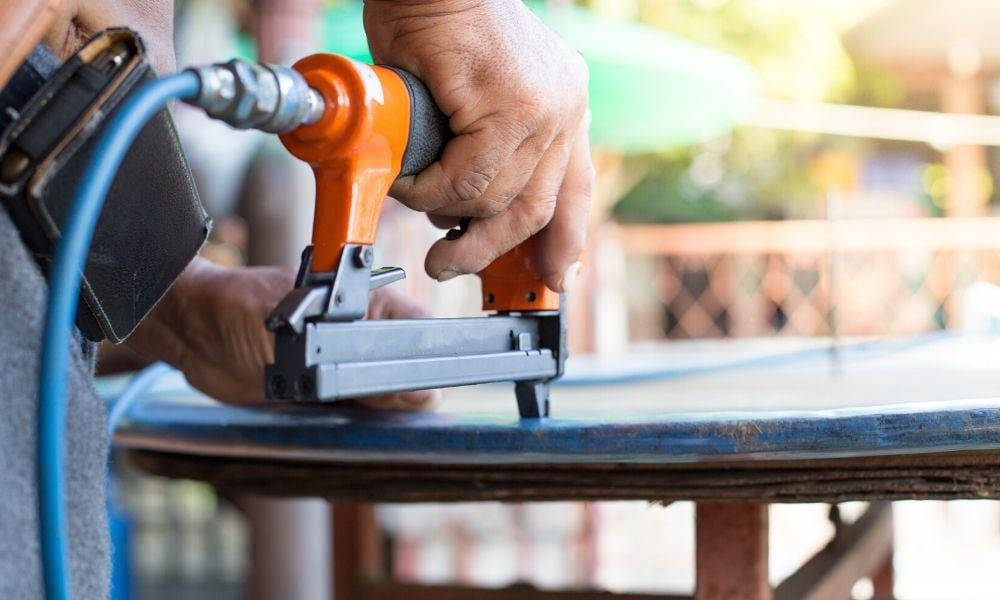
Pneumatic nail guns are very common in construction. They need compressed air from an air compressor. When you pull the trigger, air pushes a piston or driver blade downward. That blade hits the nail with strong force.
These tools are popular because they are powerful, reliable, and often lighter than cordless models. Many professionals like them for long work days. The downside is that you need a compressor and air hose, which limits movement.
Cordless battery nail guns
Cordless nail guns are easy to move around. A battery powers an electric motor, which then compresses a spring or drives a mechanical system. That stored force is released to hit the nail.
These tools are more portable, but they can feel heavier in the hand. They also cost more in many cases. Still, for users who want freedom from hoses and compressors, they are very practical.
One useful detail many beginners overlook: cordless nail guns often have a slight delay or different “feel” compared with pneumatic guns. This is normal. The energy path is more complex, so the response may seem less direct at first.
Gas-powered nail guns
Gas nail guns use a small fuel cell and a battery-powered spark or ignition system. A tiny amount of fuel burns in a chamber and creates pressure. That pressure pushes the driver blade and fires the nail.
These models are common on jobs where mobility matters. They do not need an air hose, which makes them convenient. However, they need fuel refills, regular cleaning, and good ventilation because they produce exhaust.
Electric corded nail guns
Corded electric nail guns are less common in heavy-duty work, but they are still useful for light projects. They plug into a wall outlet and use electricity to power the driving system.
They are often used for smaller home tasks where strong industrial force is not necessary. Their biggest limit is the power cord, which reduces range.
The parts inside the tool that matter most
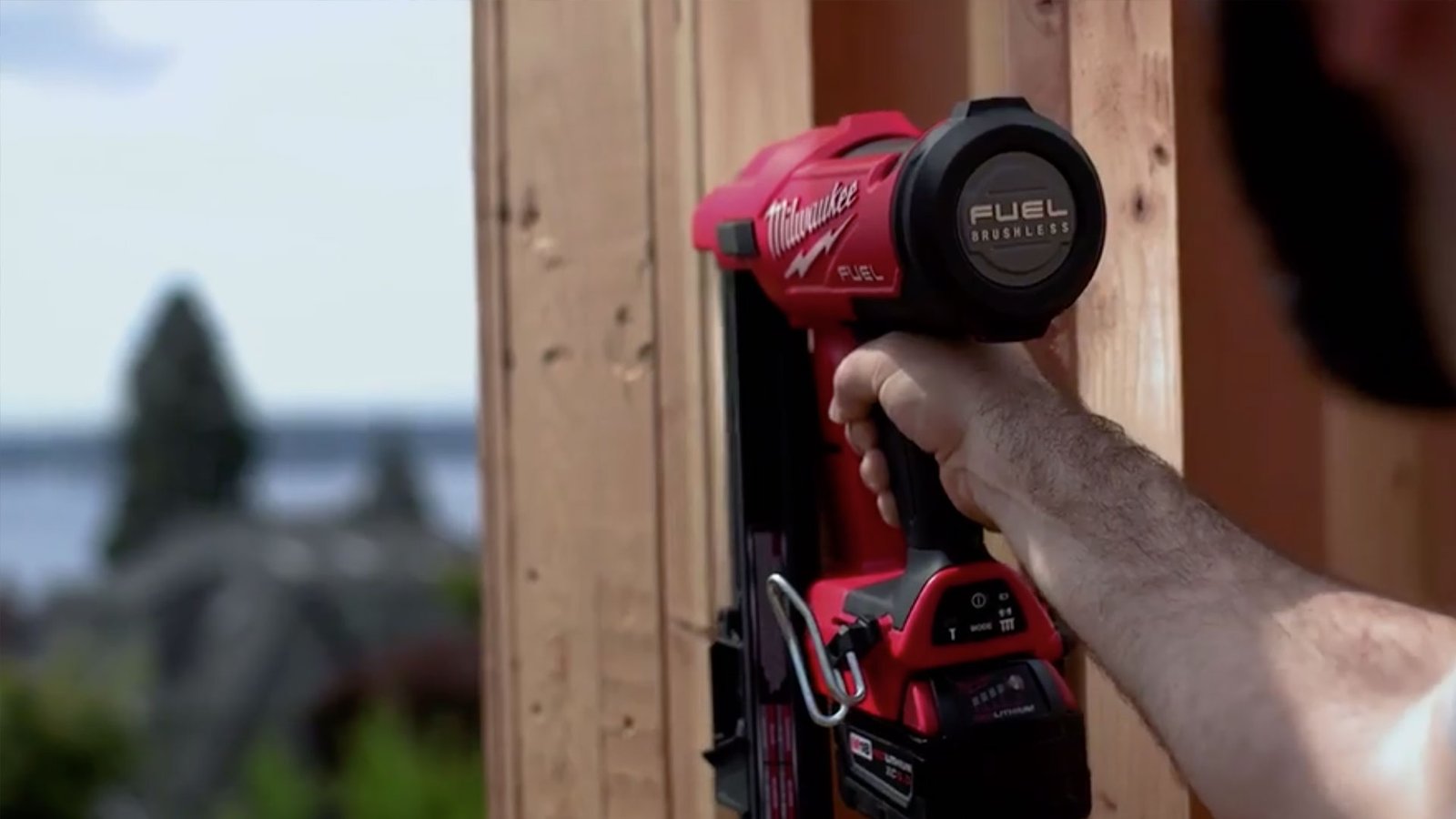
If you want a deeper answer to how does a nail gun work, you need to know the main internal parts. Even if the housing looks different from one brand to another, many tools use the same core idea.
Credit: franklyntools.com
Magazine
The magazine stores the nails in a row or coil. A spring pushes the nails forward so the next one is ready after each shot. If the nails are loaded incorrectly, the tool may jam or misfire.
Driver blade
The driver blade is the fast-moving part that hits the nail head. It is the key piece in the driving action. When the blade moves down with force, the nail goes into the material.
Piston or drive mechanism
In many pneumatic nail guns, air pressure moves a piston. The piston pushes the driver blade. In cordless tools, a motor and spring system may replace the air piston, but the result is the same: a quick downward strike.
Trigger valve or switch
This part tells the tool when to fire. Some triggers fire each time you pull them. Others allow contact firing, where the gun fires when the nose is pressed and the trigger is held. This is faster, but it also increases the risk of accidental double firing if you are not careful.
Safety contact tip
The tip at the nose must usually touch the work surface before the gun can fire. This is a safety lock. It helps prevent the gun from going off unexpectedly.
Here is a useful point that many beginners miss: the safety tip is not just about safety. It also helps the nail start in the correct position. That improves accuracy and reduces bent nails.
What happens in a pneumatic nail gun step by step
Since pneumatic models are so common, they are the easiest way to understand the mechanics in detail. Here is the firing process in simple terms.
- The compressor fills the air hose with compressed air.
- The gun keeps that air under pressure until you pull the trigger.
- When the trigger opens the valve, air rushes into the cylinder.
- The air pressure pushes the piston downward.
- The piston moves the driver blade.
- The driver blade strikes the nail head.
- The nail is driven into the work surface.
- The air inside the gun changes direction or vents, letting the piston return.
The important thing is that the air pressure is doing the heavy lifting. The trigger does not drive the nail by itself. It only releases the stored pressure at the right moment.
If you want a reliable technical reference for compressed air tools, the U.S. Occupational Safety and Health Administration has useful safety information on power tool use at OSHA.
How the safety system prevents accidents
Nail guns are powerful tools, so safety design is a major part of the mechanics. Most modern nail guns use a dual-action safety system. The nose must be pressed against the material, and the trigger must be activated as well.
This system reduces unwanted firing. Without it, a nail gun could fire while being moved, carried, or bumped. That would be dangerous.
There are usually two common trigger modes:
- Sequential trigger — press the nose first, then pull the trigger for one nail at a time
- Contact trigger — hold the trigger and tap the nose against the material for faster firing
Sequential firing is slower but safer for most beginners. Contact firing is faster for large jobs, but it can cause accidental double firing if you do not control the tool well.
Non-obvious insight: many nail gun “misses” are not really power problems. They happen because the nose is not pressed flat enough against the surface, so the safety lock does not fully engage. This is why grip and angle matter so much.
Why nails sometimes bend, jam, or do not fire
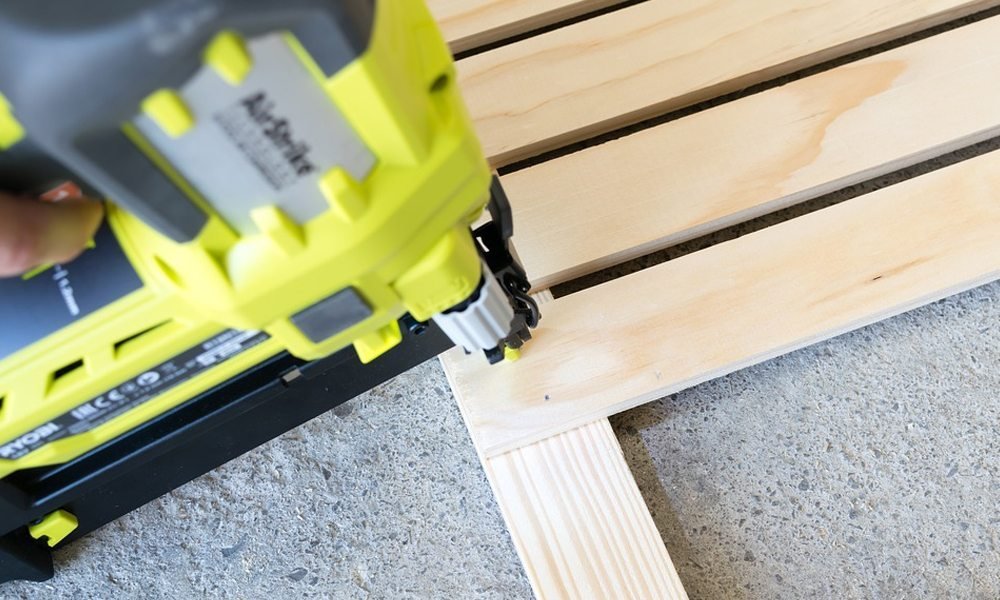
Even a good nail gun can have problems. Most issues come from loading, alignment, material hardness, or low power. Understanding the mechanics helps you find the cause faster.
Credit: bestofmachinery.com
Bent nails
A nail may bend if it hits a knot, hard grain, or metal hidden in the material. It may also bend if the gun is held at the wrong angle. If the driver blade does not strike the nail straight, the nail can curve on impact.
Jams
Jams happen when a nail is not seated properly, when the strip is damaged, or when debris blocks the firing channel. In pneumatic guns, low air pressure can also cause incomplete driving, which increases the chance of a jam.
Misfires
A misfire is when the gun makes a click or movement but no nail comes out. This can happen because the trigger is not fully engaged, the magazine is empty, the battery is low, or the air supply is weak.
Shallow drive
If the nail does not go deep enough, the tool may need more pressure, more air, or better contact with the surface. It can also mean the material is too hard for the current nail size.
Another beginner mistake is blaming the nail gun for every problem. In many cases, the real issue is the wrong nail length, wrong nail type, or wrong setting for the job.
How different settings change the result
Many nail guns let you adjust depth or power. This matters because different materials need different driving strength. Soft wood, hard wood, trim boards, and framing lumber do not behave the same way.
Depth adjustment changes how far the nail enters the surface. If the nail sits too high, it can catch on hands, clothing, or later finishes. If it goes too deep, it can damage the wood or weaken the hold.
What affects nail depth
- Air pressure or battery power
- Nail length and thickness
- Wood hardness
- Tool angle
- Surface moisture and grain direction
Beginners often think more power is always better. That is not true. Too much force can split wood, especially on trim and finish work. A good nail gun should drive the nail just deep enough, not force it deeper than needed.
Why the nail gun feels so fast compared with a hammer
A hammer relies on your arm strength and timing. A nail gun stores energy first, then releases it suddenly. That is why the tool feels so quick and easy to use.
The driver blade moves in a straight line, which means less wasted motion. A hammer strike can miss, bounce, or bend the nail. A nail gun guides the nail before the force is released. That improves speed and consistency.
This is one of the main reasons builders use nail guns for repetitive work. When you have to fasten dozens or hundreds of nails, the saved time is huge.
Practical tips for getting better results
Knowing how does a nail gun work is helpful, but using that knowledge well matters even more. A few simple habits can improve your results right away.
- Keep the nose flat against the work surface before firing.
- Use the correct nail size and type for the tool.
- Check the air pressure or battery level before starting.
- Test on scrap wood first if the material is expensive.
- Clear dust and debris from the nose and magazine often.
- Hold the tool firmly, but do not force it sideways.
Small changes can make a big difference. For example, if the gun is tilted even a little, the nail may enter at an angle. That can weaken the joint and make the finish look rough.
Common mistakes beginners make
Many first-time users expect the nail gun to work perfectly without any setup. In reality, the tool is simple, but it still needs proper use. These are common errors to avoid.
- Using the wrong nails — not every strip fits every gun.
- Skipping pressure checks — low pressure leads to weak drives.
- Ignoring the safety tip — the gun may not fire correctly or safely.
- Driving too close to edges — wood can split easily.
- Holding the gun loosely — recoil and movement reduce accuracy.
One overlooked mistake is trying to fire too fast without checking reset time. Some guns need a split second to cycle before the next shot. If you rush, you can create jams or incomplete nails.
When a nail gun is the right tool
Nail guns are best when you need speed, repeatability, and consistent fastening. They are excellent for framing walls, attaching trim, laying flooring, building fences, and many other carpentry jobs.
But they are not always the right choice. Very small craft work, delicate materials, or jobs where extreme control matters may be better handled by hand tools or specialty fasteners.
The best tool depends on the material, the job size, and the finish you want. A nail gun is a fastener tool, not a universal solution.
Credit: stapleheadquarters.com
Final thoughts on the mechanics
At its core, a nail gun is a tool that stores energy and releases it in a fast, controlled way. The exact power source may change, but the purpose stays the same: move a driver blade, strike a nail, and drive it into the material with precision.
Once you understand the main parts and the firing cycle, the tool becomes much less mysterious. You can choose the right type, use it with more confidence, and spot problems faster when something goes wrong.
The simple answer to how does a nail gun work is this: it turns stored power into a quick, straight push that drives a nail. The better answer is everything you have just read — a small system of pressure, motion, safety, and control working together in a very efficient way.
FAQs
1. How does a nail gun work in simple words?
A nail gun uses stored power from air, gas, battery, or electricity to push a driver blade. The blade hits the nail and drives it into wood or another material very quickly.
2. Do all nail guns work the same way?
No. The basic action is similar, but the power source is different. Pneumatic models use compressed air, while cordless and gas models use other systems to create driving force.
3. Why does a nail gun need to touch the surface first?
The nose safety must usually press against the material before the gun fires. This lowers the risk of accidental firing and helps place the nail in the correct spot.
4. Why is my nail gun not driving nails fully?
Common reasons include low air pressure, a weak battery, the wrong nail size, hard wood, or poor contact with the surface. Dirt or a small jam can also block full driving.
5. Is a nail gun safer than using a hammer?
It can be safer for repetitive work when used correctly, because it reduces hand strain and missed strikes. But it is still a powerful tool, so careful handling and proper safety steps are always necessary.
