
A pressure washer can clean driveways, cars, fences, patio furniture, and house walls much faster than hand scrubbing. But high pressure can also damage paint, wood, glass, plants, and even your skin if you use it the wrong way. That is why learning how to use a pressure washer safely matters as much as getting things clean.
The good news is that pressure washing is not hard once you understand the basics. You need the right nozzle, the right distance, steady movement, and a little patience. If you rush, you can leave marks, strip paint, or force water into places it should not go. If you work carefully, you can get strong cleaning results with very little effort.
This guide walks you through the full process in simple steps. You will learn how to prepare the area, choose the correct settings, clean different surfaces, and avoid common mistakes that beginners often make.
Know your machine before you start
Before you turn anything on, take a few minutes to understand your pressure washer. Different machines work in different ways, but most have the same basic parts: a motor or engine, a water inlet, a hose, a spray wand, and several nozzles. Some models also have a soap tank or detergent injector.
Check the owner’s manual first if you have it. It tells you the machine’s maximum pressure, water flow, and safety notes. If you bought a gas model, the manual will also explain fuel and oil needs. If you use an electric model, it will explain power and extension cord limits. For general safety advice from a trusted source, you can also review the U.S. Consumer Product Safety Commission.
Understand pressure, flow, and nozzle angle
Many beginners focus only on pressure, but three things matter together:
- Pressure removes dirt by force.
- Flow helps wash the dirt away.
- Nozzle angle controls how wide or narrow the spray is.
A narrow spray cleans harder, but it can also damage more easily. A wider spray is safer for most surfaces. The wrong nozzle is one of the biggest reasons people damage surfaces when learning how to use a pressure washer.
Prepare the area before washing
Good preparation makes the job safer and faster. It also protects nearby items from water damage. Do not skip this step, even if the area looks simple.
Clear the space
Move away items that do not need washing. This includes pots, toys, doormats, outdoor lights, and loose furniture. If something cannot be moved, cover it with a waterproof sheet or keep it far from the spray area.
Close windows and doors. Tape or cover electrical outlets near the work area if needed. If you are washing near a garage, make sure the door is shut and sealed as much as possible.
Protect plants, paint, and fragile surfaces
Pressure washer spray can harm soft plants and old paint. Water them lightly before cleaning nearby surfaces. Wet leaves can tolerate accidental spray better than dry ones. For painted walls, test a hidden spot first. If paint is already loose, pressure may remove it quickly.
Never point high pressure at window seals, roof shingles, electrical boxes, vents, or cracks in siding. Water can enter tiny openings and cause hidden damage later.
Inspect the machine and hose
Look for cracks, loose fittings, leaks, or damaged cords. Check that the nozzle is clean and properly attached. Make sure the water supply works well and is fully open. A weak water source can cause the machine to run badly or overheat.
Wear the right safety gear
Pressure washing looks simple, but it is not a bare-hand job. A strong spray can cut skin or send dirt into your eyes. Wear gear that gives real protection, not just casual comfort.
- Safety glasses or goggles to protect your eyes from flying dirt and splash-back
- Closed-toe shoes with good grip to reduce slipping
- Long pants to protect your legs from spray and debris
- Gloves for better grip and hand protection
- Hearing protection if you use a loud gas-powered machine for a long time
Do not wear sandals or loose clothing. Wet surfaces become slippery fast, and loose fabric can get in the way of your movement.
Choose the correct nozzle and setting
The nozzle matters more than many people think. It changes the spray pattern, and that changes the cleaning power. Most pressure washers come with colored nozzles.
| Nozzle color | Spray angle | Best use |
|---|---|---|
| Red | 0° | Very small, very stubborn spots on hard surfaces only |
| Yellow | 15° | Concrete stains, heavy dirt, hard surfaces |
| Green | 25° | Decks, siding, fences, general cleaning |
| White | 40° | Cars, windows, delicate surfaces, rinsing |
| Black | Soap nozzle | Applying detergent at low pressure |
Start with the widest safe nozzle for the surface. If dirt remains, move to a slightly stronger option. Do not begin with the most powerful tip unless the surface is very hard, such as concrete.
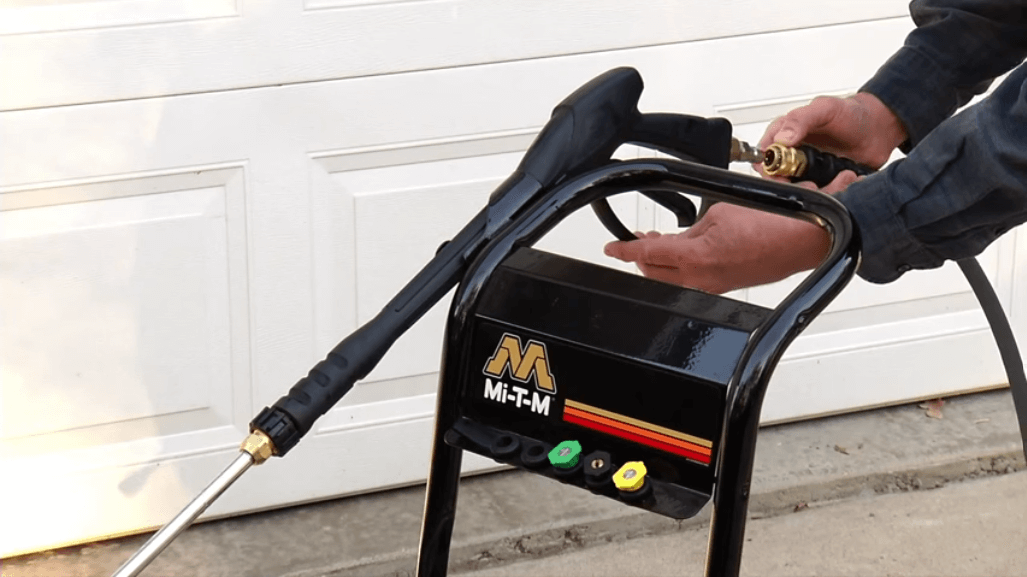
Credit: mitm.com
Non-obvious tip: lower pressure can clean better
Many beginners think stronger pressure always means better cleaning. That is not true. A slower pass with the right cleaner often removes more dirt than a fast blast with too much pressure. The water needs time to lift grime. On soft surfaces, too much pressure can push dirt deeper or strip the top layer.
Set up the pressure washer correctly
Now you are ready to connect and start the machine. Take your time here. A poor setup can cause leaks, weak spray, or machine damage.
- Connect the garden hose firmly to the water inlet.
- Attach the high-pressure hose to the machine and the spray wand.
- Install the correct nozzle.
- Turn on the water supply fully.
- Check for leaks before starting the motor or engine.
Before turning the machine on, squeeze the trigger to release trapped air. This helps the pump get a steady water flow. If you are using a gas model, make sure there is fuel and oil at the right level. If it is electric, plug it into a proper outlet and use an outdoor-safe extension cord only if the manual allows it.
Test the spray on a hidden spot
This is one of the smartest things you can do. Test the machine on a small hidden area first. Watch how the surface reacts. If paint lifts, wood fibers rise, or the surface looks rough, stop and choose a lower setting or a wider nozzle.
This simple test can save you from expensive damage.
Use the pressure washer with the right technique
The cleaning method is just as important as the machine setup. Good movement keeps the surface even and helps prevent stripes or marks.
Keep a safe distance
Start several feet away from the surface. Move closer only if needed. For most jobs, it is better to begin too far than too close. You can always move in slowly. If you start too close, damage can happen in a second.
As a general rule, keep the nozzle moving and maintain a steady distance. Do not hold the spray in one place.
Work in smooth, even passes
Use long, overlapping sweeps. Think of painting a wall with water. Move left to right, then slightly down, and repeat. This helps you clean evenly and avoids visible lines.
- Hold the wand with two hands when possible.
- Point the spray slightly downward on vertical surfaces.
- Overlap each pass by a small amount.
- Keep your body balanced and your feet firm.
If you clean a driveway or patio, work from the back toward the exit so you do not walk over the cleaned area. If you clean a wall, start at the top and move downward so dirty water runs off clean areas, not over already cleaned sections.
Use detergent only when needed
Some jobs need soap; some do not. Detergent helps break down grease, mildew, and stuck dirt. It works best on siding, outdoor furniture, vehicles, and badly soiled surfaces. Use only pressure washer-safe detergent. Regular household soap may damage the pump or leave too much residue.
Apply detergent with the low-pressure soap nozzle. Let it sit for a few minutes, but do not let it dry on the surface. Then rinse thoroughly with clean water.
Never let detergent dry on hot surfaces
This is a mistake many beginners miss. In hot sun, soap can dry quickly and leave streaks or stains. Work in smaller sections and rinse before the cleaner dries. If the surface is very hot, wait for a cooler part of the day.
How to clean common surfaces safely
Different materials need different care. One setting does not work for everything. Below are the most common surfaces and the safest way to handle them.
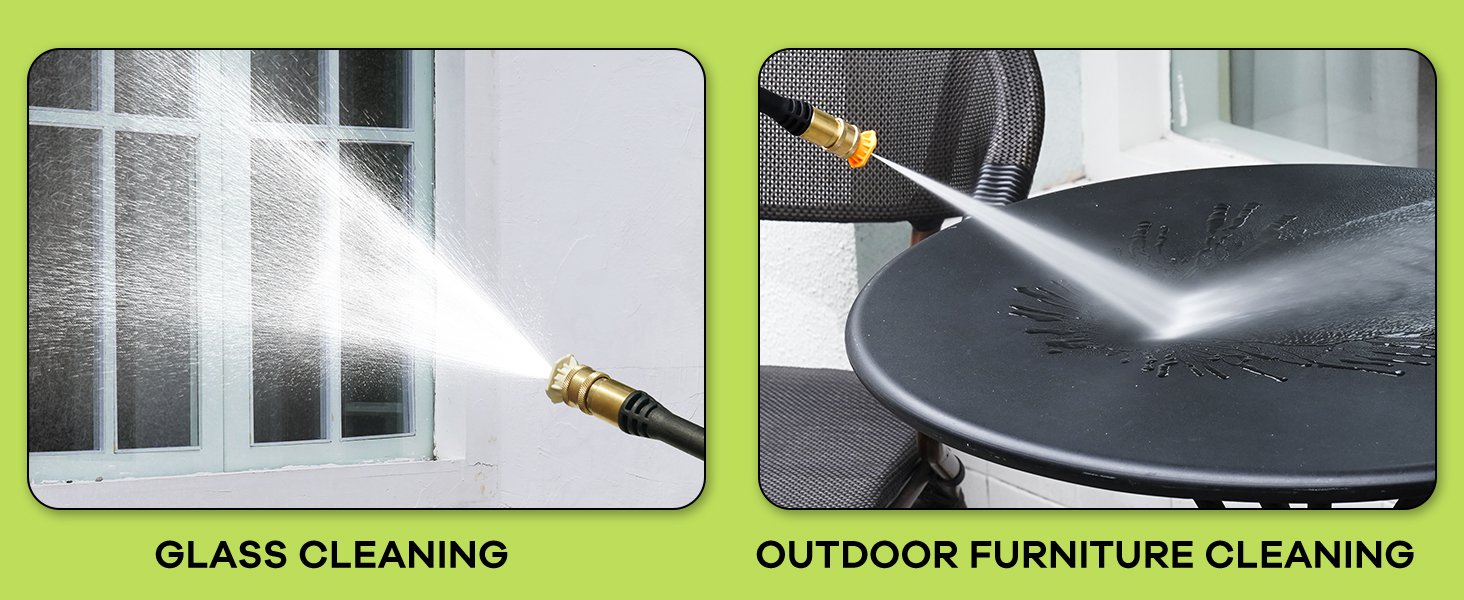
Credit: amazon.com
Concrete and driveways
Concrete is one of the easiest surfaces to pressure wash. It can handle stronger settings than wood or paint. A 15° or 25° nozzle often works well. For large flat areas, a surface cleaner attachment can make the job faster and more even.
Watch for oil stains. They may need a degreaser before washing. Also, keep in mind that old concrete can be weaker than it looks. If the surface has cracks or flaking spots, use less pressure and stay a little farther away.
Wood decks and fences
Wood needs care. Too much pressure can leave lines, raise the grain, or even cut into the wood. Use a wider spray, keep distance, and move with the wood grain when possible. Do not use a red nozzle on wood.
After washing, wood may need time to dry before staining or sealing. This is important if you want a good finish later.
Cars and motorcycles
Vehicle paint can be damaged by high pressure, especially around trim, badges, and seals. Use the widest nozzle that still cleans well, and stay far enough away to avoid forcing water into gaps. A foam cannon or gentle soap setting can help loosen grime before rinsing.
Never spray directly into mirrors, door seals, or engine bays unless you know the part can handle it.
House siding
Siding is often cleaned well with a wide spray and mild detergent. Work from a safe distance and aim the water downward or at a slight angle. Spray upward carefully, because water can get behind siding panels and cause moisture problems.
If you see peeling paint, broken caulk, or damaged siding, stop and repair those areas before washing more aggressively.
Common mistakes to avoid
Many people get good results the first time, but a few mistakes can cause real problems. Avoid these habits if you want safer and better cleaning.
- Starting with too much pressure — This is the fastest way to damage surfaces.
- Using the wrong nozzle — The spray angle must match the material.
- Holding the wand in one spot — This creates stripes, gouges, or burned-looking marks.
- Washing from too close — Distance matters as much as pressure.
- Ignoring the weather — Hot sun dries soap too quickly, and windy days can blow spray back at you.
- Forgetting to rinse well — Leftover soap can leave streaks or attract dirt later.
One more mistake is cleaning in a hurry. Pressure washing is easier when you stay calm. The machine does most of the work. Your job is to guide it the right way.
Finish the job the right way
When the surface looks clean, do not stop immediately. A good finish keeps the area looking better for longer and helps protect your machine too.
- Turn off the detergent flow if you used soap.
- Rinse the surface with clean water.
- Release pressure from the hose by squeezing the trigger after turning off the machine.
- Turn off the water supply.
- Disconnect the hose and nozzle carefully.
- Drain leftover water if your manual recommends it.
- Store the machine in a dry place.
If you used a gas pressure washer, check fuel storage instructions before putting it away. If you used detergent, flush the system with clean water so the pump does not clog.
Take care of the machine after use
Good maintenance helps the washer last longer. Wipe down the wand and hoses. Check for damage. Clean the nozzles if they are blocked. If you use the machine only once in a while, follow the storage steps in the manual so seals and pumps stay in good shape.
Quick tips that make pressure washing easier
These small habits can improve your results a lot:
- Work on a cloudy day or in the morning to reduce drying streaks.
- Use detergent on greasy or dirty areas before rinsing.
- Keep extra nozzles close by so you can switch safely.
- Practice on a less visible area first.
- Stop if you see damage starting.
Another useful tip: if an area does not clean well, do not instantly increase pressure. First try a better detergent, a longer soak time, or a slower cleaning pass. That usually works better and keeps the surface safer.

Credit: wikihow.com
How to use a pressure washer effectively without causing damage
If you want the short version, the best method is simple. Choose the right nozzle, start with the lowest safe pressure, keep the wand moving, and test on a hidden spot. That basic routine protects almost every surface.
The real secret to how to use a pressure washer well is not force. It is control. Good control means cleaner results, less risk, and less wasted time. Once you learn that balance, pressure washing becomes a very useful skill for home care.
Frequently asked questions
1. What is the safest nozzle for beginners?
The safest choice for beginners is usually the widest nozzle, often the white 40° tip. It spreads the water over a larger area and lowers the risk of damage. Always test it on a hidden spot first.
2. Can I use a pressure washer on a car?
Yes, but you must use low pressure and a wide nozzle. Keep a safe distance and avoid spraying directly into seals, mirrors, or gaps. A gentle wash method is better for vehicle paint.
3. Do I always need detergent?
No. Water alone is enough for light dirt on many hard surfaces. Use detergent when you need to remove grease, mildew, or stubborn grime. Choose a soap that is made for pressure washers.
4. Why is my pressure washer spraying weakly?
Weak spray can happen because of a clogged nozzle, loose hose connection, low water supply, or air in the system. Check the connections first, then clean the nozzle and make sure the water flow is steady.
5. How far should I hold the nozzle from the surface?
Start several feet away and move closer only if needed. The right distance depends on the surface and nozzle. Hard surfaces can handle closer work, while wood, paint, and cars need more space.
