
If you have ever stood in front of a drill bit rack and wondered which one to buy, you are not alone. The choice often comes down to black oxide vs titanium drill bits, and the names can sound more different than they really are. Both are common, both look similar at a glance, and both can drill clean holes in many materials.
But the real difference is not only the color. It is about coating, heat control, tool life, price, and the kind of work you do most often. Picking the wrong bit can waste time, burn the tip, or make drilling much harder than it should be.
In this guide, you will learn how black oxide and titanium drill bits compare, when each one makes sense, and what most beginners miss when buying them. If you want a simple answer for real-world use, this article will help you choose with confidence.
What These Drill Bits Really Are
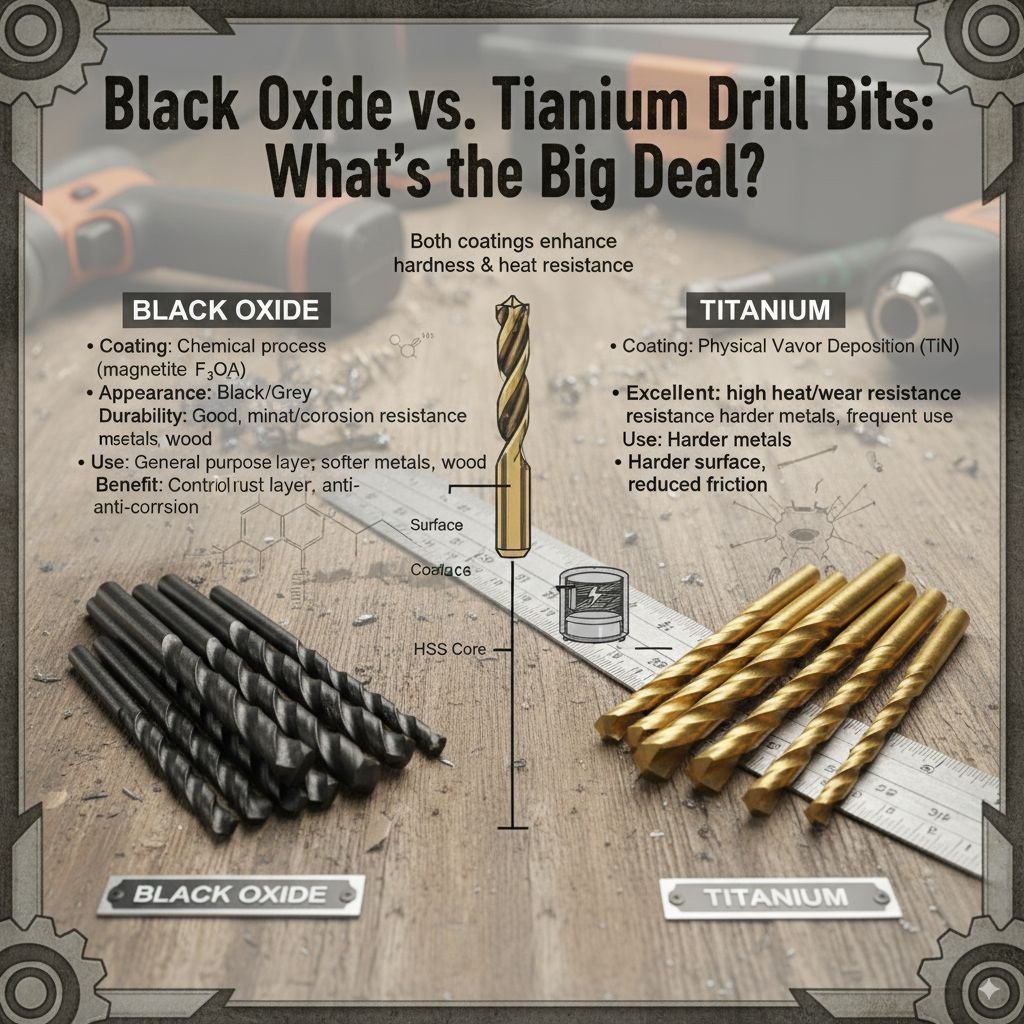
Before comparing performance, it helps to know what black oxide and titanium drill bits actually mean. Many people think the entire bit is made of titanium or black oxide, but that is not true. In most cases, these are surface coatings applied to high-speed steel bits.
The base metal is usually high-speed steel, also called HSS. The coating changes how the bit handles heat, friction, rust, and wear. That is why the coating matters, but it does not turn a low-quality bit into a top-quality one.
Black oxide drill bits
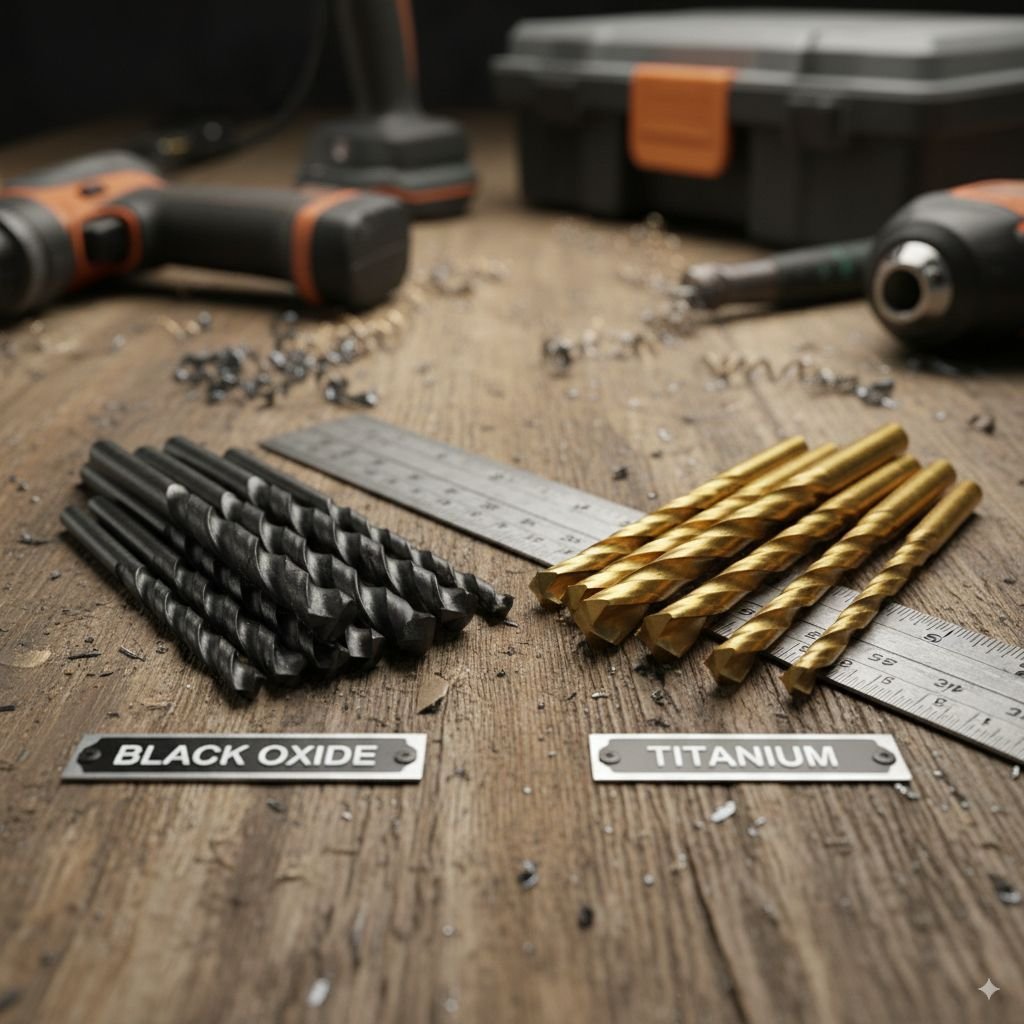
Black oxide drill bits have a black finish created by heat treatment and chemical conversion. This coating helps reduce friction a little, improves rust resistance, and can hold cutting fluid better than bare steel.
These bits are usually a solid middle-ground choice. They are often cheaper than titanium-coated bits and are common in general-purpose sets.
Titanium drill bits
Titanium drill bits are usually HSS bits coated with titanium nitride, often shown as a gold color. This coating is harder than black oxide and helps reduce wear. It also improves heat resistance during repeated drilling.
One important detail: the coating is thin. Once it wears off from use or sharpening, the performance advantage drops. That is why the quality of the bit underneath still matters a lot.
Black Oxide vs Titanium Drill Bits: The Core Differences
The debate around black oxide vs titanium drill bits becomes much easier when you look at the key job of each coating. They are not built for exactly the same use pattern, even though they overlap in many projects.
| Feature | Black Oxide | Titanium |
|---|---|---|
| Coating color | Black | Gold or gold-gray |
| Heat resistance | Good | Better |
| Friction reduction | Moderate | Higher |
| Rust resistance | Good | Good |
| Durability in repeated use | Decent | Better for many drilling cycles |
| Sharpening impact | Still useful after sharpening | Coating can wear off after sharpening |
| Typical price | Lower | Higher |
At first glance, titanium looks better in almost every way. But that is not the full story. A titanium coating helps most when the bit is used repeatedly and heats up often. For light, occasional work, black oxide may be the smarter and cheaper choice.
Heat control
Heat is one of the biggest enemies of drill bits. When the bit gets too hot, it dulls faster. Titanium coatings usually handle heat better, so they are helpful for repeated holes in harder materials.
Black oxide still helps by lowering friction a little, but it is not as strong a heat barrier as titanium nitride.
Friction and smooth drilling
A lower-friction surface helps the bit cut more smoothly. Titanium often wins here. It tends to slide through material with less resistance, especially when drilling many holes in a row.
Black oxide can also drill smoothly, but the difference becomes more noticeable as workload increases.
Durability and lifespan
Many buyers assume titanium bits last forever. They do last longer in many cases, but only if the underlying bit is good and the coating stays intact. If the bit is overheated, forced, or used at the wrong speed, no coating will save it.
Black oxide bits may not look as advanced, but they can offer very good life for normal home use. They are often easier to replace too, which matters if you lose bits often or need a large set.
Price and value
Black oxide drill bits usually cost less. That makes them attractive for DIY users, occasional users, and anyone buying a large set for general tasks.
Titanium bits cost more, but the extra money can be worth it for frequent drilling, especially in workshops, job sites, or projects where speed matters.
How Each Bit Performs in Real Use
The best bit is not always the strongest one on paper. Real use tells a different story. Material type, drilling speed, pressure, and the number of holes all affect performance.
Credit: woodworkingadvisor.com
Wood
Both types work well in wood. Titanium may stay sharp longer during heavy use, but black oxide is often enough for home projects, furniture repair, and basic woodworking.
For softwood, the difference is small. For dense hardwoods, titanium may offer a longer useful life if you drill often.
Metal
This is where the difference becomes more important. Titanium bits are usually better for metal because they handle repeated heat better. They are a strong choice for sheet metal, brackets, steel furniture, and general fabrication.
Black oxide bits can still drill metal, especially thin metal or light steel. The key is to use the right speed and some cutting fluid. If you drill metal only once in a while, black oxide can be enough.
Plastic
Both types can drill plastic, but titanium is not always the best choice. In plastic, the main problem is heat. Too much heat can melt the material and leave rough edges. A sharp black oxide bit often works just as well, sometimes better, because the result depends more on technique than coating.
Masonry and hard materials
Neither black oxide nor titanium is the right choice for concrete, brick, or stone. You need masonry bits with carbide tips. This is a common mistake: people buy titanium bits and expect them to work on every hard surface. They do not.
Benefits of Black Oxide Drill Bits
Black oxide bits are not the flashy option, but they have real strengths. In some jobs, they are the better value because they give enough performance without extra cost.
1. Lower cost
Black oxide bits usually cost less than titanium-coated bits. If you need a full set for household use, the savings can be meaningful.
2. Good for general use
They work well for wood, plastic, light metal, and everyday repair work. For many people, that is enough.
3. Better value for occasional drilling
If you only drill a few holes now and then, paying extra for titanium may not help much. Black oxide gives solid performance at a lower price.
4. More forgiving after sharpening
Because the coating is not the main feature driving performance, a sharpened black oxide bit can still work well even after some wear. That is useful in shops where bits are resharpened instead of replaced.
5. Good rust resistance
The black finish provides better corrosion resistance than bare steel. That helps if the bits are stored in a garage, toolbox, or damp space.
Benefits of Titanium Drill Bits
Titanium bits are popular for a reason. When used in the right situations, they can make drilling faster and less frustrating.
1. Better wear resistance
Titanium coatings help the bit resist surface wear. This can extend life during repeated drilling, especially in metal.
2. Strong heat performance
Because they reduce heat buildup better, titanium bits are useful for long drilling sessions. That matters when you drill many holes in a row.
3. Faster work in the right materials
Less friction can mean smoother cutting and less effort. For users who drill often, that can save time and reduce fatigue.
4. Good for job-site and workshop use
If a bit is used every day, the longer life and better heat control may justify the extra cost.
5. Better choice for repeated metal drilling
This is one of the strongest use cases. For thin steel, brackets, aluminum, and similar tasks, titanium often delivers better value over time.
What Beginners Often Miss
Most first-time buyers compare only the coating color. That is a mistake. Two bits with the same coating can perform very differently depending on the base steel, sharpness, and geometry.
Credit: woodworkingadvisor.com
The coating is not the whole bit
A poor-quality titanium bit is still a poor-quality bit. The coating may help a little, but it cannot fully fix bad steel or weak manufacturing.
Drill speed matters more than many people think
Running a bit too fast creates heat and ruins performance. This is true for both black oxide and titanium bits. In metal, slower speeds are often better. In wood, speed can be higher, but control still matters.
Pressure is not always helpful
Many people push too hard, thinking more force will make drilling easier. In reality, too much pressure can overheat the bit and damage the edge. A sharp bit with steady pressure usually works better.
Coating wear is normal
Titanium bits do not keep their gold color forever. Once the coating wears off in the cutting zone, the extra advantage drops. That does not mean the bit is useless. It just means the coating has done part of its job.
Which One Is Better for Specific Jobs?
The better choice depends on what you drill most often. Here is the simple way to think about it.
Choose black oxide if you:
- Drill only sometimes
- Want a lower-cost set
- Work mostly with wood, plastic, or light materials
- Need bits for general home repairs
- Like a bit that still offers good value after sharpening
Choose titanium if you:
- Drill often and want longer life
- Work with metal more regularly
- Need better heat resistance
- Want smoother cutting during repeated use
- Use your drill in a shop, garage, or job-site setting
For mixed home use
If you do many different tasks, titanium can be a smart upgrade for the few sizes you use most often. But for a large general-purpose kit, black oxide may give better overall value.
Common Buying Mistakes to Avoid
People often waste money on drill bits because they focus on the wrong things. Avoid these mistakes if you want better results.
- Buying only by color. Gold does not always mean better in every situation.
- Ignoring the base material. Good HSS matters more than coating alone.
- Using the wrong bit for masonry. Titanium and black oxide are not masonry bits.
- Drilling too fast in metal. This destroys bits quickly.
- Forcing a dull bit. A dull bit makes heat, not progress.
One useful rule: if you rarely drill metal, black oxide may be enough. If you drill metal often, titanium is usually the safer bet. The right answer is less about hype and more about use pattern.
Care Tips That Extend Bit Life
No coating can replace good care. A few simple habits can make both types last much longer.
Keep the bit cool
When drilling metal, use proper speed and pause if the bit starts to overheat. Cutting fluid or even a little lubricant can help in some jobs.
Do not force the bit
Let the edge cut. If you push too hard, the bit can glaze, overheat, or wander off the mark.
Store bits dry
Even rust-resistant coatings can suffer if bits are left wet. Wipe them dry before storage.
Use the right pilot hole
For larger holes, starting with a smaller bit can reduce stress and improve accuracy.
Sharpen when needed
A sharp black oxide bit can often perform better than a dull titanium one. For many users, sharpness matters more than coating type.
For a deeper technical look at drill bit coating types, you can also check this general reference from Wikipedia’s drill bit overview. It is not a buying guide, but it can help you understand the basic terminology.
Final Verdict: Black Oxide vs Titanium Drill Bits
The honest answer is simple: neither one wins every time. In the black oxide vs titanium drill bits debate, the better choice depends on how often you drill, what you drill, and how much you want to spend.
Black oxide is a smart, budget-friendly option for general use, light projects, and occasional drilling. It offers good value and decent protection against heat and rust.
Titanium is better for frequent drilling, especially in metal. It gives stronger heat resistance, better wear performance, and smoother cutting in demanding use.
If you want the shortest answer possible: choose black oxide for everyday value, and choose titanium for heavier, repeated work. That simple rule will help most buyers make the right decision.
Credit: simpleweld.com
FAQs
Are titanium drill bits always better than black oxide?
No. Titanium bits are usually better for frequent drilling and metal work, but black oxide bits can be the smarter choice for occasional use and lower cost.
Can black oxide drill bits drill metal?
Yes, they can drill thin or light metal well if you use the right speed and do not overheat the bit. For heavy metal drilling, titanium is often better.
Do titanium drill bits work on wood?
Yes, titanium bits work on wood very well. However, for simple wood projects, black oxide bits are often enough and cost less.
Why do titanium drill bits turn dull after a while?
The coating wears down with use, heat, and sharpening. Once the coating is gone in the cutting area, the extra performance drops, even though the bit may still be usable.
Which is better for home use: black oxide or titanium?
For most home users, black oxide is the better value. If you drill metal often or want longer life, titanium is worth the extra cost.
