
Choosing the right multimeter is not just about price or brand. It also depends on how fast you want readings, how much control you need, and how often you test different electrical values. This is where the debate between auto ranging vs manual multimeter becomes very important.
Many beginners like auto ranging because it feels simple. You turn the dial, touch the probes, and the meter picks the range for you. Others prefer manual range because it gives more control and, in some cases, faster results. Both tools can be accurate. The real question is which one fits your work better.
In this guide, you will learn how both types work, where each one is strong, where each one can slow you down, and how to choose the best option for accurate electrical testing.
What auto ranging and manual range really mean
A multimeter measures things like voltage, current, resistance, and continuity. To do this well, it must know the range of the signal it is reading. That is the main difference between these two types.
How an auto ranging multimeter works
An auto ranging multimeter finds the correct range by itself. If you measure a small battery or a high-voltage circuit, the meter adjusts automatically. You do not need to guess the range first.
This makes it easy for beginners and for people who test many different circuits in a short time. It also reduces setup mistakes, because the meter does the range selection for you.
How a manual multimeter works
A manual multimeter requires you to choose the range before you take a reading. For example, if you expect about 12 volts, you may set the dial to 20V. If you expect resistance in the kilo-ohm range, you choose a suitable ohm setting.
This takes a little more knowledge. But once you understand the ranges, it gives you full control over the test process.
Why range selection matters for accurate electrical testing
Accuracy is not only about the meter’s internal quality. Range selection also affects how easy it is to get a stable and useful reading. If the range is too low, the meter may overload. If it is too high, the reading may look less precise than it should.
For example, if you measure 1.8 volts on a very high range, the display may show fewer decimal details. On a lower, proper range, you may get a cleaner reading with better resolution.
That is one of the most important points people miss in the auto ranging vs manual multimeter debate: accuracy and resolution are not always the same thing. A meter can be accurate but still give a less detailed display if the range is not ideal.
Two beginner mistakes that reduce reading quality
- Using the wrong range on a manual meter: This can give an overload reading or a poor display.
- Trusting the display without checking the setup: Even auto ranging meters need the correct mode, such as AC volts, DC volts, resistance, or current.
Auto ranging multimeter: strengths and limits
Auto ranging is popular because it makes electrical testing feel simple. But it is not perfect for every job.
Benefits of auto ranging
1. Faster setup
You do not need to think about the exact range before every test. This saves time, especially when you move between different measurements.
2. Easier for beginners
New users often make mistakes with manual ranges. Auto ranging removes one big source of error.
3. Good for mixed testing
If you test batteries, outlets, switches, resistors, and continuity in one session, auto ranging helps you move quickly.
4. Less chance of wrong range selection
Since the meter chooses the range, you do not need to worry as much about overload due to a bad dial setting.
Limitations of auto ranging
1. It can be slower to settle
Auto ranging meters sometimes take a second or two to find the best range. That delay can feel small, but it matters in fast troubleshooting.
2. Display changes can be distracting
The reading may jump between ranges before stabilizing. For some users, this makes the meter harder to watch.
3. Less control for advanced testing
Experienced users sometimes want to lock the range themselves. Auto ranging does not give that same direct control.
4. Can waste battery in some models
Some auto ranging designs use more power than a simple manual meter, especially in lower-cost models.
Manual multimeter: strengths and limits
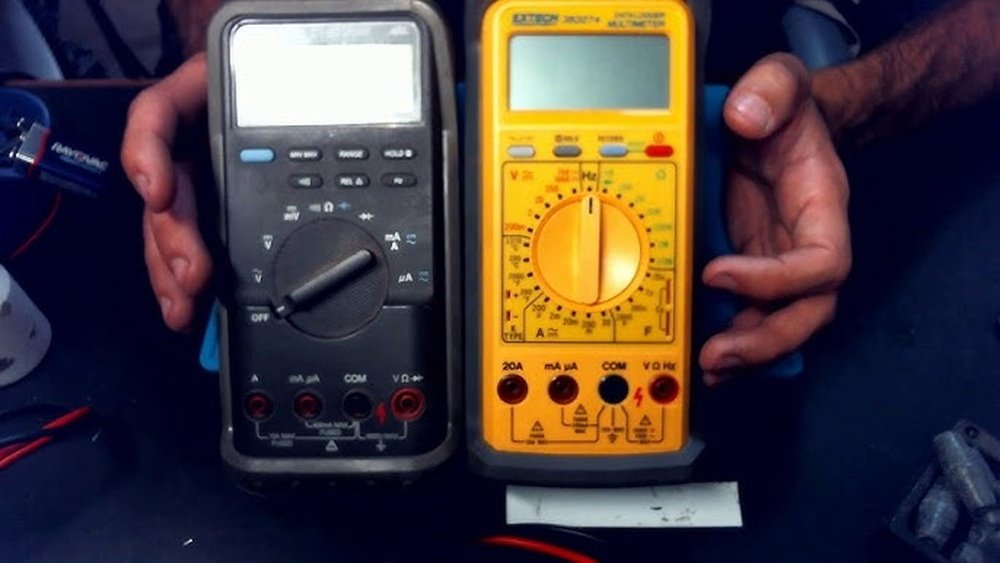
Manual range meters have been used for years, and many technicians still trust them. They are simple, direct, and often fast in skilled hands.
Credit: electrozlab.com
Benefits of manual range
1. Full control over the test
You choose the range, so you know exactly what the meter is doing. This is useful when you already know the approximate value.
2. Often faster for repeated readings
If you keep testing the same kind of signal, manual range can be quicker because there is no waiting for the meter to auto-adjust.
3. Better for experienced users
Technicians who understand ranges can work very efficiently with a manual meter.
4. Sometimes better battery life
Many manual meters are simple in design and may use less power.
Limitations of manual range
1. More room for user error
Choosing the wrong range is common for beginners. It can lead to overload, confusion, or wasted time.
2. Slower when values are unknown
If you do not know what the circuit contains, you may need to change ranges several times before getting the right one.
3. Less convenient for fast field work
When you are moving from one test point to another, manual range can slow you down.
Auto ranging vs manual multimeter: which is more accurate?
This is the question most people really want answered. The short answer is: neither type is automatically more accurate by itself. Accuracy depends more on the meter’s quality, internal design, and measurement category than on range style alone.
Still, range style can affect how accurate the reading feels in real use. Auto ranging helps reduce user mistakes. Manual ranging helps experienced users choose the most useful range quickly. So the better choice depends on who is using the meter and what kind of test is being done.
A high-quality auto ranging meter can be more reliable for beginners because it removes wrong-range errors. A skilled technician with a manual meter may get more consistent results in repeated testing because the range stays fixed.
What really affects accuracy more than range style
- True RMS capability: Important for non-sinusoidal AC signals.
- Meter category rating: Safety matters when testing mains or industrial circuits.
- Input impedance: This can affect sensitive circuit readings.
- Build quality and calibration: A cheap meter of any type may be less trustworthy.
When auto ranging is the better choice
Auto ranging is usually the best choice if you want simplicity and speed without much setup. It is especially useful in these situations:
- You are a beginner. The meter does more of the thinking for you.
- You test many different values. Batteries, outlets, fuses, and small electronics all in one job are easier with auto range.
- You work in a general repair setting. If values are not predictable, auto range saves time.
- You want fewer mistakes. Wrong range selection is one of the most common user errors.
Auto ranging is also a smart choice if you often train other people, share tools, or lend the meter to someone less experienced.
When a manual multimeter is the better choice
Manual range is often better when you want speed, control, and repeat use on similar readings. It fits these situations well:
- You are an experienced user. If you already know what range to expect, manual mode is efficient.
- You perform repeated measurements. Production testing and service work often benefit from a fixed range.
- You want a stable display. Manual mode avoids range-hunting and can feel easier to read.
- You work on known circuits. If you already know the voltage or resistance range, manual selection is simple.
Many technicians like manual meters because they feel direct. The dial position tells you exactly what the meter is measuring and on what scale.
Accuracy tips that matter for both types
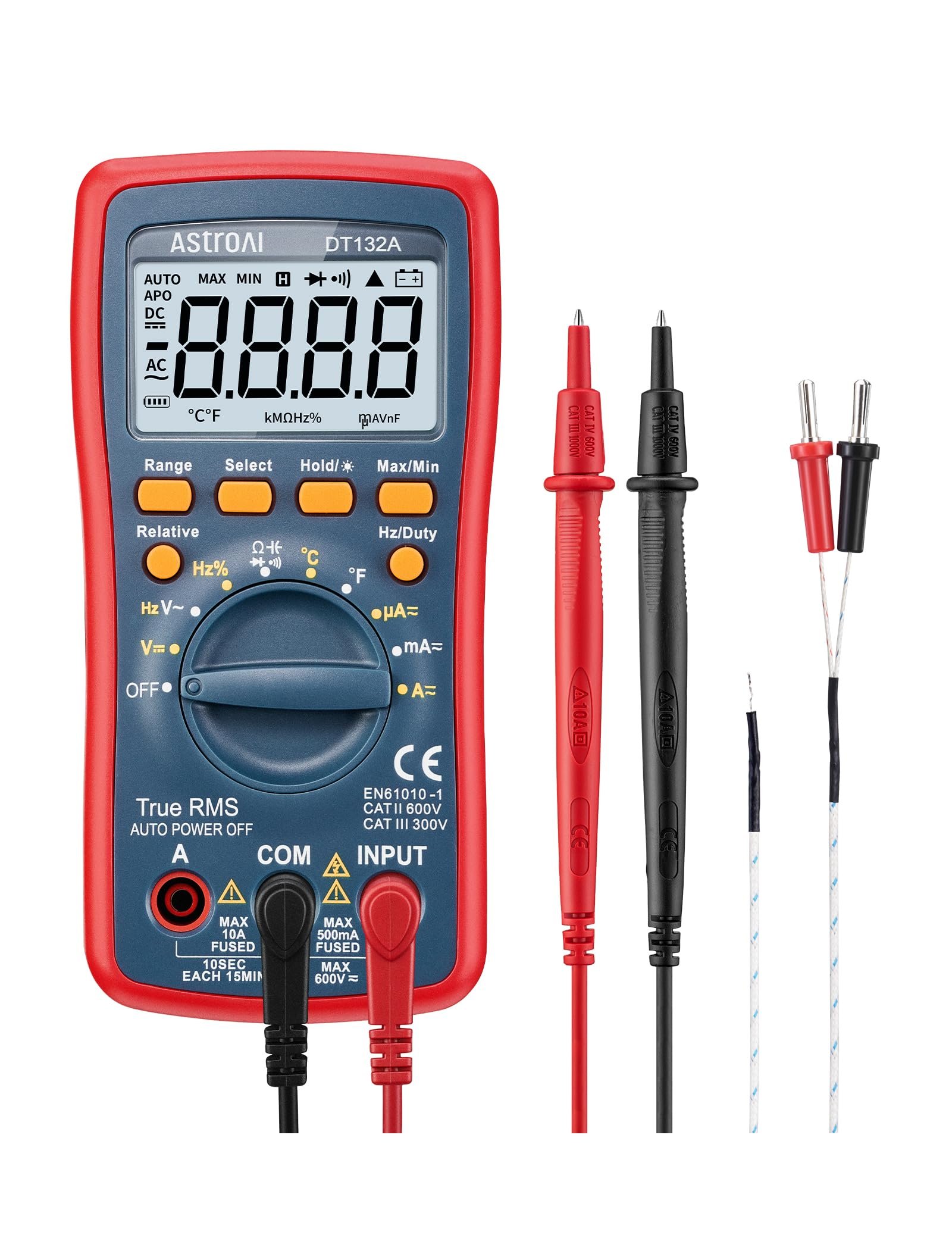
No matter which side you choose in the auto ranging vs manual multimeter debate, good testing habits matter more than the dial style alone.
Credit: us.amazon.com
1. Use the correct function first
Do not start by selecting a range. First choose the right mode: AC voltage, DC voltage, resistance, current, or continuity. A common mistake is trying to measure voltage while the meter is in resistance mode.
2. Know the value you expect
Before touching the probes, think about the circuit. Is it a 1.5V battery, a 12V automotive line, or a 120V wall outlet? Even with auto ranging, knowing the expected value helps you notice strange readings faster.
3. Let the reading settle
Digital meters may show a moving value for a moment. Wait for the number to stabilize before making a decision. This is especially important with auto ranging meters on changing signals.
4. Check probe contact
Poor contact can create false readings. Dirty terminals, loose probe tips, or weak pressure can make a meter seem inaccurate when the problem is actually physical contact.
5. Watch for overload signs
If the meter shows OL, 1, or a similar overload signal, the selected range or mode may be wrong. Do not ignore it.
Common myths about auto ranging and manual meters
Many buyers hear the same claims again and again. Some are true, but some are not.
Myth 1: Auto ranging is always more accurate
Not true. Auto ranging is often easier, but it does not automatically make the meter more accurate.
Myth 2: Manual range is only for experts
Also not true. Beginners can learn manual range with a little practice. It is not hard once you understand the basics.
Myth 3: Auto ranging meters are too slow to use
Not always. Many modern auto ranging meters are fast enough for normal electrical work. The delay is usually small.
Myth 4: Manual meters are outdated
Not at all. Manual meters are still useful in many fields, especially when the user wants direct control.
A practical way to choose the right meter
If you are still unsure, use your real work as the guide. That is the best way to choose between auto ranging vs manual multimeter.
| Type of user | Better choice | Why |
|---|---|---|
| Beginner | Auto ranging | Less chance of wrong range selection |
| Student learning basics | Auto ranging or hybrid | Simple for practice, but manual helps build skill |
| Technician with repeat jobs | Manual | Fast when the expected values are known |
| General home user | Auto ranging | Easier for mixed household testing |
| Industrial or field worker | Depends on workflow | Control, speed, and safety rating matter more than style alone |
A smart buyer should also look at the meter’s safety rating, display quality, build strength, and measurement features. The range type is important, but it is only one part of the full picture.
Which one is best for accurate electrical testing?
If you want the easiest answer, here it is: auto ranging is usually best for most people, while manual range is best for users who already know what they are doing and want more control.
For most beginners, auto ranging gives the best mix of accuracy, speed, and ease of use. It reduces mistakes and makes the meter less intimidating. For more experienced users, manual range can be faster and more efficient in routine testing.
The best multimeter is not just the one with auto or manual range. It is the one that matches your skill level, your test environment, and the kind of electrical work you do every day.
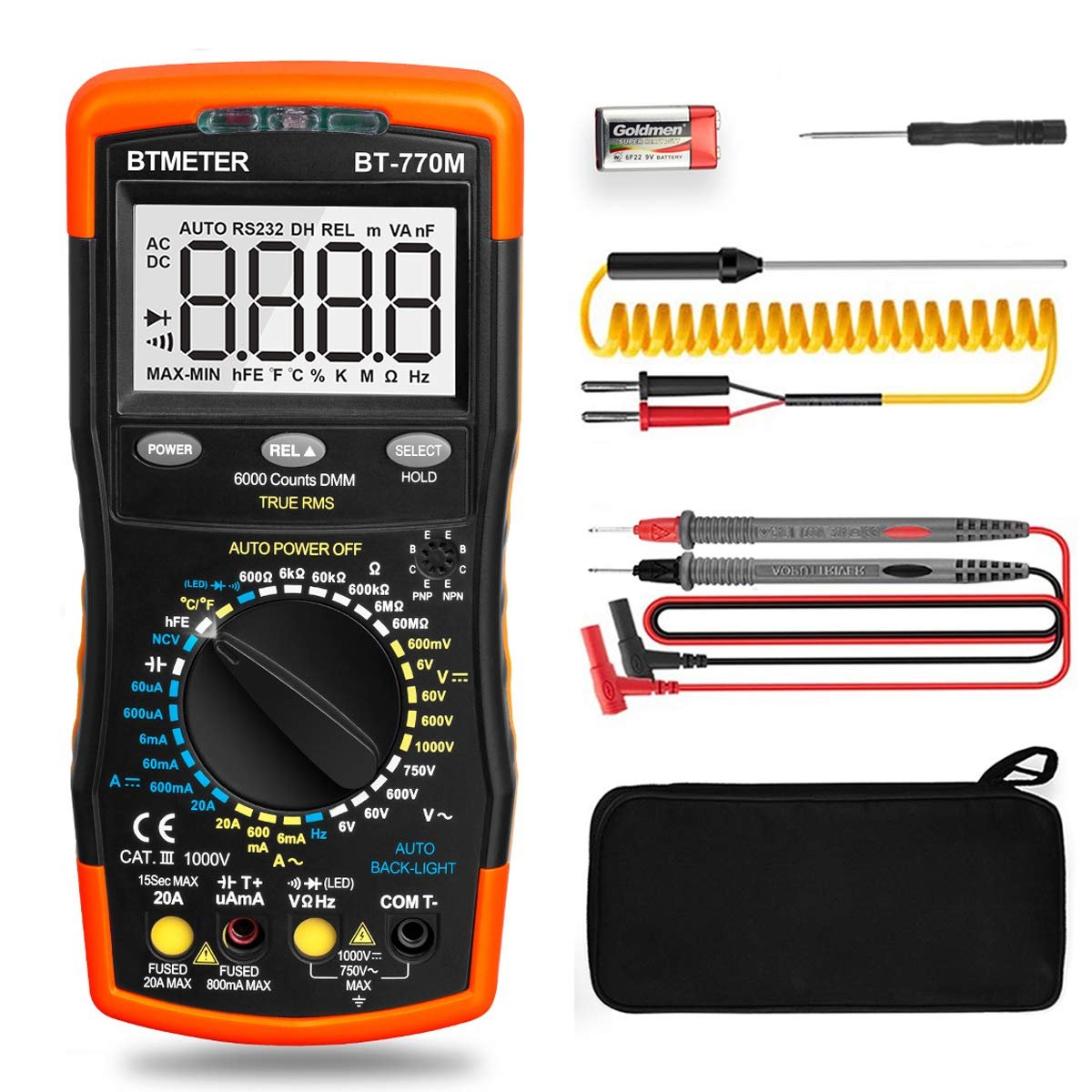
If you want a simple rule, use this: choose auto ranging for convenience, choose manual range for control. Both can deliver accurate results when used correctly.
For deeper safety guidance on electrical testing, you can also review the official information from OSHA’s electrical safety resources.
Credit: us.amazon.com
Final thoughts
The auto ranging vs manual multimeter choice is not about which one is “better” in every case. It is about which one helps you test more safely, more quickly, and with fewer mistakes.
Auto ranging is simple and friendly. Manual range is controlled and efficient. If you are a beginner or do varied testing, auto ranging is usually the better fit. If you are experienced and want fast repeat readings, manual range may be the smarter tool.
Either way, the real key to accurate electrical testing is good technique, the correct mode, and a quality meter you trust.
FAQs
1. Is auto ranging better than manual range for beginners?
Yes. Auto ranging is usually better for beginners because it removes the need to guess the correct range. This lowers the chance of mistakes and makes the meter easier to use.
2. Does a manual multimeter give more accurate readings?
Not always. Manual range does not automatically make a meter more accurate. Accuracy depends more on the quality of the meter, its calibration, and how it is used.
3. Why do professionals still use manual multimeters?
Many professionals like manual meters because they offer more control and can be faster for repeated measurements on known values. The fixed range also gives a stable display.
4. Can auto ranging multimeters measure everything a manual one can?
In most normal jobs, yes. Auto ranging meters can handle the same basic measurements. The difference is mainly in how the range is selected, not what is measured.
5. Which type is best for home electrical testing?
For most home users, auto ranging is the better choice. It is easier to use for batteries, outlets, appliances, and general troubleshooting around the house.
