
If you want a clean, tight fit in a plumbing job, irrigation line, or DIY repair, learning how to cut PVC pipe is one of the most useful skills you can have. A good cut saves time, reduces leaks, and makes the next step much easier.
The good news is that PVC is not hard to cut. The real challenge is cutting it well. A pipe that is even a little crooked, rough, or crushed can cause problems later. That is why the right tool, the right method, and a little care matter more than speed.
In this guide, you will learn simple ways to make clean, accurate cuts, avoid common mistakes, and choose the best cutting method for your project. Whether you are a beginner or just need a better result, this step-by-step guide will help.
What you need before making the cut
Before you start, gather your tools and prepare the pipe. A small amount of planning makes a big difference in the final result.
The best tool depends on the size of the pipe, the number of cuts, and how clean you need the edge to be. A single cut for a home repair is different from a large project with many pieces.
| Tool | Best for | Cut quality |
|---|---|---|
| PVC pipe cutter | Fast, clean cuts on smaller pipes | Very good |
| Fine-tooth saw | Large pipes or thicker walls | Good with care |
| Power miter saw | Many repeat cuts and perfect angles | Excellent |
| Hacksaw | Simple jobs and low-cost cutting | Fair to good |
You will also want a tape measure, marker, sandpaper or deburring tool, and safety glasses. For a safer, more complete view of cutting and handling plastic pipe, you can also check this guidance from the Occupational Safety and Health Administration.
Good preparation habits
These small steps help you avoid waste and poor cuts:
- Measure twice before you mark the pipe.
- Use a clear, thin line so you know exactly where to cut.
- Support the pipe on a flat surface so it does not roll.
- Leave a little extra length if the final fit must be exact.
Non-obvious tip: When you mark the pipe, draw the line all the way around it. A line on only one side often leads to a slanted cut, because your eye may follow the wrong edge while cutting.
How to cut PVC pipe with a pipe cutter
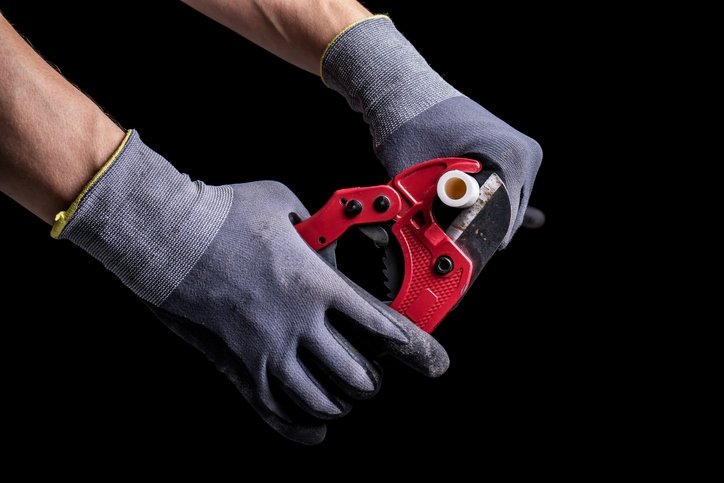
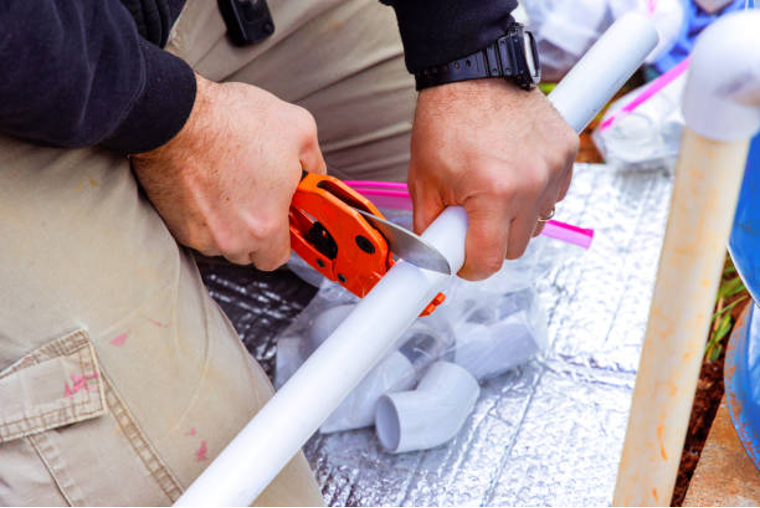
A PVC pipe cutter is the easiest tool for many home projects. It works best on small- to medium-size PVC pipe and gives a neat edge with very little cleanup.
Step 1: Measure and mark the pipe
Use a tape measure to find your cut point. Mark it with a pencil or thin marker. If accuracy matters, wrap a piece of paper around the pipe to help you create a straight guide line.
Step 2: Place the pipe in position
Set the pipe cutter blade on the marked line. Make sure the pipe is stable. If it moves, your cut may shift and become uneven.
Step 3: Close the cutter slowly
Do not force the cutter all at once. Squeeze it gradually. Turn the pipe a little as you tighten if needed, so the blade stays on the line.
Step 4: Finish the cut cleanly
Keep tightening until the pipe separates. A clean cutter often leaves a smooth edge, but you should still check for a small burr inside or outside the pipe.
Best use case: A pipe cutter is ideal when you want speed and low mess. It is especially helpful for fast repair work where you need just a few clean cuts.
Common mistake: Squeezing too hard too fast can crush the pipe instead of cutting it. Slow pressure gives a cleaner result.
How to cut PVC pipe with a saw
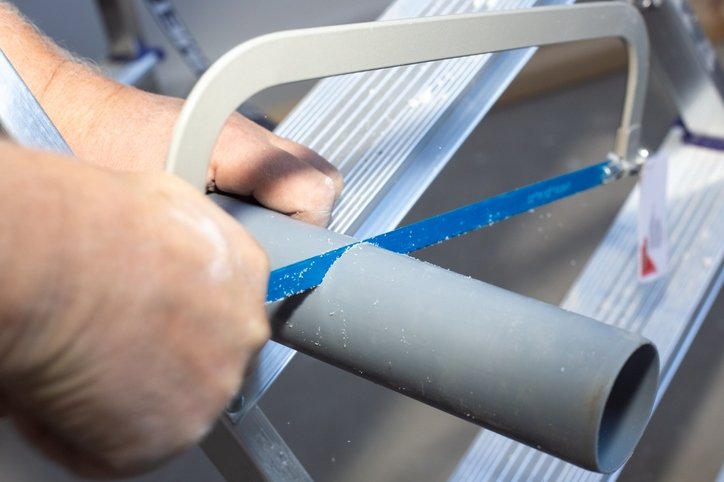
If you do not have a pipe cutter, a saw works well. A fine-tooth saw, miter saw, or hacksaw can make a good cut if you control the pipe and keep the blade steady.
Credit: homedit.com
Step 1: Secure the pipe
Place the pipe on a workbench or between supports. It should not roll or bounce. If the pipe moves, the blade can wander off the line.
Step 2: Align the saw with the mark
Set the blade just outside the line at first. This gives you room to clean up the edge later if needed. Start carefully so the blade does not jump.
Step 3: Use short, steady strokes
Let the blade do the work. Pressing too hard can crack the pipe or create a rough edge. A smooth motion gives more control and less damage.
Step 4: Keep the cut straight
Watch the line as you cut. If the saw begins to drift, slow down and correct it. For larger jobs, a miter box or miter saw helps keep the cut square.
Non-obvious tip: A saw cut often looks fine from the outside but leaves tiny plastic teeth inside the pipe. Those rough edges can trap debris or affect water flow. Always inspect both sides of the cut.
When a saw is the better choice
A saw is often better for thicker pipe, larger diameters, or when you need an angle cut. It is also a smart option if you only cut PVC once in a while and do not want to buy a special cutter.
How to get a square cut every time
A square cut means the end of the pipe is even and straight across. This matters because fittings depend on a proper surface to make a strong joint.
One of the easiest ways to get a square cut is to keep the pipe still and rotate the tool around it slowly. Another method is to use a miter box, which helps guide the saw straight.
Use a simple guide if needed
If you do not have a miter box, you can wrap paper or tape around the pipe. The edge of the wrap should line up evenly all the way around. This helps you see whether the cut is staying straight.
Check the end after cutting
Hold the pipe against a flat surface or a square edge. If there is a visible angle, trim it again before using the piece. Small errors now can become larger problems during installation.
Beginner mistake to avoid: Many people focus only on where the blade starts. The real key is how the blade finishes. A straight start does not always mean a straight end, especially with a hand saw.
How to smooth and prepare the cut end
Cutting is only part of the job. A rough edge can keep a fitting from sliding on properly. It can also leave plastic chips inside the pipe.
Remove burrs
After cutting, run a deburring tool, utility knife, or sandpaper around the edge. Remove sharp ridges from the outside and any plastic lip from the inside.
Lightly round the edge
A tiny bevel at the end can help the pipe fit into a socket more easily. Do not remove too much material. You only need to smooth the edge, not reshape the pipe.
Clean the pipe before assembly
Wipe away dust and plastic shavings. Clean parts bond better if you are using PVC primer and cement. Dirt or chips can weaken the connection.
Important insight: A smooth edge is not only about looks. It helps reduce stress when the pipe is pushed into a fitting. That can improve the long-term reliability of the joint.
How to choose the right cutting method
The best method depends on your project. There is no single tool that is perfect for every job.
- Use a pipe cutter when you want fast, neat cuts on smaller PVC pipe.
- Use a hacksaw when you need a simple, low-cost option.
- Use a miter saw when you are making many cuts and want consistency.
- Use a fine-tooth hand saw when the pipe is large or the space is tight.
If you are doing plumbing repair, it is often worth choosing the cleanest method available. For a garden project or temporary line, a simpler cut may be good enough as long as the end is smooth and square.
Credit: homedit.com
Think about the pipe size
Small pipe is easier to cut with a hand cutter. Large pipe may be too wide for some cutters and may need a saw. Always check your tool size before starting.
Think about the final use
For pressure lines, drainage, and permanent joints, clean cuts matter more. For non-critical projects, you still want a neat edge, but the job may allow a little more tolerance.
Common mistakes when cutting PVC pipe
Even simple cuts can go wrong. Knowing the common mistakes helps you avoid wasted pipe and poor joints.
- Cutting without measuring first.
- Using a dull blade that tears the pipe.
- Not supporting the pipe during the cut.
- Forcing the tool too hard.
- Skipping the deburring step.
- Ignoring a slanted or crushed end.
These mistakes are easy to make, especially when you are in a hurry. But each one can create a problem later, such as a poor fit, a leak, or a weak connection.
Non-obvious tip: A slightly crushed pipe end may still look usable, but it can change the shape of the fitting seat. That often causes stress points after the joint is glued.
Safety tips that should not be skipped
PVC cutting is simple, but safety still matters. Small plastic pieces can fly off, and sharp tools can slip if you rush.
- Wear safety glasses to protect your eyes.
- Keep hands away from the blade path.
- Work on a stable surface with good lighting.
- Do not cut near loose clothing or hanging cords.
- Use gloves if you are handling rough cut edges, but keep them away from rotating power tools.
If you are using a power saw, pay attention to the blade and keep the pipe firmly supported. A slipping pipe can cause a bad cut or a hand injury.
Best way to cut PVC pipe for clean results
If you want the cleanest possible result, the best approach is simple: measure carefully, mark clearly, use the right tool, and finish the edge properly. That is the real answer to how to cut pvc pipe the right way.
For most small home projects, a PVC pipe cutter is the easiest choice. For larger pipe or more exact work, a fine-tooth saw or miter saw may be better. The tool matters, but your control matters even more.
Here is the short version of what works best:
- Measure the cut location.
- Mark a clear line around the pipe.
- Hold the pipe steady.
- Cut slowly and evenly.
- Deburr and smooth the edge.
That simple process gives you a much better result than rushing through the cut. It also helps your pipe fit the fitting correctly, which is what matters most in the end.
Credit: genuinetools.com
FAQ
1. What is the easiest way to cut PVC pipe?
The easiest way is to use a PVC pipe cutter. It is fast, simple, and usually gives a clean cut with very little cleanup. It works best on smaller pipes.
2. Can I cut PVC pipe with a regular saw?
Yes, you can use a regular fine-tooth saw or hacksaw. The key is to keep the pipe steady and cut slowly so the edge stays straight and smooth.
3. Do I need to sand PVC after cutting?
Yes, in most cases. Even a clean cut can leave small burrs or rough spots. Light sanding or deburring helps the pipe fit better and reduces problems during assembly.
4. How do I keep PVC pipe from cracking when cutting?
Support the pipe well, use a sharp blade, and avoid too much pressure. Cutting too fast or letting the pipe move can cause cracks or crushed ends.
5. What should I do if the cut is not straight?
If the cut is slightly uneven, trim it again before using the pipe. A straight, square end is important for a good fit, especially in plumbing and glued joints.
