
If you are new to metal work, you may ask, what is a mig welder and why do so many people use it? MIG welding is one of the easiest and most popular ways to join metal. It is used in garages, small shops, factories, and even hobby projects at home.
The reason it is so common is simple. MIG welding is fast, neat, and beginner-friendly. It can help you make strong welds with less effort than many other welding methods. But to get good results, you still need to understand how the machine works, what materials it fits best, and what mistakes to avoid.
This guide explains MIG welding in clear, simple English. You will learn how a MIG welder works, what parts it has, where it is used, and how to choose one for your needs. You will also learn a few practical tips that beginners often miss.
How a MIG welder works
A MIG welder joins metal by feeding a wire through a welding gun. That wire melts and becomes the filler metal that connects two pieces of metal. At the same time, the machine sends out a shielding gas that protects the hot weld from air.
MIG stands for Metal Inert Gas. Many people also call it Gas Metal Arc Welding, or GMAW. The name sounds technical, but the idea is easy. The wire creates the weld, and the gas keeps it clean while it cools.
Here is the basic process:
- You point the gun at the joint.
- You pull the trigger.
- The machine feeds wire through the gun.
- An electric arc heats the wire and the metal.
- The wire melts and forms the weld pool.
- Shielding gas protects the molten metal from oxygen and dirt in the air.
This makes MIG welding faster than many other methods because the wire feeds automatically. You do not need to stop often to add filler rod by hand.
Why the shielding gas matters
Without shielding gas, the weld can become weak, dirty, or full of holes. Air contains oxygen and nitrogen, and these can damage the hot metal. The gas creates a protective cloud around the weld.
For many steel jobs, a mix of argon and carbon dioxide is used. For some metals, pure argon or other gas blends may be better. The correct gas depends on the metal and the type of weld you want.
If you want a clear technical overview of welding processes, the American Welding Society is a trusted source.
Main parts of a MIG welding machine
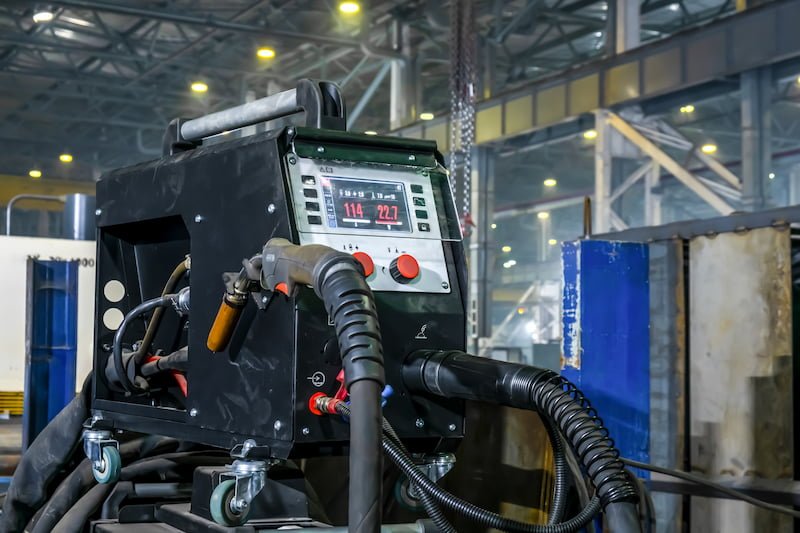
To understand what a MIG welder is, it helps to know the main parts. A MIG machine may look complicated at first, but most units work in the same basic way.
| Part | What it does |
|---|---|
| Power source | Provides the electric current needed to make the arc |
| Wire feeder | Pushed the welding wire at a steady speed |
| Welding gun | Directs the wire, gas, and current to the weld area |
| Ground clamp | Completes the electrical circuit by attaching to the metal workpiece |
| Gas cylinder | Stores shielding gas for clean welding |
| Drive rollers | Pull the wire from the spool and push it through the gun |
Some beginner machines also have simple controls, so you can adjust voltage and wire speed more easily. Advanced machines may offer more settings, but the basic idea is still the same.
Spool, wire, and tip
The wire sits on a spool inside or beside the machine. It moves through a liner, then through the contact tip at the end of the gun. The contact tip transfers electrical current to the wire.
One small but important detail beginners often miss is wire cleanliness. If the wire is rusty, dirty, or poorly stored, it can cause feeding problems and weak welds. Good wire handling makes a bigger difference than many people expect.
What materials can you weld with MIG?
MIG welding works well on many metals, but it is especially common for mild steel. It is also used on stainless steel and aluminum, although aluminum usually needs special setup and more care.
Here is a simple breakdown:
- Mild steel: Very common, easy to weld, good for beginners
- Stainless steel: Possible with the right wire and gas, but needs more care
- Aluminum: Weldable with MIG, but usually needs a spool gun or push-pull setup
- Thin sheet metal: Good choice if the settings are correct
- Thicker metal: Also possible, but may require more power and proper prep
One thing beginners should know is that metal thickness matters a lot. Thin metal can burn through fast if heat settings are too high. Thick metal may not fuse well if heat is too low. Matching the machine to the job is a big part of welding success.
When MIG is a smart choice
MIG welding is a strong choice when speed and ease matter. It is often used for car repair, metal fabrication, home projects, farm equipment, and general maintenance. If you want to make clean welds with less learning time, MIG is usually a good place to start.
It is also helpful when you need to weld long seams. The wire feed makes it easier to keep going without stopping too often. That is one reason many production shops use it every day.
Where MIG welding is used
MIG welding is popular because it fits many jobs. It works in small home garages and large industrial spaces. You will see it in auto shops, construction work, furniture making, metal art, and machine repair.
Some common uses include:
- Automotive body repair
- Frame and bracket fabrication
- Light manufacturing
- Home and farm repairs
- Metal gates, rails, and fencing
- Custom tools and shop projects
For beginners, MIG is attractive because it gives quick feedback. You can see the arc, hear the sound, and make adjustments fast. That makes learning easier than with some slower or more advanced welding methods.
Still, easy does not mean careless. Good MIG welding still depends on clean metal, correct settings, and steady hand movement.
Credit: fractory.com
Why many beginners start with MIG welding
If you are learning to weld, MIG often feels less difficult than other types. It has a simple trigger gun, automatic wire feed, and easier control of the weld pool. That makes the process less stressful for new users.
Key advantages
- Fast welding speed: The wire feeds continuously, so you can work quickly.
- Easy to learn: Many beginners pick up the basics faster than with stick or TIG welding.
- Clean welds: With the right gas and setup, the weld can look neat.
- Less cleanup: MIG usually creates less slag than stick welding.
- Versatile use: It works on many common metals and project types.
Important limits
MIG is not perfect for every job. It can struggle outdoors because wind can blow away the shielding gas. It also may not be the best choice for very dirty, rusty, or painted metal unless you clean the surface well first.
Another beginner mistake is thinking the machine does all the work. The welder helps, but you still need the right angle, travel speed, and setting. The machine is only one part of the result.
What makes a good MIG welder?
If you plan to buy a MIG welder, do not focus only on price. A cheap machine may look good at first, but it may not suit your projects. The best choice depends on the metal you want to weld, how often you will weld, and where you will use the machine.
Things to check before buying
- Power output: Make sure the machine can weld the thickness you need.
- Voltage range: More control helps with different metals and joint sizes.
- Duty cycle: This tells you how long the machine can weld before cooling down.
- Wire feed quality: Smooth feeding helps create better welds.
- Gas compatibility: Check whether the machine supports gas-shielded MIG, flux-cored, or both.
- Portability: A small machine is easier to move, but may have less power.
- Input power: Some models run on standard household power, while others need higher voltage.
One detail that many new buyers miss is future flexibility. A machine that only handles very light work may save money now, but it can limit you later. If you think your projects will grow, choose a welder with a little extra capacity.
Another smart point is wire size support. Different wire sizes help with different thicknesses. A machine that supports more than one wire size gives you more options.
Home use vs professional use
A home user may only need a small machine for repairs, hobby work, or basic fabrication. A professional user may need higher duty cycle, stronger wire feed, and better cooling. The right answer depends on how long you weld and how heavy the work is.
If you weld only for short projects, a compact machine can be enough. If you weld for many hours, build quality becomes much more important.
Common MIG welding settings and what they mean
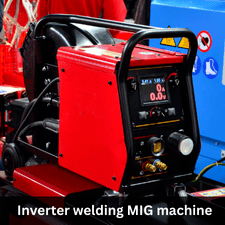
New welders often feel confused by settings. The good news is that MIG welding usually comes down to a few main controls. Once you understand them, the machine becomes much easier to use.
Credit: lincolntech.edu
Voltage
Voltage affects the arc length and heat level. More voltage usually means more heat and a wider weld. Too much voltage can cause spatter or burn-through. Too little can make the weld sit on top of the metal instead of joining it well.
Wire feed speed
This controls how fast the wire moves out of the gun. If the wire feed is too slow, the arc can become weak or unstable. If it is too fast, the wire may push into the puddle and make a rough weld.
Gas flow
Gas flow is often measured in cubic feet per hour or liters per minute. Too little gas can leave the weld exposed. Too much gas can create turbulence and actually weaken shielding. The correct level is usually moderate, not extreme.
Polarity
Polarity matters because it controls how the electric current flows. Solid wire MIG usually uses DCEP with shielding gas. Flux-cored wire may use a different setup depending on the wire type. Always check the wire instructions and machine guide.
A very common beginner mistake is changing several settings at once when a weld looks bad. A better method is to adjust one setting at a time. That way you can see what actually improved the result.
How MIG differs from other welding methods
MIG welding is only one welding process. It helps to know how it compares with other common methods so you can choose the right one.
| Welding method | Main idea | Best for |
|---|---|---|
| MIG | Wire feeds automatically with shielding gas | Fast work, beginners, general fabrication |
| Stick | Uses a coated electrode rod | Outdoor work, dirty metal, heavy repairs |
| TIG | Uses a non-consumable tungsten electrode and filler rod by hand | Precise, clean, high-quality welds |
MIG is often the easiest to learn. Stick is tougher in some ways but handles rough conditions better. TIG gives excellent control and appearance, but it usually takes more practice and more hand coordination.
If your main goal is practical metal joining with less learning time, MIG is often the best starting point.
Beginner mistakes that can ruin a MIG weld
Even a good machine will not give good results if the setup is wrong. Beginners often make the same mistakes again and again. Fixing these early can save time and frustration.
- Skipping surface prep: Rust, paint, oil, and dirt can all damage the weld.
- Wrong wire speed: This can cause popping, spatter, or weak fusion.
- Incorrect gun angle: Too much push or drag can change how the weld forms.
- Moving too fast: The weld may not penetrate enough.
- Moving too slow: The metal may burn through or build up too much heat.
- Ignoring gas issues: A leaking hose or empty cylinder can ruin the weld.
- Using the wrong wire for the job: Match the wire to the metal and process.
A small habit that helps a lot
Before every weld, take a short look at the contact tip, wire feed, gas hose, and work clamp. This takes only a few seconds, but it can prevent many problems. Small setup checks often matter more than people think.
Safety basics you should never skip
MIG welding is easier than some methods, but it is still hot, bright, and potentially dangerous. Safety should always come first.
- Wear a proper welding helmet with the right shade lens.
- Use gloves, long sleeves, long pants, and closed shoes.
- Work in a well-ventilated area.
- Keep flammable materials away from the welding zone.
- Make sure the work clamp has a strong connection.
- Do not look at the arc with unprotected eyes.
One safety point beginners sometimes miss is smoke control. Welding smoke may look light, but it can still be harmful over time. Good airflow and a clean work area are simple but important habits.
Credit: gowelding.org
So, what is a MIG welder in simple words?
In simple words, a MIG welder is a machine that joins metal by feeding a wire through a gun while shielding gas protects the weld. It is one of the easiest and most common welding tools for beginners and professionals alike.
It is popular because it is fast, flexible, and easier to learn than many other welding methods. Still, it works best when you choose the right settings, use clean metal, and understand the limits of the process.
If you want a practical welding method for home projects, repairs, or shop work, MIG is often a very smart choice.
FAQs
1. What is a MIG welder used for?
A MIG welder is used to join metal pieces together. It is common for car repair, fabrication, farm work, home repairs, and general metal projects.
2. Is MIG welding good for beginners?
Yes, MIG welding is one of the best methods for beginners. It is easier to learn because the wire feeds automatically and the process is simple to control.
3. Can a MIG welder work without gas?
Some MIG-style machines can use flux-cored wire without shielding gas. But standard MIG welding usually needs gas for clean, smooth welds.
4. What metal is easiest to weld with MIG?
Mild steel is usually the easiest metal to weld with MIG. It is common, forgiving, and works well with many beginner machines.
5. Why is my MIG weld full of spatter?
Spatter often comes from wrong settings, poor wire feed, dirty metal, bad gas flow, or incorrect polarity. Checking these one by one usually helps fix the problem.
