
Choosing the right drill bit can save time, protect your tools, and give you cleaner results. Many people buy one drill bit set and try to use it for everything. That often leads to broken bits, rough holes, and wasted effort.
The good news is that the types of drill bits are easier to understand than they first seem. Each bit is made for a certain material, hole shape, or job. If you know the difference, you can drill faster and with far less frustration.
This guide explains the main bit types, what each one is best for, and how to choose the right one for wood, metal, masonry, tile, plastic, and more. You will also learn a few small details that beginners often miss, but that make a big difference in real work.
What a drill bit really needs to match
Before looking at the different types of drill bits, it helps to understand what makes one bit better than another. A drill bit is not chosen only by size. The material, tip shape, and cutting angle matter just as much.
Here are the main things to match:
- Material being drilled — wood, metal, masonry, plastic, tile, or concrete.
- Hole size — small pilot holes need different control than large holes.
- Hole finish — some jobs need a clean edge, others just need speed.
- Tool type — a hand drill, drill press, or hammer drill changes what works best.
- Job goal — making a starter hole, enlarging an opening, or driving a fastener.
A common beginner mistake is assuming one expensive bit will work on everything. In reality, a “universal” bit is usually a compromise. It may work well enough on several materials, but it often will not excel in any one of them.
Main types of drill bits and what they do
Here are the most useful drill bits you will see in home shops, repair jobs, and construction work. Each one has a clear purpose.
| Drill bit type | Best for | Main advantage | Main limitation |
|---|---|---|---|
| Twist bit | General-purpose drilling, especially metal and plastic | Common, versatile, easy to find | Not ideal for very clean wood holes |
| Brad point bit | Wood | Clean entry, less wandering | Not for masonry or metal |
| Masonry bit | Brick, concrete, stone | Handles hard, abrasive surfaces | Needs proper drill and technique |
| Spade bit | Fast holes in wood | Quick and inexpensive | Rougher finish than other wood bits |
| Hole saw | Large diameter holes | Creates wide openings | Slower and needs more control |
| Forstner bit | Clean, flat-bottomed wood holes | Very neat finish | Slower and more demanding |
| Step bit | Thin metal and sheet materials | Makes several hole sizes with one bit | Not good for thick material |
| Auger bit | Deep holes in wood | Efficient chip removal | Usually used for wood only |
1. Twist drill bits
Twist bits are the most common of all types of drill bits. They have a spiral shape that helps remove material as the bit turns. You will find them in many tool kits because they are useful for general work.
They work well on metal, plastic, and sometimes wood. However, in wood they often leave a less clean hole than a brad point bit. Standard twist bits are usually made from high-speed steel, also called HSS.
Best use: General drilling, pilot holes, light metal work, plastic.
Tip: If you drill metal, use slow speed and steady pressure. Too much speed creates heat, and heat shortens bit life.
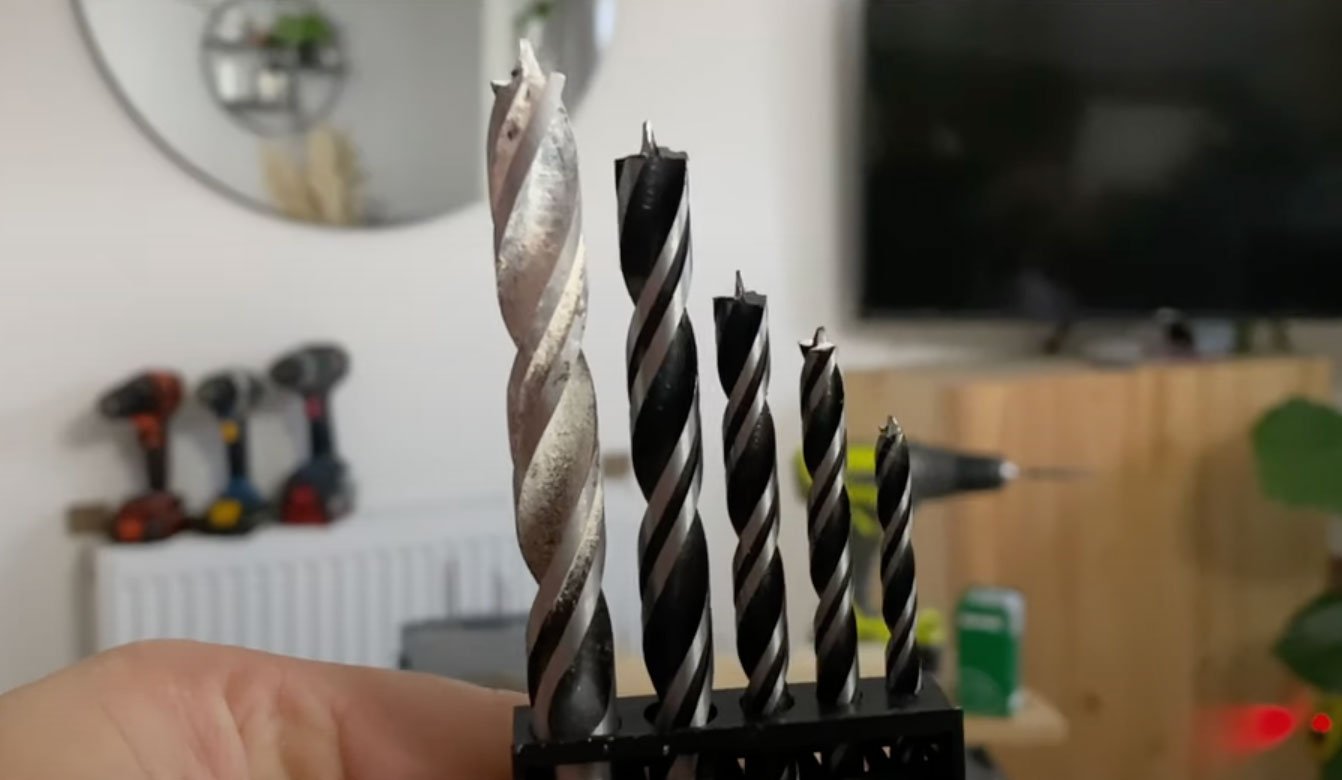
2. Brad point drill bits
Brad point bits are one of the best choices for wood. They have a sharp point in the center and small cutting edges on the sides. That center point helps the bit stay in place and prevents wandering when you start drilling.
This is one of the non-obvious details beginners often miss: a brad point bit not only makes cleaner holes, it also reduces the chance of the hole starting in the wrong spot. That is very useful when drilling visible furniture pieces or cabinet parts.
Best use: Clean holes in hardwood, softwood, plywood, and some wood composites.
Tip: Use a backing board under thin wood to reduce splintering on the exit side.
3. Masonry drill bits
Masonry bits are made for hard, abrasive materials like brick, block, stone, and concrete. They usually have a carbide tip, which helps them cut and survive rough surfaces. These bits are not designed like wood or metal bits.
If you try to drill masonry with the wrong bit, the tip can wear down fast or even fail. For harder jobs, a hammer drill is often used because it adds a pounding action as the bit turns.
Best use: Brick, concrete, stone, cinder block.
Tip: Let the bit do the work. Pressing too hard can slow drilling and overheat the tip. For deeper holes, pull the bit out now and then to clear dust.
For more on safe drilling practices in masonry work, the Occupational Safety and Health Administration offers useful safety guidance for job sites and tool use.
4. Spade bits
Spade bits are flat bits with a sharp point in the center and two cutting edges. They are fast and affordable, which makes them common for rough wood drilling. They are often used when speed matters more than a perfect finish.
These bits create large holes in wood, but the edges are usually rougher than those made by a Forstner bit. They are best when the hole will later be hidden by trim, wiring, or hardware.
Best use: Fast holes in framing lumber and general carpentry.
Tip: Start slowly to keep the bit from jerking. Once it bites, you can increase speed carefully.
5. Hole saws
Hole saws are not solid bits. They are circular cutting tools that cut a ring shape and leave a center plug. They are used when you need a large hole, such as for door hardware, pipes, or electrical boxes.
One thing many beginners do not expect is how much torque a hole saw can create. A large hole saw can catch suddenly if it meets resistance. Because of that, a steady grip and lower speed are important.
Best use: Large holes in wood, plastic, drywall, and some metals with the right saw.
Tip: Use a pilot bit if your hole saw has one, and stop often to clear chips.
6. Forstner bits
Forstner bits are made for clean, accurate wood holes. They can make flat-bottomed holes, overlapping holes, and very neat recesses. Cabinet makers and furniture builders often prefer them because the finish is so clean.
This is another detail beginners often miss: a Forstner bit is not about speed. It is about control and finish. It cuts more slowly than a spade bit, but the result is much better when appearance matters.
Best use: Hinges, dowels, flat-bottom holes, decorative woodwork.
Tip: Use a drill press when possible for the best accuracy, especially on larger bits.
7. Step bits
Step bits are cone-shaped bits with several cutting “steps.” Each step makes a larger hole. They are especially useful for thin materials like sheet metal and plastic panels.
They are popular in electrical work because one bit can create several hole sizes. This saves time and reduces the need to switch tools often. They also help make cleaner holes in thin material than some standard bits.
Best use: Thin metal, plastic, electrical panels, sheet goods.
Tip: Use cutting oil on metal to reduce heat and improve the cut.
8. Auger bits
Auger bits are designed for deep, fast drilling in wood. Their spiral shape helps pull chips out of the hole efficiently. They are often used in larger construction or timber jobs.
They are especially useful when you need a deep hole and want good chip removal. That chip-clearing ability is one reason auger bits can work better than some shorter wood bits in thick material.
Best use: Deep holes in timber, framing wood, and heavy woodwork.
Tip: Keep the bit straight. Auger bits work best when they enter at the correct angle from the start.
9. Countersink bits
Countersink bits are used to create a cone-shaped opening at the top of a hole. This lets a screw head sit flush with the surface or below it. They are often used in woodworking, cabinetry, and finishing work.
People sometimes skip this step and then wonder why screws split wood or stick out. A countersink bit solves that problem and improves the final look.
Best use: Screw holes in wood and some plastics.
Tip: Match the countersink angle to the screw head for the best fit.
10. Glass and tile bits
Glass and tile bits are made to drill brittle surfaces without cracking them. They often have a special tip shape that cuts slowly and carefully. These are useful in bathrooms, kitchens, and other finishing work.
This is one of the most common places where beginners make expensive mistakes. A standard wood or metal bit can chip tile very quickly. A special bit, used at low speed with light pressure, gives a much better result.
Best use: Ceramic tile, glass, and some delicate hard surfaces.
Tip: Use masking tape to help keep the bit from slipping at the start.
How to choose the right drill bit for the job
The best way to choose from the many types of drill bits is to start with the material. Then think about hole size, finish, and tool type. This order keeps the choice simple and avoids guesswork.
- Identify the material — wood, metal, masonry, tile, or plastic.
- Choose the bit family — twist, brad point, masonry, step, and so on.
- Check hole size — standard sizes, large holes, or pilot holes.
- Think about finish quality — rough, clean, flat-bottomed, or flush.
- Match the tool — hand drill, hammer drill, or drill press.
If you only remember one thing, remember this: material comes first. A perfectly sharp bit is still the wrong choice if it is designed for the wrong surface.
Credit: realhomes.com
Wood
For wood, brad point bits are usually the best for clean holes. Spade bits are good when speed matters. Forstner bits are best when appearance matters. Auger bits are useful for deep holes in thick lumber.
Metal
For metal, standard twist bits are often the first choice. Step bits work well in thin sheet metal. The key points are slow speed, cutting fluid when needed, and steady pressure.
Masonry and concrete
For masonry, use masonry bits. If the hole is deep or the material is hard, a hammer drill helps a lot. Do not use a wood bit here. It will wear out quickly and may not cut at all.
Tile and glass
Use tile or glass bits only. Drill slowly. Keep the pressure light. If the surface is very smooth, starting with tape can help reduce slipping.
Plastic
Plastic can crack if the bit is too aggressive. Twist bits usually work, but slower speed is important. In some cases, a step bit gives a cleaner result on thin plastic sheets.
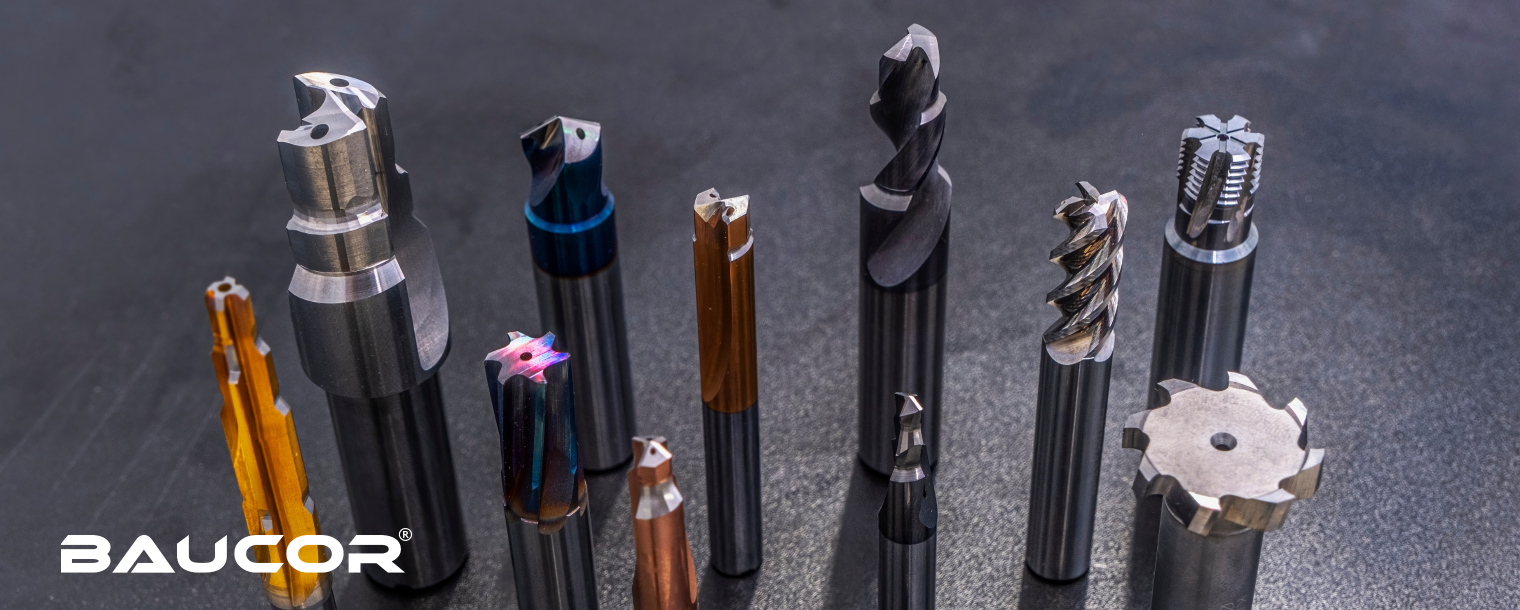
Bit material matters more than many people think
The shape of a bit is important, but the material of the bit matters too. This is one of those details that beginners often overlook.
- High-speed steel (HSS) is common, low cost, and good for general drilling.
- Black oxide coating helps reduce friction and improves durability a little.
- Titanium coating can increase wear resistance, but coating alone does not make a weak bit strong.
- Carbide-tipped bits are often used for masonry and tough materials.
- Cobalt bits are a smart choice for harder metals because they handle heat better.
A useful rule is this: do not judge a bit only by the coating. Some buyers focus on shiny color and ignore the base metal. The base material is usually more important than the surface finish.
Credit: baucor.com
Sizes, shank styles, and compatibility
A drill bit can be the right type but still not fit your tool properly. That is why the shank matters.
The shank is the end that fits into the drill chuck. Most hand drills use round or hex shanks. Some larger industrial bits may have special shank designs for stronger grip.
Size also matters in a practical way. Small bits can break if pushed hard. Large bits need more torque, so a weak drill may struggle. If your drill stalls often, the problem may be the drill itself, not the bit.
Common compatibility mistakes
- Using a masonry bit in a standard drill for heavy concrete and expecting fast results.
- Using a large hole saw with a light-duty drill that cannot handle the torque.
- Using a wood bit in metal and blaming the drill when the bit burns.
- Ignoring shank size and buying bits that do not fit the chuck well.
Another small but important point: a loose bit in the chuck can cause poor drilling, wobble, and uneven holes. Always tighten the chuck fully before starting.
Speed, pressure, and cooling make a big difference
Even the best drill bit can perform badly if used the wrong way. Speed and pressure affect cut quality and bit life.
In general, harder material needs slower speed. Softer material can often be drilled faster. Metal usually needs lower speed than wood. Masonry usually needs controlled pressure and the right drill mode.
Too much pressure is a common beginner mistake. More force does not always mean faster cutting. Sometimes it only creates heat and wear. Let the bit cut instead of forcing it.
Cooling also matters. Metal drilling can benefit from cutting fluid or oil. This reduces heat and helps the bit last longer. In masonry, the key is not oil but dust clearing. Pulling the bit out every now and then helps remove dust from the hole.
How to build a practical drill bit set
You do not need every bit type at once. A smart starter set covers most common jobs without wasting money.
- Standard twist bits in several sizes for general use.
- Brad point bits for wood projects.
- Masonry bits for wall work.
- One or two step bits if you work with sheet metal or panels.
- A hole saw set if you need larger holes often.
If you work mostly in furniture, add Forstner bits. If you do electrical or plumbing tasks, a step bit and hole saws become more valuable. If you drill concrete often, invest in better masonry bits and a proper hammer drill.
What beginners often buy too early
Many people buy huge mixed sets with many sizes but poor quality. These sets look impressive, but they may include bits you rarely use and skip the ones you really need. A smaller set of better bits is often the smarter choice.
Another mistake is buying specialty bits before learning the basics. A good twist bit, a solid wood bit, and a proper masonry bit solve more problems than a drawer full of random tools.
How to tell when a drill bit is worn out
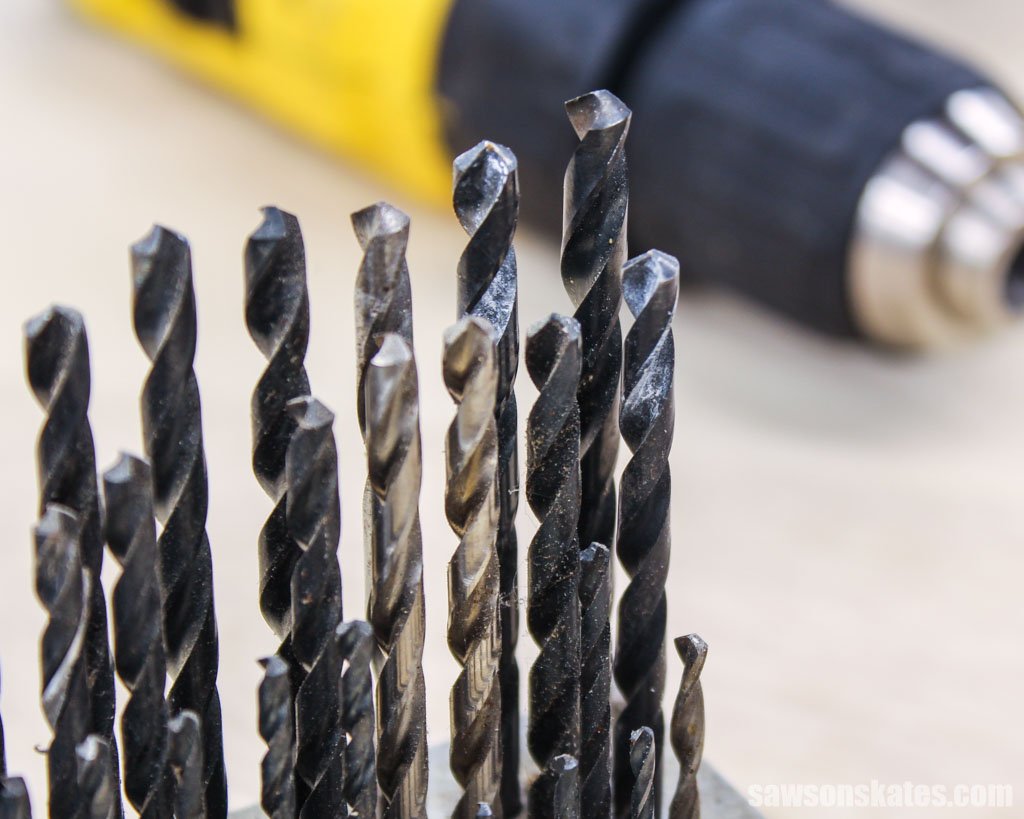
A dull bit does not just cut slower. It can also burn the material, wander off line, and make your drill work much harder.
Signs a bit may be worn out:
- It takes much longer to cut than before.
- It makes more heat and smoke or burning smell.
- It starts wandering or slipping.
- The hole edge looks torn or rough.
- The tip looks rounded, chipped, or damaged.
Some bits can be sharpened, especially certain metal and wood bits. But low-cost bits are often cheaper to replace than to restore. If a bit is damaged badly, replacing it is usually the best option.
Credit: sawsonskates.com
Simple rules that make drilling easier
Here are a few practical habits that improve results with most types of drill bits:
- Mark the hole clearly before drilling.
- Use a center punch on metal to stop the bit from slipping.
- Start at a slow speed.
- Keep the drill straight unless the job needs an angle.
- Clear chips and dust during deep drilling.
- Do not force the bit when it stops cutting well.
These habits may seem small, but they save a lot of trouble. Clean setup and patient drilling often matter more than raw power.
Choosing the right bit with confidence
The right drill bit is not about buying the most expensive tool. It is about matching the bit to the material and the result you want. Once you understand the main types of drill bits, the choice becomes much easier.
For wood, think brad point, spade, Forstner, or auger. For metal, start with twist bits or step bits. For masonry, choose masonry bits and the right drill mode. For tile and glass, use special bits and slow speed. For large holes, use hole saws.
The biggest win comes from using the correct bit with the correct speed and pressure. That simple habit improves hole quality, protects your tools, and makes every project smoother.
FAQs
What are the most common types of drill bits?
The most common types are twist bits, brad point bits, masonry bits, spade bits, hole saws, Forstner bits, step bits, and auger bits. Each one is designed for a different material or hole style.
Can one drill bit work on wood, metal, and masonry?
Some general-purpose bits can handle more than one material, but they are usually not the best choice for every job. A bit made for the right material gives cleaner results and lasts longer.
What drill bit should I use for clean holes in wood?
Brad point bits are usually the best choice for clean, accurate holes in wood. Forstner bits are better when you need a flat-bottomed hole or a very neat finish.
Why do my drill bits break so often?
Common reasons include using the wrong bit for the material, drilling too fast, applying too much pressure, or using a dull bit. Poor alignment and loose clamping can also cause damage.
Do coated drill bits last longer?
Sometimes, but the base material matters more than the coating. A good HSS, cobalt, or carbide-tipped bit will usually perform better than a low-quality bit with a fancy coating.
