
If you want to know how to use a chainsaw without getting hurt, the most important thing is not speed. It is control. A chainsaw is a powerful tool, and even a small mistake can cause a serious injury fast. The good news is that beginners can use one safely if they learn the right habits from the start.
This guide gives you a simple step-by-step method. You will learn how to prepare, how to hold the saw, how to cut with better control, and how to avoid the most common mistakes. You will also learn safety rules that experienced users never ignore, because those rules matter even more when the job feels easy.
Before you start, remember one key idea: safe chainsaw use is not only about the cut itself. It begins before you pull the starter rope and continues until the chain has fully stopped. That full process matters.
Get the right safety gear before you start
Before you learn how to use a chainsaw, get dressed for the job. Many beginners focus only on the saw, but personal protective equipment is just as important. It can reduce the damage if something goes wrong.
Wear these items every time:
- Helmet with face shield or safety glasses
- Hearing protection such as ear defenders or earplugs
- Cut-resistant gloves for better grip and hand protection
- Chainsaw chaps or trousers made for cutting protection
- Strong boots with slip-resistant soles and toe protection
- Close-fitting clothes that do not hang loose
Loose sleeves, scarves, jewelry, and baggy clothing can catch in the chain or brush. That is a risk beginners often miss because it seems harmless. Good safety gear should fit well and should not block your movement.
Also, check your work area. Remove trip hazards, mark the cutting zone, and keep children, pets, and bystanders far away. A chain saw job should not have surprises around you.
Inspect the chainsaw before you use it
Never start cutting without a quick inspection. This step takes only a few minutes, but it can prevent big problems. A saw that is loose, dull, or leaking fuel is harder to control and more dangerous to use.
Look at these parts before every job:
- Chain tension — it should be snug, but still move by hand when the saw is off
- Chain sharpness — a dull chain forces you to push harder
- Chain brake — make sure it engages and releases properly
- Bar and chain oil — the saw needs proper lubrication
- Fuel level — use the correct fuel mix if your model requires one
- Throttle and safety lock — both should move smoothly
- Nuts, screws, and covers — tighten anything loose
A dull chain is one of the biggest beginner mistakes. Many people think a saw must be faulty if it cuts slowly. In reality, the chain may simply need sharpening. A sharp chain cuts faster, stays more stable, and reduces kickback risk.
If your saw has been unused for a long time, read the manual first. For trusted general safety guidance, the NIOSH chainsaw safety page is a useful authority source.
Learn the basic parts and controls
Before you cut anything, learn the saw itself. Beginners often skip this and then panic when the tool reacts in a way they did not expect. A chainsaw becomes much easier to manage when you know what each control does.
Important parts to know
- Guide bar — the metal bar that guides the chain
- Chain — the cutting loop with sharp teeth
- Front handle — used with your left hand for control
- Rear handle — where your right hand usually stays
- Throttle trigger — controls speed
- Chain brake — stops the chain quickly in an emergency
- Starter handle — used to start the engine on gas models
- Oil cap and fuel cap — for lubrication and fuel
Best grip position
Hold the front handle with your left hand and the rear handle with your right hand. Wrap your thumbs around the handles. This is important because a full grip gives you more control if the saw moves suddenly.
Keep both feet flat and balanced. Do not stretch too far. If you cannot reach the cut comfortably, move your feet instead of leaning with your arms. That simple habit helps prevent slips and sudden loss of control.
Start the chainsaw in a safe way
Starting the saw the wrong way can be risky. The chain should not be able to hit anything while the engine starts. Keep the saw on the ground or use another stable starting method recommended by the manufacturer.
Credit: vecteezy.com
Safe ground-start method
- Place the saw on level ground.
- Engage the chain brake.
- Keep the bar and chain away from anything around you.
- Put your right foot through the rear handle if needed for stability.
- Hold the front handle firmly with your left hand.
- Pull the starter rope according to the manual.
- Let the engine warm up briefly before cutting.
Do not drop-start a chainsaw unless the manufacturer specifically allows it and you have proper training. Beginners should avoid it. It looks quick, but it also reduces stability and raises the chance of injury.
After the saw starts, check that the chain does not move at idle. If it does, stop and have it adjusted. A moving chain when the throttle is not pressed is a serious safety problem.
Position your body correctly before every cut
Your body position matters as much as your cutting technique. Many people ask how to use a chainsaw safely and expect a tool tip. But the real answer often comes down to posture and balance.
Stand with your feet shoulder-width apart. Keep your knees slightly bent. Stay to the left side of the saw when possible, not directly behind the bar. This gives you better control and keeps your body out of the main cutting line.
Keep the saw close to your body, but never let the bar touch your legs or feet. If you need to cut at an awkward angle, stop and reposition the wood or yourself. Do not twist your back for a small shortcut. That is how control breaks down.
What beginners often miss
One overlooked point is fatigue. A tired user holds the saw less steadily and reacts more slowly. If the job is long, take short breaks. Also, wet hands, cold weather, and poor footing can all change how the saw feels. These small conditions matter more than most beginners expect.
Make your first cuts with simple control
Start with small, easy cuts before you attempt larger work. A safe first cut is usually on a stable piece of wood at a comfortable height. Do not begin by cutting a log under tension or a large tree limb that can move suddenly.
Basic cutting steps
- Check that the area is clear.
- Hold the saw with both hands.
- Bring the engine to a steady cutting speed.
- Place the lower part of the bar near the wood.
- Let the chain do the work. Do not force it.
- Keep your stance balanced as the cut continues.
- Release the throttle and wait for the chain to stop after the cut.
One of the most useful beginner lessons is this: do not press hard. A sharp chain should cut with moderate pressure. If you force the saw, you may lose balance, damage the chain, or create kickback.
Cut slowly and watch the wood. If the saw starts to bind, stop and look at the tension in the material. Some wood pieces close on the bar as the cut deepens. This is common, and it needs a careful response, not more force.
Use the right part of the bar
The lower part of the bar, called the pulling or cutting zone, is usually easier for beginners to control. It tends to pull the saw into the wood in a more stable way. The upper tip area is more dangerous because it can create kickback if it touches wood or another hard object.
That tip zone is one of the least obvious risks for beginners. A saw can seem calm and steady during most of the cut, then jump suddenly if the tip makes contact. This is why expert users treat the tip with respect at all times.
Avoid kickback and other common mistakes
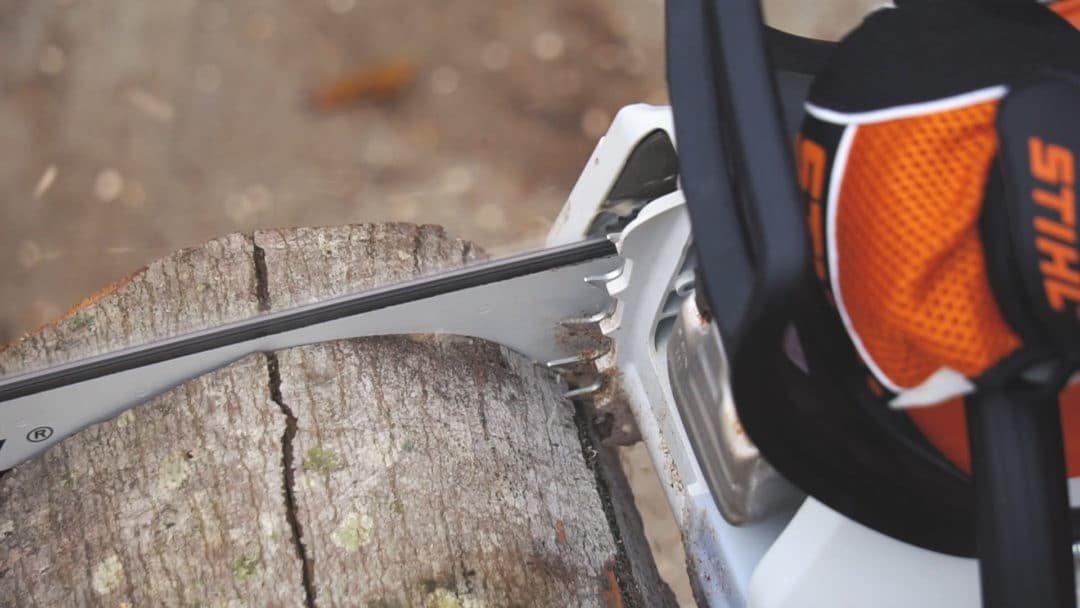
Kickback is one of the fastest ways a beginner can get hurt. It happens when the upper tip of the guide bar touches something or gets pinched in a way that forces the saw backward and upward. The movement can be sudden and violent.
To reduce kickback risk:
- Keep both hands on the saw
- Do not cut with the tip unless you know the correct method
- Use a saw with a low-kickback chain if possible
- Keep the chain sharp and properly tensioned
- Stand to the side, not directly in line with the bar
- Do not rush or reach beyond your balance
Other common beginner mistakes include cutting above shoulder height, using a dull chain, working on unstable ground, and trying to cut wood that is under pressure without a plan. Each mistake makes the saw harder to control.
Another hidden mistake is cutting while distracted. A text message, a conversation, or even a quick glance away can ruin your focus. Chainsaw work needs full attention.
Credit: wilkerdos.com
Handle different cutting situations with care
Not every cut is the same. A safe method for one job may not work for another. Beginners should learn the basic ideas behind common cutting situations before trying them.
Cutting logs on the ground
If a log is on the ground, check how it is supported. If the log is fully supported, the saw may pinch near the end of the cut. If only one part is supported, the wood can split or roll. Cut slowly and stay ready for movement.
Cutting branches
Branches can spring back when cut. This is called a tension release. Never stand where a branch can whip into your body. Plan the cut so the branch cannot strike you after it is free.
Cutting overhead
Beginners should avoid overhead cuts whenever possible. They are harder to control and more tiring. If a cut must be made above shoulder level, it is usually safer to use another method or get help from an experienced person.
| Situation | Main risk | Simple safety move |
|---|---|---|
| Log on the ground | Pinching or rolling | Check support before cutting |
| Branch cutting | Branch spring-back | Stand out of the rebound path |
| Small trimming job | Touching the tip by mistake | Keep the bar tip away from hard surfaces |
| Heavy wood under tension | Sudden release | Study how the wood is loaded before starting |
Shut down and store the saw the right way
Safety does not end when the cut is done. A moving chain can still hurt you, so you must shut down the saw carefully. Let go of the throttle and wait until the chain fully stops before moving or setting the saw down.
After use, do this:
- Turn off the engine.
- Engage the chain brake if needed.
- Let the saw cool before refueling or storing it.
- Clean dirt and sawdust from the bar, chain, and air filter area.
- Check the chain for damage or dull teeth.
- Store the saw in a dry, secure place away from children.
Never store a hot saw near fuel containers or near dry material that can catch fire. If the saw is gas-powered, follow the manufacturer’s fuel storage advice closely.
How beginners can build skill safely
The safest way to improve is to practice slowly and stay within your level. Start with simple jobs such as small branches or short cuts in stable wood. As your confidence grows, you can handle more difficult tasks, but only if your habits stay strong.
Here are a few smart ways to improve:
- Practice your stance before you cut
- Learn the feel of a sharp chain versus a dull one
- Watch the wood for tension before making a cut
- Work with a more experienced person nearby if possible
- Stop when you feel rushed or tired
One thing beginners often miss is that confidence and safety are not the same. A calm, slow user is usually safer than a fast one. Good chainsaw work is controlled work.
Credit: backyardboss.net
Final safety mindset
If you remember only one thing about how to use a chainsaw, remember this: the saw is only one part of the job. Your gear, your stance, your focus, and your patience matter just as much. A chainsaw rewards careful users and punishes careless ones.
Use the right protection. Inspect the saw every time. Keep both hands on the tool. Stay out of the kickback zone. Work slowly. And never cut when you are tired, distracted, or unsure. Those habits make a bigger difference than any single trick.
FAQs
1. What is the safest way for a beginner to hold a chainsaw?
Use both hands at all times. Put your left hand on the front handle and your right hand on the rear handle. Keep your thumbs wrapped around the handles for a firm grip. Stand with good balance and keep the saw close to your body.
2. Can I use a chainsaw without special protective gear?
No. You should always wear proper protective gear. At minimum, use eye and face protection, hearing protection, gloves, strong boots, and chainsaw chaps or protective trousers. This gear can greatly reduce injury if the saw slips or kicks back.
3. How do I know if my chainsaw chain is too loose?
If the chain hangs too far away from the bar or looks sloppy, it may be too loose. A properly adjusted chain should stay snug but still move by hand when the saw is off. If you are not sure, check the manual before cutting.
4. Why does my chainsaw feel like it is pulling hard into the wood?
This often means the chain is sharp and the saw is working normally, but it can also mean you are pressing too hard or cutting at the wrong angle. Let the chain do the work. If the saw still feels difficult, the chain may be dull or the wood may be pinching the bar.
5. What should I do if kickback happens?
Stay calm and keep a firm grip if you can. Kickback happens fast, so prevention is the real goal. Use proper stance, avoid the tip of the bar, and keep the chain sharp. If you experience repeated kickback, stop and review your technique before cutting again.
