
If you have ever pulled a Stihl starter rope again and again with no result, you know how frustrating it feels. The good news is that most starting problems are not serious. They come from small mistakes, like using the wrong choke setting, not priming enough, or forgetting a simple safety step.
This guide shows you how to start Stihl leaf blower models in a clear and easy way. It works for many common Stihl gas leaf blowers, including handheld and backpack types. Some models are a little different, but the basic process is very similar. If you learn the right starting steps once, you can save time every season.
You will also learn what to do when the blower will not start, what common mistakes to avoid, and how to make startup easier the next time. Before you pull the cord, take a minute to check the blower and the work area. That small habit can prevent damage and make the machine start faster.
Before You Pull the Starter Rope
A Stihl blower starts best when the machine is prepared the right way. Many people rush to pull the starter rope, but the blower needs a few quick checks first. These checks are simple, but they matter a lot.
Check the fuel mix
Most Stihl gas leaf blowers need fresh fuel mixed with 2-stroke engine oil. Old fuel is a common reason for hard starting. Gasoline that has sat too long can lose power and make the engine difficult to ignite. If your blower has not been used for a while, drain old fuel and refill it with a fresh mix that matches the Stihl recommendation for your model.
Non-obvious tip: Fuel problems often look like starter problems. If the rope pulls normally but the engine never catches, stale fuel is one of the first things to suspect.
Inspect the blower quickly
Look at the air filter, spark plug area, and fuel tank cap. Make sure nothing is loose or broken. Also check that the blower tube is attached correctly. On some models, a missing or badly fitted tube can affect airflow and starting behavior.
If the air filter is dirty, clean it before starting. A clogged filter can make the engine run rich and harder to start. A clean machine usually starts with less effort.
Set the blower on a flat surface
Place the blower on level ground before starting. A stable position helps the engine get fuel properly and keeps the unit from moving when you pull the rope. Keep the nozzle pointed away from people, pets, cars, and windows.
Use the right safety setup
Wear safety glasses and sturdy shoes. If you are using a backpack model, make sure the straps are secure but not tight. Keep loose clothing away from the intake and moving parts. Never try to start the blower indoors or in a closed garage because exhaust fumes are dangerous.
For general small-engine safety, Stihl also provides useful owner information on its official site: Stihl USA.
The Basic Startup Sequence
Most Stihl leaf blowers follow a simple starting pattern: fuel, choke, pull, then warm up. The exact labels may vary a little, but the process usually stays the same. If you use the correct order, starting becomes much easier.
1. Move the control to the correct setting
Find the master control or stop switch. Make sure the blower is in the start position, not off. Some Stihl models have a single lever or switch that controls stop, choke, and run. Others use a more traditional choke control.
If your blower has a primer bulb, press it several times until you see fuel moving through the line. Usually, a few presses are enough. Do not flood the bulb with too many presses unless your manual says otherwise.
2. Use full choke for a cold engine
When the engine is cold, set the choke to the full choke position. This gives the engine the rich fuel mixture it needs for the first ignition. Cold engines usually need more help than warm ones.
Common mistake: Many beginners switch to half choke too soon. If the engine has not tried to fire yet, full choke is often the right start.
3. Pull the starter rope gently at first
Pull the starter rope with a steady motion until you hear the engine try to fire. This may happen after a few pulls. Do not yank wildly. A strong, controlled pull is better than a rough one.
When the engine coughs or briefly pops, that is a sign it is ready for the next step.
4. Move to half choke or run mode
After the engine gives that first pop, switch from full choke to half choke or the next start position if your model uses one. Pull the rope again until the engine starts. Once it runs, let it warm up briefly, then move to run mode.
On some Stihl models, this step is automatic through the control lever. On others, you must move the choke by hand. The main idea is the same: full choke for cold start, then less choke after the first ignition.
5. Let it warm up before using full power
After startup, allow the engine to run for a short time before using the blower at full throttle. A brief warm-up helps the engine run smoother and reduces stalling. In cold weather, this matters even more.
How to Start a Warm Stihl Leaf Blower
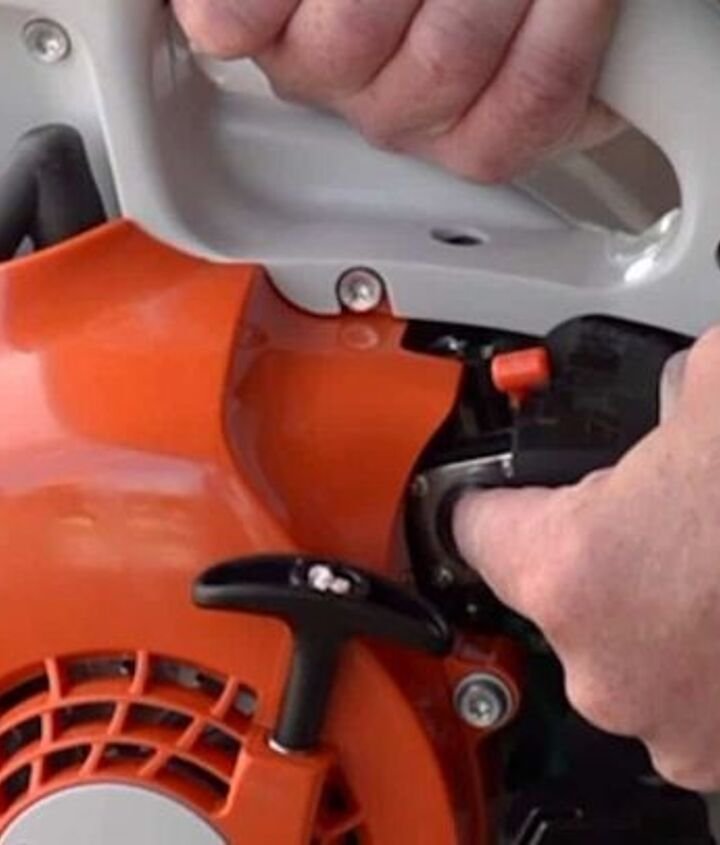
A warm blower usually starts more easily than a cold one. If you just used it and stopped for a few minutes, you may not need full choke at all. Starting a warm engine the same way as a cold engine is a common mistake.
Credit: upgradedhome.com
Use a lighter choke setting
For a warm start, try the run or half-choke setting first, depending on your model. A warm engine already has heat in the cylinder, so it does not need as much fuel enrichment.
If the blower does not start after a few pulls, move through the normal start sequence instead of continuing to yank the rope. That saves wear on the starter system and often solves the problem faster.
Do not flood the engine
Too much priming or repeated pulling with full choke can flood the engine. When this happens, the engine may smell strongly of fuel and refuse to start. If you think the blower is flooded, switch to the run position and pull several times to clear the extra fuel. Then try starting again.
Non-obvious tip: A flooded engine is often caused by impatience, not a broken machine. Slow, correct steps usually work better than repeated hard pulls.
Step-by-Step Guide for a Cold Start
If you want a simple process, use this sequence for a cold Stihl leaf blower. This method fits many common models and is a practical starting point when the machine has not been used for hours or days.
- Place the blower on a flat, open surface.
- Check that the fuel mix is fresh and the cap is secure.
- Set the master control to the start position.
- Press the primer bulb a few times if your model has one.
- Move the choke to full choke.
- Pull the starter rope until the engine briefly fires.
- Move the choke to half choke or the next start position.
- Pull again until the engine starts.
- Let the blower warm up for a short time.
- Move to run mode and begin normal use.
This order is simple, but each step matters. If you skip the choke stages or start pulling before the primer is ready, the engine may not respond well.
Model Differences You Should Know
Not every Stihl blower starts in exactly the same way. The brand makes several types of leaf blowers, and the controls may look different from one model to another. Still, the same basic principles apply.
Handheld blowers
Handheld Stihl blowers are usually lighter and easier to start. Their controls are often more compact, which means it is easy to miss the correct lever position. Read the symbols near the choke and stop switch carefully before starting.
Backpack blowers
Backpack models can feel a little different because you wear the engine on your back. The starting process is still simple, but make sure the unit is secure before you pull the cord. A loose backpack blower may shift during startup and make the rope harder to pull cleanly.
Easy2Start models
Some Stihl machines use an Easy2Start system. These models are designed to reduce pulling effort. Even so, the control steps still matter. You still need the right choke position, the right fuel mix, and a stable starting stance. Easy starting does not mean no preparation.
| Situation | Best starting approach | Common error |
|---|---|---|
| Cold engine | Full choke, then half choke after first fire | Starting in run mode too soon |
| Warm engine | Run or lighter choke setting first | Using full choke and flooding the engine |
| After storage | Check fuel freshness and air filter | Using old fuel from last season |
| Hard start | Inspect spark plug, fuel line, and filter | Pulling harder without checking the basics |
Common Mistakes That Stop a Stihl Blower from Starting
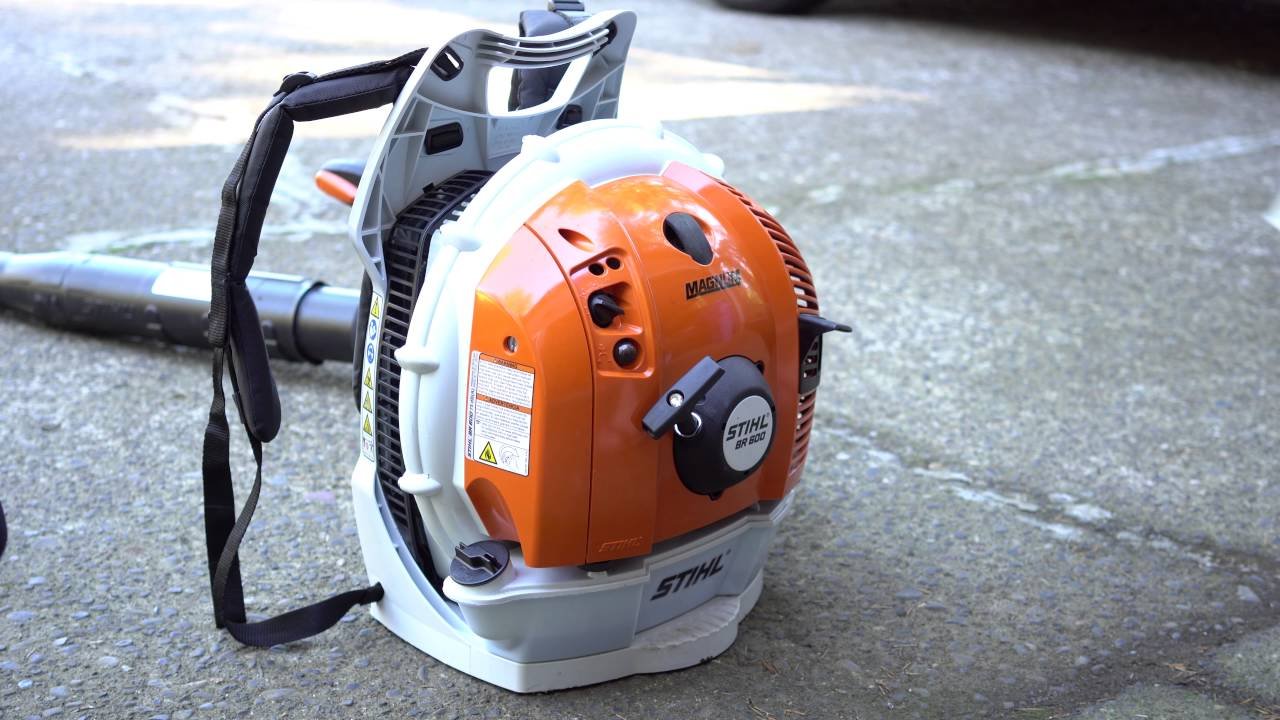
Many starting issues are not serious breakdowns. They come from small mistakes that are easy to fix. If your blower will not start, look for these problems first.
Credit: powertoolstoday.com
Using old fuel
Fuel that is too old can cause weak combustion or no combustion at all. This is one of the most common reasons a Stihl blower refuses to start after storage. Fresh fuel often solves the issue faster than any repair.
Wrong choke position
Using the wrong choke setting is another big reason for starting trouble. Full choke is useful for cold start, but not always for warm start. If the engine is already warm, too much choke can make starting worse.
Dirty air filter
A dirty filter can choke the engine in a different way. The blower may crank, sputter, or fail to keep running. Cleaning the filter is a quick maintenance task that improves both starting and performance.
Flooded engine
If you press the primer too much or keep pulling with full choke after several failed attempts, the engine can flood. When that happens, stop and let the machine clear before trying again.
Loose spark plug cap
Sometimes the issue is as simple as a spark plug cap that is not fully attached. This small detail is easy to overlook. A quick visual check can save a lot of frustration.
How to Make Startup Easier Every Time
The best way to solve starting trouble is to prevent it. Good habits make your blower easier to start, more reliable, and longer lasting.
Use fresh fuel and store it properly
Mix only the amount of fuel you expect to use in a reasonable time. Store it in a clean, approved container. Old mix loses quality and makes startup harder. Many owners notice better results after simply switching to fresh fuel.
Clean the air filter on a regular schedule
A clean filter helps the engine breathe. It also improves starting after storage. If you use the blower often, check the filter more often than you think you need to. Dust builds up quickly on blower equipment.
Run the engine before long storage
Before storing the blower for the season, use it with proper maintenance and fresh fuel or prepare it according to the owner manual. That helps reduce problems next time. A blower that is stored carelessly often becomes a hard starter later.
Useful insight: Many “starting” problems are really “storage” problems. The machine may be fine today, but poor storage can cause next season’s failure.
Know your specific model
Stihl makes several blower families, and each one may have small control differences. Take a moment to learn where the choke, primer, and stop switch are on your model. That knowledge makes startup faster every time and prevents accidental misuse.
What to Do If It Still Will Not Start
If you have followed the correct steps and the blower still will not start, do not keep pulling endlessly. At that point, a more careful check is better than force.
Check the spark plug
Remove the spark plug and inspect it if you know how to do this safely. A dirty, worn, or damaged plug can stop ignition. If the plug looks bad, replacing it is often a smart first repair.
Look at the fuel system
Check the fuel filter, fuel lines, and tank for cracks or blockages. Small leaks or clogged lines can prevent fuel from reaching the engine. These issues are not always visible at first glance, so examine them closely.
Review the choke and stop switch
Make sure the choke is moving correctly and the stop switch is not stuck in the off position. A faulty control can look like a major engine problem when it is really a simple switch issue.
Ask for service when needed
If basic checks do not solve the issue, a technician can test ignition, compression, and carburetor condition. That is the right move when you have already checked the simple causes. Do not keep forcing the starter rope, because that can damage the starter system.
Simple Startup Routine You Can Follow Every Season
Here is an easy routine that helps most owners start a Stihl leaf blower without stress:
- Use fresh fuel.
- Check the air filter.
- Set the blower on flat ground.
- Choose the correct choke setting.
- Prime only as much as needed.
- Pull with steady motion, not force.
- Switch from full choke after the first fire.
- Warm up the engine before full use.
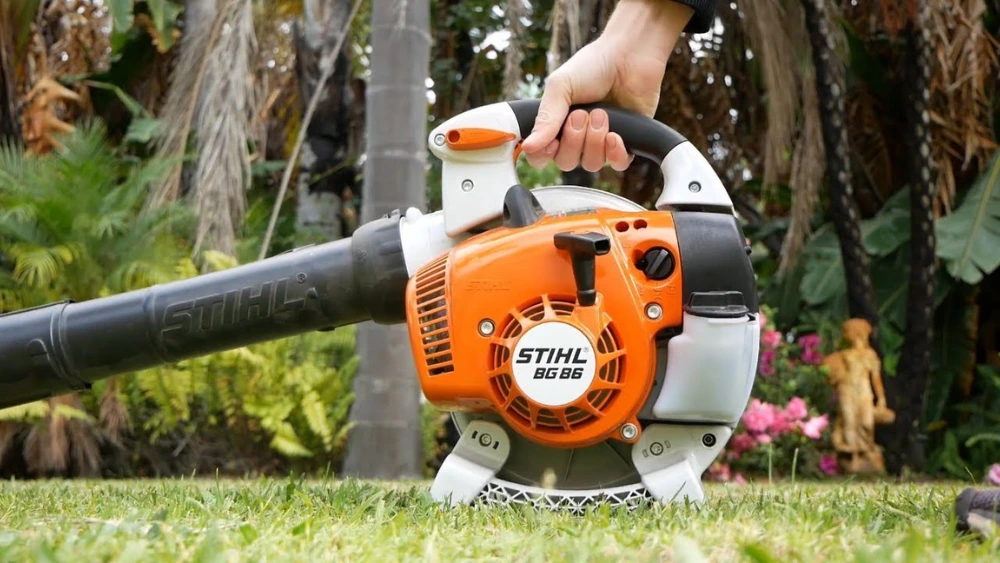
This routine may feel small, but it solves many startup problems before they begin. Most people who struggle with blowers are not doing one huge thing wrong. They are missing one or two small steps.
Credit: dailytoolfix.com
FAQs
1. Why does my Stihl leaf blower not start after sitting all winter?
Old fuel is usually the first thing to check. Fuel can go bad during storage and make the engine hard to start. Also check the air filter, spark plug, and fuel lines before trying again.
2. Do I need to use the choke every time I start my Stihl blower?
No. Use full choke for a cold engine, but a warm engine often needs a lighter choke setting or no choke at all. Using the wrong setting can flood the engine or make starting harder.
3. How many times should I press the primer bulb?
Usually only a few presses are needed. Pressing too many times can flood the engine. If your model manual gives a number, follow that instruction first.
4. What should I do if the blower starts and then dies?
Move the choke from full choke to half choke or run mode, depending on the model. Then let it warm up for a short time. If it still dies, check for stale fuel or a dirty air filter.
5. Can I start a Stihl leaf blower indoors or in a garage?
No. Never start it indoors or in a closed space. Gas engines make dangerous exhaust fumes. Always start and run the blower in a well-ventilated outdoor area.
