
Cutting down a tree is not just about starting a saw and pushing forward. It is a job that can turn dangerous very fast if you do not plan it well. A tree can fall in the wrong direction, split while cutting, or trap the saw if the wood closes around the bar. That is why learning how to cut down a tree with a chainsaw the right way matters so much.
This guide walks you through the full process in simple steps. You will learn how to check the tree, clear the area, make the cuts, and avoid common mistakes. You will also see what safety gear to use and when it is smarter to stop and call a professional.
If you are a beginner, do not rush. Good tree cutting is slow, careful work. The goal is not speed. The goal is control.
Before You Start: Know When Not to Cut
Not every tree should be cut by a homeowner. Some trees are too large, too close to buildings, or too unstable. A strong wind, dead branches high in the crown, or a tree leaning over wires can make the job much more dangerous.
One important thing beginners often miss is that the tree’s weight distribution matters more than its lean alone. A tree may look like it leans left, but heavy branches on the right can make it fall the other way. Another overlooked detail is the ground. Soft or uneven ground can change how you move and where the tree lands.
Before you touch the chainsaw, ask yourself these questions:
- Is the tree free from power lines?
- Is there enough space for the tree to fall safely?
- Are there buildings, fences, cars, or people nearby?
- Is the tree dead, split, or rotting inside?
- Can you create two clear escape paths?
If the answer to any of these is no, stop and reassess. Tree removal is not worth a serious injury or property damage.
Gear and Tools You Need
Good equipment makes the work safer and smoother. You do not need fancy tools, but you do need the right ones. A chainsaw that is too small may struggle with the trunk. A saw that is too large can be hard to control if you are inexperienced.
Here is a simple overview of what helps most:
| Item | Why it matters |
|---|---|
| Chainsaw | Main cutting tool for felling the tree |
| Helmet with face shield | Protects your head and eyes from falling debris |
| Hearing protection | Chainsaws are loud and can damage hearing |
| Chainsaw chaps | Can help reduce injury if the saw touches your legs |
| Gloves | Improve grip and protect hands |
| Boots with good traction | Help you stay balanced on uneven ground |
| Wedges | Help guide the fall and keep the saw from pinching |
| Felling lever or bar | Useful for controlling the tree as it starts to fall |
| Measuring tool | Helps plan the fall path and escape area |
Check the chainsaw before every use. Make sure the chain is sharp, the chain brake works, and the bar oil is full. A dull chain increases kickback risk and makes cutting slower and harder.
Choose the Direction of the Fall First
Before making any cut, decide where the tree should fall. This is one of the most important parts of how to cut down a tree with a chainsaw. The best fall direction is usually the one with the least resistance. Look for open space, the tree’s natural lean, and the shape of the branches.
Take time to study the top of the tree as well. Heavy limbs can pull the tree in a different direction from the trunk’s lean. Watch nearby objects too. A small change in direction can matter a lot if there is a fence, shed, or road nearby.
Mark the target area if needed. You should know exactly where the tree will land before you start cutting.
Create Two Escape Paths
This step is often skipped, but it is essential. When the tree begins to fall, you need to move fast and without confusion. Clear two escape paths at about a 45-degree angle behind the tree from your planned fall direction. Remove rocks, branches, tools, and anything else that could make you trip.
Never stand directly behind the tree when it falls. The trunk can kick back slightly, and branches can break or roll. Your safe zone should be clean and obvious.
Inspect the Tree for Hidden Problems
A healthy-looking tree can still be dangerous. Inside rot, split trunks, dead tops, and weak root systems can make a tree fall unexpectedly. Do a careful inspection before you cut.
Look for these warning signs:
- Cracks in the trunk
- Mushrooms or fungus near the base
- Dead branches high in the canopy
- Hollow sounds when the trunk is tapped
- Roots lifted on one side
- A tree that has already moved after wind or rain
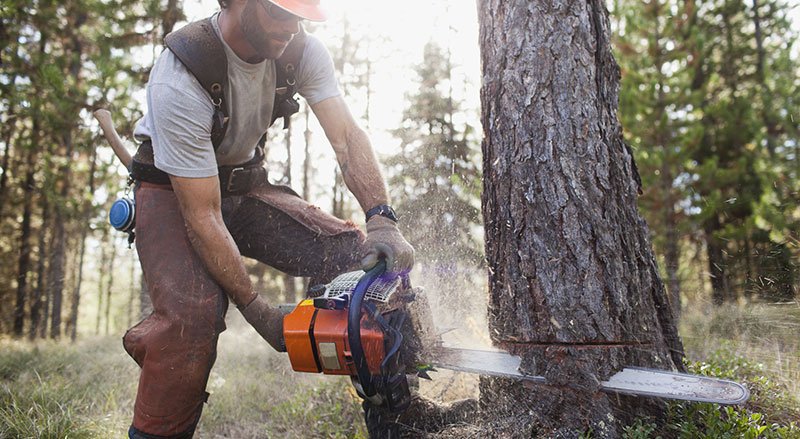
One non-obvious issue many beginners miss is tension wood. Trees under stress can store force in the trunk and branches. When you cut, the wood can spring or shift suddenly. That is why planning the cut matters more than simply cutting through the trunk.
Credit: toolnerds.com
How to Cut Down a Tree with a Chainsaw: The Full Step-by-Step Process
Now we get to the main process. Work slowly and stay focused. Keep bystanders far away. If anyone is helping you, make sure they understand the plan before you begin.
1. Make a proper stance
Stand with your feet apart and your body balanced. Keep both hands on the chainsaw. Hold it firmly, but do not lock your arms. You should feel stable before each cut. Never cut above shoulder height.
Start the saw on the ground or with the proper starting method recommended by the manufacturer. Do not drop-start a chainsaw unless it is designed for that and you are trained to do so.
2. Clear the base of the trunk
Remove brush, loose bark, rocks, and anything around the base. You need to see the trunk clearly. This also helps you avoid hitting dirt with the chain, which can dull it quickly.
If there are low branches, cut them off first. Work from the outside in so you keep better control and visibility.
3. Make the notch cut
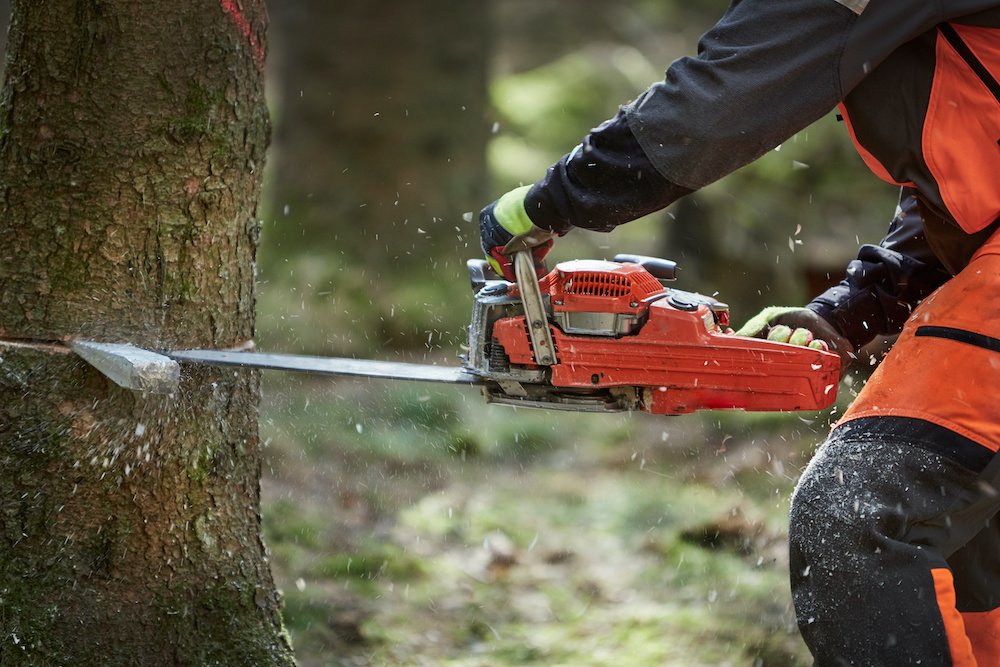
The notch cut helps guide the tree’s fall. It is usually made on the side facing the direction you want the tree to fall. This cut has two parts: the top cut and the bottom cut.
The opening of the notch should be wide enough to guide the tree well. A shallow notch can limit control and make the tree fall too early. A deeper, properly shaped notch gives better direction.
How the notch works
The notch creates a hinge of wood behind it. That hinge is what controls the fall. Without a hinge, the tree can lose direction. The tree should not be cut all the way through at this stage.
A good beginner rule is to make the notch clean, even, and aimed carefully. Do not rush it.
4. Cut the back cut
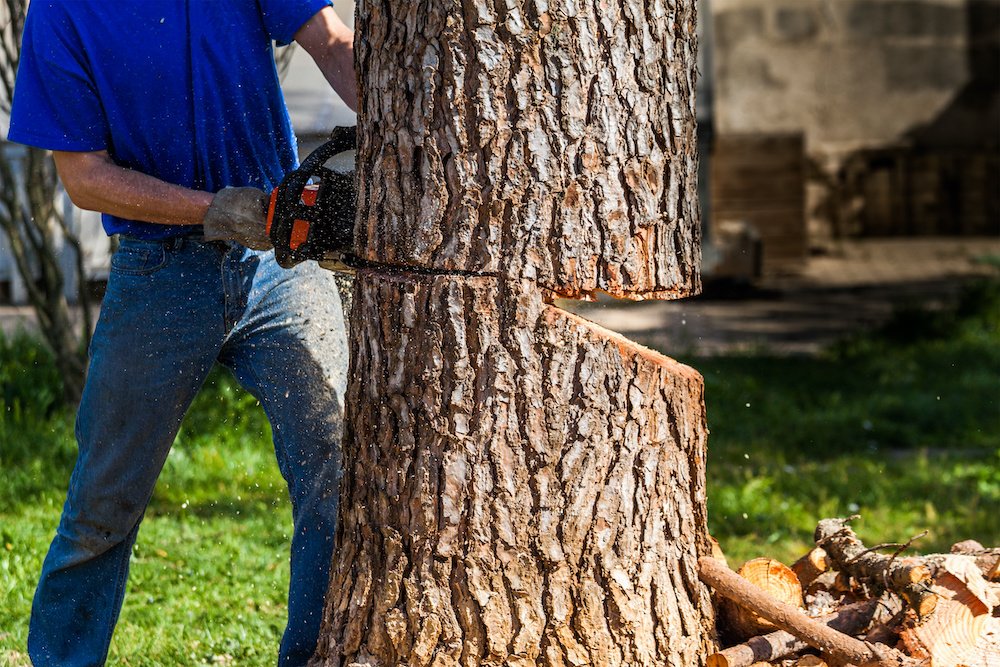
The back cut is made on the opposite side of the trunk, slightly above the bottom of the notch. This cut separates the tree from the stump while leaving enough hinge wood to control the fall.
Stop before cutting through the hinge. As soon as the tree starts to move, be ready to move away using your escape path. Do not stand still to watch it fall.
If the tree does not begin to move as expected, do not force it with random cuts. This is a sign that the tree may be hung up, leaning differently than expected, or under tension. Reassess before continuing.
5. Use wedges if needed
Wedges are useful when the tree may sit back on the saw or when you want extra control. Insert a wedge into the back cut before the tree starts to close on the bar. Tap it in gently as needed.
Wedges can help prevent the chainsaw from getting pinched. This is especially helpful in thicker trees or when the natural lean is weak. A small wedge can make a big difference in control.
6. Move away as the tree falls
Once the tree begins to fall, stop cutting and move along your escape path. Keep your eyes on the tree, but do not run blindly. Move quickly and stay aware of branches above you. Falling limbs can continue moving after the trunk hits the ground.
After the tree lands, wait for dust, branches, and movement to settle before going back in. A fallen tree can still shift or roll.
What Makes the Cut Safe and Controlled
Safety is not only about gear. It is also about the way you think and move. A controlled job depends on patience and attention to detail.
Keep these points in mind:
- Never cut when tired, distracted, or in a hurry.
- Keep both hands on the chainsaw at all times.
- Watch for kickback, especially near the tip of the bar.
- Do not cut in wet, windy, or stormy conditions if you can avoid it.
- Make sure no one stands inside the danger zone.
Another useful tip is to pause before the back cut and re-check the tree’s lean, the wind, and the escape route. Many accidents happen because people assume the first plan will still be correct after the notch is made. Sometimes it is not.
Credit: powertoolhacks.com
Common Mistakes Beginners Make
Understanding what not to do is just as important as learning the right steps. Many accidents happen because of simple mistakes that are easy to avoid.
Cutting without planning the fall
If you start cutting before deciding where the tree will go, you lose control. Always plan the direction first.
Standing in the wrong place
Do not stand directly behind the tree or too close to the side where it may swing. Keep your body out of the line of fire.
Using a dull chain
A dull chain makes the saw jump more, cut slower, and force you to push harder. That extra pressure increases the risk of mistakes. Sharpen the chain when needed.
Ignoring hidden tension
Tension inside the trunk or limbs can snap wood suddenly. If a tree seems stressed, cracked, or twisted, take extra care or call a pro.
Cutting too much of the hinge
The hinge is what helps guide the fall. If you cut through it too early, the tree may fall in an uncontrolled way.
What to Do After the Tree Is Down
Once the tree is on the ground, your job is not finished. The trunk, branches, and stump still need attention. First, wait and look. Make sure the tree is stable and not rolling or shifting.
Then begin limbing and bucking only when you are sure the tree is settled. Limbing means removing branches. Bucking means cutting the trunk into sections. Work slowly and keep your footing secure.
Be careful around bent branches. They can spring back when cut. Also watch for the bar getting pinched when cutting the trunk into pieces. Cut from the side with the least tension whenever possible.
Clean up the site
Move cut branches, logs, and tools out of the way. Keep the area safe for anyone who may enter later. If the tree came down near a property line, check for damage to fences, wires, or buildings before moving more debris.
When You Should Call a Professional
Sometimes the safest choice is to hire a trained tree service. This is especially true if the tree is near power lines, has a large dead top, is hollow, or needs to be removed in pieces from a tight space.
You should also call a professional if:
- The tree is larger than you can safely handle
- The tree is leaning over a house or driveway
- The trunk is split or badly damaged
- You do not have proper safety gear
- You feel unsure at any step
If you want to learn more about tree safety and care, the ISA Trees Are Good site is a useful high-authority resource. It offers practical tree care guidance for property owners.
Simple Safety Reminders That Save Lives
A few small habits can make a major difference. Check your tools before every cut. Work with a clear head. Keep other people away from the job site. Never assume the tree will fall exactly as planned without careful cutting.
Two beginner mistakes deserve special attention. First, many people forget that the ground behind them matters as much as the tree in front of them. A slip during retreat can be just as dangerous as a bad cut. Second, some people stop watching the tree the moment it starts falling. Keep your awareness until the trunk is fully settled.
Learning how to cut down a tree with a chainsaw is really about learning control. The saw is only one part of the job. Planning, balance, and calm decisions matter just as much.
Credit: powertoolhacks.com
FAQs
1. What size chainsaw do I need to cut down a tree?
The right size depends on the tree’s trunk diameter. For small trees, a mid-sized saw may be enough. For larger trees, you may need a longer bar and a more powerful saw. Always choose a saw you can control safely, not just the biggest one available.
2. Can a beginner cut down a tree with a chainsaw?
Yes, but only small to medium trees in open space and only if the person understands basic safety steps. If the tree is large, damaged, leaning badly, or close to structures, it is better to hire a professional.
3. Why is the notch cut so important?
The notch cut helps guide the tree in the direction you want it to fall. It also works with the hinge wood to keep the fall controlled. Without a proper notch, the tree may fall unpredictably.
4. What should I do if the tree does not fall after the back cut?
Stop cutting and do not force it. The tree may be under tension or balanced in a way you did not expect. Re-check the lean, the notch, and the trunk movement before continuing. If the situation looks unsafe, call a professional.
5. Is it safe to cut a tree by myself?
Only if the tree is small, the area is open, and you have the right gear and experience. Even then, someone should know you are working there. For large or risky trees, working alone is not a good idea.
