
If you have ever seen a pile of dry leaves disappear in seconds, you may have asked yourself, how does a leaf blower work? The answer is simple at the surface, but the machine inside is a smart mix of airflow, engine power, and focused design. A leaf blower does not “suck” leaves the way a vacuum does in most cases. It mainly pushes air at high speed to move leaves, grass clippings, and small debris from one place to another.
This simple tool is now common in homes, gardens, and landscaping jobs. But many people still do not know what is happening inside the machine when they press the trigger or pull the cord. Once you understand the basic idea, choosing, using, and caring for a leaf blower becomes much easier.
In this guide, you will learn how leaf blowers create strong air, what parts make them work, the difference between blower types, and why some models feel much more powerful than others. You will also see a few practical tips that help you use one better and avoid common mistakes.
The basic idea behind air movement
A leaf blower works by taking in air, speeding it up, and pushing it out through a narrow nozzle. This creates a fast stream of air that lifts and moves loose material on the ground. The science behind it is not complicated. Fast-moving air creates pressure and force. That force is enough to move dry leaves, dust, small twigs, and light debris.
Think of it like this: if you blow hard through a straw, the air comes out in a focused stream. A leaf blower does the same thing, but with much more power. It uses a motor or engine to spin a fan or impeller. That spinning part pulls air into the machine and pushes it out with speed.
Most people notice the air speed first, but air volume matters too. A strong leaf blower does not only blow fast air. It also moves a large amount of air. This is why two blowers with similar-looking nozzles can perform very differently.
Air speed and air volume are not the same
Beginners often think higher speed always means better performance. That is not always true. A blower with very high air speed but low air volume may move leaves in a narrow line, while a blower with more air volume can clear a wider area faster.
Air speed is how fast the air comes out, usually shown in miles per hour. Air volume is how much air moves, usually shown in cubic feet per minute. Both matter. For heavy, stuck leaves, air volume helps more. For cleaning tight corners or moving debris from cracks, air speed helps more.
Main parts that make a leaf blower work
Even though leaf blowers come in different shapes and sizes, most of them use the same basic parts. Each part has a clear job. When one part works badly, the whole blower feels weak.
| Part | What it does | Why it matters |
|---|---|---|
| Motor or engine | Creates power to spin the fan | Decides how strong the blower can be |
| Fan or impeller | Pulls in air and speeds it up | Creates the airflow |
| Housing | Holds the moving parts and guides air | Helps air move in the right direction |
| Nozzle | Narrows the air stream | Focuses the air for stronger blowing |
| Throttle or trigger | Controls power output | Lets the user change airflow level |
In cordless models, the battery is also a major part. It stores the energy needed to run the motor. In gas models, fuel and the engine system do that job instead. In corded electric models, the power comes directly from the wall outlet.
The motor or engine
This is the power source. In simple terms, it gives the blower enough force to spin the fan at high speed. Electric motors are common in lighter blowers. Gas engines are often used in stronger machines for larger jobs. Battery-powered blowers use rechargeable power, which makes them easy to carry.
A stronger power source usually means better blowing ability, but not always. If the rest of the design is poor, the blower may still perform badly. Good airflow depends on the full system, not just the power source.
The fan or impeller
The impeller is one of the most important parts of the machine. It looks like a small fan, but it is built to move air with force. As it spins, it draws air into the housing and throws it out through the nozzle.
Here is a detail many people miss: the shape of the impeller blades changes how the blower feels in real use. Some impellers are designed for high speed. Others are designed to move more air. That is one reason why two blowers with the same battery size or engine size can perform differently.
The housing and nozzle
The housing keeps the airflow moving in a controlled way. Without it, air would spread out in random directions. The nozzle is the final part where the air comes out. A narrower nozzle usually creates a more focused and forceful stream. A wider nozzle may move more air across a larger space.
People often think a smaller opening always means a stronger blower. That is partly true, but only if the blower has enough power behind it. If the motor is weak, narrowing the nozzle will not magically make it powerful.
What happens step by step inside the blower
The process is easy to follow once you break it down. No matter what type of leaf blower you use, the airflow system follows a similar path.
- The power source starts the motor or engine.
- The motor spins the impeller at high speed.
- The spinning blades pull air into the machine.
- The air is compressed and guided through the housing.
- The nozzle narrows the airflow.
- The air exits quickly and pushes leaves, dust, or debris away.
That is the whole idea. The machine does not “grab” leaves with hands or teeth. It uses moving air to create force. Loose and dry material moves first. Wet leaves or heavy debris need much more power and may still stay in place.
This is also why blowing works best when you use a low angle close to the ground. The air slides under the leaves and lifts them more easily. If you point the blower straight down from above, you often waste force and scatter debris in a messy way.
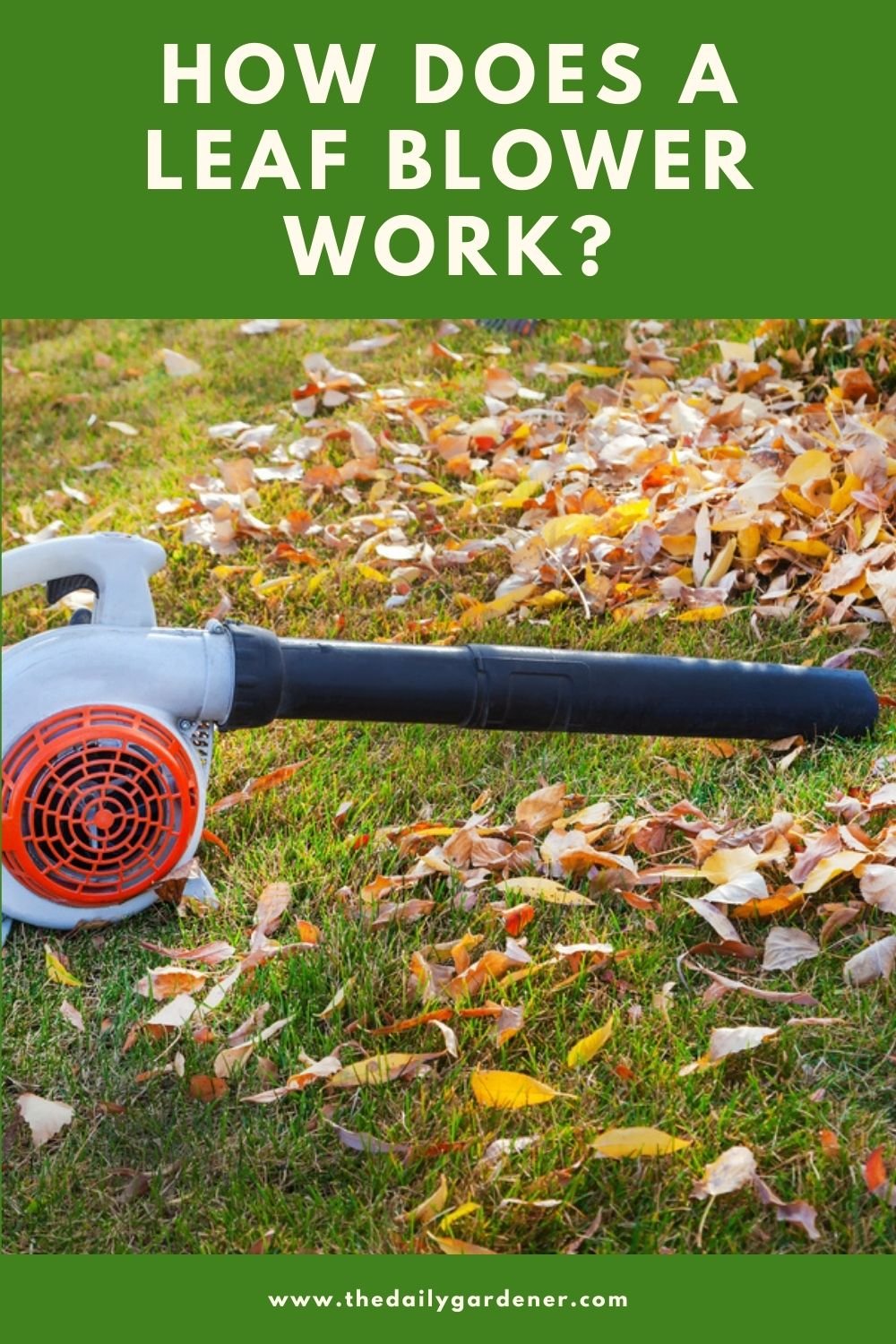
Credit: thedailygardener.com
Different types of leaf blowers and how they operate
All leaf blowers do the same core job, but they get power in different ways. Each type has benefits and limits. The right choice depends on your yard, your budget, and how often you use it.
Corded electric blowers
These plug into an outlet and run as long as power is available. They are usually lighter and easier to start than gas models. Since they do not burn fuel, they are quieter and need less maintenance.
The main limit is the cord. It can be annoying if you have a large yard. You also need an outdoor-safe extension cord. Still, for small yards and patios, corded blowers can be a smart choice.
Cordless battery blowers
Battery blowers have become very popular because they are easy to use. You do not need a fuel mix or a power cord. You charge the battery, attach it, and start blowing.
One non-obvious point: battery size is not the only thing that affects runtime. The speed setting you use matters a lot. If you run the blower at full power all the time, the battery drains much faster. Many users get better results by using lower power for light cleanup and saving full power for stubborn areas.
Gas-powered blowers
Gas blowers are often chosen for large jobs because they can deliver strong airflow for longer periods. They are useful in places where cords are not practical and charging is not convenient.
They usually need fuel, oil mix in some cases, and more care than electric models. They also produce more noise and exhaust. For many homeowners, the extra power is useful but not always necessary.
Blower-vacuum combo models
Some leaf blowers can also switch into vacuum mode. In that mode, the machine pulls in leaves through an intake and chops them into smaller pieces before collecting them in a bag. This is different from regular blowing because the airflow is reversed for collection.
These models can be helpful for small yards with lots of dry leaves. But the vacuum function is usually not as fast as many buyers expect. It works best for light cleanup, not for large wet piles.
Why some leaf blowers feel stronger than others
Two blowers may look similar, but one clears a driveway quickly while the other struggles. That difference comes from several factors working together.
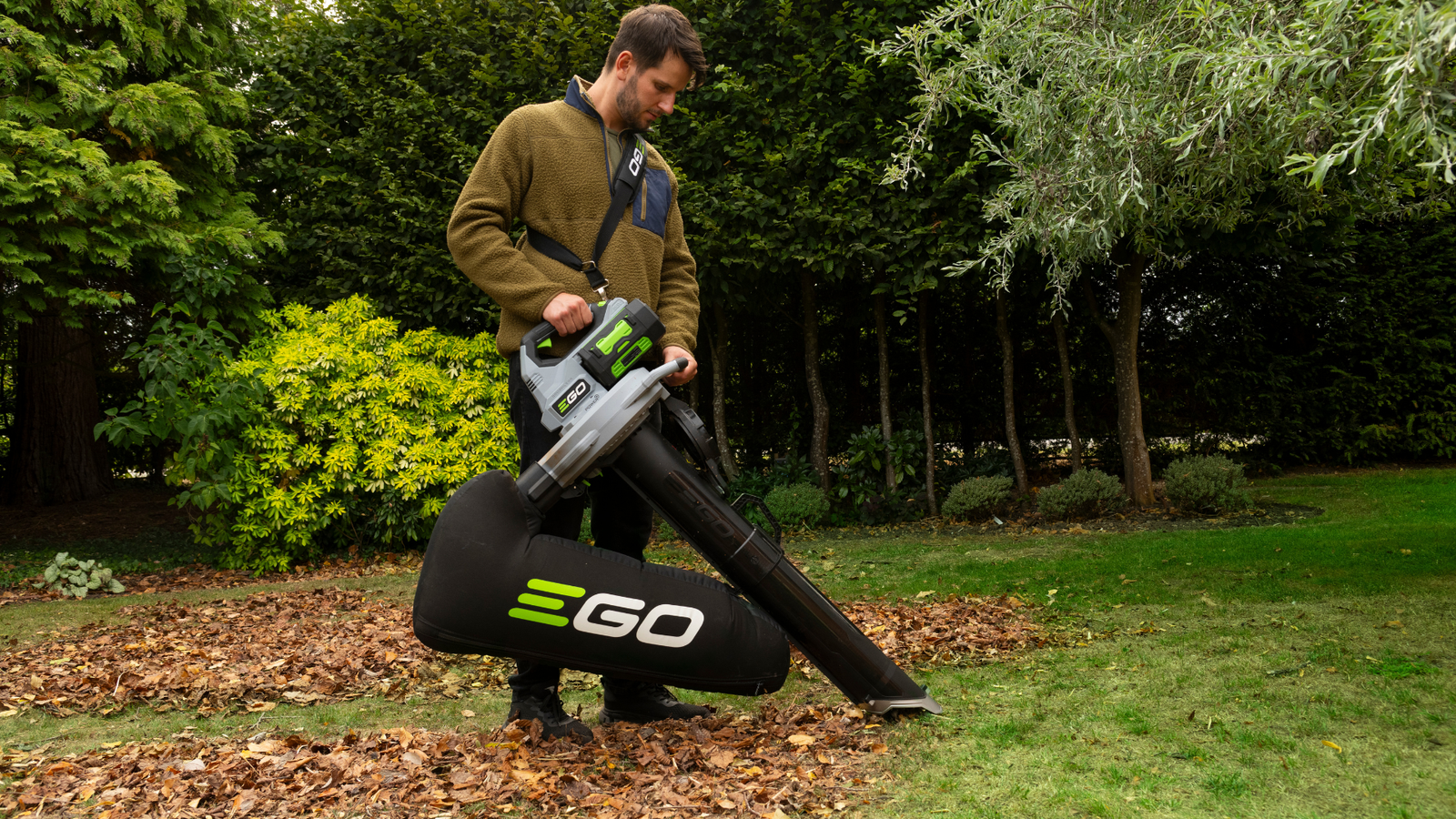
Credit: egopowerplus.co.uk
Motor power and design
A stronger motor or engine can spin the impeller faster and support greater airflow. But raw power is not enough. Efficient design matters too. A well-built blower can move air better with less waste.
Nozzle shape
The nozzle can make the air stream more focused. A more focused stream helps with tight spaces and stubborn debris. A wider stream can help cover more ground quickly.
Airflow path inside the housing
Air should move through the machine smoothly. If the inside design is poor, turbulence can slow the air down. Good engineering reduces resistance and helps the blower perform better.
Debris type and ground condition
Wet leaves are heavier than dry leaves. Leaves stuck in grass are harder to move than leaves sitting on a hard surface. Gravel is tricky because too much air can scatter it. This is why the same blower may seem perfect on a driveway but weak in a damp lawn area.
Another detail people often miss is that surface texture changes blower performance. Leaves on smooth concrete move much faster than leaves caught in rough soil or thick grass. The machine has not changed, but the job has.
What the numbers mean when buying a leaf blower
If you want to understand how does a leaf blower work in real shopping terms, you should know how performance numbers are used. Brands often mention air speed, air volume, and sometimes force. These numbers help, but they do not tell the full story.
For example, a blower with very high air speed may look impressive on paper. But if the air volume is low, the blower may not clear a wide area well. A balanced machine often works better in real yards than one with just one big number.
Do not ignore weight, handle shape, and balance. A very strong blower that is heavy and hard to control can be less useful than a lighter one you can use for longer without strain. Comfortable use matters more than many buyers expect.
If you want to compare airflow terminology in a more technical way, the U.S. Department of Energy is a useful authority for general energy and motor-related information.
How to use a leaf blower the right way
Using the tool well matters almost as much as choosing the right model. A good technique makes the machine feel stronger without changing the machine itself.
- Start from the outer edge of the area and move debris into one pile.
- Hold the nozzle low and at a shallow angle.
- Use short sweeping motions instead of random blasting.
- Work with the wind when possible, not against it.
- Move dry leaves first before they get wet or packed down.
If you try to blow a large pile all at once, leaves often scatter in every direction. It is better to guide them in stages. That saves time and keeps the area cleaner.
Common mistakes to avoid
Blowing too high is a common mistake. When the nozzle is held above the ground, much of the air misses the leaves. Another mistake is using full power too soon. That can spread debris too widely and make the job longer.
Some people also forget that leaf blowers can move dust and small stones. You should pay attention to what is around the area. If you are near windows, cars, pets, or fragile plants, aim carefully.
Safety and comfort matter more than people think
A leaf blower seems simple, but it can be tiring to use if you ignore comfort and safety. Long use can strain your arms, shoulders, and back. Noise can also become a problem, especially with gas models.
Wear eye protection. Even small pieces of dirt can be thrown into your face. Hearing protection is also a smart idea if the blower is loud. Closed shoes are better than sandals because debris can bounce back toward your feet.
Another useful habit is to check the area before you start. Remove toys, stones, wires, and light objects that should not be blown away. This saves time and prevents damage.
Maintenance keeps airflow strong
A leaf blower that is dirty or partly blocked will not work as well. Dust, stuck leaves, and clogged intake areas reduce airflow. This is true for all types, but especially for gas and vacuum models.
Simple care can make a big difference:
- Clean the air intake often.
- Check for blocked nozzles.
- Keep batteries charged properly.
- Inspect cords for damage if you use an electric model.
- Follow the fuel and filter care rules for gas blowers.
One thing many beginners miss is that weak performance is not always caused by the motor. Sometimes the problem is just a clogged intake, a weak battery, or debris caught near the impeller area.
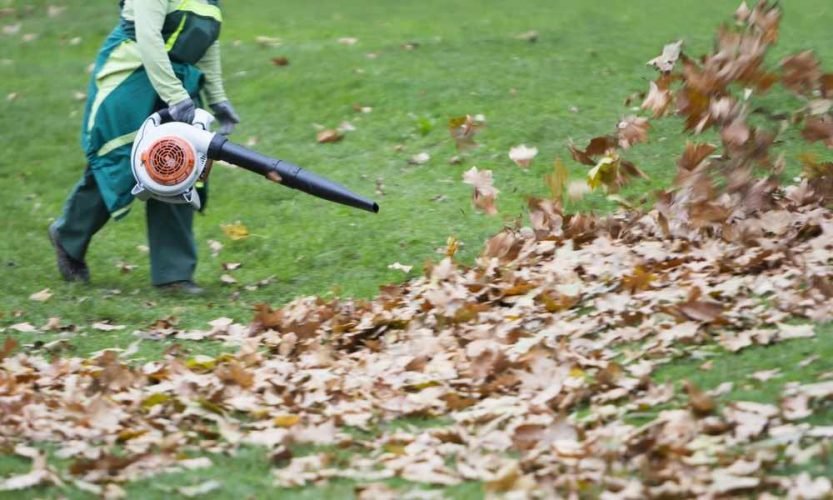
Credit: thebestleafblowers.com
Simple picture of the whole process
If we put it all together, the answer to how does a leaf blower work is this: power turns a fan, the fan pulls in air, the machine shapes that air, and the nozzle shoots it out fast enough to move loose material. That is the complete cycle.
The clever part is not only speed. It is the way the blower turns power into directed airflow. That is why design, balance, and air path matter so much. A good blower does not waste energy. It sends as much of that energy as possible into the air stream you feel at the nozzle.
Once you understand that idea, the tool becomes much less mysterious. It is not magic. It is controlled air, made useful by smart engineering.
FAQs
1. How does a leaf blower work in simple words?
A leaf blower works by using a motor or engine to spin a fan. The fan pulls in air and pushes it out through a nozzle at high speed. That fast air moves leaves and light debris.
2. Does a leaf blower suck or blow?
Most leaf blowers mainly blow air. Some models also have a vacuum mode, but the normal job is to push air forward to move debris away.
3. What makes a leaf blower powerful?
Power comes from a mix of motor strength, fan design, air speed, and air volume. A good balance of these parts usually matters more than one high number.
4. Why does my leaf blower feel weak?
It may have a clogged intake, a low battery, dirty parts, or blocked airflow. Wet leaves and rough ground can also make it seem weaker than it really is.
5. Is a battery leaf blower strong enough for most homes?
Yes, many battery blowers are strong enough for regular home use, especially for driveways, patios, and small yards. For heavy or large jobs, a gas model may still be better.
