
If you have ever swung a hammer for more than a few minutes, you already know one simple truth: the wrong weight can make a job feel twice as hard. A hammer that is too light may not drive nails well. A hammer that is too heavy can slow you down, tire your arm, and even affect your accuracy. That is why a good framing hammer weight guide matters for anyone who builds, repairs, or works with wood.
The best hammer is not always the heaviest one. It is the one that fits your hand, your strength, and the type of project you are doing. Framing work, deck building, fence repair, and general carpentry all place different demands on a tool. The right choice can improve speed, control, and comfort at the same time.
In this guide, you will learn how framing hammer weight works, what the common sizes mean, and how to choose the best option for your projects without wasting money or energy.
What hammer weight really changes on the job
Hammer weight affects more than just how heavy the tool feels. It changes how much force reaches the nail, how fast you can work, and how much stress goes into your wrist, elbow, and shoulder. A heavier hammer can deliver stronger hits with less effort from your arm, but it also creates more fatigue over time. A lighter hammer is easier to carry and swing, but it may need more effort from you to get the same result.
For framing work, this balance matters even more because the job often involves repeated swings. You may drive dozens or hundreds of nails in one day. The best hammer should help you maintain a steady rhythm without wearing you out early.
Weight also affects control. When the head is too heavy for your body or style, your swing may become less accurate. That can lead to bent nails, missed strikes, or unnecessary strain. A hammer that feels right often performs better than one that looks impressive on paper.
Common framing hammer weights
Framing hammers usually fall into a few common weight ranges. The total feel of the tool depends on both the head weight and the handle design, but these general sizes are a good starting point.
| Hammer Weight | Best For | Main Benefit | Main Drawback |
|---|---|---|---|
| 16 oz to 18 oz | Light carpentry, small repair work, users who want less fatigue | Easier control and faster swings | May need more strikes for large framing nails |
| 19 oz to 21 oz | Most general framing tasks | Good balance of power and comfort | Not the strongest option for very tough materials |
| 22 oz to 24 oz | Heavy framing, demolition, tough lumber, frequent nail driving | More striking power per swing | Can feel tiring during long jobs |
These numbers are useful, but they are not the whole story. Handle length, grip shape, head balance, and your swing style also matter. Two hammers with the same weight can feel very different in use.
How to match hammer weight to your project
Different projects need different levels of power and control. The best framing hammer weight guide is not about choosing the heaviest model. It is about matching the tool to the work.
For light framing and repair work
If your work includes small repairs, trim-related framing, or short sessions of nail driving, a hammer in the 16 oz to 18 oz range may be enough. This size is easier to carry and easier on the joints. It is a smart choice if you do not frame all day or if you want better precision for smaller jobs.
This size is also useful for beginners. A lighter hammer helps you learn swing control without fighting the tool. It is not the strongest option, but it can be the most comfortable one for short jobs.
For general framing
Most people doing regular framing work do well with a 19 oz to 21 oz hammer. This range is often the best middle ground. It gives enough force for standard framing nails while staying manageable during long work sessions.
If you are buying your first framing hammer, this range is often the safest choice. It is versatile enough for wall framing, sheathing, deck boards, and rough carpentry. You can use it for many tasks without feeling overpowered or underpowered.
For heavy-duty framing and demolition
When the work gets tougher, a 22 oz to 24 oz hammer can save time. These heavier tools are helpful when driving long nails into dense lumber or when you need more impact on each swing. They also make sense if you often do demolition and need extra striking power.
But heavier is not always better. If you are working overhead, in tight spaces, or for long hours, the added weight can become a problem. Many beginners buy a heavy hammer because it feels strong in the store, then regret it after a day on the job.
Why balance matters as much as weight
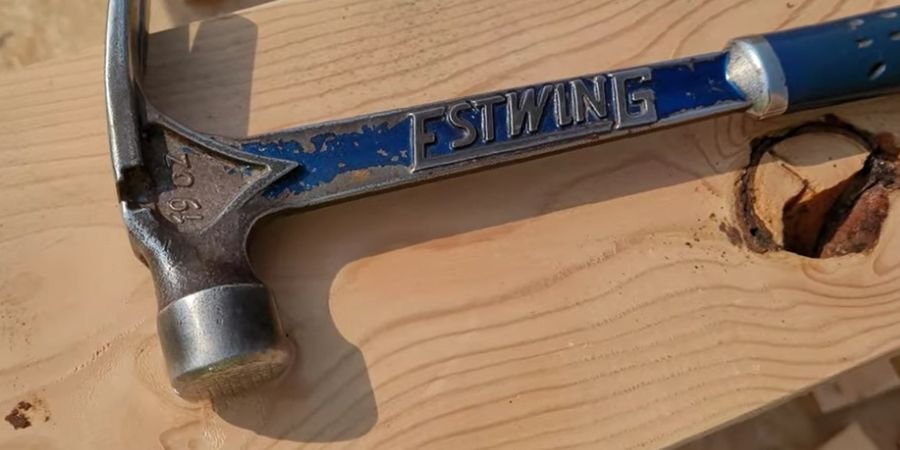
A useful insight many beginners miss is that a hammer can feel light or heavy depending on how it is balanced. A well-balanced 21 oz hammer may feel easier to use than a poorly balanced 19 oz model. That is because the weight is distributed in a way that helps the swing.
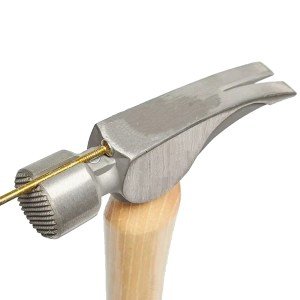
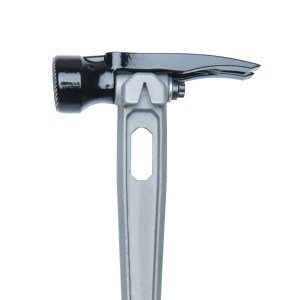
Head shape matters too. Some hammers put more mass toward the head, which creates stronger strikes. Others spread the weight more evenly, which can improve control. Handle length also changes how the hammer feels. A longer handle can increase swing speed and impact, but it may be harder to control in close work.
When possible, hold the hammer before buying it. If you cannot test it in person, read reviews that mention balance, not just weight. That detail often tells you more about real-world comfort than the number on the box.
Credit: uptoolsdown.com
How handle material changes the feel
Handle material does not change the listed weight much, but it changes how that weight feels in use.
- Wood handles often feel warm and natural, with some flex that can reduce shock.
- Fiberglass handles are usually lighter in feel and absorb vibration well.
- Steel handles are strong and durable, but they can transmit more shock to the hand.
For long framing sessions, vibration control can matter just as much as raw weight. A tool that shakes your hand too much can make fatigue arrive faster, even if the hammer itself is not very heavy.
Match the hammer to your body, not just the job
One of the biggest mistakes in tool buying is thinking everyone should use the same size. That is not true. Your height, arm strength, work experience, and even your swing technique all affect the best choice.
If you are strong and used to manual work, a 22 oz hammer may feel normal. If you are new to construction or have smaller hands, the same hammer may feel awkward. The goal is not to prove strength. The goal is to work well for a long time.
Ask these simple questions before you choose
- How often will I use this hammer?
- Will I drive nails all day or only for short periods?
- Do I need more speed or more striking power?
- Can I control a heavier hammer without losing accuracy?
- Will I work overhead, on ladders, or in tight spaces?
These questions are practical because they connect the tool to real use. A hammer that works great for one person may feel wrong for another. That is normal.
The best weight for beginners
If you are new to framing, a mid-weight hammer is usually the smartest starting point. In most cases, 19 oz to 21 oz is a good range. It is strong enough for common jobs, but not so heavy that it becomes hard to control.
Beginners sometimes think a heavier hammer will make them look more professional. In reality, accuracy matters more than size. A lighter, easier-to-control tool often helps you learn better habits. You will place nails more cleanly and waste less energy correcting misses.
A useful beginner tip is to choose a hammer with a grip that feels secure even when your hands are sweaty. Slipping during a swing can affect both safety and accuracy. A comfortable grip is not a luxury. It is part of good tool control.
Signs your hammer is too heavy
People often notice a bad hammer choice only after using it for a while. The signs are usually easy to spot if you pay attention.
- Your arm gets tired very fast.
- Your swing slows down during the job.
- You start missing nails more often.
- Your wrist or elbow feels sore after short use.
- You avoid full swings because the tool feels hard to manage.
If these problems happen, a lighter hammer may help more than more practice. Sometimes the tool is simply wrong for your body or your task.
Credit: abentitools.com
Signs your hammer is too light
A hammer that is too light has its own problems. You may need extra swings to drive each nail fully. That can slow the job and create more strain in a different way, because you are repeating the motion more often.
- Nails bend instead of going in straight.
- You need many strikes for one nail.
- The tool feels weak on dense lumber.
- You have to swing harder than feels natural.
A light hammer is not always bad. For some jobs, it is perfect. But if you are doing real framing work and feel like the hammer is fighting the material, you may need more mass.
Non-obvious factors that change the best choice
Many buyers focus only on weight, but a few other details can change the result a lot. These are often missed by first-time buyers.
1. Nail type and lumber type matter
Soft wood and small nails are easier to drive than dense lumber and long framing nails. If you mostly work with harder wood, a slightly heavier hammer may save effort. If your projects use easier materials, a medium-weight tool may be enough.
2. Swing style changes ideal weight
Some people use a fast, short swing. Others use a longer, more powerful arc. Fast swingers often prefer a moderate hammer because they value control. Longer swing users may get more benefit from extra head weight. Your natural style should influence your choice.
3. Work position affects fatigue
Driving nails at waist height is easier than working overhead or in awkward positions. If your projects involve ladders, ceilings, or tight angles, a lighter hammer may help reduce fatigue and improve control.
How to test a framing hammer before buying
If you can test a hammer in a store or on a job site, do it carefully. Hold the hammer as if you are about to swing. Notice how the weight sits in your hand. Try a few practice swings through the air. You are not looking for the heaviest hammer. You are looking for the one that feels smooth and natural.
Pay attention to the first few seconds of use. That is when the tool either feels right or starts to feel tiring. Do not ignore small discomfort. Small discomfort often becomes big fatigue after an hour.
If you are buying online, check the listed head weight, handle length, and user comments about balance. Product photos cannot tell you how a hammer feels, but reviews often can.
For broader tool safety and hand tool guidance, the Occupational Safety and Health Administration is a useful authority to explore.
Choosing based on skill level and experience
Experience changes what feels comfortable. Skilled users often develop efficient swings, so they may handle heavier hammers with less effort. New users usually benefit from a tool that forgives small mistakes and is easy to control.
If you are experienced and spend a lot of time on framing jobs, you may prefer a heavier tool for its striking power. If you work only part-time or on weekend projects, a mid-weight hammer may be the smarter choice because it is easier to use after a break.
There is no rule that says a more experienced worker must always use a heavier hammer. Good workers choose the tool that helps them stay accurate, fast, and safe.
A simple way to narrow down your choice
If you still feel unsure, use this simple rule:
- Choose 16 oz to 18 oz if comfort, speed, and light use matter most.
- Choose 19 oz to 21 oz if you want the best all-around framing hammer weight for most projects.
- Choose 22 oz to 24 oz if you need extra power for heavy framing or demolition.
This is not a perfect system, but it is practical. It gives you a reliable starting point and helps you avoid the most common mistake: buying more hammer than you really need.
Credit: abentitools.com
Final buying advice for better results
The best framing hammer is the one that helps you work well for the full length of your project, not just the first ten minutes. Weight matters, but it should be judged with balance, grip, and project type in mind. A smart choice can reduce fatigue, improve accuracy, and make repetitive work feel easier.
If you mainly do general framing, the middle range is usually the best answer. If you do lighter work, go lighter. If you do heavy tasks and can handle the extra force, go heavier. That simple approach will help you choose with confidence.
In the end, this framing hammer weight guide is about fit. The right hammer should feel like a tool you control, not a weight you fight against. When you choose well, every swing becomes more useful.
FAQs
1. What is the best framing hammer weight for most people?
For most users, a hammer between 19 oz and 21 oz is the best choice. It gives a good mix of power, comfort, and control for general framing work.
2. Is a 22 oz framing hammer too heavy for beginners?
It can be. Some beginners handle it well, but many people find it tiring during long use. A mid-weight hammer is usually easier to learn with.
3. Does a heavier hammer always drive nails better?
Not always. A heavier hammer can add power, but poor balance or weak control can reduce accuracy. The best hammer is the one that matches your swing and task.
4. Should I choose hammer weight based on my hand size?
Hand size matters, but it is not the only factor. Your strength, swing style, and project type are just as important. A comfortable grip and good balance can matter more than hand size alone.
5. Can one framing hammer work for all projects?
Yes, a 19 oz to 21 oz hammer can handle many jobs well. Still, if you do very light repair work or heavy demolition often, a different weight may be more efficient.
