
If you are finishing a wall or ceiling, one question matters more than almost any other: how long does drywall mud take to dry? The short answer is that it depends on the type of mud, the coat thickness, room temperature, humidity, and airflow. A thin first coat may dry in a few hours, while a thick final coat can take much longer.
Many people think mud dries at one fixed pace. It does not. Drying time changes a lot from one job to another. A small patch in a warm, dry room may be ready fast. A full room with heavy joints, little air movement, and high humidity may need overnight or more. Knowing the real drying time helps you sand at the right moment and avoid cracks, soft spots, and wasted work.
This guide explains the full drying times for different drywall compounds, what slows the process down, how to speed it up the safe way, and how to tell when the mud is really dry. It also shares practical tips that many beginners miss.
For better drywall planning, compare drywall sheet weight, review what drywall is made of, and follow this guide on how to sand drywall after the mud has dried.
What affects drywall mud drying time
Drywall mud does not dry by one simple rule. It loses water over time, and that process changes based on the job conditions. If you understand the main factors, you can predict the drying time much better.
Type of drywall mud
Not all mud is the same. The biggest difference is between drying-type joint compound and setting-type compound. Drying-type mud dries as water leaves the material. Setting-type mud hardens by a chemical reaction, so it sets much faster.
- All-purpose compound: Common for taping and finishing. Usually slower to dry.
- Lightweight compound: Often dries a bit faster because it contains less water and is easier to sand.
- Setting-type compound: Sold in bags with time ratings like 20, 45, or 90 minutes. These are set times, not full dry times.
- Topping compound: Often used for the final coat. It can dry faster than heavier mud.
Coat thickness
Thicker coats take longer. This is one of the most important points beginners miss. A smooth, thin coat can dry well overnight. A thick lump on a seam may stay soft much longer, even if the surface looks dry.
Try to apply only the amount needed. Thin coats dry faster, sand easier, and usually look better after painting.
Temperature, humidity, and airflow
Warm air helps moisture leave the mud. High humidity slows it down. Good airflow helps a lot, but air that is too hot or too direct can cause the outside to dry too quickly while the inside stays wet.
- Best room temperature: about 65°F to 80°F, or 18°C to 27°C
- Good humidity level: moderate, not damp or sticky
- Helpful airflow: a fan moving air across the room, not blasting one spot
Surface and room conditions
Drywall mud dries faster on porous surfaces and in open rooms. It dries slower in cold basements, bathrooms, or enclosed spaces with poor ventilation. If the wall is over primer, paint, or a very sealed surface, drying can also take longer in some cases because moisture has less place to escape.
Drying times for different types of drywall mud
Here is the practical answer many people want. The table below gives common drying ranges. These are general estimates, not fixed rules.
| Type of mud | Common use | Approximate drying time | Notes |
|---|---|---|---|
| All-purpose mud | Taping, first coats, general use | 12 to 24 hours per coat | Thicker coats may need more time |
| Lightweight mud | Final coats, easy sanding | 8 to 18 hours per coat | Often dries a little faster |
| Topping compound | Finish coats | 6 to 16 hours per coat | Can dry faster in warm, dry rooms |
| Setting-type compound | Fast repairs, taping, filling deep gaps | Sets in 20 to 90 minutes | Set time is not the same as fully dry |
| Hot mud for deep repairs | Large gaps, patching, corner repairs | 20 minutes to several hours | Depends on product and thickness |
For most home projects, the safest answer to how long does drywall mud take to dry is overnight. That is especially true for all-purpose compound. If the coat is thin, conditions are good, and the room is warm, it may be ready sooner. If not, give it more time.
Drying time by coat
Different coats on the same wall can dry at different speeds. The first coat over tape is often the slowest because it is thicker and can hold more moisture. The final finish coat is usually the thinnest and may dry faster.
- First coat: usually 12 to 24 hours
- Second coat: often 8 to 18 hours
- Third coat: sometimes 6 to 12 hours if thin
Do not rush the first coat. If the tape coat is not dry, sanding or adding the next coat can cause tears, bubbles, or weak joints.
How setting-type mud changes the answer
Setting-type compound is often confusing because it uses time labels like 20-minute, 45-minute, or 90-minute mud. These numbers tell you how long it takes to set, not how long it takes to fully dry.
That means a 45-minute product may be hard enough for another coat fairly soon, but the inside can still hold moisture. If you sand too early, the surface may crumble or drag. If you paint too soon, trapped moisture can cause problems later.
Credit: americanpropertyinspectionsfl.com
Set time versus dry time
This is one of the most useful things to understand:
- Set time means the mud becomes firm enough to handle.
- Dry time means the moisture has left the material enough for sanding, painting, or sealing.
Setting-type compound is great when you need speed. It is also useful in cold or humid rooms where drying-type mud would be slow. But even fast-setting mud still needs enough time to dry fully before finishing.
Non-obvious tip
If you use setting-type compound for a deep repair, the edges may seem dry much earlier than the center. This happens because the edges are thinner and exposed to air. Always check the middle of the patch, not just the outside ring.
Signs drywall mud is actually dry
Many beginners rely on touch alone. That can be risky. A surface may feel dry but still be soft underneath. Here are the best signs to look for.
- Color becomes even and pale: Wet mud is darker. Dry mud usually turns light and uniform.
- Surface feels hard: When pressed lightly, it should not dent easily.
- No cool, damp feeling: Dry mud usually feels room temperature, not cold or wet.
- Sandpaper does not clog fast: If sandpaper gums up, the mud may still be damp.
- Edges do not smear: Light rubbing should not leave a soft smear.
One small warning: do not use too much pressure when testing. You can damage a nearly dry patch and create a spot that needs more repair.
Second useful insight
Dry on the surface does not always mean dry in the center. This matters most on corner beads, deep fills, and heavy tape coats. If the room feels humid or the repair is thick, wait longer than you think you need to.
How to make drywall mud dry faster
You can speed up drying without ruining the finish. The key is to help water leave evenly, not to bake the surface.
- Apply thinner coats. This is the best method. Thick coats slow everything down.
- Use a fan. Move air around the room, but do not point a heat source right at the wall.
- Keep the room warm. Mild warmth helps drying much more than cold air.
- Control humidity. A dehumidifier can help in damp rooms or basements.
- Open doors or vents if possible. Fresh air helps moisture escape.
Do not try to force drywall mud dry with very high heat. That can cause the top layer to dry too fast, which may lead to cracking, poor bonding, or a soft center that stays wet longer.
What not to do
- Do not apply thick coats just to finish faster.
- Do not sand wet mud.
- Do not paint before the compound is fully dry.
- Do not use strong direct heat on one spot.
Why drywall mud sometimes takes longer than expected
If your wall still feels damp after a long wait, one of these issues is usually the reason.
Credit: codrywallcontractor.com
Too much mud was applied
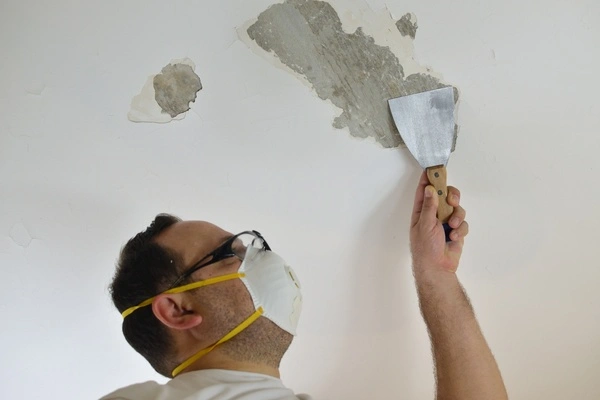
Large ridges and heavy fills hold more water. Even if the top layer looks dry, the inside may still be soft. This is very common around screw holes, patched dents, and taped joints with too much compound.
The room is too humid
Bathrooms, laundry rooms, and basements often have slow drying conditions. If the air already holds a lot of moisture, the mud cannot release its water as easily.
The temperature is too low
Cold air slows drying. In chilly rooms, compound may stay workable for a long time. If possible, warm the space to a normal indoor temperature.
Poor airflow
Still air traps moisture. A fan can help, but the goal is gentle circulation, not a windstorm.
The wrong product was used for the job
Using regular all-purpose mud for a deep repair can slow the project a lot. A setting-type compound may be a better choice when you need to fill deep gaps or move quickly.
Best practices for a smoother finish
Good drying is only part of the job. The way you apply drywall mud also affects how the final wall looks.
- Feather the edges so the repair blends into the wall.
- Use the right knife size for the joint or patch.
- Mix mud smoothly so there are no lumps or dry pockets.
- Scrape off extra mud before it dries on the wall.
- Let each coat dry fully before the next one.
If you rush the process, you often end up sanding more, not less. A patient job usually gives a flatter wall and less repair later.
How long before you can sand or paint
Sanding and painting depend on full dryness, not just surface hardness. If you sand too early, the mud can roll up or clog the paper. If you paint too early, moisture can get trapped and cause flashing, dull spots, or weak adhesion.
For sanding
Most drying-type compound is ready for sanding after about 12 to 24 hours. Thin coats in good conditions may be ready sooner. Heavy coats may need longer.
For painting
Wait until the mud is fully dry throughout. In many cases, this means at least 24 hours, and sometimes longer for thick repairs or humid rooms. If the patch still feels cool or darker than the surrounding wall, wait more time.
For a more detailed look at safe drying and finishing practices, you can also check a trusted builder resource like Family Handyman’s drywall finishing guide.
Simple drying guide for common situations
Here is a practical way to think about drywall mud drying time in real life.
- Small nail hole repair: often a few hours to overnight
- Thin joint coat in warm room: about 8 to 12 hours
- Thick tape coat: often overnight or longer
- Setting compound patch: can be ready for the next step in under an hour, but full drying may take longer
- Large repair in humid space: often 24 hours or more
When in doubt, wait. Extra drying time is much safer than sanding too early.
Common mistakes that slow the project down
Some drying delays happen because of the product. Others happen because of technique. These are the mistakes that cause the most trouble.
- Using too much mud on each coat.
- Skipping ventilation in a closed room.
- Mixing mud too wet, which adds extra water and slows drying.
- Working in a cold, damp space without adjusting conditions.
- Painting before the center is dry.
Another mistake is judging by appearance only. A patch can look finished and still hide moisture below the surface. That is why time, room conditions, and product type all matter.
Credit: chicagohandyman.net
Final thoughts on drywall mud drying time
The real answer to how long does drywall mud take to dry is: it depends on the mud, the coat, and the room. For most normal home repairs, all-purpose drywall mud needs 12 to 24 hours per coat. Lightweight and topping compounds can dry faster. Setting-type mud sets much faster, but it still needs time to dry fully before sanding or painting.
If you want a better finish with less sanding, use thinner coats, keep the room warm, and let air move gently across the space. Most wall problems come from rushing the job, not from waiting a little longer. Drywall work rewards patience.
FAQs
How long does drywall mud take to dry overnight?
In many normal rooms, a thin coat of drying-type drywall mud is dry overnight. This usually means about 12 to 24 hours. Thick coats, cold rooms, or high humidity can make it take longer.
Can you speed up drywall mud drying with a fan?
Yes. A fan helps move air and can speed up drying. Place it so it circulates air around the room, not so it blasts one spot on the wall. Strong direct airflow can dry the surface too fast and leave the center wet.
What happens if you paint over drywall mud too soon?
Painting too early can trap moisture under the paint. This may cause dull spots, poor adhesion, or later cracking. It is better to wait until the mud is fully dry throughout, not just dry on the surface.
Is setting-type drywall mud fully dry when it hardens?
No. Setting-type mud becomes firm quickly, but that is not the same as fully dry. It can still hold moisture inside. Give it enough time to dry before sanding, priming, or painting.
How can I tell if drywall mud is dry enough to sand?
Look for an even pale color, a hard surface, and no cool or damp feeling. If sandpaper clogs or the surface smears, it is not ready yet. When in doubt, wait a little longer.
