
If you work with electronics, home wiring, cars, batteries, or small repair jobs, a multimeter is one of the most useful tools you can own. It helps you check voltage, current, resistance, and continuity. But when people compare digital vs analog multimeter, they often ask the same question: which one is actually better?
The answer is not as simple as “digital is better.” Both tools can do valuable work. The right choice depends on what you measure, how often you use the tool, and how much detail you need. A digital model may be easier to read. An analog model may show fast changes more smoothly. Each has strengths that matter in real use.
In this guide, you will learn the key differences, main pros and cons, and the mistakes many buyers make when choosing a multimeter. By the end, you will know which one fits your needs best.
What a multimeter actually does
A multimeter is a measuring tool used to test electrical values. It usually measures voltage, current, and resistance. Many models also check continuity, diodes, capacitance, frequency, and temperature.
Think of it as a health check tool for electrical systems. If a battery is weak, a wire is broken, or a circuit is not working, a multimeter can help you find the problem. That is why electricians, technicians, hobbyists, and DIY users rely on it every day.
The main difference between digital and analog models is how they show results. That one detail changes the reading experience more than many beginners expect.
Digital vs analog multimeter: the core difference
The biggest difference is simple:
- Digital multimeter shows numbers on a screen.
- Analog multimeter shows values with a moving needle on a scale.
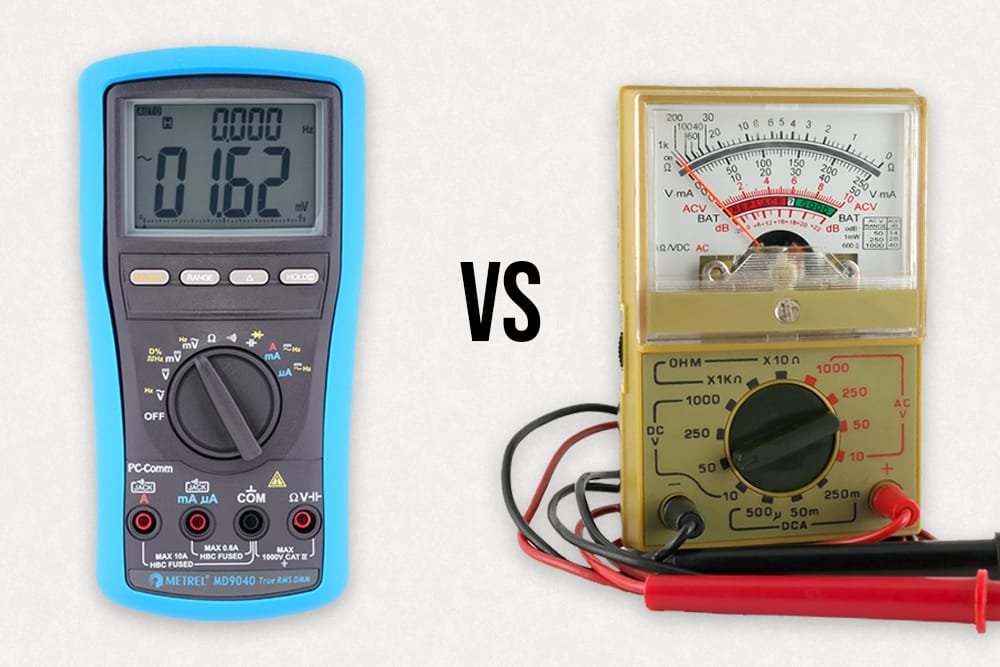
That sounds small, but it affects speed, accuracy, and ease of use. A digital meter gives exact numeric values, such as 12.47 volts. An analog meter shows the reading by needle position, so you estimate the value from the scale.
Digital models are now more common because they are easier to read and usually more accurate. Analog models are still used because they are simple, responsive, and useful in some special situations.
How the display changes the experience
With a digital meter, you get a direct number. There is less guessing. This helps beginners and anyone who needs clear results.
With an analog meter, you watch the needle move. This gives a sense of change over time. If a signal is unstable or slowly rising, the moving needle can sometimes show this better than a screen that updates in steps.
This is one of the first things beginners miss: the “best” meter is not always the one with the most features. Sometimes the most useful tool is the one that matches the job.
Digital multimeter: strengths and weak points
A digital multimeter, often called a DMM, is the modern standard for most users. It uses electronic circuits to measure values and then shows the result on a digital screen.
Pros of a digital multimeter
- Easy to read — The number is clear, even for beginners.
- More accurate — Most digital models give precise readings.
- Extra functions — Many include auto-ranging, continuity beeps, diode test, capacitance, and more.
- Less user error — You do not need to guess the scale as much.
- Compact and practical — Many DMMs are small and travel well.
Auto-ranging is especially helpful. It lets the meter choose the correct measuring range for you. Beginners often forget this feature matters. It saves time and reduces mistakes.
Cons of a digital multimeter
- Battery needed — Most digital models need power to work.
- Can hide fast changes — Some displays update in jumps, not in smooth motion.
- Cheap models can be unreliable — Very low-cost units may give poor quality readings.
- More electronics inside — They can be more sensitive to low-quality build design.
One important point: not every digital multimeter is good just because it has a screen. A poorly made meter can still be unsafe or inaccurate. If you use a multimeter on mains electricity or in a workshop, build quality matters a lot.
When a digital multimeter works best
A digital model is usually the better choice for home users, students, electricians, car repair work, and electronics troubleshooting. If you want quick, exact readings, digital is the easiest path.
It is also the better option when you need to record numbers. For example, if you are checking battery voltage before and after charging, a digital display gives you a clear value you can write down.
Analog multimeter: strengths and weak points
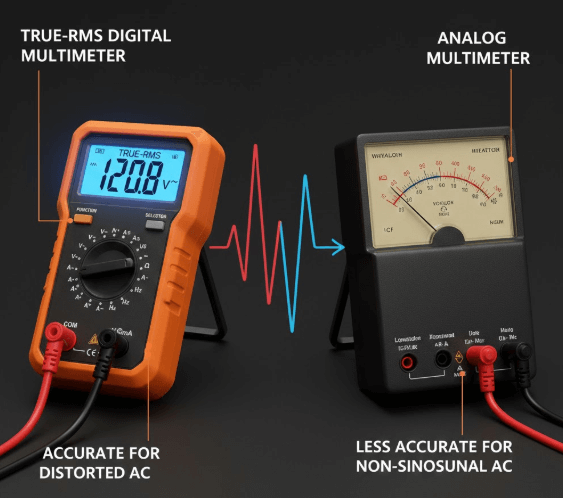
An analog multimeter uses a needle and printed scale. The needle moves according to the electrical value being measured. This older design still has real value in many situations.
Credit: digi-electronics.com
Pros of an analog multimeter
- Shows trends smoothly — Needle movement makes changes easy to see.
- No digital lag — It can show live movement without waiting for screen updates.
- Good for tuning and adjustment — Helpful when setting circuits or watching changing signals.
- Often cheaper — Basic models can cost less than digital ones.
- Uses less or no battery for some measurements — Depending on the model and function.
One less obvious benefit is that analog meters can help you notice unstable readings faster. If a circuit jumps up and down, the needle movement may make that problem easier to spot than a number that flickers on a screen.
Cons of an analog multimeter
- Harder to read — You must estimate the value from the scale.
- Less precise — Small changes are harder to measure accurately.
- Can be affected by viewing angle — Parallax error can change the reading.
- More skill needed — Beginners may find it confusing.
Parallax error is a common beginner mistake. It happens when you look at the needle from the wrong angle and read the scale incorrectly. To avoid this, you must look straight at the meter face.
When an analog multimeter works best
Analog meters are useful for older electronics, signal tracing, and situations where you want to see movement instead of exact numbers. They can also be a good teaching tool because they help people understand how electrical values change in real time.
Some technicians still prefer analog meters for quick “feel” checks. If they want to know whether a voltage is rising, falling, or bouncing around, a needle can tell the story fast.
Digital vs analog multimeter: side-by-side differences
Here is a simple comparison to make the choice easier.
| Feature | Digital Multimeter | Analog Multimeter |
|---|---|---|
| Reading style | Numbers on screen | Moving needle on scale |
| Ease of use | Very easy | Needs practice |
| Accuracy | Usually higher | Usually lower |
| Trend visibility | Good, but sometimes limited | Very good for smooth changes |
| Price | Wide range | Often cheaper in basic models |
| Extra features | Many modern functions | Usually fewer functions |
| Battery dependence | Usually required | Sometimes lower dependence |
| Best for | General use, repairs, beginners | Signal changes, learning, some tuning tasks |
Accuracy, speed, and reading quality
For most people, accuracy is the main reason to buy digital. A digital multimeter usually gives a more exact result. That matters when you need to know if a battery is at 12.4V or 12.7V, or whether a resistor is within tolerance.
But speed is not only about how fast the meter gives a number. It is also about how fast your brain understands the result. A digital reading is easy to understand at a glance. An analog reading needs you to interpret the needle and scale.
Still, analog can win in one narrow area: live movement. If voltage changes quickly, the needle can show that change in a natural way. Some people find this easier to understand than a screen with numbers that jump.
One detail many beginners miss
Accuracy does not always mean “better for every job.” For example, if you are checking whether a sensor output is stable, an analog needle may be more helpful than a digital number that stays mostly fixed. The needle can show tiny drift and flutter better in some cases.
So the real question is not just “Which is more accurate?” It is also “What kind of behavior do I need to see?”
Ease of use for beginners
If you are new to electrical work, a digital multimeter is usually the easier choice. The display is clear, and most meters today include auto-ranging. That means you do not need to choose the range by hand every time.
Beginner-friendly features matter more than many people think. A meter that is simple to use is safer because it reduces confusion. Confusion often leads to wrong settings, weak readings, or even damaged fuses.
Credit: microprecision.com
Common beginner mistakes with multimeters
- Using the wrong mode — For example, measuring voltage while the meter is set to current.
- Forgetting the range — On manual meters, the wrong range can produce bad results.
- Reading an analog scale from the wrong angle — This causes parallax error.
- Not checking fuse protection — Some meters need proper internal fuses to protect the user.
- Thinking all meters are equally safe — Safety category ratings matter when working with mains power.
If you are using a meter near household voltage, always check the safety rating. For general guidance on electrical safety and meter ratings, a trusted source like Fluke’s multimeter guide can be helpful.
Which one is better for home users, electricians, and hobbyists?
The best choice depends on your work.
For home users
A digital multimeter is usually best. It is easier to read and more useful for quick checks like outlet testing, battery testing, and continuity checks.
For electricians
Most electricians prefer a digital multimeter because speed, accuracy, and safety features matter. Many professional jobs also require extra functions, such as true RMS, that are easier to find in digital models.
For electronics hobbyists
Digital is often the better first buy. However, an analog meter can still be useful if you work with changing signals, repair older equipment, or want a deeper feel for circuit behavior.
For students and learners
Digital is better for simple learning. Analog can be added later for practice and understanding. If you are learning the basics of voltage and resistance, digital keeps the process clean and less frustrating.
Safety and quality matter more than the format
Many buyers focus only on digital vs analog multimeter, but the real safety difference often comes from build quality, not the display style. A low-quality digital meter is still a poor choice. A well-made analog meter may be useful, but it must also be safe for the work you do.
Look for strong test leads, clear input labels, proper fuse protection, and a safety rating that matches the job. If you will test electrical panels, outlets, or appliances, do not choose a meter only because it is cheap.
Another detail beginners often miss is input protection. A meter that looks simple may still fail badly if it is exposed to the wrong kind of current or voltage. Good protection is not visible on the display, but it is one of the most important features.
How to choose the right multimeter
Use these practical questions before you buy:
- Do I need exact numbers or just a general reading?
- Will I measure fast-changing signals?
- Do I want a tool that is easy to read right away?
- Will I use it for home repair, electronics, or professional electrical work?
- Do I need extra features like auto-ranging, continuity beep, or true RMS?
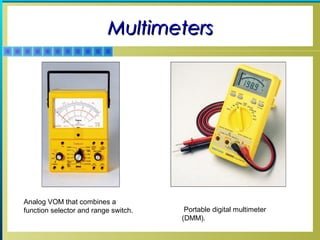
If you answered “easy to read,” “exact numbers,” or “general use,” a digital multimeter is likely the better pick. If you answered “watching movement,” “older circuits,” or “signal changes,” an analog meter may still be worth considering.
For most buyers today, the safe and practical answer is simple: choose digital unless you have a clear reason to use analog. That is the common path because digital models solve most everyday problems faster and with less effort.
Credit: slideshare.net
Final choice: digital or analog?
When comparing digital vs analog multimeter, the digital option wins for most people. It is easier to use, clearer to read, and usually more accurate. It also offers more features for the price.
But analog is not obsolete. It still has value when you want to see movement, check unstable signals, or work with older equipment. In the right hands, it can be a very useful tool.
If you are buying only one meter, get a good digital multimeter first. If your work later needs smooth visual tracking of changing values, then an analog meter can become a second tool, not a replacement.
Frequently asked questions
1. Which is more accurate, digital or analog multimeter?
A digital multimeter is usually more accurate. It shows exact numbers and reduces reading errors. Analog meters are useful, but they are harder to read with precision.
2. Is an analog multimeter still useful today?
Yes. An analog multimeter is still useful for watching changing signals, checking unstable values, and working with some older electronic systems. It is not outdated for every job.
3. Is a digital multimeter better for beginners?
Yes, in most cases. A digital multimeter is easier to understand because the result appears as a number. Beginners usually make fewer mistakes with it.
4. Can a digital multimeter measure the same things as an analog one?
In most basic cases, yes. Both can measure voltage, current, and resistance. Digital models often offer more extra features, while analog models are simpler.
5. Which multimeter should I buy first?
For most people, the first choice should be a digital multimeter. It is practical, easy to read, and suitable for home repairs, electronics, and general troubleshooting.
