
If you have ever seen a drill bit chew through concrete like it is soft wood, you were probably watching a rotary hammer do its job. This tool looks similar to a normal drill, but it works in a very different way. That difference matters a lot when the material gets hard, thick, or stubborn.
Many beginners ask, what is a rotary hammer used for, and the short answer is this: it is made for drilling and chiseling hard materials such as concrete, brick, stone, and masonry. But there is more to it than that. A rotary hammer can save time, reduce effort, and help you do jobs that would be nearly impossible with an ordinary drill.
In this guide, you will learn how a rotary hammer works, what it is best used for, when to choose one, and what benefits it gives on real jobs. You will also see where people often make mistakes, so you can use the tool with more confidence and better results.
How a Rotary Hammer Works
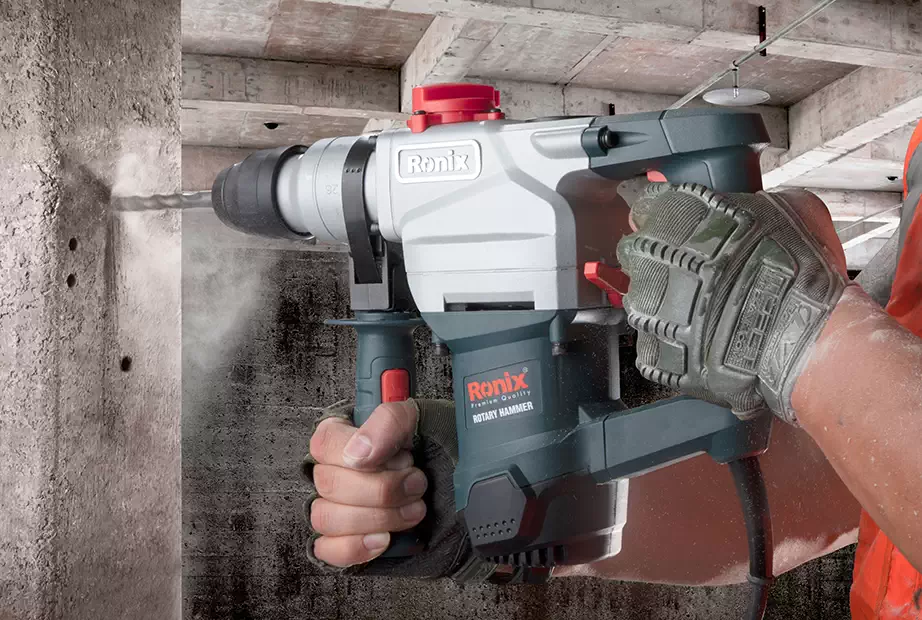
A rotary hammer is a power tool built for heavy-duty drilling in hard materials. It uses two actions at the same time: rotation and hammering. The drill bit spins, and at the same time, the tool delivers a strong pounding motion forward. This is what helps it break through concrete and masonry much faster than a normal drill.
There is an important difference between a rotary hammer and a regular hammer drill. A hammer drill gives a light tapping action that helps on brick or block. A rotary hammer uses a much stronger piston-driven mechanism. That means more force, less strain on the user, and better performance on tough surfaces.
Most rotary hammers use SDS or SDS-Plus bits, and heavier models use SDS-Max bits. These special bit systems hold the bit more securely and allow it to move slightly during hammer action. That small movement helps the tool transfer energy more efficiently.
Why this matters in real work
If you need to drill one small hole in a soft wall, a rotary hammer is probably too much. But if you need to drill many holes into concrete, remove tiles, or chip away masonry, it becomes a very smart choice. The tool is designed to do hard work without forcing you to push too hard.
What Is a Rotary Hammer Used For in Daily Projects?
The main uses are simple to understand, but each one helps in a different way. A rotary hammer is not a one-task tool. It can support many construction, repair, and renovation jobs.
1. Drilling into concrete
This is the most common use. A rotary hammer is ideal for making holes in concrete slabs, walls, floors, and foundations. It is often used when installing anchors, fasteners, conduit clips, support brackets, or wall mounts.
Concrete is dense and hard. A normal drill may struggle, overheat, or wear out quickly. A rotary hammer cuts through it with much less effort. This is one of the biggest reasons professionals rely on it.
2. Drilling into brick and block
Brick and masonry block are easier than solid concrete, but they still need a strong tool if you are drilling many holes or working on older, harder material. A rotary hammer gives cleaner, faster results and helps reduce cracked edges around the hole.
3. Chiseling and light demolition
Many rotary hammers have a hammer-only mode. In this mode, the bit does not spin. It only hammers forward. This is useful for chipping tile, breaking small bits of concrete, opening channels for pipes, or removing old mortar.
For example, if you are remodeling a bathroom and need to remove tile from a concrete wall, a rotary hammer with a chisel bit can make the work much easier and faster.
4. Removing mortar and cleaning joints
Brick restoration work often needs old mortar to be removed before repointing. A rotary hammer can be fitted with a proper chisel or mortar removal accessory to clean joints without damaging the bricks too much. This takes practice, but it is a common use on repair jobs.
5. Anchor and rebar-related work
When installing heavy fixtures, machines, railings, or support systems, the tool is often used to drill anchor holes. In some cases, it can help make holes for chemical anchors or mechanical anchors that need a strong grip in concrete.
6. Site and renovation work
Rotary hammers are common on building sites, but they are also very useful for home renovation. People use them for drilling into basement walls, hanging large shelves, mounting TV brackets on concrete, or opening small passages for cables and pipes.
Where a Rotary Hammer Performs Best
Not every material needs the same tool. A rotary hammer shines when the surface is hard and the work volume is high. It is most useful in these situations:
- Concrete walls and floors
- Brick and masonry block
- Stone and natural masonry
- Tile removal on hard backings
- Mortar cleaning and surface chiseling
- Anchor hole drilling for heavy fixtures
One thing beginners often miss is that rotary hammers are not only about power. They are also about efficiency. A job that takes 15 minutes of strain with a wrong tool may take 2 or 3 minutes with the right one. That time saving becomes very important on larger projects.
Another detail many people overlook is bit quality. Even a strong rotary hammer will perform poorly with a dull or wrong-size bit. A sharp masonry bit, the right shank type, and the correct drilling mode matter just as much as the tool itself.
Credit: ronixtools.com
Benefits of Using a Rotary Hammer
People usually buy a rotary hammer because they need power. But the real benefits go beyond raw force. It changes how fast, safe, and accurate your work can be.
Less effort from the user
The tool does most of the hard work. You do not need to push as hard as you would with a standard drill. That means less body strain, especially during long jobs or overhead drilling.
Faster drilling in hard materials
A rotary hammer can drill concrete much faster than a regular drill. This is important for professionals who need speed and for homeowners who want to finish one project without frustration.
Cleaner and more controlled results
Because the tool is made for masonry work, it usually produces better hole quality in concrete and brick. You are also less likely to burn out the motor by forcing the tool to do a job it was not designed for.
More job flexibility
With the right bits, the same tool can drill, chip, and remove material. This makes it useful for many different tasks, especially in renovation and repair work.
Better for repeated use
If you have many holes to drill, the rotary hammer becomes even more valuable. The tool stays more efficient over time because its hammer mechanism is built for repeated impact work.
| Task | Regular Drill | Rotary Hammer |
|---|---|---|
| Small hole in wood | Best choice | Not needed |
| Hole in concrete | Slow and difficult | Best choice |
| Hole in brick | Possible, but slower | Much faster |
| Tile chipping | Not suitable | Good with chisel mode |
| Heavy anchor installation | Limited use | Very effective |
Rotary Hammer vs Hammer Drill vs Regular Drill
People often confuse these tools because they look similar. But the way they work is very different.
Regular drill
A regular drill is best for wood, metal, plastic, and light work. It can sometimes drill masonry with the right bit, but it is not built for heavy concrete work.
Hammer drill
A hammer drill adds a light hammering motion to rotation. It helps on brick, block, and soft masonry. It is useful for small home projects, but it is not the best tool for hard concrete or large jobs.
Rotary hammer
A rotary hammer uses a piston-based impact system that delivers much stronger force. This makes it the right choice for serious masonry work. If your job includes concrete drilling or chiseling, this is usually the tool to choose.
Here is a simple rule that helps beginners: if the material feels hard enough to slow down a normal drill very quickly, a rotary hammer may be the better tool. If you only need to drill light holes in a few soft bricks, a hammer drill may be enough.
Types of Rotary Hammers
Not all rotary hammers are the same. The type you choose should match the size of the work.
Light-duty rotary hammers
These are often compact and easy to handle. They are good for home use, light anchor work, and smaller holes. Many DIY users prefer these because they balance power and control well.
Medium-duty rotary hammers
These tools handle more demanding jobs and are often used by contractors. They are suitable for frequent drilling in concrete, larger anchors, and some chiseling tasks.
Heavy-duty rotary hammers
These are built for bigger holes, deeper drilling, and serious demolition tasks. They are heavier and more expensive, but they offer the strongest performance. If you need to work in reinforced concrete or do regular construction work, this type may be the right fit.
How to choose the right size
Do not buy the biggest tool just because it has more power. A larger rotary hammer may be harder to control and more tiring to use. Match the tool to the actual size of your jobs. This is one of the smartest buying decisions you can make.
Safety and Best Practices
Power tools are useful, but they must be handled carefully. A rotary hammer can create dust, noise, vibration, and flying chips. Good habits make the tool safer and more effective.
- Wear eye protection every time.
- Use hearing protection for long drilling sessions.
- Check that the bit is locked in correctly before starting.
- Let the tool do the work instead of forcing it.
- Keep both hands on the tool when possible.
- Watch for hidden wires, pipes, or rebar inside walls.
Dust control is another important point. Concrete dust can be harmful if you breathe too much of it. For more general safety guidance on construction dust, the CDC/NIOSH is a useful authority.
One beginner mistake is using too much pressure. With rotary hammers, heavy pushing does not always help. In many cases, it slows the tool down and increases wear. A steady grip and moderate pressure usually work better.
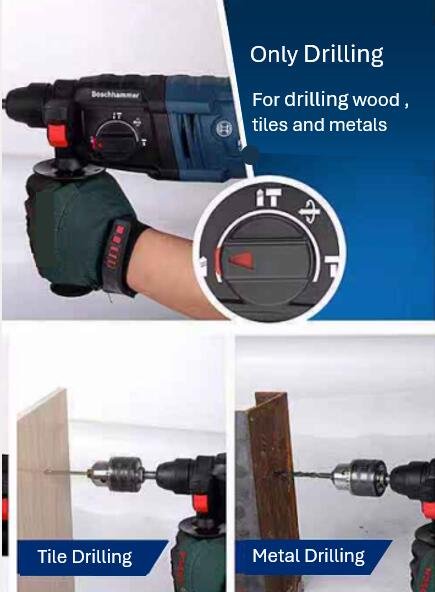
Another common mistake is using the wrong mode. If you are drilling into concrete, you need the hammer-drill mode. If you are chiseling, you need hammer-only mode. If the tool has a rotation-only mode, use that for special tasks and the correct accessories.
Credit: dingguantools.com
Common Jobs Where a Rotary Hammer Saves Time
It helps to picture real use cases. Here are some jobs where the rotary hammer proves its value again and again.
- Installing wall brackets in concrete for shelves, cabinets, or equipment.
- Mounting handrails on brick or masonry walls.
- Drilling holes for anchors in basement or garage walls.
- Breaking up damaged tile during bathroom repair.
- Chiseling small channels for pipes or electrical conduit.
- Cleaning mortar joints for restoration work.
These tasks are common, but they can become slow and tiring without the right machine. A rotary hammer turns them into practical jobs instead of frustrating ones.
What to Look for Before Buying
If you are thinking about buying one, focus on real needs, not just big numbers on the box. Power matters, but it is not the only thing that matters.
- Impact energy for harder drilling and chiseling
- Weight if you need to hold the tool for long periods
- Bit system such as SDS-Plus or SDS-Max
- Mode settings for drilling, hammer drilling, and chiseling
- Anti-vibration features for comfort
- Depth stop and side handle for better control
Beginners often focus only on wattage or voltage. Those numbers matter, but impact energy and bit system are often more useful when comparing rotary hammers. A smaller tool with good impact performance can be more practical than a bigger one that feels awkward and tiring.
When You Should Not Use a Rotary Hammer
Even a great tool has limits. A rotary hammer is not the right choice for every job.
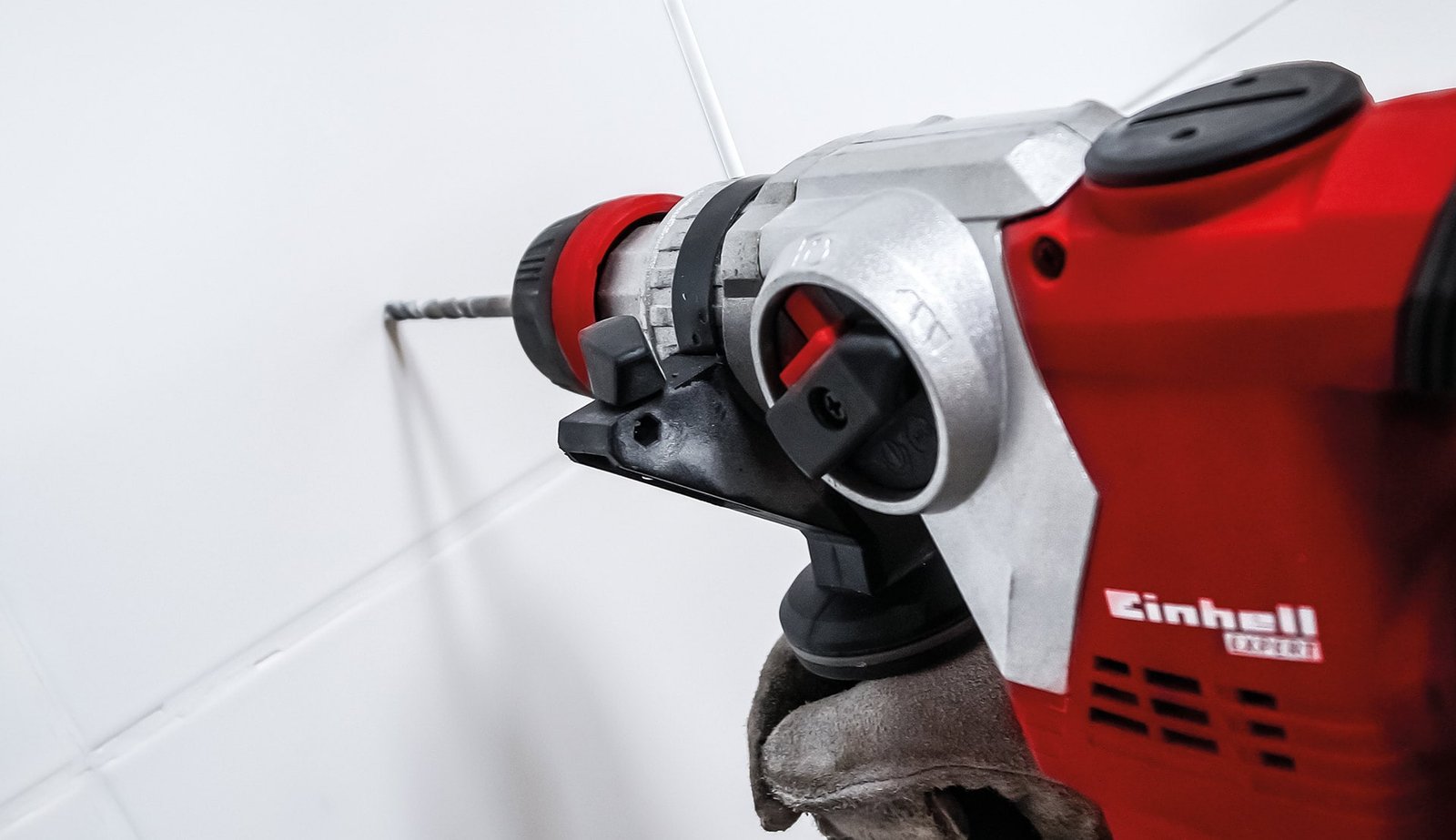
Do not use it for fine woodworking, thin metal drilling, or delicate materials that can crack easily. It is also not the best choice for small household jobs where a simple drill is faster and easier. If you only need a few tiny holes in plasterboard or wood, a rotary hammer may be overkill.
Also, be careful with fragile brick or old masonry. Strong hammering can damage weak material if the bit and mode are not used correctly. In older buildings, test carefully before going deeper.
Credit: einhell.co
Why Professionals Rely on It
Contractors and tradespeople use rotary hammers because the tool gives reliable results under tough conditions. They need speed, durability, and less downtime. A tool that saves even a few minutes per hole can make a huge difference over a full workday.
It also improves consistency. When a project needs many anchor points or repeated drilling, the rotary hammer helps make each hole more uniform. That matters for fit, strength, and finish quality.
For many workers, the real benefit is not just power. It is confidence. They know the tool can handle concrete, brick, and masonry without fighting back.
Final Thoughts
So, what is a rotary hammer used for? It is used for drilling and chiseling hard materials like concrete, brick, stone, and masonry. It is also used for anchor work, tile removal, mortar cleaning, and light demolition. In short, it is the right tool when ordinary drills are no longer enough.
If your projects include concrete or heavy masonry, a rotary hammer can save time, reduce effort, and improve results. The key is to choose the right size, use the right bits, and match the mode to the task. When used well, this tool becomes one of the most useful machines in a workshop, renovation kit, or job site.
FAQs
1. Can a rotary hammer replace a regular drill?
Not completely. A rotary hammer is excellent for concrete and masonry, but a regular drill is still better for wood, metal, and light household work. Many people own both because each tool has a different job.
2. Is a rotary hammer good for home use?
Yes, if you often drill into concrete, brick, or block. It is very useful for home projects like mounting shelves, installing anchors, or removing tile. For very light tasks, it may be more tool than you need.
3. What kind of bits does a rotary hammer use?
Most rotary hammers use SDS-Plus or SDS-Max bits, depending on the model. These bits are made to handle the hammering action and give better grip than standard drill bits.
4. Can I use a rotary hammer on wood or metal?
Yes, some models have a rotation-only mode, but it is usually not the best choice. A regular drill will normally give cleaner, faster, and more controlled results on wood and metal.
5. Why does my rotary hammer feel slow in concrete?
It may be due to a dull bit, the wrong mode, too much pressure, or weak material support. Check the bit condition first, make sure hammer mode is on, and let the tool work at its own pace.
