
A bench grinder is one of those tools that looks simple, but it can do a lot. If you have ever seen sparks flying from a small wheel in a workshop, that was likely a bench grinder at work. It can sharpen tools, smooth rough edges, clean metal, and even help shape small parts.
If you are wondering what is a bench grinder used for, the short answer is this: it is a powerful bench-mounted tool used for grinding, sharpening, cleaning, and finishing metal and other hard materials. But that simple answer does not show how useful it really is. In the right hands, it saves time, improves tool life, and makes workshop work much easier.
In this guide, you will learn the main uses of a bench grinder, what features matter most, how to use it safely, and which mistakes beginners should avoid. If you are setting up a home workshop or just want to understand this tool better, this article will give you a clear and practical view.
What a bench grinder actually does
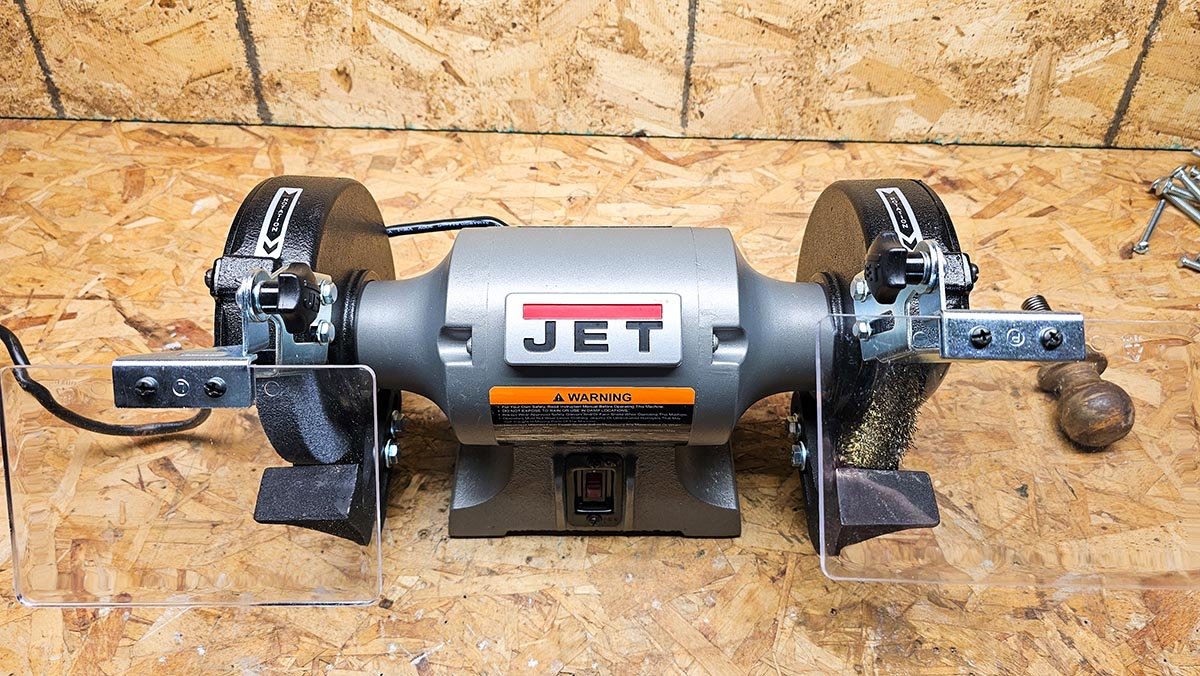
A bench grinder is a fixed power tool with two rotating abrasive wheels, one on each side of a motor. It sits on a workbench or stand, which is where the name comes from. The wheels spin at high speed and remove small amounts of material from a workpiece.
Most people think of it as a sharpening tool, but that is only one part of the story. A bench grinder can also remove rust, smooth welded joints, restore damaged edges, and prepare metal for more detailed work. Some models come with different wheels or attachments for different jobs, such as wire wheels, polishing wheels, or fine grinding stones.
What makes it useful is the mix of speed and control. It is not meant for heavy cutting like a chop saw, and it is not for delicate finishing like a file. Instead, it fills the important middle ground where you need fast material removal and decent control.
Main uses of a bench grinder
Bench grinders are common in machine shops, garages, repair shops, and home workshops. Here are the most practical ways people use them.
1. Sharpening tools
This is the best-known use. A bench grinder can sharpen chisels, drill bits, garden tools, knives, plane blades, and many other steel tools. It works by grinding a new edge onto a dull tool.
Sharpening on a grinder is fast, but it must be done carefully. Too much pressure can overheat the metal and damage the temper. That is why short passes and frequent cooling matter.
Beginners often miss one important point: a sharp tool is not always about a thin edge alone. The angle matters just as much. If the angle is wrong, the tool may feel sharp at first but will dull quickly or perform badly.
2. Removing rust and corrosion
With a wire wheel attachment, a bench grinder can clean rust from bolts, brackets, hand tools, and old metal parts. This is useful when restoring tools or preparing parts for painting or welding.
The wire wheel is especially helpful on uneven surfaces where sandpaper would take too long. It can clean surface rust faster and reach into small grooves. Still, you need to hold the part firmly because the wheel can grab light pieces and throw them.
3. Cleaning metal surfaces
Metal often has scale, paint, burrs, or residue from cutting and welding. A bench grinder can remove these unwanted layers. This helps when you need a clean surface before assembly, welding, or finishing.
This use is common in fabrication work. A clean surface improves weld quality and helps coatings stick better. Many beginners focus only on sharpening and forget that a grinder is also a strong prep tool.
4. Smoothing rough edges
After cutting metal, the edges are often rough and sharp. A bench grinder can smooth these edges quickly. This makes parts safer to handle and easier to fit together.
For example, if you cut a steel bracket and the edge feels jagged, a few light passes on the grinder can make it clean and even. This is one of the simplest and most useful jobs the tool can do.
5. Shaping metal parts
A bench grinder can shape small metal pieces by removing material where needed. This may include rounding corners, adjusting a bolt head, or fine-tuning a part to fit.
It is not a precision shaping machine, but it works well for rough shaping. Many mechanics and metalworkers use it for small corrections that would take much longer by hand.
6. Deburring
Burrs are thin raised edges left after cutting, drilling, or machining. They may seem small, but they can affect fit and safety. A bench grinder removes burrs quickly and cleanly.
This is one of those workshop tasks people often ignore until a part refuses to fit properly. Removing burrs can make assemblies go together more smoothly and reduce the chance of injury.
7. Polishing and finishing
Some bench grinders use buffing or polishing wheels instead of grinding wheels. These are useful for bringing shine to metal parts, tools, and small components.
This is not the same as heavy grinding. It is a lighter finishing task. If you want a clean look on a metal surface, a bench grinder with the right wheel can help.
8. Helping with drill bits and cutting tools
Drill bits, lathe tools, and other small cutting tools often need edge maintenance. A bench grinder can restore the cutting point or improve the shape of the cutting edge.
This is where experience matters. Small changes in angle can make a big difference in performance. If you are new, practice on cheap tools before working on expensive ones.
Types of wheels and what they are for
Not every wheel does the same job. The wheel choice changes what the grinder can do and how it behaves.
| Wheel type | Common use | Best for |
|---|---|---|
| Coarse grinding wheel | Fast material removal | Shaping, heavy sharpening, rough work |
| Fine grinding wheel | More controlled grinding | Sharpening tools, smoother edges |
| Wire wheel | Cleaning and rust removal | Metal prep, restoring old parts |
| Buffing wheel | Polishing | Finishing metal surfaces |
One detail beginners often miss is that wheel speed and wheel type must match the job. A coarse wheel removes material faster, but it can also make the surface rougher and produce more heat. A fine wheel gives better control, but it works more slowly.

Credit: istockphoto.com
When a bench grinder is the right tool
A bench grinder is best when you need to remove small amounts of material from hard surfaces. It is ideal for maintenance, repair, sharpening, and cleanup work.
It is not the right tool for everything. It should not replace a sander, file, or cutting tool. If you try to use it like a saw or force it to do precision work, you may damage the part or the wheel.
Think of it this way: a bench grinder is a problem-solver. It fixes dull edges, rough surfaces, rust, and small shape issues fast. That makes it very useful in everyday workshop tasks.
How to use a bench grinder safely
Because the wheels spin quickly, safety matters a lot. A bench grinder is useful, but it can also be dangerous if used carelessly. The good news is that safe use is simple once you know the basics.
Set up the grinder correctly
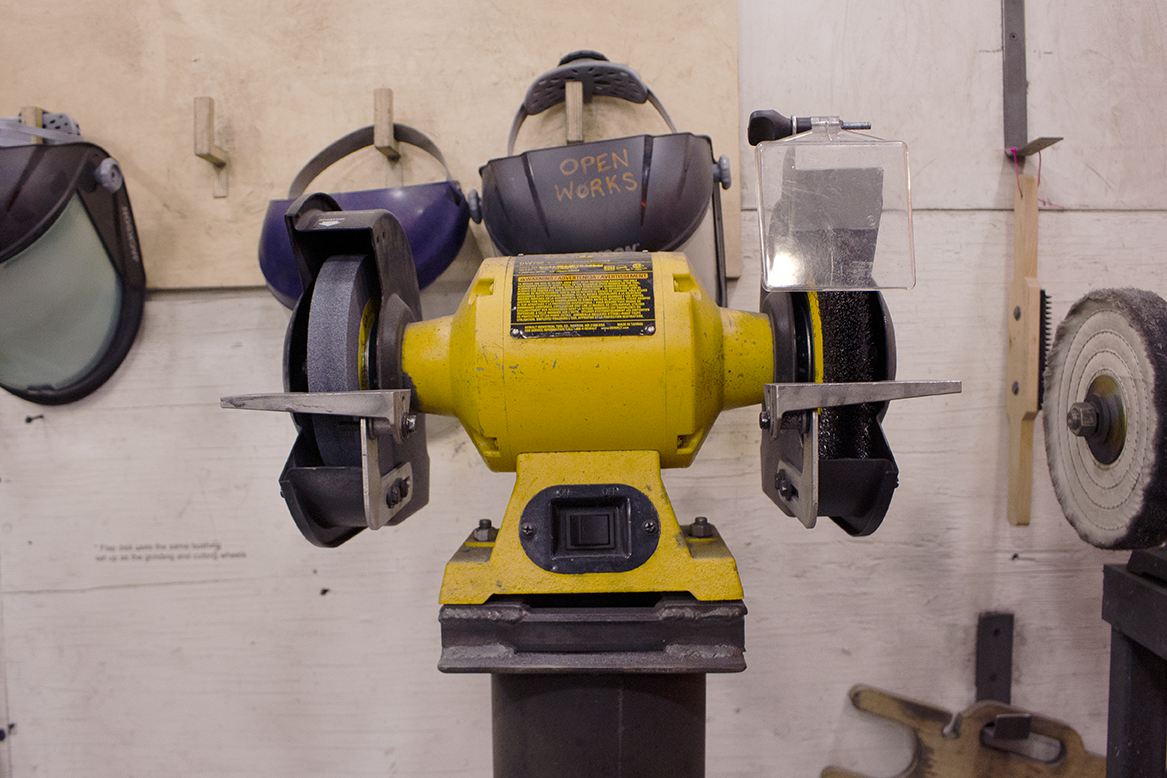
Before using the tool, check that it is bolted down firmly. A moving grinder is unsafe. Also check the tool rests and guards. The rest should sit close to the wheel, and the guard should cover the wheel properly.
According to OSHA, machine guarding and safe setup are important for preventing injury when working with power tools. That advice applies strongly to bench grinders.
Wear the right protection
Always wear safety glasses or a face shield. Small bits of metal or wheel fragments can fly off at high speed. Hearing protection may also help if you use the grinder often.
Do not wear loose sleeves, jewelry, or anything that can get caught. Tie back long hair. Keep your hands away from the wheel path as much as possible.
Use light pressure
Let the wheel do the work. If you push too hard, you create heat, slow the motor, and wear out the wheel faster. Light pressure gives better control and safer results.
This is a common beginner mistake. Many people think harder pressure means faster work, but with grinders, that usually causes worse results.
Keep the work moving
Do not hold one spot against the wheel for too long. Move the piece side to side in short passes. This helps prevent overheating and reduces grooves in the metal.
If the part starts to change color from heat, stop and cool it. Blue marks on steel usually mean the metal has gotten too hot.
Know the direction of the sparks
Stand slightly to one side, not directly in line with the sparks. This gives you better protection if a small piece breaks loose. It also keeps your body out of the main spark path.
Common mistakes beginners make
Many first-time users assume the grinder is simple enough that mistakes do not matter. In reality, small errors can ruin tools or cause injuries. These are the most common ones.
- Using the wrong wheel – A grinding wheel is not the same as a wire wheel or buffing wheel. Each one has a different purpose.
- Pressing too hard – Heavy pressure creates heat and poor results.
- Sharpening at the wrong angle – This weakens the edge and reduces tool life.
- Ignoring wheel wear – Worn or damaged wheels can vibrate and perform badly.
- Skipping eye protection – This is one of the fastest ways to get hurt.
Another mistake is assuming the grinder will fix every problem. It is a strong tool, but it still needs the right technique. Good results depend on patience and control, not force.
Credit: bobvila.com
Choosing a bench grinder for your workshop
If you are buying one, think beyond just motor power. A stronger motor helps, but it is not the only thing that matters.
Wheel size
Common wheel sizes are 6-inch and 8-inch. Larger wheels usually offer smoother grinding and better control for bigger tools. Smaller wheels are more compact and may fit smaller spaces better.
Motor speed
Speed affects how the grinder behaves. Higher speed removes material faster, but it can also create more heat. For general workshop use, a stable and reliable motor is often more valuable than just raw speed.
Tool rests and guards
Good rests and guards improve safety and accuracy. The tool rest should be solid and easy to adjust. Poor rests make sharpening harder and less safe.
Wheel quality
Cheap wheels wear unevenly and may vibrate more. Better wheels give a smoother finish and last longer. This is worth paying attention to, because wheel quality affects the final result just as much as motor power.
Vibration
Too much vibration is a sign of poor balance, bad mounting, or a worn wheel. A grinder should feel stable. If it shakes too much, it becomes harder to control and less safe to use.
Practical tips for better results
These small habits can make your bench grinder work better and last longer.
- Dress the wheel when it becomes glazed or uneven.
- Use both hands for better control on larger pieces.
- Keep a container of water nearby for cooling tools when needed.
- Check the wheel for cracks before use.
- Match the wheel to the material and job.
- Work in short passes instead of trying to finish in one go.
One useful tip many beginners miss is to mark the edge before sharpening. A light marker line helps you see whether you are hitting the correct angle. It is a simple trick, but it makes learning much easier.
Another smart habit is to keep the grinder clean. Dust, metal grit, and worn abrasive particles can build up over time. A clean tool is easier to inspect and safer to use.
Materials you should and should not grind
Bench grinders are mainly made for metal, but not all materials are good candidates.
Good for: steel, iron, some tool metals, welded parts, and hardware.
Use caution with: aluminum and other soft metals, because they can load the wheel quickly.
Avoid: plastics, wood, and materials that can melt, burn, or clog the wheel. These can damage the tool and create unsafe conditions.
If you are unsure about a material, test a small hidden area first or choose a different tool. That is safer than guessing.
Credit: wiki.openworksbmore.org
Why a bench grinder is still useful today
Even with many modern power tools available, the bench grinder remains valuable. It is compact, fast, and easy to use for common shop tasks. You do not need advanced skill to get useful results from it, but you do need basic care and respect for the tool.
It is especially helpful because it solves many small problems at once. A dull chisel, a rusty bolt, and a rough metal edge can all be handled with one machine. That is a big reason why so many workshops keep one nearby.
In simple terms, if you work with tools or metal often, a bench grinder earns its place quickly.
FAQs
What is a bench grinder used for in a home workshop?
In a home workshop, a bench grinder is used for sharpening tools, removing rust, smoothing edges, cleaning metal parts, and doing small shaping jobs. It is useful for quick repair and maintenance work.
Can a bench grinder sharpen knives?
Yes, it can sharpen some knives, but you must use care. Too much heat can damage the blade. Many people prefer finer sharpening tools for kitchen knives because they give more control.
Is a bench grinder safe for beginners?
Yes, if it is used with proper safety steps. Wear eye protection, keep the tool rest adjusted, use light pressure, and never force the workpiece into the wheel.
What is the difference between a bench grinder and a bench sander?
A bench grinder removes material with abrasive wheels and is better for sharpening, shaping, and cleaning metal. A bench sander uses sanding belts or discs and is often better for smoother finishing and material leveling.
How often should I dress a bench grinder wheel?
Dress the wheel when it becomes glazed, uneven, or slow to cut. If the wheel stops working smoothly, dressing helps restore its shape and cutting ability.
