
If you are trying to decide between a scroll saw vs jigsaw, the answer is not just about power or price. It is about the kind of cuts you want to make, the material you use, and how much control you need over the blade. These two tools can both make curves, but they do it in very different ways.
A scroll saw is usually the better choice for fine detail, small turns, and clean inside cuts. A jigsaw is more flexible, faster, and better for larger projects or cutting on a worksite. If you pick the wrong tool, the job can become slower and the cut quality can suffer. If you pick the right one, the work feels easier and looks better.
In this guide, you will learn the real differences, where each tool works best, common mistakes, and how to choose the right one for your project. By the end, you will know which tool fits your needs without wasting money or time.
What each tool is designed to do
At a basic level, both tools cut wood and some other materials with a thin blade. But they are built for different kinds of work. That is why the scroll saw vs jigsaw choice matters so much.
Scroll saw
A scroll saw is a stationary tool. The blade moves up and down very fast, while the material stays on a flat table. You guide the workpiece by hand. This makes it ideal for detailed patterns, tight curves, and delicate cuts.
It is often used for:
- Intricate wood patterns
- Small decorative projects
- Inlay work
- Fine model making
- Inside cuts with drilled starter holes
Jigsaw
A jigsaw is a handheld power tool. The blade also moves up and down, but you move the tool across the material. This gives you more freedom and makes it useful for larger sheets, rough curves, and cuts that do not need perfect detail.
It is often used for:
- Cutting plywood or boards
- Curved cuts in furniture projects
- Cutouts for sinks and outlets
- Quick trimming jobs
- Jobsite and home repair work
The biggest differences between a scroll saw and a jigsaw
Many beginners think the main difference is size. That is only part of the story. The real differences are in control, speed, accuracy, and the kind of cut each tool can make.
| Feature | Scroll Saw | Jigsaw |
|---|---|---|
| Tool type | Stationary | Handheld |
| Best for | Fine detail and small curves | General cutting and larger curves |
| Control | Very high | Moderate |
| Speed | Slower | Faster |
| Cut accuracy | Excellent | Good to fair |
| Inside cuts | Very easy | Possible, but less convenient |
| Material size | Best for small to medium pieces | Works on large sheets and panels |
| Portability | Low | High |
The table makes one thing clear: these tools are not direct substitutes. They overlap in some jobs, but each has a strong area where it performs better than the other.
Control and precision
A scroll saw gives much finer control because the material stays flat on the table. Your hands guide the wood, not the tool. That makes it easier to follow small patterns and delicate lines. If you need to cut a tiny shape or a sharp turn, the scroll saw is usually better.
A jigsaw is less precise because you hold the tool in the air. It can still make smooth curves, but the blade can drift if you move too fast or if the material is not well supported. A steady hand helps a lot, but it will not match the precision of a scroll saw.
Speed and convenience
The jigsaw wins when speed matters. You can set it on a board, follow a marked line, and finish quickly. It is useful for jobs where perfect edge quality is not the main goal.
The scroll saw is slower by nature. It is meant for careful work, not fast removal of material. That slower pace is actually a strength when detail matters, because it gives you more time to guide the cut.
Cut depth and material size
A jigsaw can handle large panels, long boards, and thick sheets more easily. You can move around the workpiece, which makes it practical for furniture, flooring, and remodeling.
A scroll saw is better for smaller pieces because the tool has limited throat depth, which is the distance from the blade to the back of the saw. That means large boards are harder to use, even if the cut itself is not very deep.
Blade style and cut quality
Scroll saw blades are very thin and designed for delicate work. They leave a clean cut, especially on soft wood and thin stock. But they are not made for heavy, aggressive cutting.
Jigsaw blades are thicker and come in many styles for wood, metal, plastic, and laminate. They cut faster, but they can leave more tear-out, especially on finished surfaces. For cleaner results, many users place masking tape over the cut line or choose a fine-tooth blade.
What each tool is best used for
The easiest way to choose is to think about the project itself. Not every cut needs the same tool.
Credit: thesawguy.com
When a scroll saw is the better choice
-
Decorative patterns and fretwork
If you want to cut letters, ornaments, or detailed art designs, a scroll saw is the clear winner. Its blade can turn very tightly without damaging the workpiece.
-
Small craft projects
It is excellent for puzzle pieces, wooden toys, holiday decorations, and other small projects where appearance matters more than speed.
-
Inside cuts with high detail
When you need to cut a hole or an inner shape, the scroll saw makes this simple after drilling a starter hole. This is one of its strongest features.
-
Thin wood and delicate stock
Thin boards can be cut cleanly without forcing the blade. That reduces breakage and keeps edges neat.
When a jigsaw is the better choice
-
Large projects
If you are cutting plywood, particle board, laminate, or long boards, a jigsaw is more practical. You can move it easily over the work surface.
-
Home repair and remodeling
Cutting openings for sinks, pipes, outlets, and vents is a common jigsaw job. It is a very useful tool for this type of work.
-
Rough curves and quick cuts
If the cut does not need perfect detail, the jigsaw saves time. It gives solid results without a long setup.
-
Work away from the shop
Because it is handheld and portable, you can take it anywhere. That makes it useful for job sites and outdoor projects.
Accuracy, finish, and learning curve
For beginners, this is one of the most important parts of the scroll saw vs jigsaw decision. A tool may look simple, but the learning curve can be very different.
Why the scroll saw often feels easier for detail work
Even though the scroll saw is slower, many beginners find it easier to control for decorative cuts. The material stays flat, and both hands can guide the work. You do not need to balance a moving tool in the air.
A smart beginner tip: let the blade do the cutting. Do not push the wood too hard. If you force it, the blade may bend and the cut line will wander. This is one of the most common mistakes new users make.
Why the jigsaw is harder to keep perfectly straight
A jigsaw is easy to pick up, but that does not mean it is easy to master. Since you guide the tool by hand, small movements in your wrist can change the cut. Blade flex can also make the line drift, especially in thick material.
Another point beginners miss: the blade cuts on the upstroke, so the bottom side of the material often has more tear-out. If the visible side is important, place the good face down on most woods, or use a blade and backing method that reduces splintering.
Finish quality differences
A scroll saw often leaves a cleaner edge on thin wood. That reduces sanding time. For detailed crafts, that can save a lot of effort.
A jigsaw can still produce good results, but the edge usually needs more cleanup. If you care about final appearance, blade choice and cutting speed matter a lot. Slow down on the curve, and support the material near the cut line to reduce vibration.
Choosing the right tool for your workshop
There is no single winner. The right tool depends on what you make most often. If your work is mostly decorative, a scroll saw may be the better investment. If you build, repair, or remodel, a jigsaw will probably get used more often.
Credit: luxuryhomestuff.com
Choose a scroll saw if you mostly:
- Make signs, ornaments, and art pieces
- Cut small or thin wood pieces
- Need very tight curves
- Want clean inside cuts for detailed work
- Work mainly in a workshop, not on job sites
Choose a jigsaw if you mostly:
- Cut plywood, boards, or sheet goods
- Do home improvement or installation work
- Need one tool for many different jobs
- Want portability and speed
- Do not need extreme precision
Here is a useful rule: if the project is judged by detail, choose a scroll saw. If it is judged by utility and speed, choose a jigsaw.
Common mistakes people make with both tools
Many cutting problems come from poor setup, not from the tool itself. These are mistakes that can ruin a project.
Using the wrong blade
A coarse blade on thin material can tear the wood. A fine blade on thick material can burn or slow down. Match the blade to the material and the kind of cut you want.
Moving too fast
This happens a lot with jigsaws. People try to cut quickly and end up with a wavy line or rough edge. With a scroll saw, pushing too hard can break the blade or make the cut wander.
Not supporting the workpiece
With a jigsaw, unsupported material can vibrate and splinter. With a scroll saw, thin pieces can lift or chatter if you do not hold them gently but firmly. Good support improves both safety and cut quality.
Ignoring the visible side of the cut
This is a small detail beginners often miss. On many jigsaw cuts, the top and bottom edges do not look the same. Planning which side will face up can save a lot of sanding and frustration.
Forgetting about dust and safety
Both tools make dust and small chips. Eye protection is important. A dust extractor or shop vacuum also helps, especially with scroll saws, because fine dust can hide the cut line.
What matters most when buying
If you are ready to buy, do not look only at the price. Look at the features that actually affect your work.
For a scroll saw, check:
- Throat depth
- Blade type and ease of blade changes
- Vibration control
- Table size and tilt
- Variable speed
- Dust blower or dust port
Vibration is more important than many buyers think. A smoother saw gives better control and reduces blade breakage. Also, easier blade changes matter a lot if you do detailed work often.
For a jigsaw, check:
- Orbital action settings
- Blade change system
- Variable speed control
- Cutting power for thick material
- Comfort of the grip
- Dust removal and visibility of the cut line
Orbital action can make the jigsaw cut faster, but it can also make the edge rougher. That is a helpful feature for rough work, but less useful when you want a clean finish. This is one of those details many buyers overlook.
Which one should you choose?
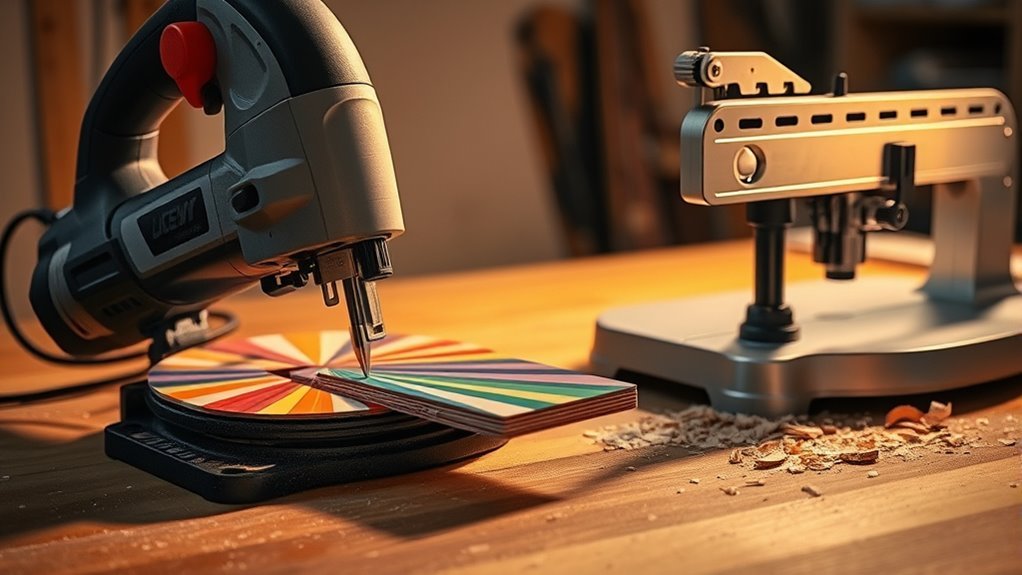
If you only need one tool, the better choice depends on the type of work you do most often. A scroll saw is specialized. A jigsaw is general-purpose. That simple difference usually decides the answer.
Pick a scroll saw if you want detail, precision, and decorative work. Pick a jigsaw if you want flexibility, portability, and a tool that can handle many everyday jobs. For most homeowners, the jigsaw is more practical. For hobby woodworkers, craft makers, and model builders, the scroll saw can be much more satisfying.
If your budget allows, many woodworkers eventually own both. They are not duplicates. They complement each other. The jigsaw covers big and quick jobs. The scroll saw handles fine and delicate work. That combination gives you the most freedom.
For a deeper look at safe woodworking practices and tool use, you can also review the WOOD Magazine tool reviews for general buying guidance and product details.
Credit: toolboxguru.com
FAQs
1. Is a scroll saw better than a jigsaw?
A scroll saw is better for detailed cuts, tight curves, and decorative work. A jigsaw is better for larger jobs, speed, and portability. Neither tool is better in every situation.
2. Can a jigsaw do the same work as a scroll saw?
It can do some of the same curve cuts, but not with the same precision. A jigsaw is more flexible, but a scroll saw gives cleaner and finer results on small detailed work.
3. Which tool is easier for beginners?
Many beginners find a scroll saw easier for detail work because the material stays still. A jigsaw is simple to start with, but it takes more practice to keep the cut line smooth.
4. Can I cut metal with a scroll saw or jigsaw?
Yes, both can cut thin metal with the right blade. A jigsaw is usually more practical for metal sheets or larger metal pieces. A scroll saw works best on thin, delicate metal work.
5. What should I buy first, a scroll saw or a jigsaw?
For most people, a jigsaw should come first because it is more versatile. If you mainly make crafts, patterns, or fine decorative pieces, a scroll saw may be the better first choice.
