
If you work with wood, you will hear this question again and again: planer vs jointer — which one should you buy first? Both tools help turn rough lumber into flat, usable boards, but they do very different jobs. Many beginners think they do the same thing. They do not.
Once you understand the real difference, your woodworking becomes much easier. Boards fit better. Glue-ups look cleaner. Projects stay flatter. And you waste less time fighting twisted lumber.
This guide explains what each tool does, how they work, where they are different, and how to choose the right one for your shop. If you are trying to decide between a jointer and a planer, this article will give you a clear answer.
What each tool actually does
The easiest way to understand these machines is to think about the job of the board before and after each tool touches it.
What a jointer does
A jointer creates one flat face and one square edge. It is mainly used to remove twist, bow, and cup from lumber. When a board is rough or uneven, the jointer helps you start with a true surface.
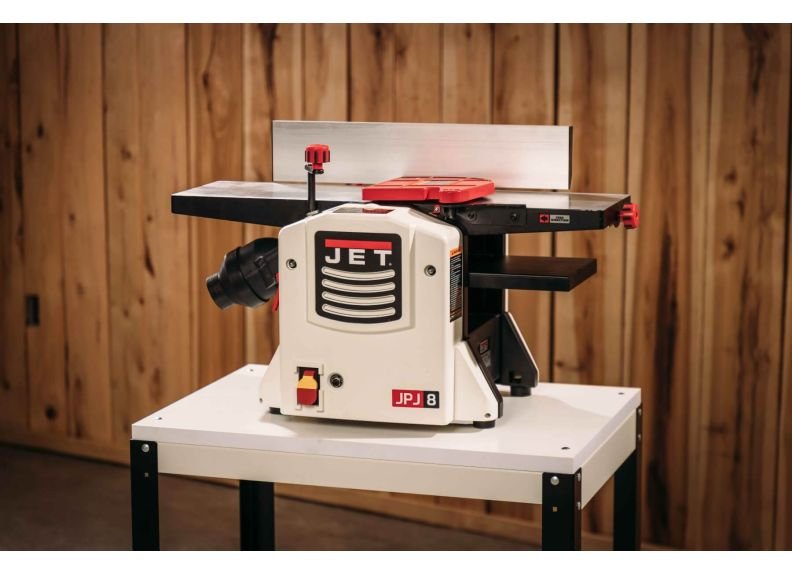
The jointer has an infeed table, an outfeed table, and cutter knives or inserts in the middle. As the board passes over the cutter head, the high spots are shaved away. This makes one face flat. Then you can place that flat face against the fence to straighten an edge.
What a planer does
A planer makes the second face of the board parallel to the first face. It does not usually create flatness from a twisted board on its own. Instead, it assumes one face is already flat, then reduces the thickness evenly across the board.
This is why a planer is often called a thickness planer. It brings a board to a specific thickness while keeping both faces parallel. It is great for making boards match in height for furniture, cabinets, and panels.
The simple way to remember it
A jointer is for flattening and squaring. A planer is for thicknessing and matching.
If you remember only one thing, remember this: the jointer makes a reference surface, and the planer uses that reference surface to finish the board.
How they work differently in real wood
These tools can seem similar because both use sharp cutters and moving tables or rollers. But the way the board is supported is very different, and that changes the result.
Jointer: the board rides on tables
On a jointer, the board rests on the machine tables. The knives cut only the parts that are too high. This is why jointers are excellent for removing twist and bow. The board is guided by the tables, not by rollers.
However, a jointer only works well if you understand the board’s shape. If the board rocks, the machine may remove the wrong area. This is one reason beginners sometimes get poor results.
Planer: the board is pulled through rollers
On a planer, the board is fed between rollers and the cutter head. The board is held down as it passes through. The machine cuts the top face, then the board comes out with a thinner and more uniform thickness.
But here is the catch: if the board is already warped, the planer may copy that warp instead of fixing it. A planer is very good at making a board thinner. It is not the best tool for creating flatness from scratch.
Why this difference matters
This difference matters because many woodworkers expect one machine to solve every lumber problem. That usually leads to frustration. A warped board may look better after a planer pass, but the twist can remain. A jointer can flatten a board, but it does not make the other face parallel or set final thickness.
The two tools work best together, not as replacements for each other.
Key differences at a glance
Here is a simple comparison to help you see the difference fast.
| Feature | Jointer | Planer |
|---|---|---|
| Main job | Flattens one face and squares one edge | Makes the second face parallel and sets thickness |
| Best for | Removing twist, bow, and cup | Making boards uniform in thickness |
| How the board is supported | On tables | By rollers |
| Result | One flat face, one square edge | Two parallel faces |
| Can it fix warped lumber alone? | Yes, partly | Usually no |
| Best use in workflow | First step for rough lumber | Second step after flattening |
That table shows the core difference clearly. Still, knowing the job is only part of the story. What really matters is how these tools fit your kind of work.
When a jointer is the better choice
A jointer is the better tool when your lumber is rough, twisted, or uneven. It is often the first machine you reach for when processing raw boards from a lumberyard or sawmill.
Credit: wurthmachinery.com
You need a flat starting face
If you want clean glue joints or tight joinery, a flat face matters a lot. Even a small twist can throw off a cabinet side or tabletop. A jointer gives you a proper starting point.
You work with rough lumber often
Rough lumber usually arrives with natural movement from drying and storage. It may have cup, bow, or twist. A jointer helps remove those problems so the board can later be sized correctly.
You build face frames, cabinets, and furniture
These projects need straight edges and flat mating surfaces. A jointer helps you prepare boards for edge-gluing and accurate assembly. It is especially useful when you want seams that disappear after sanding.
Non-obvious insight: jointers save more than time
Many beginners think a jointer only saves labor. It also saves material. When you flatten a board with a jointer first, you can often plane less off the opposite side. That means you keep more usable thickness, which is important when working with expensive hardwood.
Another thing people miss: a jointer helps reveal the true shape of the wood. A board may look okay before jointing, but after a few passes you can see the real grain direction and movement. That makes later cuts more accurate.
When a planer is the better choice
A planer is the better tool when you already have one flat face and want a matching thickness across the board. It is ideal for making parts the same size.
You need boards to match in thickness
This is the planer’s strongest job. If you are making drawer parts, cabinet doors, table aprons, or panels, consistent thickness matters. A planer gives you that consistency quickly.
You want smooth, even faces
After jointing one side, the planer finishes the other side and makes the board look cleaner. It also reduces sanding time because the surface becomes more uniform.
You buy pre-milled lumber
If you often use lumber that is already fairly straight, a planer may be more important than a jointer. For example, if your material comes surfaced on one or two sides, you may only need thickness control, not full flattening.
Non-obvious insight: a planer can improve accuracy across an entire project
Many people think thickness is only about looks. It is not. When your parts are the same thickness, your joinery becomes more predictable. Doors hang better. Drawer runners align better. Tabletops are easier to glue flat.
A planer also helps when you need to use narrower scraps from different boards. You can plane them all to one exact size and make the project feel professionally built.
Which tool should you buy first?
This is the big question. The right answer depends on how you work and what kind of wood you buy.
Buy a jointer first if…
- You often buy rough lumber.
- Your boards are frequently warped or twisted.
- You make furniture, cabinets, or face frames.
- You need a true edge for glue-ups and joinery.
In these cases, flattening comes before thicknessing. A jointer becomes the tool that makes everything else possible.
Buy a planer first if…
- You already buy surfaced lumber.
- You mostly need consistent thickness.
- You work on smaller projects with prepared stock.
- Your budget allows only one machine and you care more about sizing than flattening.
If your lumber is already close to flat, a planer may solve more of your daily problems.
Buy both if you can
If your budget allows it, owning both tools gives you the full workflow. The jointer creates the reference face. The planer makes the opposite face parallel. Together, they turn rough lumber into ready-to-build stock.
For many woodworkers, this combination is the turning point where projects start fitting together with less effort.
How to use both tools in the correct order
The common workflow is simple, but it matters a lot. If you use the tools in the wrong order, you can waste time and still end up with bad stock.
- Start with the rough board.
- Joint one face until it is flat.
- Place the flat face against the jointer fence and square one edge.
- Run the board through the planer with the flat face down.
- Plane the second face until it reaches the needed thickness.
- If needed, make a final light joint on the edge for perfect straightness.
This order works because the planer needs a stable reference surface. If you skip the jointer step, the planer may not correct a warped board the way you expect.

Credit: toolmentorship.com
What if you only have a planer?
You can still work with rough lumber, but you must create a flat reference face another way. Some woodworkers use sleds, shims, or hand planes. This takes more time, but it can work.
What if you only have a jointer?
You can flatten and square boards, but setting final thickness becomes harder. You may need to use hand planes, sanding, or careful stock selection. It is possible, but slower.
Common mistakes people make with planer vs jointer
These mistakes are very common, especially for beginners.
Thinking a planer can flatten anything
This is the biggest mistake. A planer does not automatically make a twisted board flat. It usually follows the board’s existing shape. If you feed in a bowed board, you may get a thinner bowed board.
Running a board through the jointer without checking grain direction
Jointing against the grain can tear the wood surface. The board may look rough instead of smooth. Always watch the grain and change direction if needed.
Taking too much off in one pass
Heavy cuts create more tear-out, more noise, and more stress on the machine. They also make it harder to control the result. Light passes are usually better.
Ignoring infeed and outfeed support
Long boards need support before and after the machine. If the board droops, you can get inaccurate cuts. This is especially important with long or heavy stock.
Not understanding reference faces
Many beginners lose track of which face is flat and which edge is square. Mark your reference surfaces with chalk or pencil. It saves confusion and helps keep your project accurate.
Choosing based on your workshop size and budget
Space matters. So does money. These machines are not small, and both can be expensive.
Small workshop
If your shop is tight on space, a planer often gives more general value because it can be used with simpler flattening methods. A benchtop planer is also easier to store than a long jointer.
Limited budget
If you can only afford one machine, think about the wood you buy most often. Rough lumber usually points to a jointer. Pre-surfaced lumber usually points to a planer.
Medium to larger workshop
If you have room, a longer jointer gives better results on longer boards. A planer with good capacity gives better control over thickness. Many serious woodworkers eventually want both because each one fills the gap left by the other.
If you want a trusted general woodworking reference, a good starting point is WOOD magazine, which offers practical advice on tool use and shop setup.
How to decide for your own projects
Ask yourself three questions.
Credit: powertecproducts.com
What kind of lumber do I use most?
If your boards arrive rough and uneven, a jointer will help first. If they already arrive close to flat, a planer may be the more useful machine.
What is my main problem in the shop?
If your main problem is twist and crooked edges, choose a jointer. If your main problem is different thickness in boards, choose a planer.
What kind of work do I build?
Furniture makers and cabinet builders often need both. Hobby woodworkers who build smaller projects may start with one machine and add the other later.
A good rule is this: if lumber prep is slowing you down, buy the machine that removes your biggest bottleneck.
Final verdict
The real planer vs jointer decision is not about which tool is better. It is about which job you need done first.
A jointer is the tool for flattening and squaring. A planer is the tool for thicknessing and making the opposite face parallel. If you work with rough lumber, the jointer is often the better first buy. If you already have fairly straight stock and need accurate thickness, the planer may give you more value.
For most woodworkers, both tools are useful. Together, they make rough wood behave. Separately, each one solves a different problem. Once you understand that, choosing becomes much easier.
FAQs
1. Can a planer replace a jointer?
Not completely. A planer can make a board thinner and parallel, but it usually cannot flatten a badly twisted board by itself. If you need a true flat face, a jointer is still the better tool.
2. Can a jointer replace a planer?
Not fully. A jointer can flatten one face and square one edge, but it does not set final thickness. You would still need another method to make the opposite face parallel.
3. Which tool is more important for beginners?
It depends on the lumber you buy. If you use rough boards, a jointer is often more important. If you use surfaced lumber, a planer may be more useful first.
4. Do I need both tools for woodworking?
No, but having both makes lumber preparation much easier. Many woodworkers start with one tool and add the other later as their projects get larger or more precise.
5. What is the correct order to use a jointer and planer?
First joint one face flat, then joint one edge square, then run the board through the planer to make the second face parallel and reach the final thickness.
