
Rust on a table saw is more than a cosmetic problem. It can make the surface rough, affect your cuts, and even make wood slide poorly. The good news is that you do not need expensive tools to fix it. With the right method, you can restore a smooth top and keep your saw working well for a long time.
If you are looking for how to remove rust from table saw parts safely, this guide will walk you through each step in a simple way. You will learn what to use, what to avoid, and how to protect the metal after cleaning. You will also see a few small tricks that many beginners miss, but that make a big difference in the final result.
The process is not hard, but it does need care. A table saw surface is usually cast iron, and cast iron can rust fast if it stays damp or unprotected. So the goal is not only to remove the rust, but also to stop it from coming back.
What you should know before you start
Before you begin cleaning, check how bad the rust really is. Light rust looks orange or brown and feels slightly rough. Heavy rust can look dark, flaky, and uneven. Most table saw tops can be cleaned well at home if the rust has not deeply pitted the metal.
It also helps to know which parts you are working on. The top of the saw is the main area, but rust may also show up on the trunnions, fence rails, throat plate, wings, and miter slots. Some of these parts can be cleaned with the same method, but others need a lighter touch.
One thing many beginners miss is that old sawdust can hide rust. Clean the full surface first, then inspect it under bright light. You may find more rust than you expected, especially near corners and around bolt holes.
Tools and materials you may need
- Clean rags or microfiber cloths
- Vacuum or brush
- Mild soap and water
- Mineral spirits or denatured alcohol
- Plastic scraper or old credit card
- Fine steel wool or non-scratch scrub pad
- Rust remover or white vinegar
- Paste wax or tool protectant
- Sandpaper in fine grits, if needed
- Protective gloves
If you prefer a chemical rust remover, read the label carefully. Some products work fast but can damage paint, plastic parts, or nearby aluminum. Always test a small area first. For general safety advice on handling chemicals, the OSHA website is a helpful reference.
Step-by-step method to remove rust safely
The best way to clean a rusty table saw is to work in stages. Start with the mildest method first. Only move to stronger cleaning if needed. This lowers the risk of scratching the surface.
1. Unplug the saw and clear the area
Safety comes first. Unplug the saw before doing anything else. Remove the blade, throat plate, fence, and any loose accessories if they are in the way. You want full access to the top and rails.
Place the saw in a well-lit, dry area. If possible, work outside or in a garage with the door open. Rust removal can create dust and small particles, so ventilation matters.
2. Remove dust, grease, and grime
Use a vacuum or soft brush to clear sawdust from all corners. Then wipe the surface with a rag slightly dampened with mild soap and water, or use mineral spirits if there is grease. Dry the metal fully after this step.
This part is important because rust removers work better on clean metal. If you skip it, dirt can act like a barrier and make the rust harder to remove.
3. Try a gentle rust removal method first
For light rust, use a non-scratch pad or very fine steel wool with a little mineral spirits or rust remover. Rub in small circles or along the grain of the metal surface. Keep the pressure light at first.
Do not use heavy sandpaper right away. It can leave scratches that are harder to fix than the rust itself. A smooth table saw top is important because wood needs to glide across it without resistance.
If the rust is only a thin film, this step may be enough. Wipe the area clean and check your progress. Repeat as needed rather than scrubbing hard at once.
4. Use a rust remover for stronger spots
If the rust remains, use a rust remover made for metal tools or a simple white vinegar soak method. Apply the product according to the instructions, then let it sit for the recommended time. Most products need only a short wait before scrubbing.
For stubborn areas, use a plastic scraper or fine pad to lift the loosened rust. Work slowly and check often. The goal is to remove the rust, not the top layer of metal.
Important detail: If you use vinegar, do not leave it on too long. It can etch the surface if forgotten. Wipe it off promptly, rinse the area lightly, and dry it fully.
5. Handle deeper rust carefully
If the rust has left small pits, you may need a longer cleaning process. In some cases, a paste made from baking soda and water or a rust remover gel can help loosen the oxide in the pits. Apply it, wait, and scrub gently.
Deep rust may never make the surface look brand new, but it can still become smooth enough for accurate work. The goal is function first. A table saw does not need to look perfect to perform well.
Another beginner mistake is trying to sand away deep rust too fast. That can create low spots on the cast iron. If the top becomes uneven, it may affect your cuts more than the rust did.
6. Wipe the surface clean and inspect it
Once the rust is gone, wipe the surface with a clean dry cloth. Look at the top from different angles. Bright light helps show any remaining orange spots or rough patches.
If you still see rust, repeat the cleaning in those areas. Do not rush this part. Small leftovers can spread again if they are left behind.
7. Dry the metal completely
Moisture is the enemy here. Even a little water can start new rust on bare cast iron. Use dry cloths first, then let the saw sit for a while before applying protection.
If the room is humid, use a fan or dehumidifier. This is one of the most overlooked steps in how to remove rust from table saw surfaces properly. Cleaning without full drying often causes the rust to return very quickly.
Best ways to protect the table saw after cleaning
Rust removal is only half the job. The surface needs a protective layer so air and moisture cannot attack the metal again. A clean table saw can rust again in days if it is left bare in a damp shop.
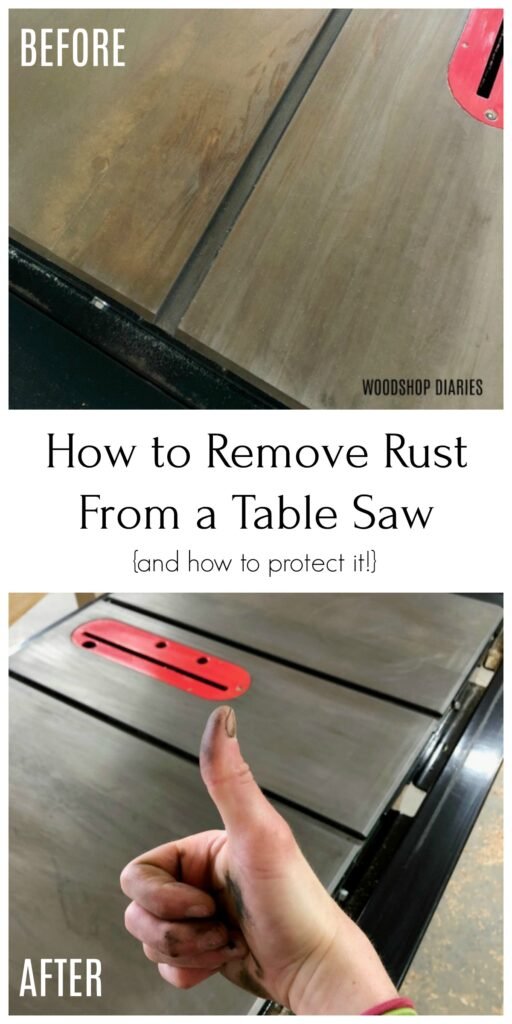
Credit: woodshopdiaries.com
Use paste wax for a smooth finish
Paste wax is one of the best options for a cast iron saw top. It adds a thin protective film and also helps wood glide more easily. Apply a small amount, let it haze, then buff it with a clean cloth.
Use a wax made for tools or fine furniture, not a heavy polish with unknown additives. A thin layer is enough. More wax does not mean better protection.
Consider a tool protectant or corrosion inhibitor
Some woodworkers prefer spray protectants made for metal tools. These can work well in humid shops, especially if you do not use the saw often. Follow the directions and avoid getting product on belts, plastic parts, or rubber pieces.
If you live in a wet or coastal area, this extra layer matters. Moist air can cause rust even when the saw looks clean.
Keep the shop dry
Humidity control is a big part of rust prevention. If your garage or workshop stays damp, a dehumidifier can save you a lot of trouble. Closing the saw in a sealed cover also helps, but only if the saw is completely dry first.
| Rust level | Best cleaning method | Risk level |
|---|---|---|
| Light surface rust | Fine pad with mineral spirits or light rust remover | Low |
| Moderate rust | Rust remover gel or vinegar, then gentle scrubbing | Medium |
| Heavy rust with pitting | Longer treatment, careful scrubbing, repeated protection | Higher |
Common mistakes that make the problem worse
Many people damage their saw while trying to fix rust. The most common problem is being too aggressive. Strong scrubbing can leave scratches that catch wood and make the surface less useful than before.
Another mistake is using too much liquid. Flooding the top with water or cleaner can push moisture into seams and hidden areas. That can create new rust where you cannot easily see it.
Some users also forget to clean the miter slots, fence rails, and underside edges. Rust often begins in places that are not touched during normal use. If you ignore these areas, the problem may come back quickly.
Non-obvious insight: Rust can return from the bottom of the top as well. Even if the upper surface looks perfect, damp air under the table can still create new corrosion. That is why full drying and shop humidity control matter so much.
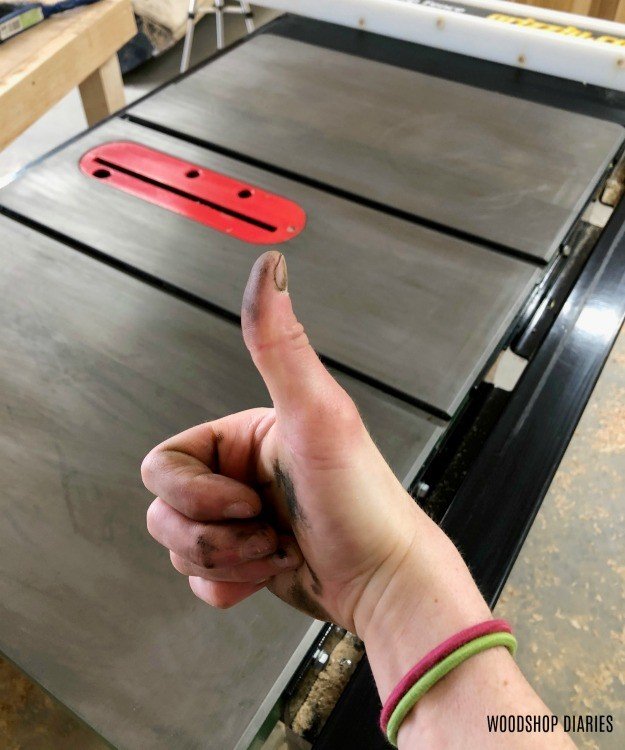
Credit: woodshopdiaries.com
How to keep the saw rust-free longer
Once the surface is clean, a few habits can make a big difference. Wipe the table saw top after each use, especially if your hands are sweaty or if the shop is humid. Fingerprints can leave moisture and salts behind, and those can start rust spots.
Apply wax regularly, not just after a big cleaning. For many shops, every few weeks is enough. In damp places, you may need to do it more often. The same goes for unused saws. Tools that sit still rust faster than tools that are used and maintained.
Another helpful habit is to cover the saw only after it is fully dry. A cover traps moisture if the metal is still cool or damp. This is a subtle point, but it is one of the main reasons people see rust return after a cleaning.
Maintenance routine that works well
- Wipe the saw top after every use.
- Check for orange spots once a week.
- Reapply wax when the surface stops feeling slick.
- Keep the workshop dry whenever possible.
- Inspect hidden areas, not just the top.
What to do if the rust is on other parts
The method for how to remove rust from table saw surfaces can also help on nearby metal parts, but not every component should be treated the same way. Fence rails and cast iron wings can usually handle similar cleaning. Precision parts, however, need more care.
Miter slots
Clean miter slots gently with a narrow pad, cloth wrap, or fine abrasive tool made for tight spaces. Do not widen them by force. Any damage here can affect sleds and miter gauges.
Fence rails
Fence rails often collect rust near the ends. Clean them well, then apply a light protective coat. If the fence feels sticky, check for rust buildup under the locking parts too.
Blade insert and small hardware
The throat plate and screws may rust faster than the top. These can usually be cleaned off the saw, which makes the job easier. If hardware is badly rusted, replacement is often faster and better than heavy cleaning.
When replacement may be the better choice
Not every rusty part is worth saving. If the metal is deeply pitted, bent, or structurally weak, replacement may be the smarter option. This is especially true for small parts like screws, clips, or inserts that are cheap and easy to replace.
For the main table top, though, light to moderate rust is usually worth fixing. Cast iron lasts a long time, and most rust damage can be managed before it becomes serious.
If you have to choose between perfect looks and safe function, choose function. A smooth, clean, protected surface is what matters most for accurate woodworking.
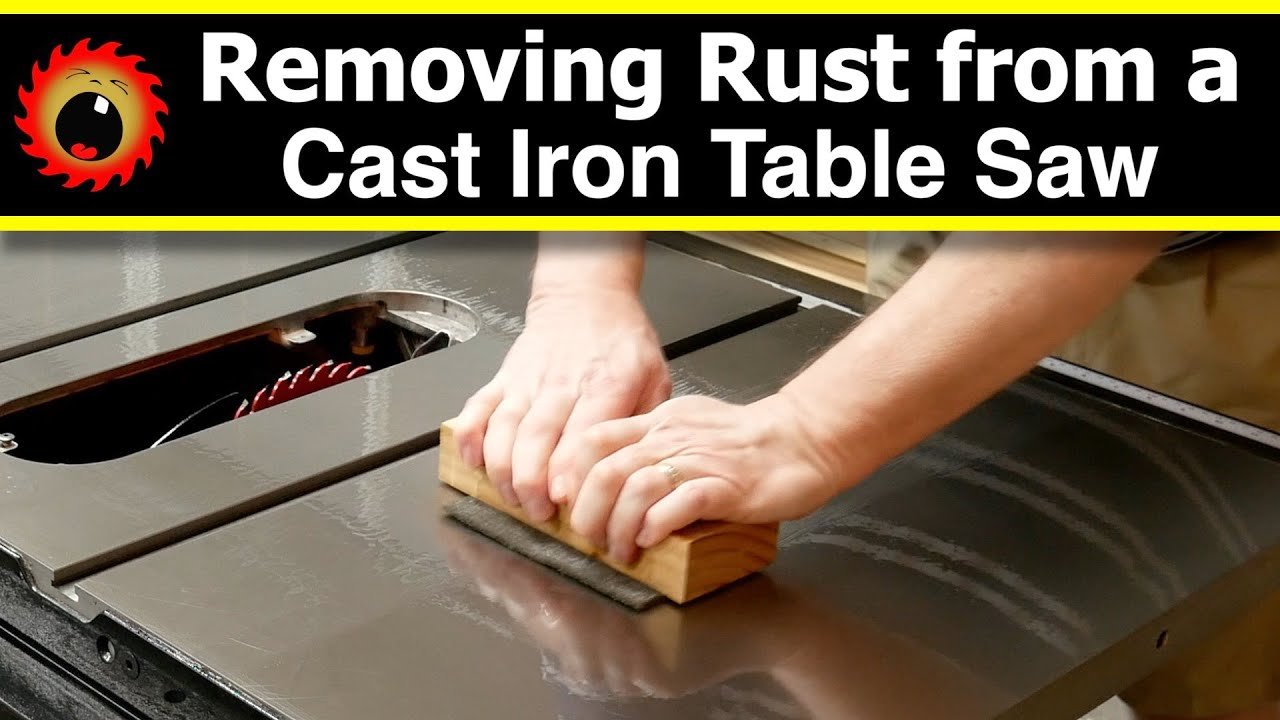
Credit: thesawblog.com
Final thoughts on restoring a smooth table saw surface
Learning how to remove rust from table saw surfaces is one of the most useful maintenance skills for a woodworker. It protects accuracy, improves safety, and makes the saw easier to use. The job is simple when you break it into clear steps: clean first, remove rust gently, dry fully, and protect the metal afterward.
The biggest long-term wins come from prevention. Wipe the saw often, keep the air dry, and do not let moisture sit on bare cast iron. If you treat the surface well, your table saw can stay smooth and ready for work for years.
Frequently asked questions
1. What is the safest way to remove light rust from a table saw?
The safest method is to start with a clean rag, fine non-scratch pad, and a little mineral spirits or rust remover. Work gently and wipe the surface dry right after cleaning.
2. Can I use vinegar to remove rust from a table saw?
Yes, white vinegar can help with light to moderate rust. Do not leave it on too long, and always rinse or wipe the area clean, then dry it fully to avoid new rust.
3. Will steel wool scratch my table saw top?
Very fine steel wool can be safe if used lightly and with care, but it can still leave marks if you press too hard. A non-scratch pad is often a safer first choice.
4. How do I stop rust from coming back after cleaning?
Dry the surface completely, apply paste wax or a protectant, and keep the shop humidity low. Wiping the saw after each use also helps prevent new rust spots.
5. Should I remove the rust from the whole saw or only the top?
Focus on the top first, since that affects cutting and wood movement the most. Then check rails, miter slots, and other exposed metal parts so rust does not spread again.
