
Concrete looks hard, heavy, and almost unbreakable. That is why many people feel nervous the first time they need to make a hole in it. But with the right tool, the right bit, and a careful method, the job is much easier than it seems.
If you want how to drill a hole in concrete safely, the main goal is not speed. It is control. Concrete can crack, bits can overheat, and dust can spread fast if you rush. A clean hole comes from good prep, steady pressure, and the right drilling technique.
In this guide, you will learn how to do the job step by step, what tools to use, common mistakes to avoid, and a few practical tips that make the work cleaner and safer. Whether you are hanging shelves, mounting a bracket, or fixing hardware to a wall, this process will help you get a solid result.
What You Need Before You Start
Before you drill, gather everything first. This saves time and helps you work without stopping in the middle. Concrete drilling is not the kind of job where you want to search for a missing bit after you have already marked the wall.
The most important thing is the right drill. A normal drill may work for small light jobs, but a hammer drill or rotary hammer makes the work much easier. For small home tasks, a hammer drill is often enough. For thicker concrete or repeated drilling, a rotary hammer is better.
| Tool or item | Why it matters |
|---|---|
| Hammer drill or rotary hammer | Helps break through hard concrete faster |
| Masonry drill bit | Made for concrete, brick, and stone |
| Safety glasses | Protects your eyes from dust and chips |
| Dust mask | Reduces breathing in fine concrete dust |
| Ear protection | Concrete drilling can be very loud |
| Masking tape or marker | Helps mark the exact spot |
| Vacuum or brush | Cleans dust from the hole |
| Wall anchor or screw | Needed if you are mounting something to the hole |
One small detail many beginners miss: the drill bit size must match the anchor or fastener you plan to use. A hole that is too wide will not hold well. A hole that is too narrow can damage the anchor or make insertion difficult.
Choose the right bit
Use a masonry bit, not a wood or metal bit. Masonry bits usually have a carbide tip designed to cut through hard surfaces. If you are unsure, look for bits marked for concrete, brick, or stone.
For deeper or larger holes, check the bit length before you begin. Many people buy a short bit, then discover it cannot reach the depth needed for a wall anchor. That is a common mistake and an easy one to avoid.
Mark the Spot the Right Way
A good hole starts with a good mark. If the spot is even slightly off, the finished job may look crooked or weak. Take a few extra seconds here. It will save you trouble later.
First, place the item you want to mount against the wall and check where the hole should go. If you are drilling for a shelf bracket, hold the bracket in place and mark the holes through the bracket holes. If you are drilling for an anchor only, measure carefully from fixed points like corners or edges.
Use a pencil, marker, or a small piece of masking tape to show the center point. Tape can help because the drill bit starts better on a surface that is less slippery. It also makes the mark easier to see on dusty or rough concrete.
Check what is behind the concrete
This step is easy to ignore, but it is one of the most important. Before drilling, make sure there are no pipes, electrical wires, or hidden lines behind the spot. If you are drilling into a wall, use a stud finder with wire detection if possible. In some homes, concrete walls may hide conduits or plumbing paths.
If you are not sure what is behind the wall, stop and check. A clean hole is not worth a damaged pipe or a dangerous electrical strike.
Set Up for Safe Drilling
Safe drilling is not complicated, but it does require a few habits. Concrete drilling makes dust, noise, and vibration. Good setup helps control all three.
Put on your safety glasses, ear protection, and dust mask before you turn on the drill. If you are working overhead, a dust mask matters even more because fine particles fall down toward your face.
Clear the area around you. Keep cords away from the bit. If you are drilling into a wall, make sure you have a stable ladder or solid footing. It is hard to make a clean hole if you are balancing badly.
For better control, hold the drill with both hands. Stand square to the wall so the bit enters straight. A crooked start can make the hole wander, which is hard to fix later.
According to OSHA, dust control and proper protective gear are important when working with construction materials. That advice is worth following even for small home projects.
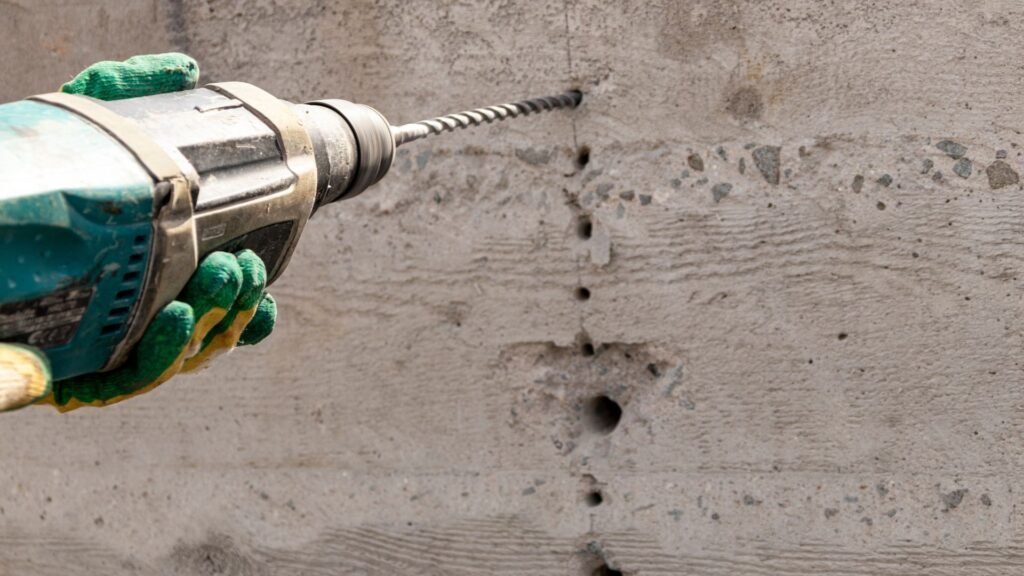
Credit: concretecuttersauckland.co.nz
How to Drill a Hole in Concrete Step by Step
Now that everything is ready, you can start drilling. The key is to move slowly at first, then keep steady pressure once the bit is set in the concrete.
Place the bit on the mark. Hold the drill so the bit is straight and centered on your mark. Do not start at an angle. A straight start gives you a cleaner hole.
Begin at a slow speed. Start gently so the bit can create a small guide point. If you use high speed too early, the bit may skate across the surface.
Use hammer mode if your drill has it. Hammer action helps the bit chip through the concrete. For hard concrete, this makes a huge difference. If you only use rotation, the bit may heat up and move slowly.
Apply steady pressure. Do not push too hard. Let the bit do the work. Too much force can overheat the bit, slow progress, or cause the hole to become rough. A firm, even push is best.
Pause now and then to clear dust. Pull the bit out briefly every few seconds for shallow holes, or after some depth for deeper holes. This clears concrete dust and helps the bit cut better.
Drill to the correct depth. If you are using an anchor, make the hole slightly deeper than the anchor length. This gives space for dust at the bottom and helps the anchor sit fully in place.
Remove the bit carefully. Once you reach the right depth, pull the bit out slowly while the drill is still aligned. A sudden jerk can chip the edges of the hole.
If the hole is for a screw anchor, test the fit before inserting the screw. The anchor should fit snugly but not need force. If it is too tight, the hole may be too small or filled with dust.
How to keep the hole clean
Dust is one of the main reasons concrete holes do not hold well. A hole may look correct, but if fine dust remains inside, the anchor may not grip properly.
After drilling, use a vacuum, a blow bulb, or a small brush to clean out the dust. If you do not have a vacuum, you can tap the wall lightly near the hole to loosen dust, then brush it out. This small step often improves the final hold more than people expect.
Non-obvious tip: if you are drilling several holes, clean each one before moving to the next. It is much easier than waiting until the end, and it keeps the workspace cleaner.
How to Avoid Common Mistakes
Many concrete drilling problems come from a few simple mistakes. If you know them early, you can avoid wasted time and broken bits.
Using the wrong drill bit
This is the number one mistake. A regular twist bit may seem close enough, but it is not designed for concrete. It will wear out fast, overheat, or simply fail to cut. Always use a masonry bit.
Drilling too fast from the start
If you rush the beginning, the bit can slide off the mark. It can also chip the surface around the hole. A slower start gives better control and a cleaner edge.
Applying too much force
People often think harder pressure means faster progress. In concrete, that is not always true. Too much force can shorten bit life and make the drill harder to control. Let the hammer action do more of the work.
Not clearing dust
A packed hole is a weak hole. Dust builds up quickly, especially in deeper drilling. Clear it often so the bit can keep cutting and the anchor can sit properly.
Ignoring wall safety
One of the least obvious mistakes is drilling without checking what is behind the surface. Even a small hole can hit something important. This is especially true in older buildings where wiring and pipes may not follow modern paths.
How Deep and Wide Should the Hole Be?
The right hole size depends on what you are installing. If you are using a wall plug, concrete anchor, or sleeve anchor, the hole must fit that hardware exactly. The anchor packaging usually tells you the drill bit size and the required depth.
As a simple rule, the hole should be the same diameter as the anchor and a little deeper than the anchor length. That extra space helps collect dust at the bottom and prevents the anchor from bottoming out too soon.
If you are not sure, test on a spare piece of material or start with the recommended bit size from the anchor maker. A hole that is too large is hard to fix. A hole that is too small is usually easier to enlarge carefully.
For larger jobs, make a mark on the drill bit with tape so you know when to stop. This is a simple trick, but it helps a lot when you need repeated holes at the same depth.
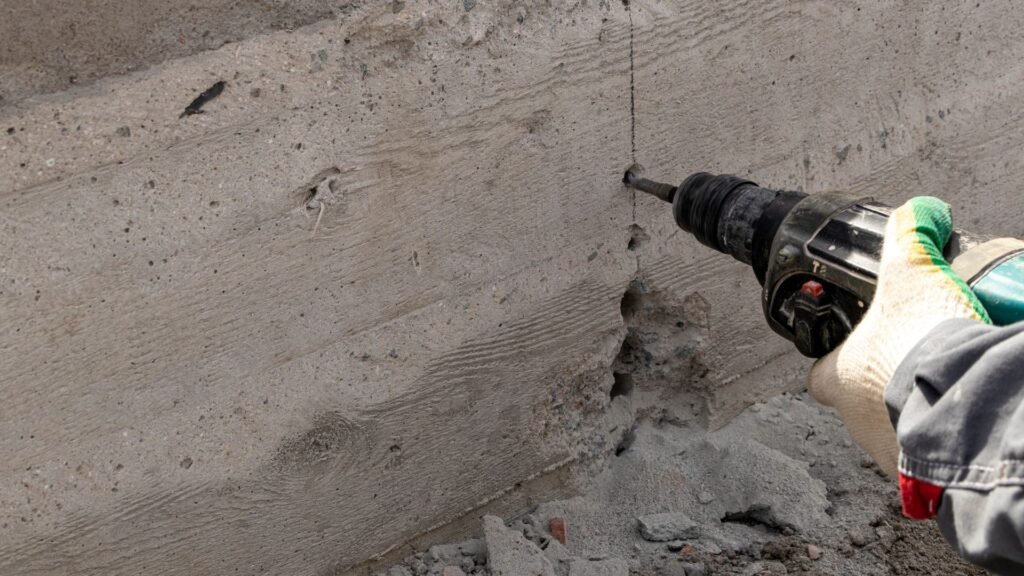
Credit: concretecuttersauckland.co.nz
Special Tips for Cleaner Results
Some small habits can make your work look much better. These are the kinds of details many beginners skip, but they make a real difference.
Use masking tape on the mark. It helps reduce surface slipping and can lower surface chipping at the start.
Start with a pilot dimple if needed. On very hard or smooth concrete, a center punch can help the bit stay in place. Tap it lightly to make a small starting dent.
Keep the drill straight. Even a slight angle can make the hole wider than needed and weaken the hold.
Watch the bit temperature. If the bit becomes very hot, stop and let it cool. Hot bits wear faster and cut worse.
Use the right anchor for the load. A strong hole means little if the anchor is too weak for what you are hanging. Heavy items need proper concrete anchors, not basic plastic plugs.
Here is another beginner mistake: people often think all concrete is the same. It is not. Old concrete, very dense concrete, and concrete with stone aggregate can all drill differently. Some holes will go smoothly. Others need more patience. Do not assume a slow hole means you are doing it wrong.
When to Stop and Recheck
If the drill suddenly slows down, binds, or sounds strained, stop and check the bit. The hole may be full of dust, or the bit may be dull. Continuing to force it can damage the bit or make the hole messy.
If the hole does not look straight, it is better to correct it early than later. A slight angle at the beginning can become a bigger problem as the hole gets deeper.
Also stop if you see unexpected material like metal dust or hear a different sound. That can mean you have reached rebar or another hidden object. Drilling through rebar is a different job and should not be forced with a standard masonry bit.
Finishing the Job the Right Way
Once the hole is drilled and cleaned, insert the anchor or fastener carefully. It should go in with light pressure. If you have to hammer it hard, the hole may be too small or still full of dust.
When everything fits, tighten the screw or install the item you are mounting. Do not overtighten. Concrete anchors need a secure fit, but extra force can strip the anchor or crack weak material around the hole.
Clean up the dust when finished. Concrete dust spreads easily and can settle on nearby surfaces. A quick vacuum or damp wipe makes the space safer and easier to use.
The best results come from patience, not power. If you take your time, use the correct bit, and keep the hole clean, the finished job will look neat and hold well.
:max_bytes(150000):strip_icc():format(webp)/SPR-how-to-drill-into-concrete-5025037-06-0ede78f4e8f241d19f73d824e29fbd32.jpg)
Credit: thespruce.com
Quick Recap for Better Results
If you want the shortest path to a good hole, remember these core points: use a masonry bit, start slow, keep the drill straight, clear dust often, and match the hole size to the anchor. These five habits solve most problems before they begin.
Many people search for how to drill a hole in concrete because they want a simple answer. The real answer is simple, but not careless. Concrete rewards steady hands and a little planning. Once you learn the rhythm, the job becomes much easier.
FAQs
1. Can I drill concrete with a regular drill?
Yes, but only for very small and light jobs, and it may take longer. A hammer drill is much better because it adds impact force. For hard concrete or several holes, a regular drill is usually not the best choice.
2. What size drill bit do I need for concrete anchors?
Use the size listed on the anchor package. The drill bit should match the anchor diameter. If the hole is too large, the anchor may not hold well. If it is too small, the anchor may not fit.
3. How do I stop concrete dust from spreading?
Wear a dust mask and use a vacuum near the hole while drilling or right after drilling. You can also clear dust in short pauses. Dust is normal, but it should be controlled as much as possible.
4. Why does my drill bit keep getting stuck in concrete?
This usually happens when the hole is full of dust, the bit is dull, or too much pressure is being used. Pull the bit out often to clean the hole and let the bit cool if it gets hot.
5. How deep should I drill into concrete?
Drill slightly deeper than the anchor or screw needs, so there is room for dust at the bottom. If you are not using an anchor, the depth should match the task you are doing. Always check the fastener instructions when possible.
