
Concrete looks strong, but it collects dirt fast. Oil stains, mud, mildew, rust, and drink spills can make a driveway, patio, or garage floor look old even when the surface is still in good shape. Many people think a pressure washer is the only real solution, but that is not true.
If you want to know how to clean concrete without pressure washer, the good news is that you have several easy and effective options. With the right cleaner, a stiff brush, and a little patience, you can remove most common stains and bring back a much cleaner look.
This guide shows simple methods for different types of dirt and stains. You will also learn what works best on outdoor slabs, garage floors, and older concrete that needs extra care. The goal is not just to make the surface look better, but to clean it safely without causing damage.
Start by identifying the type of dirt on the concrete
Before you scrub, look closely at what you are trying to remove. Concrete stains are not all the same. A muddy walkway needs a different approach from an oil spot, and mold is treated differently from rust. This step matters because using the wrong cleaner can waste time or make the stain harder to remove.
Concrete is porous. That means liquid can sink into tiny holes on the surface. Fresh stains are easier to clean than old ones because they have not settled deep into the material yet. If the stain is old, you may need to repeat the process more than once.
Common concrete stains and what they need
| Stain type | Best cleaning method | Notes |
|---|---|---|
| Dirt and mud | Water, stiff brush, mild soap | Usually easy to remove |
| Oil and grease | Absorbent material, degreaser, scrub brush | May need repeat treatment |
| Mold and mildew | Bleach solution or vinegar-based cleaner | Rinse well after cleaning |
| Rust | Rust remover made for concrete | Test first on a small area |
| Paint | Scraper, detergent, spot treatment | Older paint may need a specialty product |
One small detail many beginners miss: the same stain can sit differently depending on the surface finish. Smooth broom-finished concrete usually cleans faster than rough or older concrete because dirt has fewer places to hide.
Use basic soap and water for general cleaning
For light dirt, dust, and everyday grime, simple soap and water often work well. This method is safe, cheap, and good for regular maintenance. It is also the best first step before trying stronger products.
You do not need fancy tools. A bucket, warm water, dish soap, and a stiff-bristle brush are enough for most light cleaning jobs. If you are cleaning a patio or driveway that only looks dull, this may be all you need.
What you need
- 1 bucket of warm water
- 2 to 3 tablespoons of liquid dish soap
- Stiff-bristle broom or deck brush
- Garden hose or clean water for rinsing
- Rubber gloves, if desired
How to do it
- Sweep the concrete first to remove loose dirt, leaves, and grit.
- Mix warm water with dish soap in a bucket.
- Pour the solution on the concrete or spread it with a mop or brush.
- Scrub the surface using firm, circular motions.
- Let the soap sit for 5 to 10 minutes if the dirt is stuck.
- Rinse with clean water and let the area dry.
This method is simple, but do not rush the scrubbing. The brush does the real work. If you only pour soap and rinse, the dirt will stay in the pores. A few minutes of brushing can make a clear difference.
When this method works best
Soap and water are ideal for:
- Dusty garage floors
- Lightly dirty patios
- Walkways with dry mud
- Concrete that needs routine cleaning
If the surface is heavily stained, move to a stronger method instead of scrubbing harder. Extra force alone usually does not remove deep stains.
Try baking soda for mild stains and fresh marks
Baking soda is a useful cleaner because it has mild scrubbing power and helps lift some stains without being too harsh. It works well on small areas, fresh spills, and spots that need a little extra attention after soap and water.
It is especially helpful when you want a safer option for areas near plants, children, or pets. While it is not strong enough for every stain, it can be surprisingly effective on light grease and surface grime.
Simple baking soda paste
- 1/2 cup baking soda
- 2 to 3 tablespoons water
Mix the ingredients into a thick paste. Spread it over the stain and let it sit for 15 to 30 minutes. Then scrub with a stiff brush and rinse well.
Better use cases
Baking soda works best for:
- Small oil drips
- Food stains on patios
- Light discoloration
- Spot cleaning before a full wash
A useful tip many people miss: baking soda works better when the stain is still fresh. If a grease spot has been sitting for weeks, use an absorbent powder first, then follow with a degreaser.
Use vinegar for mildew, mineral marks, and light buildup
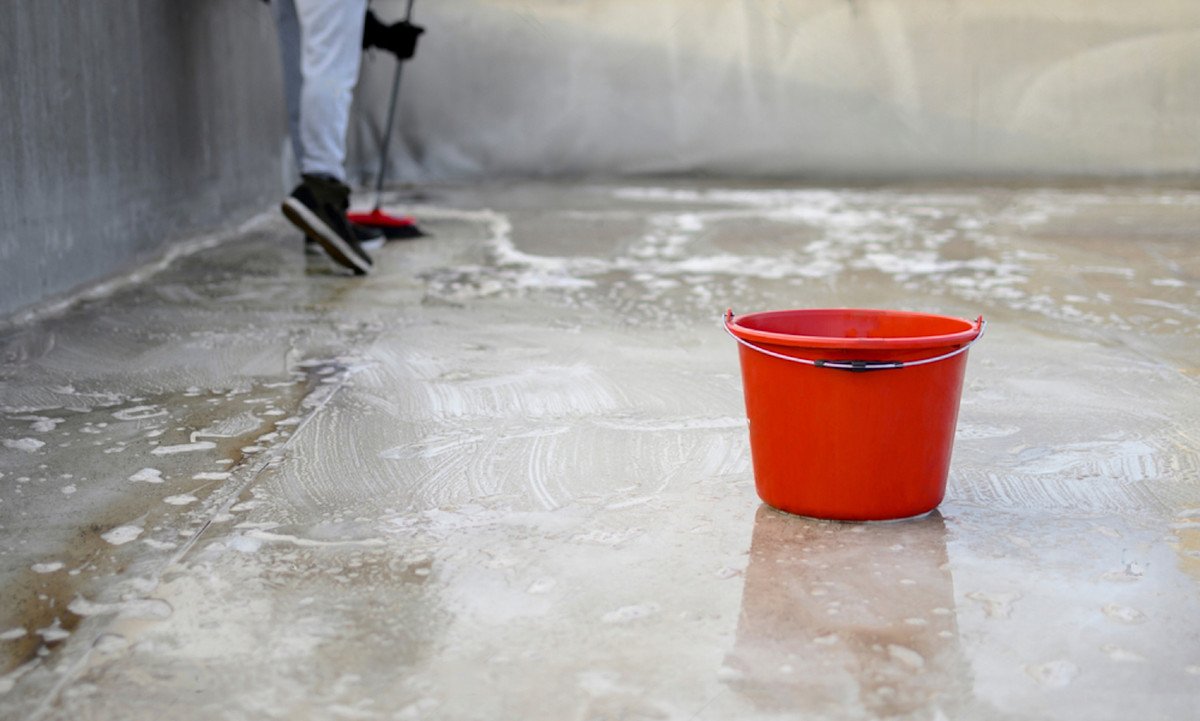
White vinegar is a strong natural cleaner for certain concrete problems. It helps break down mineral film, light mildew, and some hard water marks. It is not the best choice for oil stains, but for dull-looking concrete with a chalky or slightly green surface, it can help a lot.
Because vinegar is acidic, it should be used carefully. It is usually fine for normal household cleaning, but do not leave it sitting on concrete for a long time. Always rinse well after use.
Credit: grimebusterswash.com
How to make the solution
- 1 part white vinegar
- 1 part water
Spray or pour the mixture on the problem area. Let it sit for 10 to 15 minutes, then scrub and rinse. For stronger mildew, you may need to repeat the process once or twice.
What to keep in mind
Vinegar is helpful, but there is one important detail: it may slightly dull the surface if used too often. That is why it is better for spot cleaning than for repeated whole-surface cleaning.
Do not mix vinegar with bleach. That combination is dangerous and can create toxic fumes.
Remove oil and grease with absorbent material first
Oil stains are one of the most common concrete problems, especially on driveways and garage floors. The key mistake many people make is going straight to scrubbing. That often spreads the oil instead of removing it.
The smarter method is to pull as much oil as possible out of the surface first. Then use a degreaser or cleaner to deal with what remains.
Step one: cover the stain
Use an absorbent material like cat litter, baking soda, cornstarch, or sawdust. Cover the stain completely and leave it for several hours. Overnight is even better for fresh spills.
After that, sweep it up and check the stain. If the spot is still dark, continue with a degreasing cleaner.
Step two: apply a degreaser
Use a concrete-safe degreaser or a strong dish soap solution. Scrub the stain with a stiff brush and let the cleaner sit for 10 to 20 minutes before rinsing.
If the stain is deep, repeat the process. Older oil spots often need more than one round because concrete can hold oil deep inside its pores.
A quick tip for garage floors
Warm water helps degreasers work better. If you are cleaning in cold weather, try to use water that is warm but not hot. This can improve results without shocking the concrete.
Another detail beginners often miss: do not use too much water at the start. If you flood a fresh oil stain before absorbing it, the oil can spread into a wider area.
Use bleach carefully for mold and mildew
When concrete turns black, green, or brown in shaded areas, mold or mildew may be the problem. This is common on patios, sidewalks, and pool decks that stay damp. In these cases, a bleach solution can be effective if used the right way.
Still, bleach should be handled with care. Wear gloves, keep the area well ventilated, and protect nearby plants. If you want a less harsh option, use a commercial outdoor mold cleaner made for concrete.
Basic bleach solution
- 1 cup bleach
- 1 gallon water
Apply the solution to the affected area, let it sit for 5 to 10 minutes, then scrub with a brush. Rinse thoroughly with clean water.
For a safety reference on bleach use, see the U.S. Environmental Protection Agency. It gives useful general guidance on safe cleaning practices.
Important safety notes
- Do not mix bleach with vinegar or ammonia.
- Protect grass and plants nearby.
- Test on a small area first if the concrete is colored.
- Rinse well to prevent residue.
One non-obvious point: mold often returns if the area stays damp. So after cleaning, try to improve drainage or reduce shade buildup if possible. Otherwise, you may be cleaning the same spot again soon.
Handle rust stains with a concrete-safe remover
Rust stains often come from metal furniture, garden tools, fertilizer, or rebar inside the slab. These stains can look permanent, but the right product can remove much of the discoloration.
Do not use random acids or harsh scrubbing pads. Some products can damage concrete or leave a bigger mark. A rust remover made for concrete is the safest choice.
How to use it
- Sweep and rinse the stained area.
- Apply the rust remover according to the label.
- Let it sit for the recommended time.
- Scrub lightly if needed.
- Rinse very well.
If the rust is caused by a metal object sitting on the concrete, move the object first. Otherwise, the stain may come back after cleaning.
Another smart move is to check whether fertilizer granules or metal parts are the real source. Cleaning without removing the source only gives a short-term result.
Clean large areas in sections so the work stays manageable
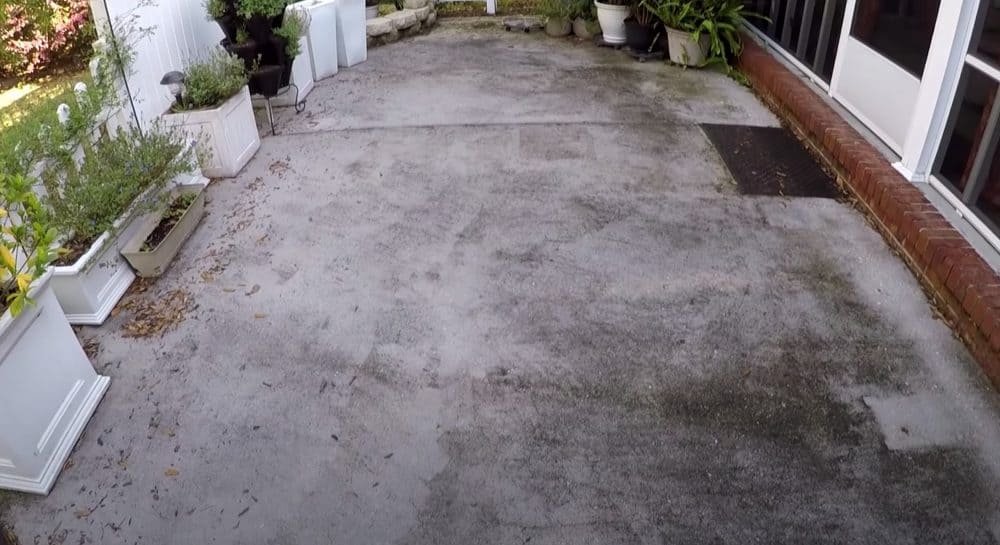
If you are cleaning a full driveway or a big patio, do not try to do everything at once. It is easier to work in sections. This helps you keep control of the cleaner, scrub well, and rinse before products dry on the surface.
Divide the area into small parts and finish one section before starting the next. That method gives better results and prevents streaking.
Credit: madbackyard.com
A practical section-by-section approach
- Sweep the full area.
- Treat the worst stains first.
- Wash one section at a time.
- Scrub, wait, and rinse before moving on.
- Check for missed spots after the surface dries.
This approach is especially useful for beginners because it reduces mistakes. It is easy to miss dry cleaner residue on concrete, and residue can leave pale marks if it sits too long.
Use a wet broom or mop for light outdoor dirt
For concrete that is not heavily stained, a wet broom or heavy-duty mop can be enough. This method works well for dust, pollen, light mud, and fine debris that regular sweeping does not remove.
It is not a deep-cleaning method, but it is a good maintenance step between bigger cleanings. It also helps prevent dirt from building up and becoming harder to remove later.
Simple routine for maintenance cleaning
- Sweep dry debris first.
- Wet the surface lightly with a hose.
- Scrub with a wet broom or mop and mild soap.
- Rinse with clean water.
- Let it dry fully.
This method is best for covered patios, sidewalks, and garage floors that only need a refresh. It is also gentle enough for older concrete that may be slightly worn.
How to clean specific concrete areas without a pressure washer
Different spaces need different care. A driveway, garage floor, and patio all face different types of dirt. Choosing the right method saves time and gives better results.
Driveways
Driveways usually deal with oil, tire marks, mud, and leaves. Start with sweeping, then use a degreaser for oil spots and soap and water for general grime. If mold grows in shaded parts, treat those sections separately.
Garage floors
Garage floors often hold oil, paint drips, and dust. Keep the water amount low so it does not run under stored items. Spot clean stains first, then wash the whole floor in sections.
Patios
Patios usually need a gentler touch. Soap, baking soda, and vinegar can handle most common dirt. If the patio sits near plants, rinse carefully so cleaning products do not damage landscaping.
Sidewalks and walkways
These surfaces often get mud, algae, and weather stains. Use soap for general dirt and bleach or vinegar for green growth. Be careful on walkways used every day, because slippery residue can create a fall risk.
Common mistakes that make concrete harder to clean
Many cleaning problems happen because people move too fast. A few small mistakes can make the job harder or even damage the surface. Knowing what to avoid is just as important as knowing what to use.
- Using the wrong cleaner for the stain. Oil, rust, and mildew need different treatment.
- Scrubbing dry concrete first. Lightly wetting the area often helps the cleaner spread better.
- Letting cleaners dry on the surface. This can leave residue or marks.
- Using metal brushes too hard. They may scratch or leave marks on some finishes.
- Ignoring drainage problems. Water that sits too long leads to new stains and growth.
Here is one insight people often miss: concrete can look clean while still holding stain shadow deep in the pores. If you clean a stain and it still looks faint after drying, it may need a second treatment the next day, not more force right away.
When sealing the concrete makes future cleaning easier
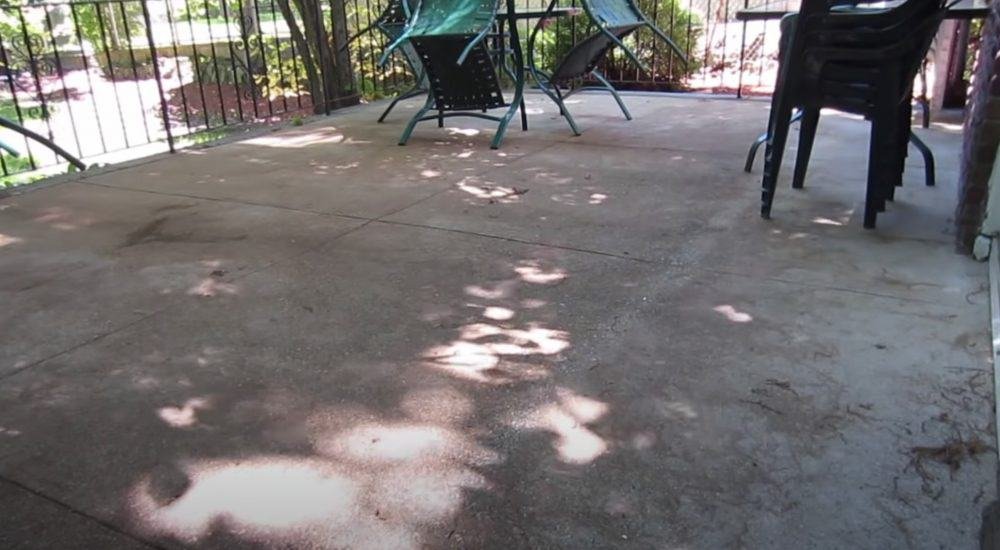
If you clean concrete often, sealing it can save time later. A good sealer reduces how quickly dirt and liquids sink in. That means future stains are easier to remove and water rinses away more dirt.
Sealing is especially useful for driveways, garage floors, and patios that get frequent spills. It is not a replacement for cleaning, but it makes cleaning much easier.
Credit: madbackyard.com
Signs your concrete may benefit from sealing
- Stains soak in quickly
- The surface looks dull after cleaning
- Water absorbs instead of beading up
- The area gets heavy foot or car traffic
Before sealing, make sure the concrete is fully clean and fully dry. Sealing over dirt can trap stains and make the surface look worse later.
Simple maintenance plan to keep concrete looking better
Regular care is easier than deep cleaning. A few small habits can stop dirt from building up and keep concrete looking fresh longer.
- Sweep weekly or as needed.
- Rinse off mud before it dries.
- Clean fresh spills right away.
- Treat stains before they settle.
- Re-clean shaded damp areas if mildew appears.
This is one of the best long-term lessons in how to clean concrete without pressure washer: quick action matters more than strong force. A stain handled the same day is usually much easier to remove than one left for weeks.
Final thoughts
You do not need a pressure washer to make concrete look much better. With the right method, you can clean dirt, oil, mildew, rust, and everyday buildup using simple tools. Soap and water handle light grime. Baking soda helps with small stains. Vinegar works well for mildew and mineral marks. Degreasers and rust removers solve tougher problems.
The best results come from choosing the right cleaner, working in sections, and giving each stain the time it needs. If you clean concrete carefully and regularly, it stays safer, cleaner, and much easier to maintain.
FAQs
1. What is the easiest way to clean concrete without a pressure washer?
The easiest method is warm water, dish soap, and a stiff brush. Sweep first, scrub the area, and rinse well. This works best for light dirt and everyday grime.
2. Can I use vinegar on all concrete stains?
No. Vinegar is good for mildew, light mineral marks, and some surface buildup, but it does not work well on oil or grease. Use it carefully and rinse after cleaning.
3. How do I remove old oil stains from concrete?
Start with an absorbent material like cat litter or baking soda to pull up surface oil. Then use a concrete-safe degreaser and scrub the spot. Older stains may need more than one treatment.
4. Is bleach safe for cleaning concrete?
Yes, bleach can be used for mold and mildew when diluted properly. Never mix it with vinegar or ammonia, and protect nearby plants. Rinse the area well after cleaning.
5. How often should I clean concrete?
Light cleaning every few weeks is helpful for high-traffic areas. Deep cleaning is usually needed only when stains build up. Cleaning spills quickly is the best way to keep concrete looking good.
