
If you are planning to use pegboard for tools, craft supplies, kitchen items, or garage storage, one question matters more than any other: how much weight can pegboard hold? The honest answer is that pegboard strength is not fixed. It depends on the board material, thickness, wall support, peg type, and how the weight is spread out.
Some pegboards hold only light hand tools. Others can support surprisingly heavy items when installed the right way. The mistake many people make is treating all pegboard the same. That leads to bent hooks, torn holes, or a board that pulls away from the wall.
This guide explains the real weight limits of pegboard in simple terms. You will learn what affects strength, how to make pegboard hold more weight, and how to avoid common mistakes that shorten its life.
What actually controls pegboard strength
When people ask how much weight can pegboard hold, they usually want one exact number. But pegboard is not like a shelf with a clear rating. Its strength comes from a mix of parts working together. If one part is weak, the whole setup becomes weak.
The board material matters most
Pegboard is usually made from hardboard, metal, or plastic. Hardboard is common and cheap, but it is also the weakest of the three. Metal pegboard is much stronger and lasts longer in busy spaces. Plastic pegboard is useful in some light-duty setups, but it is not the best choice for heavy loads.
Hardboard can work well for hand tools, small bags, and light household items. Metal is better for garages, workshops, and places where the board will be used every day. If you need long-term strength, material choice is not a small detail. It is the main decision.
Thickness changes the load limit
A thicker board usually holds more weight because it bends less. Thin pegboard can sag or crack around the holes when you load it too much. Even if the board looks fine at first, repeated stress can wear it out.
For light use, thin board may be enough. For heavier storage, thicker board is safer. But thickness alone does not solve everything. A thick board mounted badly can still fail.
Wall backing is just as important as the board
This is one of the biggest things beginners miss. Pegboard does not hold weight only by itself. It also depends on the wall behind it. If the board is attached to solid wood framing or a strong backing panel, it can hold much more. If it is hanging with weak spacing or loose fasteners, the load limit drops fast.
People often blame the board when the real problem is poor mounting. A strong pegboard on weak anchors is still a weak system.
The peg hooks carry the load too
Hooks, bins, shelves, and brackets all affect how much weight the board can handle. A small hook may hold only a few pounds before it starts to tilt. A double-prong hook or locking accessory spreads the load better and stays in place more securely.
Also, some accessories create leverage. That means the item pulls forward from the wall instead of hanging straight down. This can make a small weight act much heavier than it is.
How much weight can pegboard hold in real use
There is no single number for every setup, but there are useful ranges. In a light-duty home setup, a standard hardboard pegboard may hold around 1 to 5 pounds per hook when used with simple accessories. With better support and stronger hooks, some spots may hold more.
For a well-installed metal system with proper backing and heavy-duty hooks, the board can support much more. In real workshops, people often use pegboard for tools that weigh 10 pounds or more when the load is spread across several points. The key word is spread.
A single peg hole is not the same as the whole board. A board may support many small items across its surface, while one overloaded hook can fail quickly. This is why it helps to think in terms of both point load and total load.
| Pegboard type | Typical use | Practical weight range |
|---|---|---|
| Thin hardboard | Light home storage, craft rooms | About 1 to 3 lbs per standard hook |
| Thicker hardboard | General garage or closet use | About 3 to 5 lbs per hook, sometimes more with support |
| Metal pegboard | Workshop, garage, heavy daily use | Often 5 to 10+ lbs per hook with proper mounting |
| Plastic pegboard | Light indoor storage | Usually best for light items only |
These are practical ranges, not promises. The real number can be lower or higher depending on installation and accessories. If you are planning to store anything valuable or heavy, test the setup carefully before loading it fully.
Why pegboard sometimes fails even with light items
Pegboard failures are often not about the item weight alone. They happen because of movement, bad spacing, or repeated pulling. A tool that is placed on and removed many times a day creates wear at the holes. Over time, the hole can enlarge and the hook can loosen.
Another problem is uneven loading. If all the weight sits in one small area, the board can warp. Once a board starts to bend, the hooks shift angle and the stress increases even more. That is how a small problem becomes a bigger one.
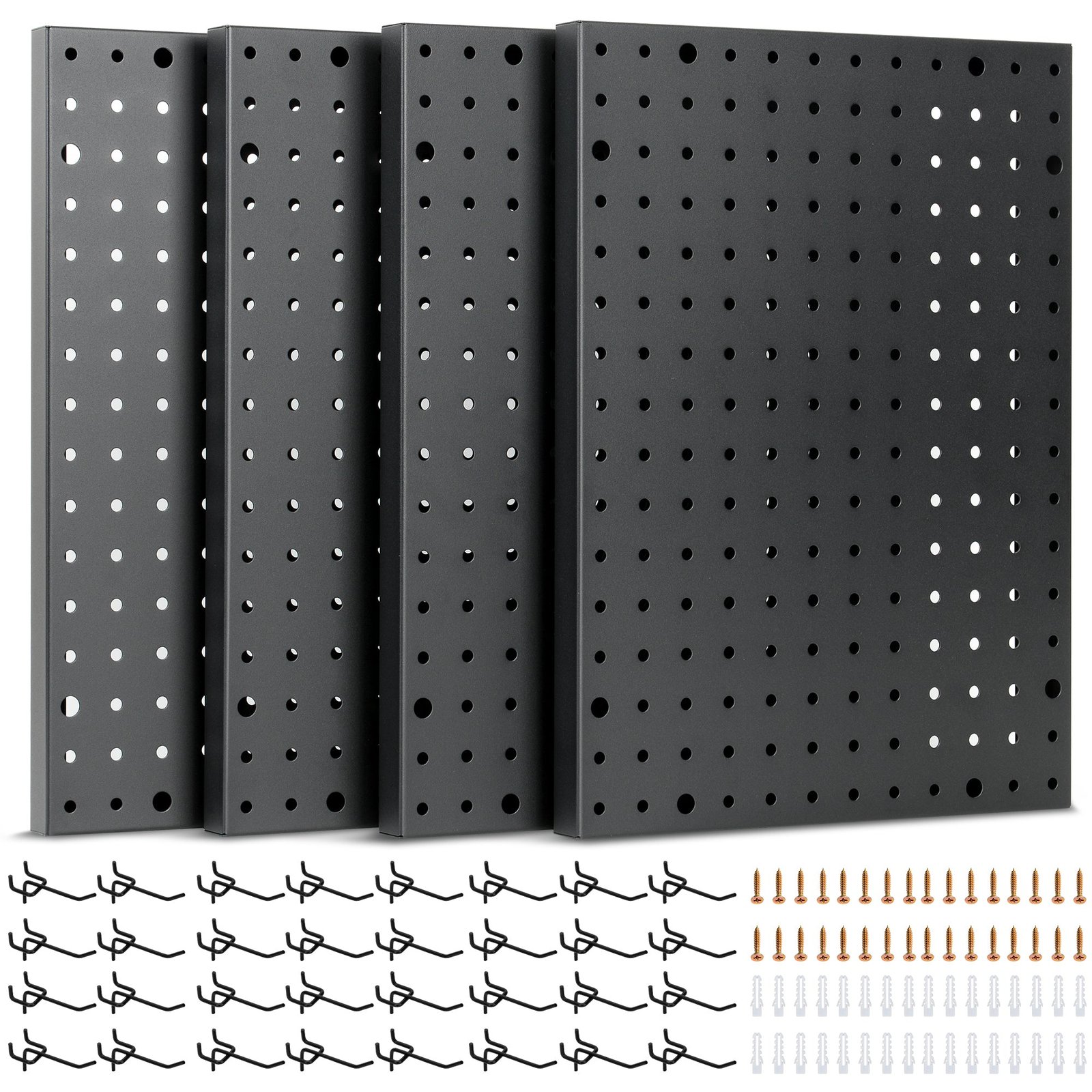
Credit: storagestandard.com
Common mistakes that reduce holding power
- Using a thin board for heavy tools
- Mounting pegboard with weak anchors or too few screws
- Hanging heavy items on single-point hooks
- Putting too much weight in one area
- Using damaged or worn peg holes
- Choosing the wrong hook shape for the item
One mistake many people do not notice is lever action. A basket or shelf that sticks far from the wall creates far more stress than a tool that hangs close to the board. Even if both items weigh the same, the shelf is harder on the pegboard.
Humidity can weaken some boards
Hardboard can absorb moisture. In garages, basements, or laundry rooms, humidity may slowly reduce strength. A board that was fine in a dry room may soften or warp in a damp one. This is one reason metal pegboard often performs better in tough environments.
If your pegboard is in a humid space, check it often. Look for swelling, sagging, and soft spots around the holes.
How to make pegboard hold more weight
If you want stronger performance, do not rely on the board alone. Improve the whole system. Small changes can make a big difference in real-world strength.
Use a solid backing board
A backing board behind pegboard can greatly improve support. Many people use plywood or strips of wood to create space for hooks while also giving the pegboard better structure. This helps the board resist bending and gives fasteners a stronger base.
If you want a stronger setup, mount the pegboard over wood strips or directly onto a rigid backing. This is far better than leaving the board loosely mounted against drywall.
Screw into studs when possible
Wall studs are the safest anchor points. Screwing into studs gives the whole system a strong connection to the wall. If studs are not available in the right spots, use proper wall anchors rated for the load.
Do not assume drywall alone is enough. Drywall can hold light items, but it is not the best support for a loaded pegboard system.
Choose better hooks and accessories
Double-prong hooks are usually more stable than single-prong hooks. Locking pegs, reinforced shelves, and purpose-made brackets also perform better. They reduce wobble, which helps protect the holes from wear.
Try to match the accessory to the item. A long tool should sit close to the wall. A basket should have more than one support point if possible. The more balanced the load, the better the pegboard performs.
Spread weight across the board
Do not cluster all heavy items in one small section. Spread them out across multiple studs and multiple rows if you can. This reduces bending and lowers stress on any one point.
This is a simple fix, but many people ignore it. A board with 20 pounds spread evenly can be safer than a board with 10 pounds hanging from one crowded corner.
Two useful rules to remember
Keep heavy items low. Lower items create less pull on hooks and are easier to support. Keep the heaviest objects near studs. That gives the system the best chance to stay secure over time.
Best pegboard type for heavy storage
If your goal is strength, metal pegboard is usually the best choice. It costs more, but it offers better durability and better resistance to wear. It also handles repeated use well, which matters in garages and workshops.
Hardboard still has a place. It is affordable and easy to find. For light storage, it can be perfectly fine. But if you are asking how much weight can pegboard hold because you plan to store tools or hardware, metal is often worth the extra cost.
Plastic pegboard is the least suitable for heavy loads. It can work in special cases, but it is not the first choice for weight-bearing storage.
If you want to learn more about mounting safety and fastener choices, a helpful resource is the Home Depot pegboard installation guide. It gives a basic view of setup and support methods.
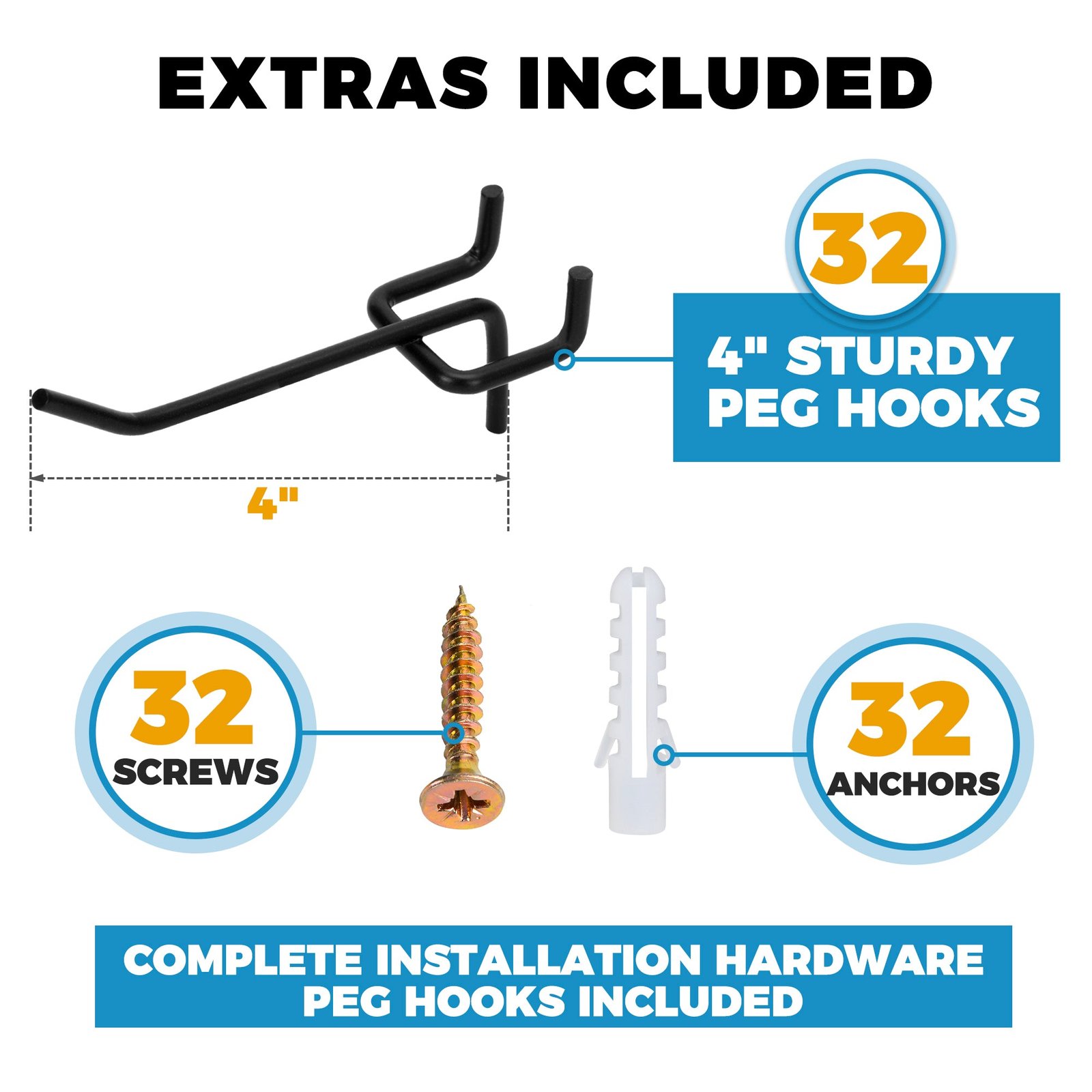
Credit: storagestandard.com
How to test your pegboard before loading it fully
Never assume a new setup is ready for heavy use. A quick test can save you from damage later. Start with light items and watch the board for movement.
- Install the board securely and check that all screws are tight.
- Hang a few light objects first.
- Look for bending, shifting, or pulling away from the wall.
- Increase weight slowly over several days.
- Check the holes and hooks again after full loading.
If the board starts to flex, stop adding weight. If hooks slip out often, change the hook style or improve the backing. A small adjustment now is easier than repairing damage later.
Signs your pegboard is overloaded
- The board bows outward in the middle
- Hooks tilt forward or fall out
- Holes look stretched or torn
- The board makes popping or creaking sounds
- Fasteners loosen after normal use
These warning signs matter. They usually appear before total failure. If you notice them early, you can fix the setup before it becomes unsafe.
What beginners usually miss about weight ratings
One non-obvious point is that weight rating is not only about the item. It is also about how the item moves. A still object is easier to hold than one that is lifted, taken off, and replaced many times each day. Movement adds stress.
Another point is that the same pegboard can have different limits in different spots. Near a stud or backing strip, it may be much stronger. In a weak center section with poor support, it may hold much less. So you should not treat the whole board like one uniform surface.
This is why good pegboard setups look simple but are actually planned carefully. The strongest systems are not the ones with the most holes. They are the ones with the best support behind the holes.
Practical weight guidance by room
The best pegboard choice depends on where you use it. Different rooms create different stress levels.
Garage
A garage often needs the strongest setup. Tools, extension cords, hardware bins, and garden items can add up fast. For this space, metal pegboard or thick hardboard with a strong backing is usually the safer option.
Kitchen
Kitchen pegboard usually holds lighter items like cups, utensils, and small pans. Moisture and heat matter here, so the board should be easy to clean and stable. Heavy cookware is better on strong hooks with extra support.
Craft room
Craft rooms often use pegboard for scissors, thread, small containers, and light tools. Hardboard can work well here if the load is light and evenly spread.
Basement or utility room
These rooms can be damp, so moisture resistance matters. Check the wall condition before installation. In these spaces, metal often outperforms wood-based boards over time.
Final answer: how much weight can pegboard hold?
The short answer is this: a pegboard can hold anywhere from a few pounds per hook to much more, depending on the material, thickness, mounting method, and accessories. Light hardboard setups may be fine for everyday home storage. Strong metal systems with proper backing can handle much heavier use.
If you want the safest result, think about pegboard as a system, not just a panel. The board, the wall, the hooks, and the load pattern all matter. When those parts work together, pegboard can be very useful and much stronger than people expect.
So if you are still asking how much weight can pegboard hold, the most honest answer is: as much as the weakest part of the setup allows. Build the setup well, and the board can serve you for years.
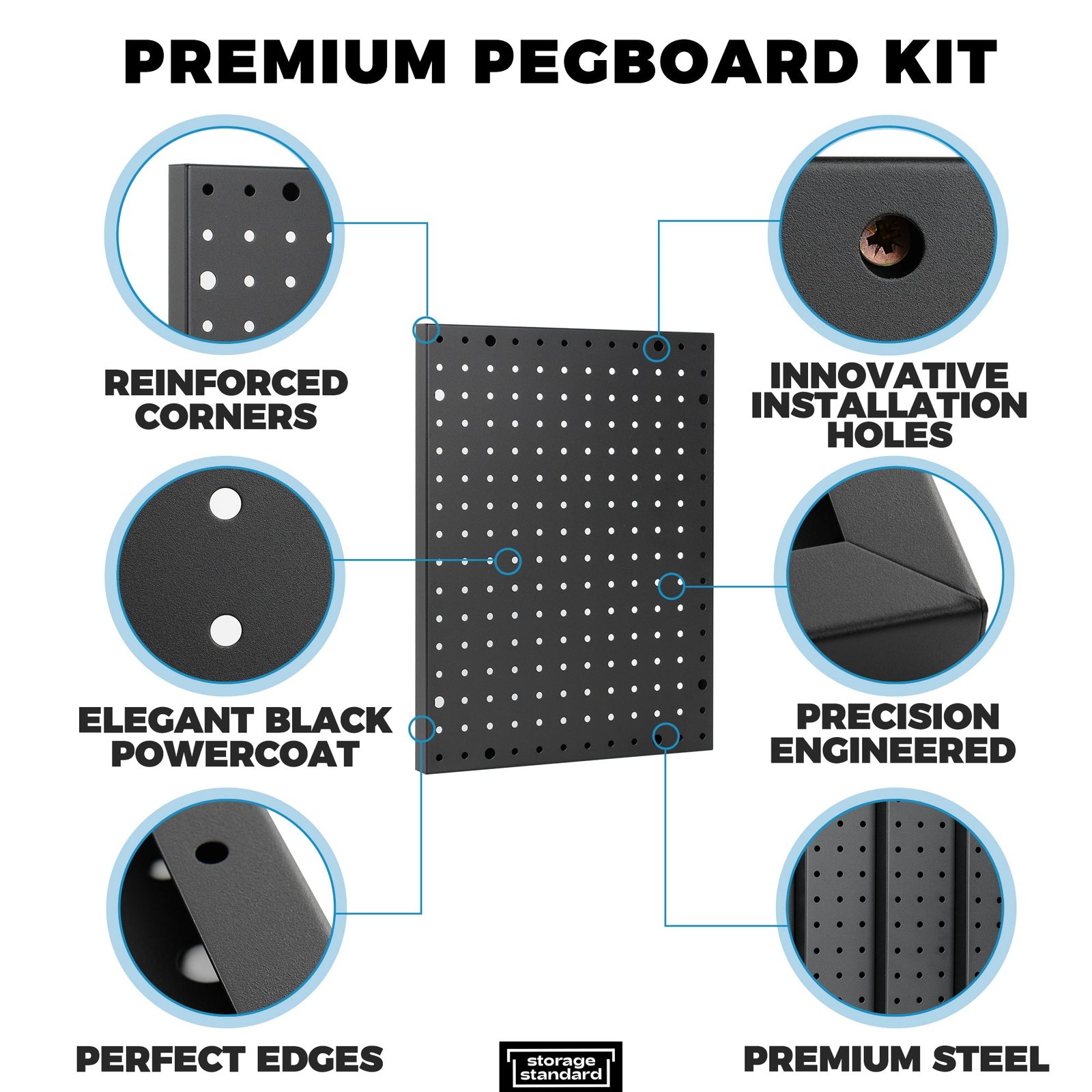
Credit: storagestandard.com
FAQs
How much weight can pegboard hold on a single hook?
For a standard hardboard pegboard, a single hook often holds about 1 to 5 pounds in normal use. Stronger metal systems with better backing can hold more, but the exact amount depends on the hook style and wall support.
Can pegboard hold power tools?
Yes, some pegboard setups can hold small power tools if the board is strong and the mounting is secure. Heavier tools should be supported by double-prong hooks, shelves, or a reinforced backing. Do not hang power tools on weak hooks alone.
Is metal pegboard stronger than hardboard pegboard?
Yes. Metal pegboard is usually stronger, more durable, and better for frequent use. It also handles humidity and wear better than hardboard, which makes it a better choice for garages and workshops.
Do pegboard hooks wear out the holes?
They can. Repeated removal, heavy loads, and poor-fitting hooks can enlarge or damage peg holes over time. Using better hooks and spreading weight across the board helps reduce wear.
What is the best way to make pegboard hold more weight?
The best way is to mount it securely into studs or a solid backing, use strong hooks, and spread the weight evenly. A backing board or wood strips can also improve support and reduce bending.
