
Choosing the right wire size is more important than many people think. A wire that is too small can get hot, waste power, and even become a fire risk. A wire that is too large may cost more and be harder to install. That is why a wire gauge chart guide is so useful. It helps you match the wire size to the current, distance, and purpose of the job.
If you work on home wiring, car audio, lighting, solar projects, or small electronics, you need more than a rough guess. You need a simple way to understand wire gauge, ampacity, and voltage drop. This guide explains those ideas in clear words, so you can make safer and smarter choices.
By the end, you will know how to read a wire gauge chart, when to choose thicker wire, and which mistakes to avoid. You do not need advanced electrical knowledge to follow this. You only need a careful approach and the right basic rules.
What wire gauge really means
Wire gauge is a number that tells you how thick a wire is. In most common systems, a smaller gauge number means a thicker wire. That often confuses beginners, because the number goes down as the wire gets larger. For example, 10 AWG is thicker than 14 AWG.
AWG means American Wire Gauge. It is the most common sizing system in the United States and many other places. Thick wire can carry more current with less heat. Thin wire can carry less current and is better for light-duty use.
Think of it like a water pipe. A wider pipe can move more water with less pressure. A thinner pipe restricts flow more. Wire works in a similar way. Electrical current is the flow, and wire thickness affects how easily that current moves.
Why wire gauge matters
The right wire size affects safety, performance, and cost. If the wire is too small for the load, it may overheat. If it is too long and too thin, voltage may drop too much. That can make motors weaker, lights dimmer, and devices less reliable.
Beginners often focus only on voltage. But wire choice depends on both voltage and current. A 12-volt system can be more demanding on wire size than a 120-volt system, because lower voltage systems often use higher current for the same power.
How to read a wire gauge chart
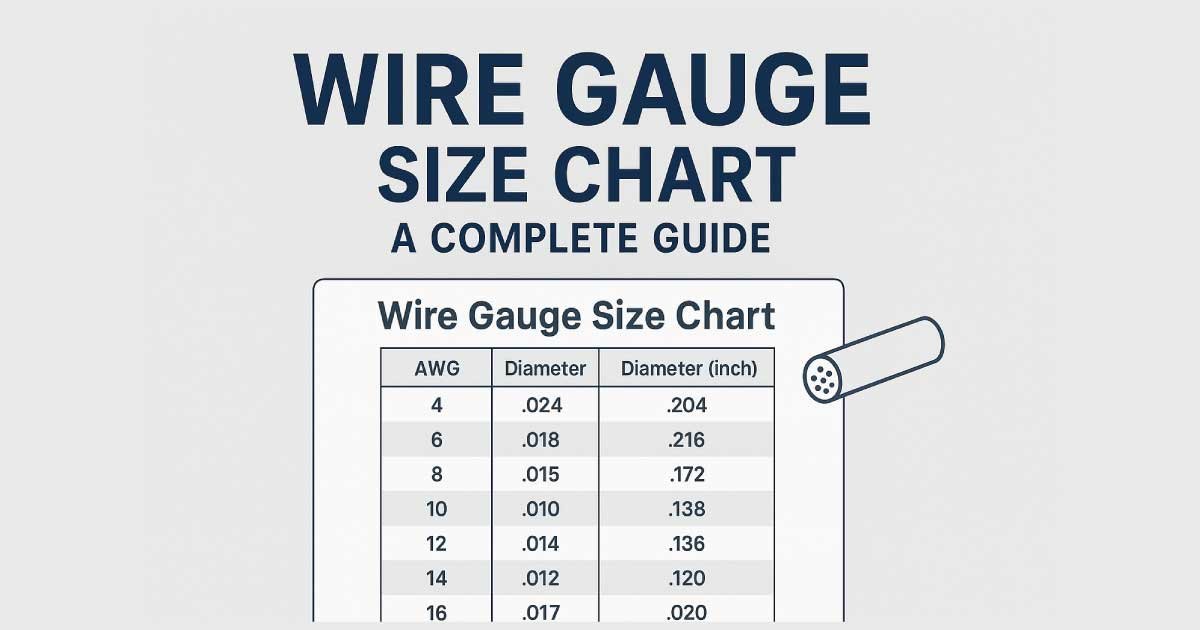
A wire gauge chart guide is easiest to use when you know what each column means. Most charts show wire size, maximum current, and sometimes the wire material or insulation type. Some charts also include resistance per foot or per meter.
Here is a simple example of the kind of information you may see on a basic chart.
| Wire Gauge | Approx. Diameter | Typical Current Use | Common Uses |
|---|---|---|---|
| 18 AWG | 1.02 mm | Low current | Small lights, signal wires |
| 14 AWG | 1.63 mm | Medium low current | Lighting circuits, outlets in some cases |
| 12 AWG | 2.05 mm | Moderate current | Kitchen circuits, appliances, extension cords |
| 10 AWG | 2.59 mm | Higher current | Water heaters, long runs, heavier loads |
| 8 AWG | 3.26 mm | Heavy current | Air conditioners, subpanels, battery cables |
This chart is only a starting point. The real choice depends on your exact project. Two important things can change the answer: wire length and installation conditions.
The two things beginners miss most
First, long wire runs need thicker wire. Even if the current is safe for a short run, a long cable can lose voltage along the way. That is called voltage drop. It is a common reason for weak performance in car audio, LED systems, and outdoor wiring.
Second, wire inside a hot space may need to be larger than expected. Heat makes it harder for wire to carry current safely. A wire in a bundle, in insulation, or near other heat sources may not cool as well as wire in open air.
Current, voltage drop, and heat
To choose the right wire size, you need to understand three simple ideas: current, voltage drop, and heat. These are connected. When current moves through wire, the wire resists the flow a little. That resistance creates heat.
The more current you push through a wire, the more heat it makes. The longer the wire, the more resistance it has. So a long, thin wire is more likely to waste energy and warm up than a short, thick one.
Current rating is not the full story
Many people look at a chart and stop at the amp rating. That is not enough. The right wire size also depends on how much voltage you can afford to lose. For sensitive electronics, even a small voltage drop can be a problem.
For example, a device may still turn on with a lower voltage, but it may run poorly. Motors may slow down. LED lights may dim. In battery-powered systems, wasted voltage also means shorter runtime.
Why long runs need thicker wire
Here is a simple rule: the longer the wire, the more careful you must be. A short wire can often handle more current than a long wire of the same size. That is why the same gauge may work in one project and fail in another.
In practical work, people often choose one wire size based on current alone, then move one size thicker if the run is long. That is a useful habit, but not a perfect rule. For important jobs, use a proper voltage drop calculation or a trusted chart made for your system type.
Common wire gauge sizes and what they are used for
Different wire sizes fit different jobs. Below are general examples to help you think clearly about wire selection. Exact limits can vary depending on insulation type, temperature rating, and local electrical codes.
- 18 AWG – Common for low-power signals, small lamps, doorbell wire, and lightweight electronics.
- 16 AWG – Used for speakers, light cords, and some low-current accessories.
- 14 AWG – Often used for lighting circuits and smaller household loads.
- 12 AWG – A common choice for general home wiring, outlets, and many appliances.
- 10 AWG – Suitable for heavier loads, longer runs, and some heating equipment.
- 8 AWG – Used for larger appliances, subpanels, battery systems, and higher-current circuits.
- 6 AWG and larger – For very heavy loads, service equipment, and larger power runs.
Do not assume one size works for all brands or all materials. Copper and aluminum behave differently. Copper is more conductive, so it usually needs less thickness than aluminum for the same job.
Credit: mechforged.com
Copper wire vs aluminum wire
Copper is the standard choice in many projects because it conducts well and is easy to work with. Aluminum is lighter and cheaper, but it usually needs a larger size to carry the same current safely. It also needs proper connectors and careful installation.
One mistake beginners make is using a chart made for copper wire and applying it to aluminum. That can create real risk. Always check the material before selecting wire size.
How to choose the right wire size for your project
The best way to choose wire size is to follow a clear process. Start with the load, then check the length, then think about safety margin. If you skip one of these steps, you may end up with wire that is technically wrong for the job.
1. Find the current
Look at the device or circuit and find its current in amps. You may see it on a label, manual, or specification sheet. If you only know watts, you can estimate current with this simple idea:
Current = Power ÷ Voltage
For example, a 120-watt device on a 12-volt system uses about 10 amps. That same 120 watts on a 120-volt system uses only 1 amp. This is why low-voltage systems often need thicker wire.
2. Check the wire length
Measure the full distance the wire must travel. For many circuits, you must count the round trip, not just one direction. That means from the power source to the load and back again.
This is one of the most missed details in wire sizing. A 10-foot one-way run can act like a 20-foot electrical path. If you forget that, your wire choice may be too small.
3. Consider the environment
Ask where the wire will go. Will it be in a hot attic, inside a wall, in a vehicle, outdoors, or inside a bundle with other wires? These conditions affect heat removal and safe current capacity.
Wire exposed to high heat may need more headroom. Wire in a moving vehicle may also need protection from vibration and rubbing. In outdoor use, you may need insulation rated for moisture and sunlight, not just the correct gauge.
4. Add a margin of safety
It is usually smart to choose a wire size with some extra capacity. This gives you room for startup surges, future upgrades, and warmer conditions. Do not run a wire at the edge of its limit unless you know the system well.
A small extra cost for thicker wire can save a lot of trouble later. It can improve performance and reduce the chance of heat damage.
Wire gauge chart guide for home wiring
Home wiring has its own rules, and those rules can vary by country and local code. In many cases, household circuits use 14 AWG, 12 AWG, or 10 AWG copper wire. The breaker size must match the wire size, not the other way around.
Here is a general home-use view:
- 14 AWG is often used for 15-amp circuits.
- 12 AWG is often used for 20-amp circuits.
- 10 AWG is often used for 30-amp circuits.
Do not treat these as universal rules. Electrical code may require different sizes depending on insulation temperature rating, number of wires in a cable, and the type of circuit. If you are doing fixed home wiring, follow the rules used in your area and get help from a licensed electrician when needed.
For a trusted code-based reference, see the National Electrical Code information from NFPA.
Why breaker size and wire size must match
The breaker is there to protect the wire. If the breaker is too large for the wire, the wire may overheat before the breaker trips. That is a serious safety issue.
Many beginners think a bigger breaker gives extra safety “room.” In reality, it can do the opposite if the wire is not sized for it. The wire is the part that must be protected first.
Wire size for cars, boats, and battery systems
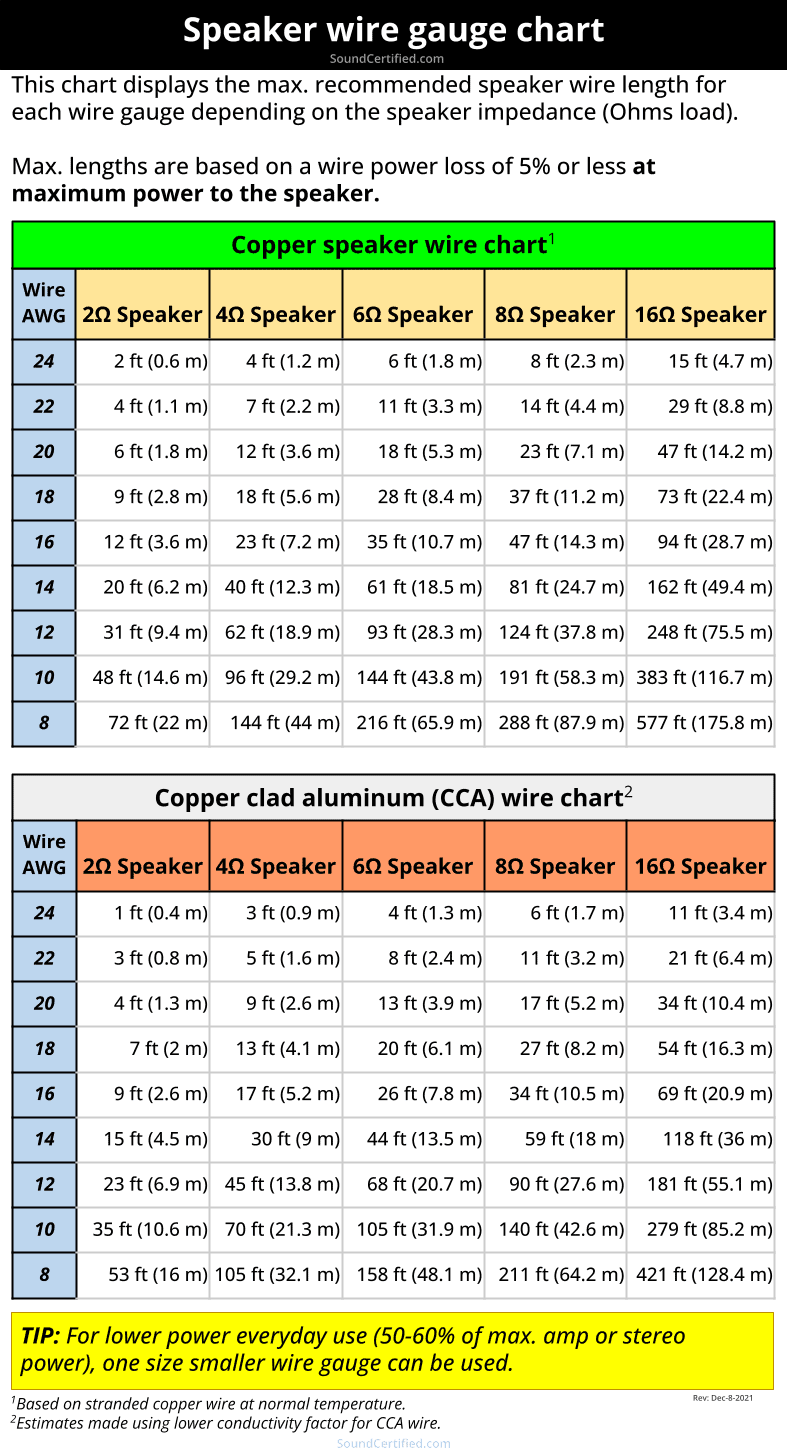
Low-voltage systems are where wire gauge mistakes happen most often. In a car, boat, RV, or solar setup, voltage is low, so current can be high. That means wire size becomes very important very fast.
For example, a 12-volt amplifier may pull far more current than a household device with the same power rating. If the wire is too thin, the system may lose power, shut down, or get hot.
Credit: soundcertified.com
What to watch for in low-voltage systems
These systems often need thicker wire than people expect because voltage drop matters more. A small voltage loss in a 12-volt system is a much bigger percentage of the total voltage than the same loss in a 120-volt system.
Also, battery systems often have short but high-current surges. A wire that seems fine during normal use may struggle during startup or peak load. That is why speaker cable, inverter wiring, and battery cable sizing deserve extra care.
Practical example
If you install a power-hungry accessory in a vehicle and use wire that is too thin, the device may still work at first. But it may lose performance when the engine is off or when several accessories run at once. The problem may look like a weak battery, when the real issue is wire size.
How insulation and temperature affect wire choice
Wire is not only about the metal inside. The outer insulation also matters. It must handle the temperature and environment where the wire will be used. Some wire jackets are made for heat, some for flexibility, and some for outdoor protection.
Temperature rating affects how much current a wire can safely carry. A wire with higher temperature-rated insulation may allow better performance, but only when the rest of the system also supports it. The whole setup matters, not one label alone.
Bundled wire can run hotter
When many wires are tied together, they cannot release heat as easily. That means the safe current rating may go down. This is another detail beginners often miss. A chart rating may assume a single wire in open air, not a tight bundle inside a wall or conduit.
If you are building a project with several wires next to each other, be conservative. Heat buildup can reduce wire life and increase risk.
Common mistakes when using a wire gauge chart
Even good charts can be used the wrong way. Here are the most common mistakes people make when using a wire gauge chart guide.
- Ignoring wire length – Short-run ratings are not the same as long-run ratings.
- Using the wrong material chart – Copper and aluminum are not sized the same.
- Forgetting voltage drop – A wire may be safe but still perform badly.
- Mixing up breaker size and wire size – The breaker protects the wire, not the load only.
- Not checking temperature and bundling – Hot or crowded spaces reduce safe capacity.
One more hidden mistake is using wire that is “close enough” because it is already on hand. That is risky. If the correct size is not available, it is better to wait and get the right wire than to force a poor match.
Simple rules that make wire selection easier
You do not need to memorize every chart if you remember a few strong habits. These rules help you avoid the most serious errors.
- Choose the wire based on current, distance, and environment.
- When in doubt, use thicker wire, especially for low-voltage systems.
- Check both the wire material and insulation rating.
- Never let the breaker rating exceed what the wire can safely handle.
- For long runs, think about voltage drop before you install anything.
If you are building a project that matters, test before final assembly when possible. A quick test can show whether the wire is getting warm or whether voltage at the load is too low.
Credit: systoncable.com
When to ask an expert
Some projects are simple. Others are not. If you are working on main household wiring, a service panel, a large solar system, or any circuit where failure could cause injury or damage, get expert help. That is not a sign of weakness. It is smart risk control.
You should also ask for help if the chart values you find do not agree with each other. That can happen because of different standards, different materials, or different temperature ratings. In that case, do not guess. Use the more conservative option and confirm with a qualified source.
Final thoughts on choosing the right wire size
The right wire size is not just about following a number on a chart. It is about matching the wire to the load, the distance, and the conditions around it. That is the real value of a wire gauge chart guide. It gives you a practical way to avoid heat, voltage loss, and unsafe shortcuts.
Remember the main idea: thicker wire carries more current with less resistance. But the best choice also depends on wire length, material, insulation, and how the circuit is installed. When you think through those points, your wiring becomes safer and more reliable.
If you are ever unsure, choose the safer path. Use a thicker wire, check the code, and verify the details before turning power on.
FAQs
1. What is the easiest way to use a wire gauge chart?
Start with the current your device needs, then check the wire length and environment. Use the chart to find a wire size that can handle the current safely, and move thicker if the run is long or the setup gets hot.
2. Does a smaller wire gauge number mean a bigger wire?
Yes. In the AWG system, a smaller number means a thicker wire. For example, 10 AWG is thicker than 14 AWG.
3. Why does wire size matter more in 12-volt systems?
Because low-voltage systems often use higher current for the same power. That makes wire heating and voltage drop more serious, so thicker wire is often needed.
4. Can I use a thicker wire than the chart recommends?
In most cases, yes. Thicker wire is usually safer and reduces voltage drop. The main downside is higher cost and less flexibility during installation.
5. Should I use the same wire gauge for copper and aluminum?
No. Aluminum usually needs a larger wire size than copper for the same current. Always check the chart for the correct material before you choose.
