
If you ask, when was drywall invented, the short answer is more surprising than most people expect. Drywall did not appear all at once as a perfect modern product. It went through many small steps, old building methods, and factory improvements before it became the fast, clean wall material we know today.
Before drywall, builders used plaster on wood lath, brick, and other heavy materials. Those methods worked, but they were slow, messy, and expensive. Drywall changed that. It made walls faster to build, easier to repair, and more affordable for homes and businesses.
The history of drywall is really a story about speed, mass housing, and industrial progress. It also shows how one simple building material can change the way entire cities are built.
The early problem drywall was designed to solve
To understand the origin of drywall, it helps to know what builders wanted to replace. For hundreds of years, interior walls were often made with a frame of wooden strips called lath. Workers then spread wet plaster over the lath in several layers. The result could look beautiful, but the process took time and skill.
This older method had clear weaknesses:
- It needed several work steps.
- It dried slowly.
- It required skilled labor.
- It could crack over time.
- It created a lot of dust and mess.
Builders and manufacturers wanted a wall surface that could be installed faster and with less labor. That need pushed the development of board-based wall materials. Drywall was not invented just because of technology. It was invented because construction needed a better system.
When was drywall invented?
The answer depends on what you mean by “invented.” If you mean the first version of a gypsum board product, the story begins in the late 1800s. If you mean the modern drywall panel used today, the real breakthrough came in the early 1900s, and its widespread use grew much later.
One of the earliest important steps came in 1888, when Augustine Sackett patented Sackett Board, a layered gypsum panel. This product was one of the first real ancestors of drywall. It was not the smooth, paper-faced drywall sheet used today, but it was a major step toward it.
The more modern form of drywall began taking shape in the early 20th century, especially as companies improved the paper-faced gypsum board design. By the 1920s and 1930s, drywall started becoming a serious alternative to traditional plaster walls. After World War II, it became standard in many parts of the United States.
So, the simplest answer is this: drywall was invented in stages, beginning in the late 1800s, with the modern version emerging in the early 1900s.
What came before modern drywall
Drywall did not come from nowhere. It grew out of older building ideas. The main predecessor was plaster applied over lath, but other gypsum-based wall products also played a role. For a plain-language material overview, see our what is drywall guide.
Plaster and lath
For a long time, plaster and lath was the standard inside wall system. Workers nailed thin wood strips to framing members. Then they applied wet plaster in layers. This created a hard surface that could be painted or decorated.
This method had a strong finish, but it was slow and skill-heavy. A single room could take days or longer to complete. If a wall cracked or got damaged, repairs were not simple.
Early gypsum boards
Gypsum is a soft mineral that can be made into a hard building surface when processed correctly. In the 1800s, inventors began creating board products using gypsum to replace wet plaster work. These boards were early building panels, and they helped shape the drywall industry.
These early boards were not easy to perfect. They had issues with strength, moisture, and production quality. Still, they proved that walls did not have to be built only with wet plaster.
The key invention: Sackett Board
One of the most important moments in drywall history was the invention of Sackett Board by Augustine Sackett. In 1888, he received a patent for a gypsum board made of layers. This material used gypsum plaster between paper layers, which made it much easier to handle than wet plaster walls.
Sackett Board was a major step forward because it introduced the idea of a factory-made wall panel. Instead of building a wall surface piece by piece on the job site, builders could attach prepared boards.
Still, Sackett Board was not the final answer. It was thicker and less refined than modern drywall. But without it, later improvements may not have happened as quickly.
A helpful place to learn more about gypsum and related wall materials is the Encyclopaedia Britannica entry on drywall.
Credit: reddit.com
How drywall became modern
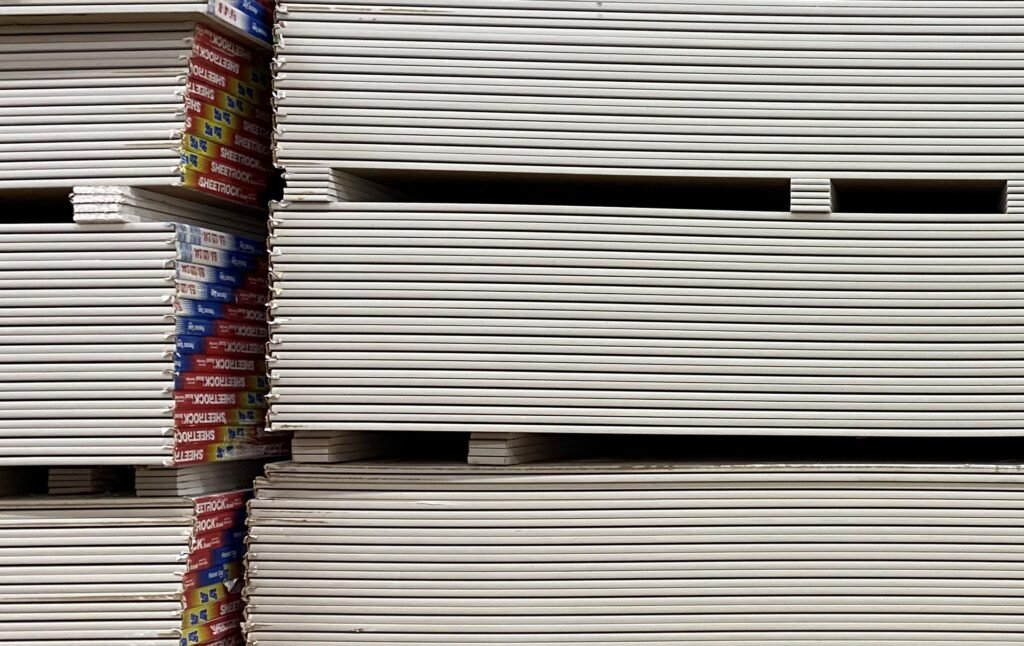
The modern drywall panel came from a series of improvements made in the early 1900s. Manufacturers worked to make boards lighter, smoother, easier to produce, and faster to install. The biggest change was the move toward a gypsum core wrapped in heavy paper.
This paper-faced design solved many problems at once. It gave the board better strength, better handling, and a cleaner finish. It also made mass production possible.
The rise of the gypsum core
Gypsum is ideal for interior walls because it is relatively light and naturally fire-resistant. When heated, gypsum releases water vapor, which helps slow the spread of fire. That made it attractive not only for builders, but also for safety reasons.
As production improved, gypsum boards became more consistent. That mattered a lot. Construction products must be uniform if builders are going to trust them on every job.
The paper face made a huge difference
The paper facing was more important than many people realize. It gave the board flexibility and a better surface for finishing. It also helped keep the gypsum core intact during shipping and installation.
This was a smart design choice. Beginners often think drywall is just “a hard board,” but the combination of gypsum and paper is what made it practical for large-scale use.
Why drywall spread so quickly in the 20th century
Drywall did not become popular only because it was new. It spread because the world needed faster building methods. Several big changes helped it succeed.
1. Mass housing needed speed
As cities grew, builders had to finish more homes in less time. Wet plaster work could not keep up with this demand. Drywall allowed crews to install walls much faster.
2. Labor costs mattered more
Traditional plaster required skill and time. Drywall reduced both. That made projects cheaper and more predictable.
3. Manufacturing got better
Factories could produce drywall sheets in large numbers with steady quality. Once production became efficient, prices dropped and availability improved.
4. It fit modern construction methods
Wood framing and later metal framing both worked well with drywall. Builders liked materials that could be installed with fewer steps and less drying time.
Drywall during and after World War II
World War II changed construction in many ways. After the war, many countries needed fast housing for growing families, returning soldiers, and expanding cities. Drywall fit that moment perfectly.
Postwar homebuilding was often about speed, scale, and cost. Drywall helped builders create homes much faster than old plaster methods. This is one reason drywall became a normal part of residential construction in North America.
This period also helped shape the image of drywall as a standard building product, not a special or experimental one. By the mid-20th century, many builders saw it as the practical choice.
Drywall versus plaster: what changed on the job site
The switch from plaster to drywall was not just about materials. It changed how workers planned and finished a room.
| Feature | Plaster and Lath | Drywall |
|---|---|---|
| Installation speed | Slow | Fast |
| Skill needed | High | Moderate |
| Drying time | Long | Short |
| Repair work | More complex | Usually simpler |
| Factory production | No | Yes |
The difference is easy to see. Plaster offered a very solid finish, but drywall gave builders speed and consistency. In modern construction, those benefits usually win. For a deeper side-by-side comparison, read our plaster vs drywall guide.
Two details about drywall history many people miss
Most people know drywall replaced plaster, but there are two less obvious points that matter a lot.

Credit: reddit.com
Drywall was shaped by industrial production, not just construction needs
Drywall became successful because factories could make it in large sheets. This is important. It was part of a bigger industrial shift, where more building parts were made off-site instead of at the job site.
That change helped construction become more efficient. It also made quality more consistent from one project to another.
Fire safety helped drywall gain trust
Gypsum’s natural fire-resistant quality was another big reason it spread. Builders and code makers cared about this, especially in growing cities where building safety mattered more and more.
This is one reason drywall was not just “cheaper plaster.” It offered performance benefits that fit modern safety needs.
Modern drywall is not the same as the first versions
When people ask when was drywall invented, they sometimes imagine one clear date. But the truth is that today’s drywall is the result of many improvements.
Modern drywall sheets come in different types for different jobs. If you are comparing brand and material terms, our Sheetrock vs drywall guide explains the difference.
- Standard drywall for most interior walls
- Moisture-resistant drywall for areas with humidity
- Fire-resistant drywall for extra safety
- Sound-reducing drywall for quieter rooms
These versions show how far the product has come. What started as an answer to slow plaster work is now a family of products used for comfort, safety, and performance.
Why the invention date is not a single year
It is tempting to look for one exact date, but drywall history does not work that way. There is a difference between the first idea, the first patent, and the product becoming common.
Here is the simple timeline:
- Before the late 1800s, interior walls were mostly plaster over lath.
- In 1888, Sackett Board became one of the first important gypsum board products.
- In the early 1900s, paper-faced gypsum board began to take shape.
- By the 1920s and 1930s, drywall was growing in use.
- After World War II, drywall became standard in many building projects.
So if someone asks for one answer, the best response is that drywall was invented through a process, not a single moment.
How drywall changed home building forever
Drywall changed more than walls. It changed the pace of entire projects. A house could be framed, sheeted, finished, and painted much faster than before. That speed affected contractors, suppliers, and homeowners.
It also changed the look of interiors. Drywall created smooth surfaces that were easy to paint, decorate, and repair. This made modern homes feel cleaner and more uniform than older plaster homes.
Another major effect was cost. Because drywall reduced labor time, it helped make housing more affordable. That is one reason it became so important in suburban development and large-scale building projects.
The legacy of drywall today
Today, drywall is one of the most common interior wall materials in the world. Many people never think about its history because it seems so ordinary. But its rise was a major building innovation.
Its success came from solving real problems:
- It reduced labor.
- It sped up construction.
- It gave a smoother finish.
- It supported mass housing.
- It offered useful fire resistance.
That mix of benefits is why drywall survived while many older wall methods faded. It was not only easier. It matched the way modern building works.
Credit: drywallinsider.com
Final thoughts on the origin of drywall
If you want the clearest answer to when was drywall invented, say this: the first important drywall ancestor appeared in 1888, and the modern drywall system developed in the early 1900s, becoming common in the 20th century. Drywall was not invented in one day. It was built step by step, just like the walls it helps create.
That long history explains why drywall became so successful. It solved an old problem in a simple way. It made wall building faster, cleaner, and more efficient. And once builders saw what it could do, there was no going back.
FAQs
1. When was drywall invented?
Drywall’s history began in the late 1800s, with an important early patent in 1888. The modern paper-faced version developed in the early 1900s and became widely used later in the 20th century.
2. Who invented drywall?
One of the key early inventors was Augustine Sackett, who patented Sackett Board in 1888. His work helped lead to the drywall we use today.
3. What was used before drywall?
Before drywall, builders often used plaster over wood lath. This method made strong walls, but it was slower, messier, and more expensive.
4. Why did drywall become so popular?
Drywall became popular because it was faster to install, easier to mass-produce, and cheaper than traditional plaster methods. It also worked well for modern housing needs.
5. Is drywall the same as gypsum board?
Drywall is a type of gypsum board. The term “drywall” is usually used for the paper-faced wall panels that are installed without wet plaster.
