
Wood screws look simple, but the right one can make a project clean, strong, and long-lasting. The wrong one can split the wood, pull loose over time, or leave an ugly finish. That is why learning the types of wood screws matters for anyone who works with furniture, cabinets, decks, trim, or basic home repairs.
Not all wood screws are built the same. Some are made for strength, some for fast driving, and some are chosen mainly because they look better on finished surfaces. The size, head shape, thread design, and material all affect how the screw performs. Even small details, like whether the screw is fully threaded or partly threaded, can change how tightly two pieces of wood pull together.
This guide explains the main screw types in simple words. You will learn how to choose the right size, head style, and use case, so your next project is easier and more secure.
What makes a wood screw different
A wood screw is designed to grip into wood fibers, not into metal or masonry. Its threads are shaped to bite into the material and hold firmly. Most wood screws also have a sharp point, which helps them start easily without needing a pilot hole in every situation.
Still, the best wood screw depends on the job. Softwood, hardwood, plywood, MDF, and outdoor lumber all behave differently. A screw that works well in pine may not be the best choice for oak or treated lumber.
Before choosing a screw, it helps to understand four things: the head, the drive, the thread, and the material. These four details decide how easy the screw is to install and how strong the joint will be.
Main types of wood screws by head style
The head is the top part of the screw. It affects how the screw sits in the wood and how it looks when finished. Some heads are made to sit flush, while others stay above the surface.
Flat head
A flat head screw is one of the most common options. It is designed to sit level with the wood surface or slightly below it. This makes it a good choice for furniture, cabinetry, and general woodworking where you want a clean finish.
Flat head screws usually need a countersunk hole. That means the top of the wood is shaped so the screw head can sink in neatly. If you skip this step, the head may stick out and look rough.
Round head
Round head screws have a domed top that stays visible after installation. They are often used when appearance is less important than holding power, or when a decorative look is wanted.
Because the head remains above the surface, round head screws are not the best choice for smooth, flush finishes. But they can be useful in rustic projects, brackets, and some hardware applications.
Oval head
Oval head screws are a middle ground between flat and round heads. They sit slightly above the surface but still offer a more finished look than a full round head.
These screws are often used in trim work and decorative woodworking. They can be a smart choice when you want a little visual detail without a bulky screw head.
Pan head
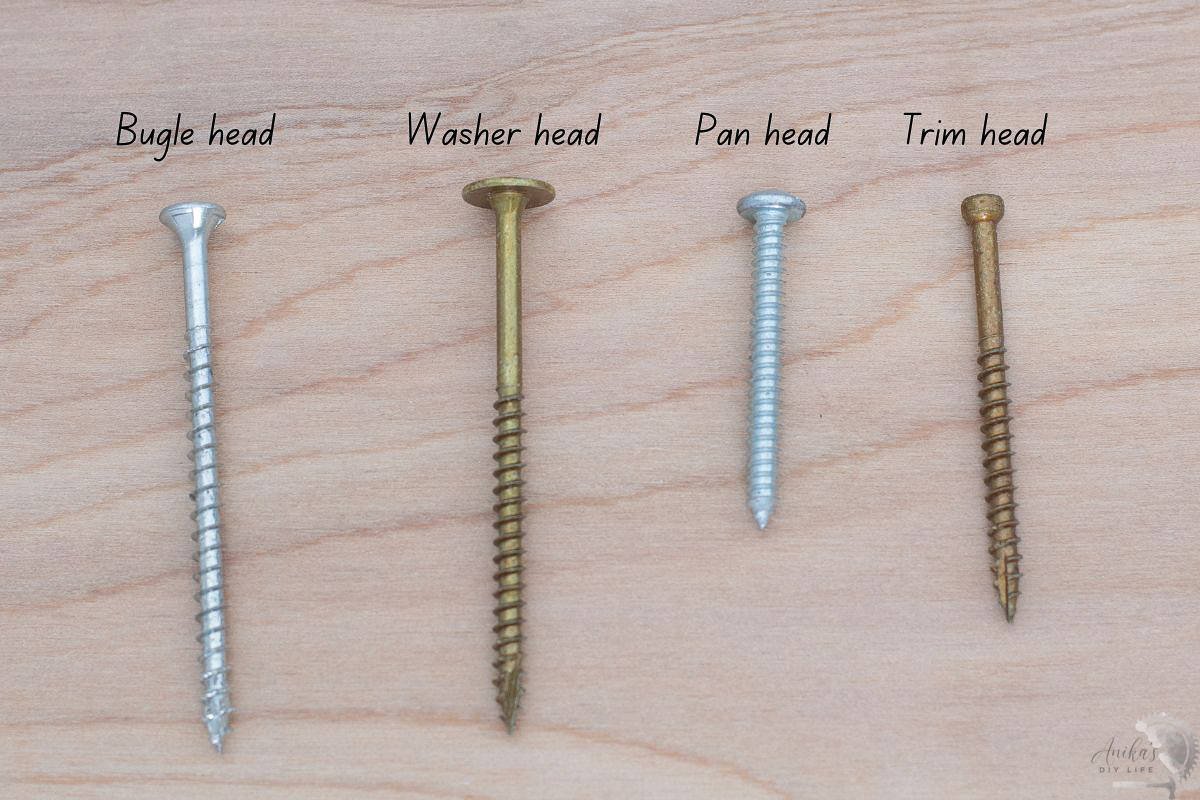
Pan head screws have a broad, rounded top with a flat underside. They are not meant to sink deeply into the wood. Instead, they rest on the surface and spread pressure across a wider area.
This style is common in light-duty fastening and hardware attachment. It is less about a hidden finish and more about easy installation and reliable holding. For a closer look at this head style, see our pan head screw guide.
Bugle head
Bugle heads are often seen in screws made for drywall, but they are also useful in some woodworking and composite-material jobs. The curved shape helps reduce surface damage and spread force smoothly. If you are comparing fasteners for wall materials, our wood screw vs drywall screw guide explains the practical differences.
For wood projects, bugle heads are useful when you want less surface cracking and a more controlled seat in softer materials.
Wood screw drive types you will see most often
The drive is the shape in the top of the screw where the driver bit fits. The right drive helps prevent slipping and makes installation faster. The wrong one can strip easily and waste time.
Phillips
Phillips drives are very common. They are easy to find and work with, especially for basic home projects. The design helps the bit stay centered, but it can cam out if too much pressure is applied.
That means you should use steady force, not excessive torque. Many beginners over-tighten Phillips screws and damage the head.
Slotted
Slotted screws have a single straight groove. They are older in design and are still used in some woodworking and restoration jobs.
They can look classic, but they are less convenient than modern drives because the driver can slip more easily. They are best for light-duty use or historical projects.
Square drive
Square drive screws are popular with woodworkers because the bit grips well and resists slipping. This gives better control and often speeds up installation.
For many people, square drive is one of the best choices for practical woodworking because it reduces stripped heads and feels more stable while driving.
Torx
Torx screws use a star-shaped drive. They are excellent for torque and resist cam-out very well. That makes them a strong choice for projects where you want a firm, clean installation.
Torx is especially useful in modern cabinetry, decking, and structural wood assembly. If you want reliability, this is one of the best drive styles to consider.
Hex
Hex drive screws use a six-sided recess or head. They can handle high torque and are often used with bolts, lag screws, and heavier wood fastening.
They are not always the first choice for fine furniture, but they are very useful when strength matters more than appearance.
Thread styles and why they matter
The thread is the spiral ridge around the screw body. It is one of the most important parts of the screw because it creates grip. Different thread shapes work better in different woods and projects. For thread-forming fasteners, compare this with our self-tapping screws guide.
Credit: mfinelumber.com
Coarse thread
Coarse-thread screws have wider, deeper threads. They grip softwoods well and drive quickly. Pine, cedar, and other softer woods usually respond well to this design.
These screws are also helpful when you want fast bite with less effort. The wider thread pattern can give strong holding power in low-density material.
Fine thread
Fine-thread screws have smaller, tighter threads. They are often used in hardwoods because the closer thread pattern can give better control and reduce splitting.
If you are working with oak, maple, or other dense wood, fine threads may be a better choice than coarse threads.
Fully threaded
Fully threaded screws have threads along most or all of the shank. They are good when you want strong grip throughout the depth of the joint.
These are common in fastening two pieces of wood together firmly, especially when movement should be limited.
Partially threaded
Partially threaded screws have a smooth section near the head. This smooth part helps draw two pieces tightly together. That makes them useful in joints where clamping force matters.
Non-obvious insight: many beginners choose fully threaded screws for every job, but partially threaded screws are often better when you want wood pieces to pull tightly against each other. This is a small detail that can improve joint strength a lot.
Wood screw sizes explained in simple terms
Wood screw size is usually described by gauge, length, and sometimes diameter. The gauge tells you the thickness of the screw body. The length tells you how far the screw goes into the wood.
Choosing the right size is just as important as choosing the right head. A screw that is too short will not hold well. A screw that is too long may come through the other side or split the wood.
Common gauge sizes
In woodworking, common screw gauges include #6, #8, #10, and #12. Smaller numbers are thinner, while larger numbers are thicker.
- #6 is often used for light-duty work, trim, and smaller pieces.
- #8 is a very common general-purpose size for furniture and cabinets.
- #10 offers more strength for heavier joints.
- #12 is used when stronger fastening is needed.
Common length ranges
Wood screw lengths often range from under 1 inch to several inches. Short screws are used for thin material and trim. Longer screws are used for framing, structural joints, and thicker lumber.
As a basic rule, the screw should go deep enough into the second piece of wood to hold firmly, without going so deep that it damages the opposite side.
How to choose length correctly
A simple rule is to aim for at least half the screw length to sit in the base piece of wood, but the exact choice depends on the project. For many woodworking jobs, a 1 1/4-inch to 2 1/2-inch screw is common.
Non-obvious insight: longer is not always better. If the screw is too long for the wood thickness, it can split the material or make the joint weaker. In thin panels, a shorter screw with the right thread type often performs better than a longer screw forced into place.
| Gauge | Common use | Relative strength | Typical projects |
|---|---|---|---|
| #6 | Light-duty fastening | Low to medium | Trim, small hardware, thin wood |
| #8 | General-purpose use | Medium | Cabinets, furniture, basic repairs |
| #10 | Heavier joinery | Medium to high | Frames, shelves, thicker parts |
| #12 | High-strength fastening | High | Structural wood joints, load-bearing areas |
Wood screw materials and coatings
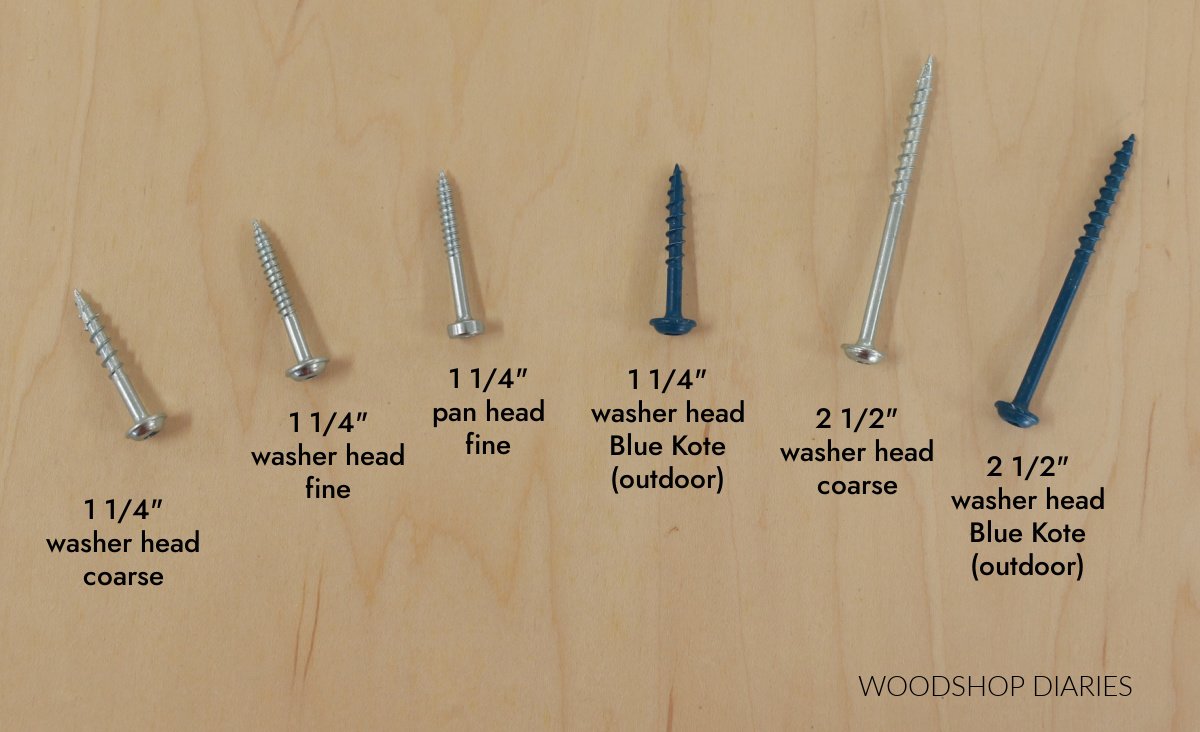
The material and coating affect corrosion resistance, strength, and appearance. This is especially important if the screw will be used outdoors or in damp places.
Credit: woodshopdiaries.com
Steel
Steel screws are common and affordable. They work well for indoor projects and general woodworking. Plain steel should be used carefully in wet areas because it can rust.
Stainless steel
Stainless steel is the better choice for moisture, outdoor exposure, and projects near water. It resists rust well and lasts longer in harsh conditions.
For outdoor decks, fences, and garden structures, stainless steel is often worth the extra cost.
Brass
Brass screws are chosen more for appearance than for high strength. They have a warm, attractive finish and are often used in decorative work, small furniture details, and visible hardware.
They are softer than steel, so they are not ideal for heavy-duty fastening.
Coated screws
Some screws have coatings that improve rust resistance and reduce driving friction. This can make installation smoother and increase the life of the screw.
Exterior coatings are useful for pressure-treated lumber and outdoor construction. If you want guidance on corrosion-resistant fasteners, the Fastenal fastener resource is a helpful place to learn more about common screw and hardware materials.
How to choose the right type of wood screw
Choosing the right screw is easier when you match the screw to the wood and the job. Here is a simple way to think about it.
For furniture
Use screws that give a neat finish and strong hold. Flat head or oval head screws are common. Square drive or Torx drives are often easier to use than Phillips.
For cabinets
Cabinet work usually needs clean results and steady fastening. Screws with good holding power and reliable drive control are best. Partially threaded screws can help pull joints tight.
For trim and molding
Smaller screws with a neat head style are useful here. You usually want the fastener to be less visible. Flat head screws are often a better fit.
For outdoor projects
Pick screws with strong corrosion resistance, such as stainless steel or coated exterior screws. Outdoor wood changes with moisture, so the screw must stay secure over time.
For hardwood
Hardwood often needs careful screw choice to avoid splitting. Fine-thread screws, pilot holes, and proper length matter more here than in softwood.
For softwood
Softwood accepts coarse-thread screws well. These drive fast and grip strongly. But because the wood is softer, do not overtighten and crush the fibers.
Common mistakes people make with wood screws
Even a good screw can fail if it is used the wrong way. These are some mistakes that happen often.
- Using the wrong length. Too short gives weak hold. Too long can damage the workpiece.
- Ignoring pilot holes. In hardwood or near the edge, pilot holes help prevent splitting.
- Choosing the wrong head. A visible round head may ruin a clean finish, while a flat head may be better for hidden or flush joints.
- Using the wrong drive bit. A loose bit strips the screw head and slows the job.
- Over-tightening. This can strip the hole, break the screw, or crush the wood fibers.
One small but important habit is to test the screw in a scrap piece first. This helps you confirm the fit before you commit to the real work.
Practical examples of screw choice
Sometimes the easiest way to understand screw types is to see how they work in real projects.
Building a bookshelf
A bookshelf often needs strong joints and a clean look. A flat head, square drive, partially threaded wood screw is a strong choice. If the wood is hardwood, use pilot holes.
Installing trim
Trim should look neat and blend in. Small flat head screws or trim-specific screws work well. The goal is a flush finish with minimal visible hardware.
Attaching a bracket
For a bracket, strength matters more than appearance. A pan head or hex head screw may work better because it can clamp hardware securely against the wood.
Outdoor fence repair
For fencing, use exterior-rated screws with good rust resistance. Coarse threads often perform well in softwood fence boards.
How pilot holes help wood screws perform better
A pilot hole is a small hole drilled before the screw goes in. It makes driving easier and lowers the chance of splitting wood. Many beginners skip this step, especially in softwood, but it can save time and reduce mistakes.
Pilot holes are especially helpful in hardwood, near edges, and when using larger screws. They also make it easier to keep screws straight.
Non-obvious insight: pilot holes do more than prevent splitting. They also improve screw alignment. A screw that starts straight is less likely to wander off line and damage the joint or surface finish.
Credit: anikasdiylife.com
Quick guide to matching screw type to project
- Best for hidden strength: flat head, Torx or square drive, partially threaded
- Best for decorative work: oval head, smaller gauge, brass or finished steel
- Best for outdoor use: stainless steel or coated exterior screw
- Best for softwood: coarse thread, common general-purpose lengths
- Best for hardwood: fine thread, pilot hole, controlled tightening
Simple buying tips that save time and money
When shopping for wood screws, do not focus only on the box count. Read the size, drive type, coating, and intended use. A cheap screw that strips or rusts is not a good deal.
Also, buy a small mix only if you know you will use different sizes often. For a single project, the right specific size is usually better than a large variety pack.
It is also smart to keep a few common sizes on hand, especially #8 screws in short and medium lengths. They cover many everyday repairs and small builds.
Final thoughts on choosing wood screws
The types of wood screws you choose can change the quality of your project more than many people expect. Head style affects appearance. Drive type affects ease of use. Thread style affects grip. Size affects strength and safety. When these parts match the wood and the job, your results improve fast.
If you remember only one thing, remember this: the best screw is not the biggest or the most expensive one. It is the one that fits the wood, the load, and the finish you want. That is what makes woodworking cleaner, stronger, and less frustrating.
FAQs
1. What are the most common types of wood screws?
The most common types of wood screws are flat head, round head, oval head, pan head, and bugle head screws. You will also often see Phillips, square drive, and Torx drive versions.
2. Which wood screw is best for furniture?
For furniture, flat head screws are usually a strong choice because they can sit flush with the surface. Square drive or Torx drives are also useful because they reduce slipping during installation.
3. Should I use coarse or fine thread wood screws?
Use coarse thread screws for softwood and fine thread screws for hardwood. Coarse threads grip soft materials well, while fine threads work better in dense wood and help reduce splitting.
4. Do wood screws need pilot holes?
Not always, but pilot holes are often a good idea. They are especially helpful in hardwood, near edges, and with larger screws. They reduce splitting and make driving easier.
5. What size wood screw should I use for general projects?
A #8 screw is a common general-purpose choice for many woodworking jobs. For length, 1 1/4-inch to 2 1/2-inch screws are often used, but the right size depends on the thickness of the wood and the strength needed.
