
Choosing the right saw can save time, reduce effort, and improve the quality of your cut. That is especially true when you work with metal, plastic, or small pipes. A hacksaw may look simple, but the tool performs very differently depending on the frame and blade you use.
The types of hacksaw frames and blades matter more than many beginners think. A strong frame gives control and stability. The right blade gives speed, cleaner cuts, and longer life. If you pick the wrong combination, the saw may bend, jam, or wear out too fast. If you pick the right one, even tough cutting jobs feel much easier.
This guide explains the main frame styles, blade types, tooth counts, and blade materials in clear language. It also shows how to match the right tool to the job, so you can choose with confidence instead of guessing.
Why the frame and blade both matter
A hacksaw is a hand tool, but it works like a system. The frame holds the blade under tension. The blade does the cutting. If either part is weak or mismatched, the result suffers.
The frame affects comfort, tension, and reach. The blade affects cutting speed, finish quality, and durability. For example, a fine-tooth blade is better for thin metal, while a coarse blade removes material faster on thicker stock. A rigid frame helps keep the blade straight, which is important when you need a clean line. A flexible frame can be useful in tight spaces, but it may not feel as stable.
One beginner mistake is buying a good blade and putting it in a poor frame. Another is using a frame with weak tension, which lets the blade wander. In hacksaw work, precision often starts with tension, not just sharpness.
Main types of hacksaw frames
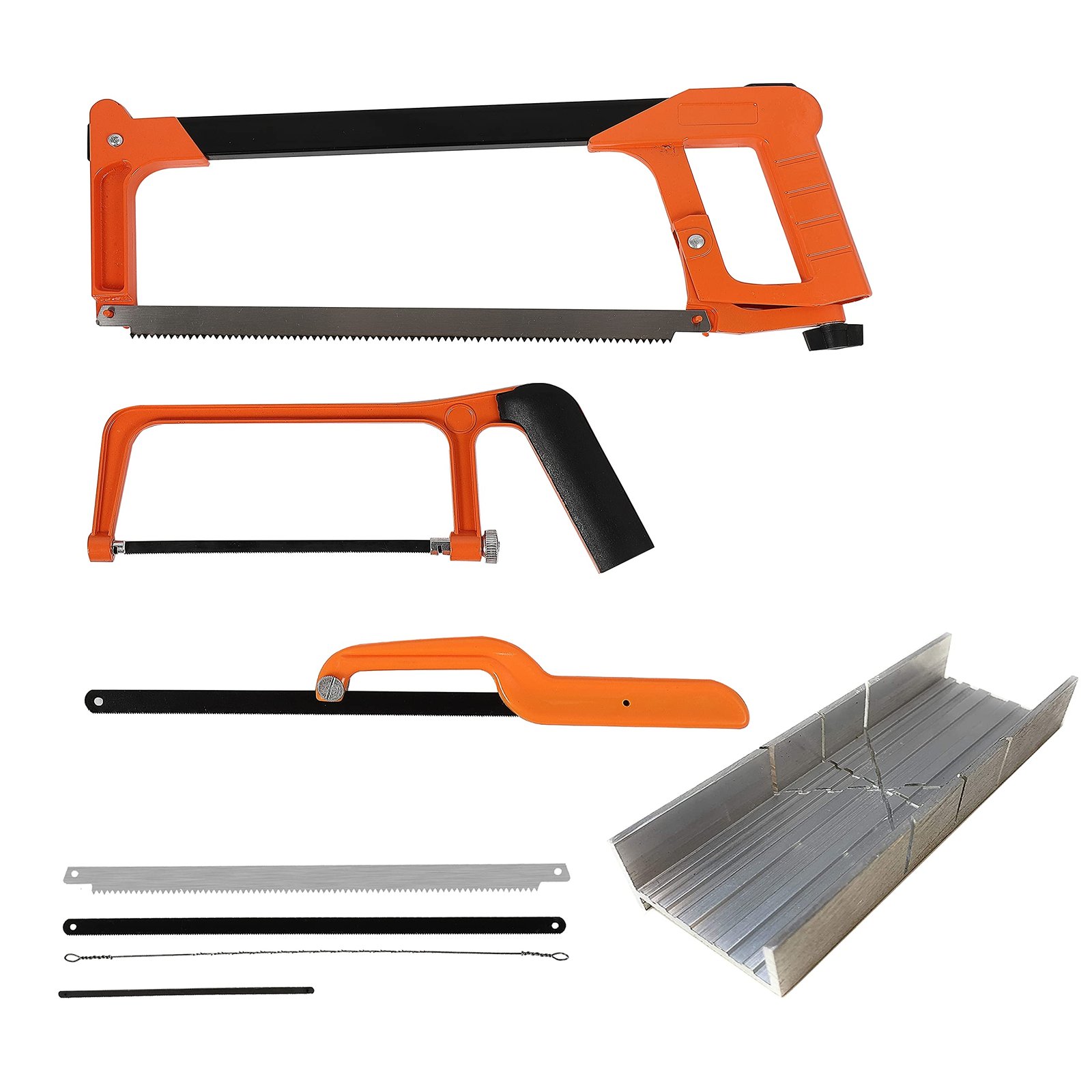
Hacksaw frames come in several styles. Some are built for general shop use. Others are made for tight spaces, deeper cuts, or faster blade changes. Here are the most common frame types and how they differ.
1. Fixed-frame hacksaw
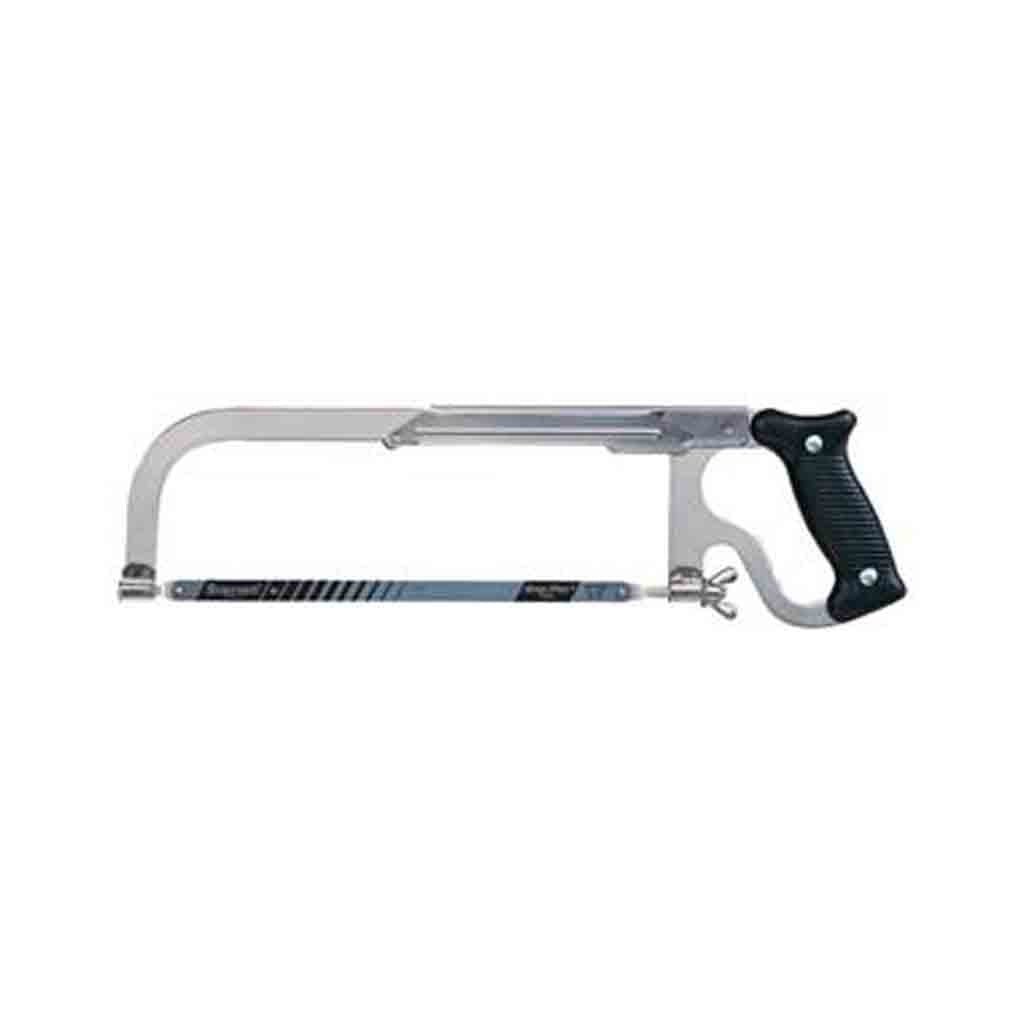
This is the classic style. The frame size does not change, and the blade sits in a rigid body. It is simple, strong, and easy to use. Many general-purpose hacksaws use a fixed frame because it offers good control and reliable tension.
Best for: everyday cutting jobs, metal rods, bolts, pipes, and general workshop use.
Why people like it: it is sturdy, affordable, and familiar. If you only need one hacksaw for basic use, this is often the safest choice.
2. Adjustable-frame hacksaw
An adjustable frame can accept different blade lengths. This is useful when you want flexibility. Some models let you switch between 10-inch and 12-inch blades, while others can handle more than one size.
Best for: users who want one frame for different tasks or blade sizes.
Important detail: not all adjustable frames hold every blade length with equal tension. A frame may fit the blade, but still feel less stable than a dedicated fixed frame. That is one of the hidden trade-offs beginners often miss.
3. High-tension hacksaw frame
A high-tension frame is designed to hold the blade tighter than a standard frame. This makes the blade less likely to twist or buckle during cutting. The result is straighter cuts and better control, especially in tougher materials.
Best for: stainless steel, thick metal, and cleaner precision work.
Why it matters: blade tension is a major factor in cut quality. A blade that stays tight usually cuts more accurately and lasts longer.
4. Mini hacksaw frame
This smaller frame is built for tight areas and light work. It is often used for small pipes, trim, bolts, or detailed work where a full-size frame would be awkward.
Best for: confined spaces and light-duty cutting.
Limit: it is not ideal for heavy cutting because the short frame limits reach and leverage.
5. Junior hacksaw frame
A junior hacksaw uses a smaller blade and compact frame. It is handy for small tasks, hobby work, and fine cuts on light metal or plastic. The tool is easy to control, which makes it a good choice for delicate work.
Best for: small fasteners, plastic tubing, thin materials, and precision tasks.
6. Deep-arc or bow-style hacksaw frame
This style has a curved frame that gives more clearance between the blade and the body of the saw. That extra space helps when you need to cut larger objects or work around shapes that do not fit well in a standard frame.
Best for: deeper cuts and bulky workpieces.
Useful insight: more clearance does not always mean better control. For small, accurate cuts, a compact rigid frame may still be better.
Common hacksaw blade types
The blade is the part that touches the material, so choosing the right one is critical. The main differences are blade length, tooth count, material, and tooth pattern.
1. High-carbon steel blades
These blades are common, affordable, and good for general use. They are flexible enough for regular hand cutting and easy to replace. However, they do not last as long as premium blades when used on hard metals.
Best for: light to medium-duty work, occasional use, and general DIY tasks.
2. Bi-metal blades
Bi-metal blades combine two metals: a flexible body and hard cutting teeth. This design gives them a very useful balance of strength and durability. They are a smart choice for many users because they last longer and resist breaking better than basic blades.
Best for: frequent use, harder metals, and users who want better blade life.
Non-obvious insight: bi-metal blades often save money over time even if they cost more at the start, because they break less and stay usable longer.
3. Carbon steel blades
Carbon steel blades are another common option for light jobs. They can cut well at first, but they wear faster than better-made blades. They are fine for simple tasks, but not the best choice for demanding work.
Best for: very light work and low-cost replacement needs.
4. Tungsten carbide grit blades
These blades do not use teeth in the normal way. Instead, they use a gritty cutting edge. They are better for hard, brittle, or abrasive materials like tile, fiberglass, or some composites. They are not the first choice for standard metal cutting.
Best for: hard-to-cut materials that quickly dull regular teeth.
5. Diamond grit blades
Diamond grit blades are more specialized. They work on very hard materials and can handle abrasive surfaces well. They are usually not needed for common hacksaw jobs, but they are useful in special applications.
Best for: niche cutting tasks and very hard materials.
Tooth counts and what they mean
Tooth count is one of the easiest ways to choose a blade, but it is also one of the most misunderstood. Blade teeth are measured as TPI, which means teeth per inch. A lower TPI means fewer, larger teeth. A higher TPI means more, smaller teeth.
In general:
- 14 TPI and below: faster cutting, better for thicker material
- 18 to 24 TPI: balanced choice for medium work
- 24 TPI and above: smoother cuts on thin material
Here is a simple way to think about it: if the teeth are too large for the material, the blade may catch and jump. If the teeth are too fine, the blade may cut too slowly and clog. Good cutting depends on getting enough teeth in the material at all times.
| Tooth count | Best use | Cutting speed | Finish quality |
|---|---|---|---|
| 14 TPI or less | Thick metal, fast rough cuts | Fast | Rougher |
| 18-24 TPI | General-purpose metal work | Medium | Balanced |
| 24 TPI and above | Thin metal, tubing, fine work | Slower | Cleaner |
Credit: amazon.com
Why TPI should match material thickness
A blade works best when several teeth are always in contact with the material. If only one or two teeth are biting, the blade can snag. If too many teeth are packed into a very thin material, the cut may feel slow and messy. For most jobs, a good rule is to keep at least three teeth in contact with the workpiece during cutting.
Blade set, shape, and direction
Not all blades look the same, even if the TPI is similar. Small design details can change how the saw feels and performs.
Regular set blades
In a regular set blade, the teeth are bent slightly left and right. This creates a wider cutting path, so the blade does not bind as easily. These blades are useful for general cutting and are very common.
Hook and raker patterns
Some blade designs use more aggressive tooth shapes. These can remove material quickly and work well in thicker stock. They may feel rougher, but they can speed up heavy cuts.
Blade direction
Many hacksaw blades are mounted to cut on the forward stroke, though some systems and specialty blades can differ. Correct blade installation matters because the teeth must face the right way. A blade installed backward will cut badly and may feel nearly useless.
Practical tip: if a hacksaw feels like it is skating on the surface instead of biting, check the blade direction before blaming the frame or the material.
How to choose the right hacksaw frame
Choosing a frame starts with the kind of work you do most often. A cheap frame may work for very light use, but if you cut metal often, better tension and comfort become more important.
Think about the material
If you mostly cut thin tubing or bolts, a standard frame is usually enough. If you often work with stainless steel or thicker pieces, a high-tension frame is a better choice. For awkward spaces, a mini or junior frame may be more practical than a full-size tool.
Check the handle and grip
A comfortable grip reduces hand fatigue. This is easy to ignore at first, but it matters when you make many cuts in a row. A handle with a firm, non-slip feel gives more control, especially when your hands are sweaty or oily.
Look at blade tension
Strong tension is one of the best signs of a good frame. If the blade feels loose, the saw may wander. Good tension helps the blade stay straight and cut with less effort. Beginners often focus on sharpness, but tension can matter just as much.
Consider blade change speed
Some frames make blade changes quick and easy. That may sound minor, but it saves time in real use. If you switch between blade types often, a tool-free or simple locking system is worth looking for.
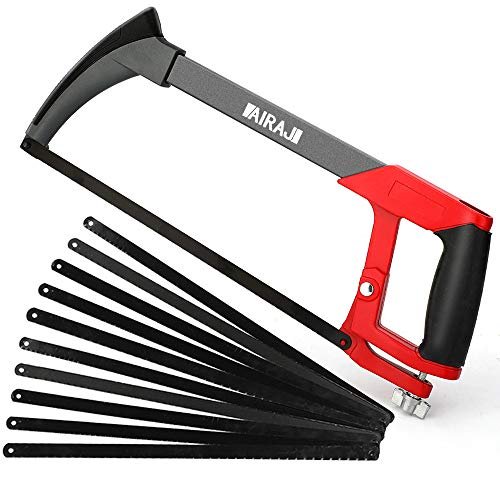
How to choose the right hacksaw blade
The best blade is the one that matches the material, thickness, and finish you need. A blade that is perfect for one job may be poor for another.
Credit: amazon.com
For thin metal
Use a fine-tooth blade, often 24 TPI or higher. This helps prevent grabbing and gives a cleaner finish. Thin sheet metal needs control more than speed.
For thick metal
Use a coarser blade, often 14 to 18 TPI. Larger teeth remove chips faster and reduce clogging. This is better for solid rods, thicker pipe, and heavy stock.
For plastic
Plastic can crack, melt, or chip if the blade is wrong. A medium-to-fine blade usually works best. Cut slowly and avoid pushing too hard.
For mixed materials
If you do many different jobs, a bi-metal blade in a middle TPI range is often the safest general choice. It gives good balance and handles a wide range of materials without wearing out too fast.
Matching frame and blade: the smartest combinations
The best results come from pairing the right frame with the right blade. A strong blade in a weak frame is still a weak setup. A rigid frame with the wrong blade may still cut poorly.
Here are some practical pairings:
- General DIY use: fixed-frame hacksaw + bi-metal blade, 18 to 24 TPI
- Thicker metal: high-tension frame + 14 to 18 TPI blade
- Thin metal or tubing: rigid frame + 24 TPI or finer blade
- Tight spaces: mini or junior frame + fine blade suited to the material
- Abrasive materials: specialty frame + grit blade
Important insight: many users buy the coarsest blade thinking it will cut everything faster. In reality, the wrong coarse blade can waste time because it skips, jams, and ruins the cut. Speed only helps when the blade matches the job.
Common mistakes to avoid
Even simple hacksaw work can go wrong when the tool is mismatched. These mistakes are easy to avoid once you know what to watch for.
Using the wrong TPI
This is the most common problem. A blade that is too coarse can snag thin material. A blade that is too fine can cut slowly and clog on thick stock.
Ignoring blade tension
If the blade is loose, the cut will drift. You may think the blade is dull, when the real issue is poor tension.
Cutting too fast
Many beginners press hard and move quickly. That often bends the blade and creates a rough edge. A steady, controlled stroke usually works better.
Forcing one blade to do every job
One blade cannot do everything well. A blade meant for thin steel is not the best choice for thick pipe. Having a few blade types is more useful than keeping one “universal” blade.
Buying a frame only by price
The cheapest frame may look fine in the store, but if it cannot hold tension well, you will feel the problem during use. A slightly better frame often gives better value over time.
How to make blades last longer
Good use habits can extend blade life and improve cut quality at the same time. These habits are simple, but they make a real difference.
- Start the cut slowly so the blade can bite cleanly.
- Use steady pressure instead of pushing hard.
- Let the teeth do the work.
- Choose the correct TPI for the material.
- Keep the blade tight in the frame.
- Replace worn blades before they become dull and uneven.
Also, use cutting fluid when needed, especially on metal. This lowers heat and friction. Less heat means less wear on the teeth. For guidance on safe hand tool use and general tool care, the OSHA hand tools resource is a useful reference.
Simple buying advice for beginners
If you are new to hacksaws, do not overcomplicate the purchase. Start with a solid fixed or high-tension frame and a few bi-metal blades in different TPI ranges. That setup handles most home and workshop tasks well.
For most people, the best first choice is not the most expensive tool. It is the one that gives good tension, feels comfortable in the hand, and accepts common blade sizes. Then add specialty blades only when you meet a specific need.
Another thing beginners often miss is storage. Blades that sit loose in a toolbox can rust, bend, or lose teeth before you even use them. Keep them dry and flat if possible. A good blade ruined in storage is still a ruined blade.
Credit: knifemaking.com
Final thoughts on choosing the right tool
Understanding the types of hacksaw frames and blades makes tool selection much easier. The frame controls stability, tension, and comfort. The blade controls speed, finish, and durability. When you match both parts to the material, the saw works better and feels easier to use.
If you remember only a few things, remember these: use higher TPI for thin material, lower TPI for thicker material, choose bi-metal blades for general value, and pick a frame with strong tension. Those simple choices solve most cutting problems before they start.
The right hacksaw is not just about cutting metal. It is about cutting cleanly, safely, and with less effort. Once you choose the right frame and blade combination, even a basic hand tool can perform like a much better one.
FAQs
1. What are the main types of hacksaw frames and blades?
The main frame types are fixed-frame, adjustable-frame, high-tension, mini, junior, and deep-arc styles. The main blade types include high-carbon steel, bi-metal, carbon steel, tungsten carbide grit, and diamond grit blades. Each one works best for different materials and cutting needs.
2. Which hacksaw blade is best for general use?
A bi-metal blade in the 18 to 24 TPI range is usually the best all-around choice. It gives a good balance of speed, durability, and clean cutting for many common jobs.
3. What does TPI mean on a hacksaw blade?
TPI means teeth per inch. A lower TPI has fewer, larger teeth and cuts faster on thicker material. A higher TPI has more, smaller teeth and works better on thin material or cleaner cuts.
4. How do I know if my hacksaw frame is good enough?
A good frame should hold the blade tightly, feel stable during use, and be comfortable to grip. If the blade feels loose or bends easily while cutting, the frame may not provide enough tension.
5. Can one hacksaw blade cut all materials?
No single blade is ideal for every material. Some blades are better for thin metal, others for thick stock, and some are made for abrasive materials. Using the right blade for the job gives better results and longer blade life.
