
If you work with electricity, electronics, HVAC systems, motors, or home appliances, you have likely seen the term true RMS multimeter. Many people buy a meter based on price alone, then later find confusing readings on real-world signals. That is where this topic matters.
A true RMS multimeter guide should do more than define a term. It should help you understand why some meters give accurate readings on modern electrical waveforms, how true RMS works, and when it is worth paying more for one. The goal is simple: choose the right meter for the work you actually do.
This guide explains the core idea in clear words, shows where true RMS matters most, and gives practical buying tips so you can avoid common mistakes. By the end, you will know what to look for and what to ignore.
What true RMS really means
RMS stands for root mean square. That sounds technical, but the basic idea is not hard. It is a way to measure the effective value of AC voltage or current. In simple terms, it tells you how much power a signal can deliver.
For a perfect sine wave, a basic average-responding meter can often give a correct reading if it is calibrated for that wave shape. But many modern electrical systems do not produce perfect sine waves. They may include harmonics, pulses, speed control, switching power supplies, or distorted waveforms. In those cases, a normal meter can be wrong, sometimes badly wrong.
A true RMS multimeter measures the actual heating or power effect of the waveform, even when the shape is irregular. That is why it is more reliable for many real-world tasks.
Why average-responding meters can fail
Older or cheaper meters often assume the waveform is a clean sine wave. They measure the average value, then apply a formula to estimate RMS. If the waveform changes shape, the estimate can be off.
Here is the key point many beginners miss: the meter may still display a number that looks normal even when it is not accurate. That is dangerous because false confidence is worse than an obvious error. A bad reading can lead to wrong troubleshooting, wasted parts, or unsafe work decisions.
How a true RMS meter gets the correct value
A true RMS meter processes the signal in a way that accounts for its real shape. It squares the signal, averages it, and then takes the square root. That produces a value that reflects the actual AC power effect, not just an estimate based on a clean wave.
This matters most when the waveform is not smooth. The more distorted the signal, the more useful true RMS becomes.
When true RMS matters in real work
You do not need a true RMS multimeter for every job. For simple household checks on clean AC lines, a basic meter may be enough. But in many modern situations, true RMS is the safer choice.
Common situations where it helps
- Variable frequency drives on motors
- LED lighting systems
- Computer power supplies
- HVAC equipment
- Inverters and generators
- Industrial control panels
- Appliances with electronic controls
These devices often create non-sinusoidal waveforms. A standard meter may not show the real voltage or current. If you troubleshoot these systems, true RMS is not just a nice feature. It is often necessary.
Examples of wrong readings
Imagine you are checking the output of a variable speed motor drive. The signal may look nothing like standard AC. A non-true RMS meter might show a number that is much lower or higher than the actual effective value. You may think the drive is bad when it is not.
Another example is LED lighting. Many LED drivers use switching circuits. These can create waveform distortion. A meter that cannot handle that signal may lead you to chase the wrong problem.
Here is a second non-obvious insight beginners often miss: true RMS does not mean accurate for every frequency or every situation. The meter still has limits. Bandwidth, crest factor, and sampling speed all matter. So you should never buy one based on the label alone.
How a true RMS multimeter works inside
You do not need to be an engineer to use one well, but understanding the basics helps you buy better. A true RMS meter usually uses electronic circuitry or digital processing to analyze the input signal.
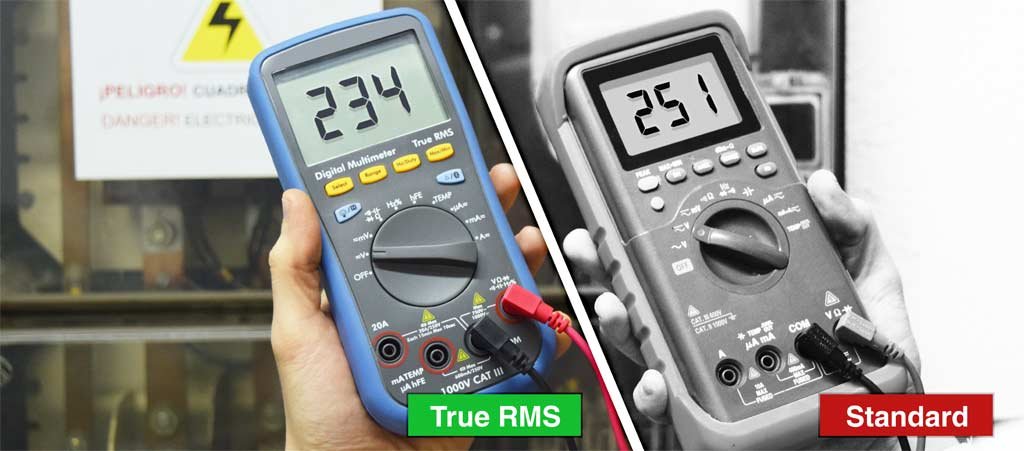
Credit: electrozlab.com
The measurement process in simple words
- The meter receives the AC signal.
- It measures the waveform over time.
- It squares the values to handle positive and negative parts correctly.
- It averages the squared values.
- It takes the square root of that average.
The result is a value that matches the effective power of the signal. This is useful because AC voltage can change direction many times each second, but its ability to do work is what matters in practice.
Why crest factor matters
Crest factor is the ratio of a signal’s peak value to its RMS value. Some modern waveforms have sharp peaks. If the meter cannot handle those peaks well, the reading can be wrong.
This is one of the most overlooked details in a true RMS multimeter guide. Many buyers focus only on voltage range and forget that a meter must also handle the shape of the signal. A higher crest factor rating usually means better handling of distorted or peaky waveforms.
Bandwidth also affects accuracy
Bandwidth tells you how fast a meter can respond to changing signals. If the signal contains higher-frequency components and the meter’s bandwidth is too low, the reading may not be trustworthy.
This matters especially for electronics, drives, and modern switching equipment. A true RMS label alone does not guarantee the meter can measure everything correctly. Always check the frequency range in the specifications.
True RMS vs non-true RMS meters
The difference is simple at the surface but important in practice.
| Feature | True RMS meter | Non-true RMS meter |
|---|---|---|
| Waveform accuracy | Works well on distorted and non-sine waveforms | Best on clean sine waves |
| Modern equipment | Better for drives, inverters, electronics | Can be inaccurate |
| Price | Usually higher | Usually lower |
| Use case | Professional and mixed environments | Simple residential checks |
For a basic homeowner who only checks wall outlets, a simple meter can sometimes be enough. For technicians, electricians, HVAC workers, and maintenance staff, true RMS is usually the smarter choice because work environments are rarely ideal.
What to look for when choosing one
Buying a meter should not be about getting the most features. It should be about getting the right balance of accuracy, safety, and ease of use. A good true RMS multimeter guide must cover the features that matter most in the field.
1. Accuracy rating
Check the meter’s basic accuracy for voltage, current, and resistance. Lower numbers are better, but only if they are meaningful and backed by clear specs. A meter with strong true RMS performance but weak basic accuracy is not a great tool.
2. Frequency range
Look at the AC frequency range for true RMS measurements. If you often work with electronics or motor drives, a wider range is better. Some meters are accurate only within a limited band, which can be a problem on non-standard signals.
3. Crest factor specification
If the meter handles a higher crest factor, it usually performs better on distorted waveforms. This is important for switching supplies and electronic loads. Do not ignore this number.
4. Safety category rating
Safety is not optional. Choose a meter with the right CAT rating for your work:
- CAT II for plug-in loads and small appliances
- CAT III for distribution panels and fixed installations
- CAT IV for service entrances and utility-level work
Never use a meter outside its safety rating. This is one of the biggest mistakes people make when choosing a meter. A cheap meter with the wrong rating can be dangerous.
5. Display quality
A clear screen saves time. Look for a backlit display, large numbers, and fast reading updates. If the display is hard to read in low light, the meter will slow you down in real work.
6. Auto-ranging vs manual-ranging
Auto-ranging is easier for beginners because the meter chooses the range for you. Manual-ranging can be faster for experienced users who know what they are measuring. Both can be good. The best choice depends on your habits.
7. Continuity and diode test speed
If you do electrical or repair work, fast continuity response is extremely useful. Slow beep delay wastes time. This is a detail many buyers overlook, yet it affects daily use more than people expect.
8. Build quality and probes
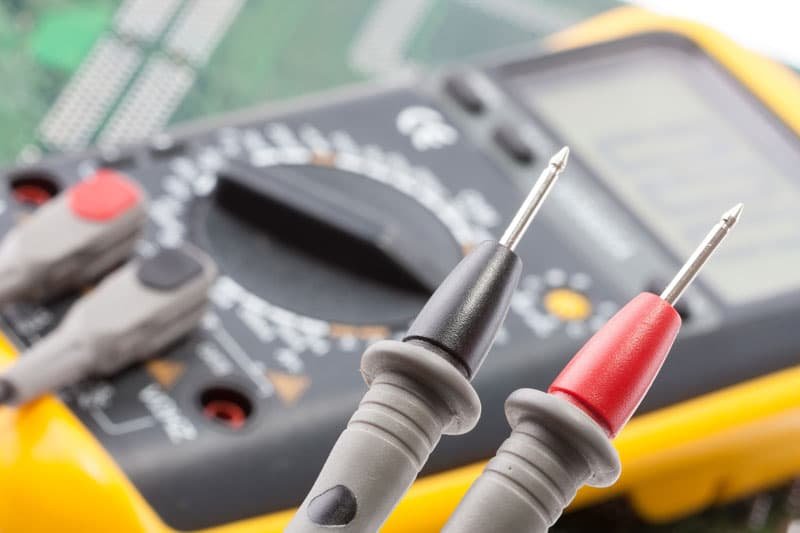
The meter body, input jacks, probe insulation, and fuse quality all matter. A strong meter with poor probes is still a weak setup. Good test leads are part of the total safety picture.
9. Extra functions you may actually use
- Capacitance
- Frequency
- Temperature
- Duty cycle
- Min/max hold
- NCV detection
Do not pay extra for features you will never use. A simpler meter that fits your work is often better than a crowded one with many unused buttons.
Common mistakes buyers make
People often make the same errors when shopping for a meter. Avoiding them can save money and frustration.
Credit: toolnerds.com
Buying only by price
The cheapest option may work for basic tasks, but it can also bring poor accuracy, weak safety protection, and short life. The best value is not always the lowest price.
Assuming true RMS solves everything
True RMS helps with waveform accuracy, but it does not fix bad probes, poor safety design, or low bandwidth. A good meter is a complete tool, not one feature.
Ignoring CAT ratings
This is a serious mistake. The safety label should match the work environment. A meter designed for low-level electronics should not be used in a panel just because it has a true RMS logo.
Overbuying features
Some buyers get a meter with every function available, then use only voltage and continuity. Think about the jobs you actually do. Simpler tools are easier to trust and faster to use.
Who really needs true RMS most
Some users need it all the time. Others may only need it sometimes. Your work style matters more than brand hype.
Best fit users
- Electricians working on mixed loads
- HVAC technicians
- Industrial maintenance workers
- Electronics repair technicians
- Automation and control technicians
If your job includes modern equipment with electronic controls, a true RMS meter is usually worth it. If you mainly check simple outlets and lamps, you may not need a high-end model.
When a basic meter may be enough
If you only test batteries, continuity, and standard household AC with simple loads, a standard multimeter can be enough. But once you move into motors, drives, and switching circuits, true RMS becomes much more useful.
How to compare models before buying
Do not look at marketing language first. Look at the specs and ask practical questions.
- What will I measure most often?
- Will I work on distorted AC waveforms?
- What safety category do I need?
- How important is display speed and readability?
- Do I need extra functions or only core measurements?
If you want a reliable source for electrical safety basics, the OSHA electrical safety guidance is a useful place to start.
Also compare the following details carefully:
- AC voltage accuracy in the range you use most
- True RMS frequency range
- Crest factor support
- Fuse protection
- Input jack protection
- Probe quality
- Warranty and support
One more practical insight many beginners miss: the best meter is often the one you can read and trust quickly in the field. A highly technical meter with a confusing interface may slow you down and increase mistakes.
Best practices for using a true RMS multimeter
Even a good meter can give bad results if used carelessly. Good habits matter.
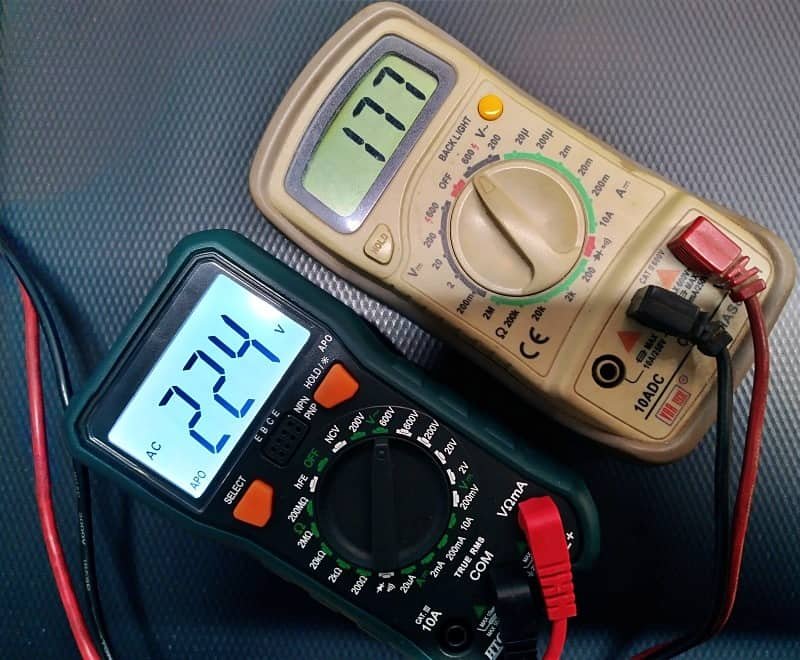
Credit: electrozlab.com
Check the measurement mode first
Make sure you are measuring AC when checking AC signals, and DC when checking batteries or power supplies. This sounds obvious, but mode errors are very common.
Use the right input jack
Current measurements often require a different jack than voltage measurements. Using the wrong one can blow a fuse or damage the meter.
Watch the range and units
Always confirm whether the reading is volts, millivolts, amps, or milliamps. A small reading in the wrong unit can lead to a big mistake.
Do not trust one reading blindly
If a result seems strange, measure again and compare. Look for patterns. Check the signal source. A true RMS meter is powerful, but good troubleshooting still needs common sense.
Final thoughts on choosing the right meter
A true RMS multimeter is not just a premium feature. For many users, it is the difference between a useful measurement and a misleading one. If you work with modern electrical systems, distorted AC, or electronic loads, it gives you a much better chance of seeing the real value.
The best choice is not always the most expensive one. Focus on your real tasks, safety rating, measurement accuracy, and frequency range. If those basics are right, the meter will serve you well for years.
In short, use this guide as a filter. Buy for the work you do today, but choose a meter that can handle the work you may face tomorrow.
FAQs
1. What is a true RMS multimeter used for?
A true RMS multimeter is used to measure AC voltage and current more accurately when the waveform is not a clean sine wave. It is especially useful for motors, inverters, LED systems, and electronic equipment.
2. Do I need a true RMS multimeter for home use?
Not always. If you only test batteries, outlets, and simple household devices, a basic meter may be enough. If your home work includes HVAC units, generators, or modern electronics, true RMS is a better choice.
3. Is true RMS always more accurate?
It is more accurate for distorted waveforms, but not automatically perfect in every case. Accuracy also depends on bandwidth, crest factor, build quality, and the meter’s overall design.
4. Can a non-true RMS meter measure AC voltage?
Yes, it can measure AC voltage, but it works best on clean sine waves. On distorted or pulsed signals, the reading may be incorrect.
5. What is the most important feature besides true RMS?
Safety rating is one of the most important features. The right CAT rating, good fuses, and strong probe quality matter a lot, especially when working on high-energy circuits.
