
If you own a pressure washer, you already know the machine does most of the hard work. But the real speed, ease, and deep-cleaning power often come from the pressure washer attachments you choose. The right add-on can help you clean driveways faster, wash cars more safely, reach high spots, and remove dirt that plain spray can miss.
Many people buy one pressure washer and use only the basic wand. That works, but it is not the smartest way to clean. Different surfaces need different tools. A narrow spray tip may blast grime from concrete, while a surface cleaner can cover a large patio in less time with fewer streaks. A foam cannon can make car washing easier and safer. A gutter cleaner can save time on tall jobs. Small tools often make the biggest difference.
In this guide, you will learn which pressure washer attachments are truly worth using, how they improve cleaning, and what to watch for before you buy. The goal is simple: help you clean faster, with less effort, and with better results.
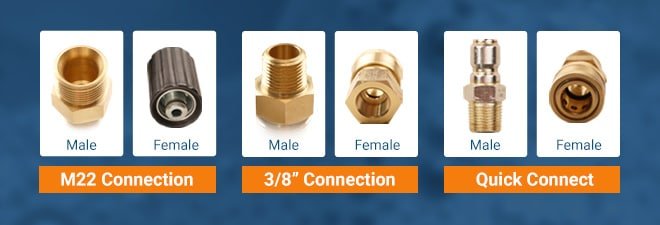
Before buying accessories, check pressure washer connector types, compare common pressure washer uses, and review these pressure washer safety tips for safer cleaning.
Why attachments matter more than many people think
The pressure washer itself gives you power. The attachment decides how that power is used. That is the key point many beginners miss. A strong machine with the wrong attachment can waste time, leave marks, or even damage a surface. A moderate machine with the right attachment can feel far more effective.
Attachments help in three big ways. First, they improve speed by covering more area or reducing the need to switch tools. Second, they improve ease by making cleaning less tiring and more controlled. Third, they improve depth by helping soap stay in place, reach tight areas, or lift dirt that a plain jet would miss.
Another thing many people overlook is that attachments also help protect surfaces. For example, a surface cleaner keeps the spray at a steady height, which reduces streaks. A foam cannon lets soap sit longer before rinsing, which lowers the chance of scratching paint during car washing. In other words, the right attachment does not just clean better. It can also clean more safely.
If you want a simple rule, use the attachment that matches the job, not just the one that looks strongest. That mindset alone will improve your results.
The best pressure washer attachments for common cleaning jobs
Not every attachment is useful for every task. Some are great for outdoor concrete. Others are better for cars, siding, roofs, or gutters. Below are the attachments that give the most value for most homeowners and detail-minded users.
1. Surface cleaner
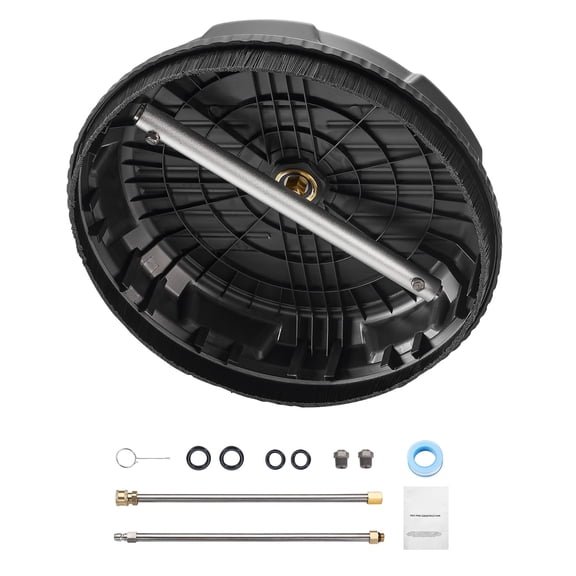
A surface cleaner is one of the best pressure washer attachments for flat areas like driveways, patios, sidewalks, and garage floors. It looks like a round cleaning head with spinning nozzles inside. Instead of spraying in a single line, it cleans a wider path with more even pressure.
This attachment saves a lot of time. A wand may take many passes to cover a driveway. A surface cleaner can do the same area much faster and with a more uniform finish. It also helps prevent streaking because the spray stays at a fixed distance from the ground.
Best for: concrete, pavers, stone, and other flat hard surfaces.
Why it helps: faster coverage, cleaner finish, less operator fatigue.
Good to know: choose a size that matches your pressure washer’s flow rate. A large cleaner on a weak machine may move slowly and underperform.
2. Foam cannon
A foam cannon is one of the most useful pressure washer attachments for car washing. It mixes soap and water, then sprays thick foam over the vehicle. That foam clings to the surface and helps loosen dirt before you touch the paint.
This matters because contact washing can cause swirl marks if grit stays on the paint. A foam cannon is not just about looks. It gives the soap more dwell time, which helps lift grime gently. This is a major reason it is popular among car owners and detailers.
Best for: cars, motorcycles, RVs, boats, and painted surfaces.
Why it helps: better soap coverage, safer pre-wash, less scrubbing.
Non-obvious insight: thick foam alone does not clean. The real value comes from the soap formula and the dwell time. A good rinse after foaming matters more than how “fluffy” the foam looks.
3. Turbo nozzle
A turbo nozzle, sometimes called a rotary nozzle, combines a strong spray with a spinning motion. That gives you more cleaning force than a standard fan tip, while still covering a wider area than a straight jet.
This attachment is a strong choice for stubborn dirt on concrete, brick, and masonry. It can remove mud, stuck-on grime, and weathered debris much faster than a normal nozzle. But it must be used carefully. Its force is much higher than many other attachments.
Best for: hard surfaces with heavy dirt buildup.
Why it helps: strong impact, faster stain removal, more aggressive cleaning.
Important caution: avoid using it on wood, car paint, soft siding, or delicate surfaces unless the manufacturer clearly says it is safe.
4. Extension wand
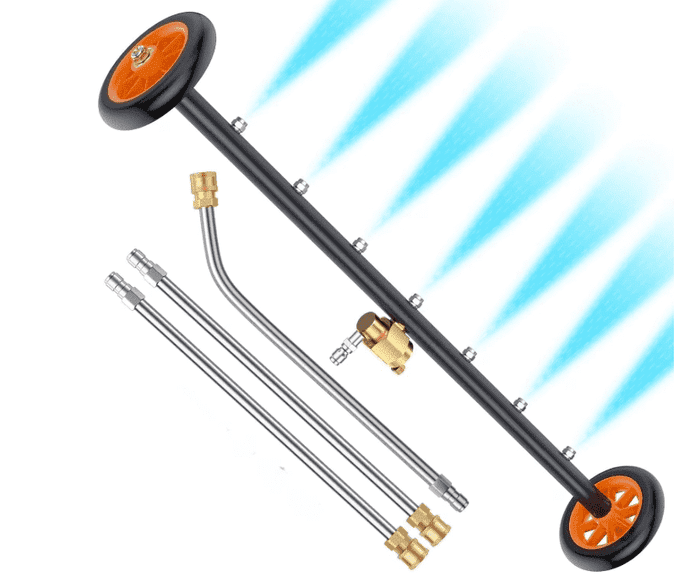
An extension wand is simple, but very practical. It adds reach to your pressure washer, making it easier to clean high walls, second-story siding, roof edges, and the tops of vehicles or equipment.
This attachment improves comfort as much as cleaning. Instead of stretching, bending, or climbing too much, you can stand in a safer position and still reach the target area. That often means less fatigue and better control.
Best for: siding, gutters, trailers, tall equipment, and hard-to-reach areas.
Why it helps: more reach, safer posture, easier high cleaning.
Beginner mistake to avoid: using too much extension with an unstable stance. Long wands can feel awkward if you do not control the nozzle well.
5. Gutter cleaner attachment
A gutter cleaner helps direct water into gutters and flush out leaves, dirt, and sludge from a safer distance. It is useful for homeowners who want to clean gutters without constantly climbing up and down ladders.
This tool is not only about convenience. It also reduces risk. Gutter work is one of those tasks where a small tool can make a big safety difference. However, you still need to be careful about ladder use and water spray direction.
Best for: roof-edge gutters, downspouts, and gutter debris removal.
Why it helps: better reach, less ladder time, faster debris removal.
Non-obvious insight: gutters often need a soft rinse first, not a hard blast. If debris is packed in, loosen it slowly so you do not force water into places it should not go.
6. Rotary wash brush
A rotary wash brush combines soft bristles with rotating water action. It is useful for surfaces that need scrubbing, not blasting. This includes siding, windows, boats, patio furniture, and some vehicles.
It helps remove dirt with less pressure on delicate surfaces. That makes it a good choice when you want cleaning power but do not want to strip paint or scratch finishes. It is especially helpful for dusty surfaces with light grime.
Best for: painted surfaces, light dirt, windows, and outdoor furniture.
Why it helps: gentle scrubbing, better contact cleaning, lower risk of damage.
Tip: rinse the bristles often. A dirty brush can drag grit across the surface.
7. Adjustable nozzle or multi-tip nozzle set
An adjustable nozzle or a multi-tip set gives you flexibility. Instead of switching to a different tool every time, you can change the spray pattern based on the task. This can save time and make your work easier.
A wide fan spray is useful for rinsing and delicate areas. A narrower pattern gives more impact for dirty spots. For many users, this is one of the most practical attachments because it supports many jobs without being complicated.
Best for: general-purpose cleaning, light to moderate grime, mixed tasks.
Why it helps: quick changes, broad usefulness, simple operation.
Good practice: always test on a small area first. A pattern that looks safe may still be too strong for old paint or soft wood.
8. Surface-safe soap injector
A soap injector lets your pressure washer pull detergent into the water stream. It is useful when you need to break down grease, mildew, road film, or outdoor stains before rinsing.
This attachment matters because water alone often cannot loosen oily dirt. Soap gives you dwell time and chemical help. A good injector can make a big difference on siding, driveways, decks, and vehicles.
Best for: pre-wash cleaning, degreasing, siding, decks, and vehicles.
Why it helps: better cleaning chemistry, less manual scrubbing, deeper dirt removal.
Non-obvious insight: not every detergent works well through every injector. Thick soaps may clog or spray poorly, so always check compatibility.
How to choose the right attachment for your job
The best attachment depends on three things: surface type, dirt level, and pressure washer strength. If you match these correctly, cleaning becomes easier right away.
Credit: walmart.com
Start with the surface
Hard surfaces like concrete can handle stronger tools such as a surface cleaner or turbo nozzle. Delicate surfaces like car paint, wood trim, and soft siding need softer tools such as a foam cannon, wash brush, or wide spray tip.
A common mistake is using one strong attachment for everything. That may work for a while, but it can damage finishes or leave marks. The safer choice is to use the right tool for each surface.
Match the dirt level
Light dust does not need aggressive cleaning. Heavy mud, algae, or oil stains do. For light dirt, a fan nozzle, soap injector, or brush may be enough. For heavy buildup, a turbo nozzle or surface cleaner may save time.
Do not over-clean. More force is not always better. Many stains come off with a proper soak, a few minutes of dwell time, and a controlled rinse.
Check flow rate and pressure
Many buyers focus only on PSI, but flow rate matters too. Some attachments need enough water volume to work properly. For example, a large surface cleaner on a low-flow machine may not spin well or may leave uneven results.
If your washer is smaller, choose smaller attachments that match its output. That usually gives better performance than buying the largest add-on available.
| Attachment | Best use | Speed | Surface safety |
|---|---|---|---|
| Surface cleaner | Driveways, patios, flat concrete | Very fast | High on hard surfaces |
| Foam cannon | Cars, boats, RVs | Fast pre-wash | Very high |
| Turbo nozzle | Heavy dirt on masonry | Fast | Low on delicate surfaces |
| Extension wand | High or hard-to-reach spots | Moderate | Depends on use |
| Wash brush | Light grime on delicate surfaces | Moderate | Very high |
Attachments that save the most time in real use
If your goal is speed, a few attachments stand out above the rest. The biggest time saver for flat areas is the surface cleaner. It covers more ground in less time and gives a more even result. For cars, the foam cannon saves time by reducing the need for heavy hand scrubbing later. For high jobs, the extension wand reduces setup and climbing time.
What many people miss is that time savings are not only about spray speed. They are also about fewer tool changes, fewer passes, and less correction work afterward. A bad attachment may look fast for one minute but create streaks, missed spots, or damage that takes more time to fix.
That is why the best setup often includes one attachment for power, one for safety, and one for reach. For many households, that means a surface cleaner, foam cannon, and extension wand.
Credit: pressurewashersdirect.com
Common mistakes people make with pressure washer attachments
Even good pressure washer attachments can give poor results if they are used the wrong way. Here are the mistakes that happen most often.
Using too much pressure on the wrong surface
Strong spray can etch wood, strip paint, and damage seals. If you see fibers lifting, paint fading, or water forcing into cracks, stop and switch to a gentler tool.
Buying attachments that do not match the washer
Some attachments need more flow than a small machine can supply. If the size and output do not match, cleaning performance drops. Always check compatibility before buying.
Skipping soap when grime is oily or sticky
Water alone is often weak against grease, film, and mildew. Soap helps lift dirt so the pressure washer can rinse it away faster and more deeply.
Forgetting to test on a small area
Test first, especially on painted, old, or fragile surfaces. A small test spot can prevent expensive damage.
Ignoring maintenance
Attachments wear out, clog, or loosen over time. Rinse them after use, clear blockages, and store them dry. Small maintenance habits keep performance high.
What to look for before you buy
If you want the best pressure washer attachments, focus on build quality, compatibility, and ease of use. Cheap parts may save money at first, but they can leak, wear out quickly, or perform poorly.
Look for solid materials. Brass fittings, reinforced nozzles, and sturdy plastic housings usually last longer than very thin parts.
Check compatibility. Make sure the attachment fits your pressure washer brand, hose size, and output range. Universal does not always mean truly universal.
Think about storage. Big attachments can be annoying to store if they have no compact shape or hanging point. Simple storage often leads to more regular use.
Consider your real cleaning habits. If you wash cars often, a foam cannon is more valuable than a turbo nozzle. If you clean concrete every month, a surface cleaner may be the best purchase you make.
For product safety and cleaning equipment guidance, it can also help to review manufacturer advice from trusted sources like the Consumer Reports website, especially before using stronger attachments on delicate surfaces.
Best attachment combinations for different users
Credit: walmart.com
For homeowners with outdoor concrete
A surface cleaner plus a turbo nozzle is a strong combination. Use the surface cleaner for wide areas and the turbo nozzle for spots, edges, and stuck dirt.
For car owners
A foam cannon, adjustable nozzle, and soft wash brush make a smart set. This gives you safe pre-wash cleaning, controlled rinsing, and gentle contact cleaning.
For people with tall siding or gutters
An extension wand and gutter cleaner are the most useful. They reduce ladder work and help you reach high areas more safely.
For mixed cleaning jobs
An adjustable nozzle set, soap injector, and surface-safe brush give you the most flexibility. This is a practical choice if you want one kit for many tasks.
How to get deeper cleaning without causing damage
Deep cleaning is not just about force. It is about the right sequence. First, loosen dirt with soap or foam. Next, let the cleaner sit for the right amount of time. Then rinse with the correct spray pattern. This method usually works better than blasting immediately.
Another useful tip is to work from the top down when rinsing walls, cars, and siding. That way, dirty water does not run over already-clean areas for too long. On flat surfaces, work in overlapping passes so you avoid lines.
Also remember that dirty attachments clean poorly. A clogged nozzle or worn brush will reduce cleaning power fast. Deep cleaning depends on both the tool and how well you maintain it.
Final thoughts on choosing the best pressure washer attachments
The best pressure washer attachments are the ones that match your most common jobs. If you clean flat concrete often, get a surface cleaner. If you wash vehicles, a foam cannon is a smart buy. If you need reach, use an extension wand. If you face heavy grime, a turbo nozzle can make a big difference. And if you want safer, softer cleaning, choose brushes and wide-spray tools.
When chosen well, attachments do more than improve your pressure washer. They turn it into a faster, easier, and more effective cleaning system. That means less effort, less time, and better results on every job.
FAQs
1. What are the most useful pressure washer attachments for most homes?
For most homes, the most useful pressure washer attachments are a surface cleaner, a foam cannon, and an extension wand. These three cover flat outdoor surfaces, vehicle washing, and hard-to-reach areas.
2. Can pressure washer attachments damage surfaces?
Yes. Strong attachments like turbo nozzles can damage wood, paint, soft siding, and other delicate surfaces if used incorrectly. Always match the attachment to the surface and test a small area first.
3. Do foam cannons really clean better?
Yes, but mainly as a pre-wash tool. A foam cannon helps soap cling to the surface longer, which loosens dirt and reduces scratching during hand washing. It works best with the right soap and good rinsing.
4. Is a surface cleaner worth buying?
Yes, if you clean large flat areas like driveways, patios, or sidewalks. A surface cleaner usually works faster than a standard wand and gives a more even finish with fewer streaks.
5. How do I know if an attachment is compatible with my pressure washer?
Check the pressure range, flow rate, hose connection, and fitting type. The attachment should match your washer’s output and connection style. If the numbers are far apart, performance may be poor or the tool may not fit at all.
