
If you have ever worked on furniture, machines, electronics, or home repair, you may have faced a simple but important question: should you use a machine screw or a bolt? They can look similar at first glance. Both fasteners hold parts together. Both come in many sizes. But they are not the same, and using the wrong one can cause loose joints, damaged threads, or weak assembly.
Understanding the difference between machine screw vs bolt is not just for engineers. It helps DIY users, makers, mechanics, and buyers choose the right fastener with more confidence. A small mistake here can lead to parts that do not fit, threads that strip, or joints that fail under stress.
In this guide, you will learn the key differences, where each fastener works best, and how to choose the right one for your job. You will also see common mistakes many beginners make, plus a few practical details that are easy to miss.
What makes a machine screw different from a bolt?
The clearest difference is how each fastener is meant to work. A machine screw is usually designed to be tightened into a threaded hole or a nut with matching threads. A bolt is usually used with a nut or a threaded part and often passes through unthreaded holes in the materials being joined.
In real life, the line can get blurry. People often call many threaded fasteners “bolts” even when they are technically machine screws. Still, the intended use matters. The design of the threads, head shape, and installation method often give away the difference.
A simple way to think about it: a machine screw usually creates or uses a more controlled threaded fit, while a bolt is commonly part of a through-fastening setup with a nut on the other side.
Basic definition of a machine screw
A machine screw is a threaded fastener with uniform threads along most or all of its shaft. It is made to fit into a tapped hole, threaded insert, or nut. Machine screws are common in metal assemblies, appliances, electronics, and precision equipment.
They are often smaller than structural bolts, but size alone does not define them. The main point is the way they are used: they are intended for threaded engagement.
Basic definition of a bolt
A bolt is also a threaded fastener, but it is usually designed to pass through aligned holes and secure with a nut. Bolts are often used where parts need higher clamping force or stronger mechanical holding. Many bolts are used in construction, automotive work, machinery, and heavy assemblies.
Bolts are usually associated with more load-bearing jobs, but again, the line is not perfect. Some fasteners sold as bolts may work in threaded holes, and some machine screws may be used with nuts. The difference is mostly about intended use.
Machine screw vs bolt: the main differences side by side
It helps to compare the two in a simple way. The table below shows the most important differences.
| Feature | Machine screw | Bolt |
|---|---|---|
| Typical use | Threaded hole, nut, insert | Through-hole with nut or threaded connection |
| Common size range | Often smaller | Often medium to large |
| Thread style | Usually fine, uniform threads | Can be coarse or fine, depending on use |
| Installation | Screwed into a prepared threaded part | Passed through parts and tightened with nut or matching thread |
| Common industries | Electronics, appliances, small machinery | Construction, automotive, heavy machinery |
| Strength focus | Precision and controlled fit | Clamping force and load handling |
The table gives the general pattern, but not every fastener will fit neatly into one box. That is why it is important to look at the hole, the load, and the assembly method before choosing.
Threaded hole vs through-hole
This is one of the most important differences. A machine screw usually goes into a threaded hole. A bolt often goes through a plain hole and tightens with a nut.
That small detail changes everything. If a part already has threads, a machine screw may be the correct choice. If the parts are smooth and need to be clamped together from both sides, a bolt is usually better.
Clamping method
Machine screws rely on thread engagement in the receiving material. Bolts often create clamp force by pulling two parts together with a nut. This is why bolts are common in joints that need stronger holding power.
Non-obvious insight: A bolt does not always mean stronger in every case. If the receiving material is soft, like plastic or thin sheet metal, the real limit may be the material itself, not the fastener. In those cases, a machine screw into a proper insert can be more reliable than forcing a bolt system into a weak setup.
Head style and driver type
Both machine screws and bolts come in many head styles: hex, socket, pan, flat, oval, and more. The head type is not the best way to tell them apart, but it can hint at their role.
Machine screws often have heads suited for smaller tools and tighter spaces. Bolts more often have heads that allow higher torque, such as hex heads or flange heads. Still, there are many exceptions.
Where machine screws are used
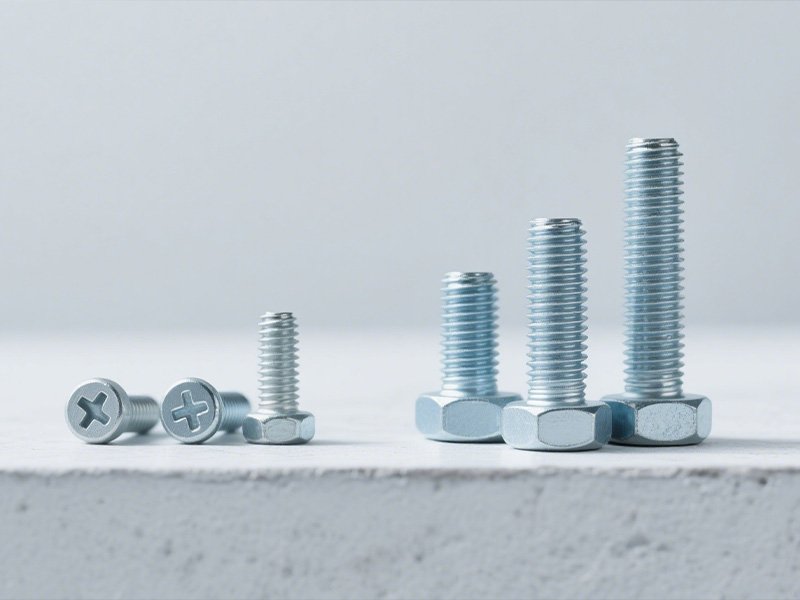
Machine screws are common wherever parts need precise fastening and a clean fit. They are especially useful in assemblies where the holes are already tapped or where a threaded insert is installed.
Credit: hainafastener.com
Electronics and devices
Many electronic housings, control panels, and device enclosures use machine screws because they are neat, compact, and easy to remove for service. Small threaded holes allow repeated opening and closing without needing a nut each time.
Appliances and consumer products
Washers, washers with locking features, covers, brackets, and internal components in appliances often use machine screws. These fasteners help manufacturers create products that can be assembled quickly and serviced later.
Precision mechanical assemblies
Machine screws are also used in equipment that needs a tight, accurate fit. Small machines, instruments, and metal frames often depend on threaded holes and controlled torque values rather than large clamping systems.
Threaded inserts and soft materials
When the base material is soft, such as plastic or wood with an insert, a machine screw can be the safer choice. The insert gives the screw a durable thread to bite into, which reduces wear and stripping.
Non-obvious insight: If a screw will be removed often, the quality of the threaded insert matters as much as the screw itself. A cheap insert can fail even if the machine screw is the correct size and material.
Where bolts are used
Bolts are usually chosen when stronger clamping, easier alignment, or heavier loads are involved. They are a standard choice in many industries because they handle practical, high-force jobs well.
Construction and structural work
Bolts are common in metal frames, brackets, anchors, and structural joints. These jobs often need parts to be held tightly together under vibration, weight, or movement.
Automotive repair
Cars, trucks, and motorcycles use many bolts because the parts need to be secured under heat, vibration, and repeated stress. Bolts are also convenient when mechanics need access from both sides of a joint.
Heavy machinery
Machines with moving parts or strong loads often rely on bolts. Their ability to create strong clamp force makes them useful in mounts, housings, and support structures.
Large assemblies
Bolts work well when two or more parts must line up through holes before tightening. This makes assembly easier, especially when parts are large, heavy, or hard to hold in place.
How to tell which one you need
Choosing between a machine screw and a bolt is easier when you ask a few simple questions. Do not start with the fastener. Start with the parts you are joining.
- Does the hole already have threads?
If yes, a machine screw is often the natural choice. - Do you need a nut on the back side?
If yes, you are probably looking at a bolt setup. - Is the material soft or thin?
If yes, you may need a threaded insert, a different fastener, or a bolt with a washer and nut. - Will the joint be removed often?
If yes, choose a system that protects the threads from wear. - How much force will the joint face?
Higher force usually pushes you toward bolts or stronger threaded systems.
These questions solve many common selection problems. They also prevent a mistake that beginners make often: choosing by head shape instead of by joint design.
Check the material first
Material matters more than many people think. Metal, plastic, wood, and composite materials behave very differently under tightening force. A fastener that works well in steel may damage plastic almost instantly.
For example, a machine screw in a tapped metal hole can give excellent holding power. But the same screw in weak plastic without an insert may strip the threads. In that case, a different design may be needed.
Think about torque and vibration
If the joint will face vibration, heat, or repeated movement, the choice becomes more important. Bolts with nuts, locking washers, thread-locking compound, or flange heads may help in such cases. Machine screws can still work, but only if the threads are strong enough and the joint is designed correctly.
Non-obvious insight: Many failures are caused not by the fastener type, but by poor torque control. Over-tightening can strip machine screw threads more easily than people expect. Under-tightening can let a bolt loosen over time. The right fastener still needs the right tightening force.
Common mistakes when choosing between them
People often make the same errors again and again. Avoiding these can save time, money, and frustration.
Credit: rs-fastener.com
Using a bolt where a machine screw should go
If a part has a tapped hole, forcing a bolt setup may be unnecessary or awkward. You may end up needing extra hardware, more space, or a different assembly process. In compact products, that can be a bad trade.
Using a machine screw in weak material without support
Soft materials can strip easily. If the part is plastic, thin aluminum, or weak sheet material, a machine screw may work only if there is a proper insert or reinforcement.
Ignoring thread pitch
Two fasteners can look almost the same and still not fit together. Thread pitch must match exactly. This is especially important when replacing old hardware. A near match is not enough.
Choosing by length only
Length matters, but it is not the only factor. Diameter, thread pitch, material, head style, and load requirements all matter too. A long fastener is useless if the thread type is wrong.
Machine screw vs bolt in strength and reliability
Many buyers ask which one is stronger. The honest answer is: it depends on the job.
A bolt setup can often handle larger loads because it uses a nut and can create strong clamping force across joined parts. But a machine screw in a properly tapped metal hole can also be very strong for its size. The real question is not “Which is stronger?” but “Which is stronger in this exact assembly?”
Strength depends on several things:
- Fastener diameter
- Thread engagement length
- Material quality
- Torque applied
- Vibration and movement
- Whether washers or locking parts are used
For example, a poorly installed bolt can fail sooner than a correctly installed machine screw. On the other hand, a machine screw in a weak hole can strip long before a properly used bolt system would fail.
If you want a trusted reference for fastener terminology and standards, the ASME website is a good place to explore authoritative engineering information.
How size, thread type, and head style affect your choice
Fastener choice is not only about machine screw vs bolt. The exact design details matter a lot.
Size and diameter
Smaller diameters are more common in machine screws. Larger diameters are more common in bolts. But this is only a pattern, not a rule. Always check the required size for your application.
Thread type
Fine threads offer better adjustment and can resist loosening in some jobs. Coarse threads are often faster to install and may be better in softer materials. The wrong thread type can create poor fit or reduced holding power.
Head style
The head style changes tool access and torque application. A hex head may be easier for high torque. A socket head may fit into tight spaces. A pan head may be better for compact covers. Pick the head for the job, not just for appearance.
Practical examples
Here are a few simple examples that make the difference easier to see.
Example 1: Laptop cover
A laptop cover often uses small machine screws. The body usually has threaded inserts or tapped holes. The screws are small because the parts are delicate and space is limited.
Example 2: Car suspension part
A suspension joint usually uses bolts and nuts. The parts must carry heavy force and vibration. A through-bolt system gives strong clamping and easier inspection.
Example 3: Metal electrical box
Machine screws are common in electrical boxes because they hold covers and components securely while allowing easy servicing. Repeated removal is expected, so a threaded hole or insert is helpful.
Example 4: Furniture assembly
Some furniture uses machine screws with metal inserts, while other designs use bolts with nuts and washers. The right choice depends on whether the parts need a hidden clean look, fast assembly, or stronger clamping.
Best practices for a better fastener choice
If you want a reliable result, use a few practical habits every time.
- Match the thread exactly. Even a small difference can ruin the fit.
- Check the base material. Do not let the fastener damage the part you are trying to protect.
- Use the correct tool. The wrong driver can strip the head.
- Do not overtighten. This is a major cause of failure in machine screw joints.
- Use washers when needed. They spread load and can protect surfaces.
- Think about service access. If the part must be opened later, choose a fastener that is easy to remove without damage.
One more useful habit is to keep a sample fastener or take photos before replacing hardware. Many problems happen because people try to guess from memory. A close look at the old part saves time and reduces errors.
Credit: accu.co.uk
Final guidance for choosing the right fastener
If you are still unsure, start with the joint design. If the part has a threaded hole and needs a neat, compact connection, a machine screw is often the right answer. If the parts need to be clamped together through aligned holes with a nut on the other side, a bolt is usually the better choice.
Do not rely on one feature alone. Not the head. Not the length. Not just the diameter. The best choice comes from matching the fastener to the material, load, access, and service needs of the job.
That is the real value of understanding machine screw vs bolt. It helps you choose with confidence, avoid damage, and build stronger assemblies that last longer.
Frequently Asked Questions
1. Is a machine screw the same as a bolt?
No. They can look similar, but they are meant for different uses. A machine screw usually goes into a threaded hole or insert, while a bolt is often used with a nut or through-hole assembly.
2. Can I use a bolt instead of a machine screw?
Sometimes, but not always. It depends on the hole design, available space, and load needs. If the part is tapped for a machine screw, switching to a bolt may not work well without changes to the assembly.
3. Which is stronger, a machine screw or a bolt?
Neither is always stronger. A bolt often handles larger loads, but a machine screw in a properly threaded metal hole can also be very strong. Strength depends on size, material, thread engagement, and installation.
4. How do I know which one to buy?
Check whether the part has a threaded hole or needs a nut on the back side. Then match the thread size, pitch, length, and head style. If possible, compare with the old fastener or the product manual.
5. Why do people confuse machine screws and bolts?
Because many fasteners look alike and are often called by loose names in stores and daily talk. The real difference is not only shape, but how the fastener is intended to be used in the joint.
