
If you have ever pushed wet leaves into a messy pile and watched them spread again, you already know that yard cleanup can feel slow and frustrating. A leaf blower can save time, reduce strain, and make the job much easier when you use it the right way.
Still, many people turn it on and start blowing in random directions. That usually creates more work, not less. The real skill is learning how to use a leaf blower with control, a simple plan, and the right technique for your yard.
In this guide, you will learn step by step how to handle a leaf blower efficiently, avoid common mistakes, and clean your yard with less effort. Whether you use an electric, battery, or gas model, the same basic method can help you work faster and get better results.
Get ready before you start blowing
The best cleanup jobs begin before the machine is even turned on. A few minutes of prep can make the work much faster and safer. It also helps you avoid blowing dirt, stones, and debris into places you do not want them.
Check your yard first
Walk around the area and look for items that should not be blown away. Move garden tools, toys, hoses, pots, and furniture. If you see loose stones, broken glass, sticks, or sharp objects, pick them up by hand.
This step matters more than many beginners think. A leaf blower does not only move leaves. It can also send small rocks or hard debris flying. That can damage windows, plants, and even the blower itself.
Choose the right time
Use the blower on a dry day if possible. Dry leaves move much more easily than wet ones. Early morning dew, rain, or damp grass makes the job harder and slower. If your leaves are wet, wait until they dry or be ready to use a lower, slower section-by-section method.
Wear basic safety gear
Even a small blower can throw dust into your eyes and make a lot of noise. Use safety glasses and ear protection. Closed shoes are better than sandals. Long pants are also a good idea if your yard has gravel, thorns, or rough edges.
If you have allergies, a simple dust mask can help too. This is especially useful when blowing around dry leaves, pollen, or old mulch.
Know your blower type
Not all leaf blowers work the same way. A battery model is usually quieter and easier to start. An electric corded model is light but limited by the cord. A gas blower often has more power and works better for larger yards, but it may be heavier and louder.
The basic method for how to use a leaf blower is similar for all of them. But the amount of power, run time, and control will feel different. If your machine has a variable speed trigger or dial, that gives you more control during cleanup.
Set up a simple cleanup plan
Many people start in the middle of the yard and move leaves in every direction. That is a mistake. You want to create one clear direction for the leaves to travel, so you spend less time fixing the same mess twice.
Work from the edges inward
Start at the far side of the yard and move leaves toward one main collection area. This could be the curb, a tarp, a compost pile, or a large open patch where you can gather them later.
Think in zones. If your yard is large, divide it into smaller sections. Finish one area before moving to the next. This keeps the job organized and prevents leaves from drifting back into cleaned spots.
Choose your collection spot first
Before you blow anything, decide where the leaves will end up. If you do not choose a target area, the job becomes messy fast. Good options include:
- A tarp for easy lifting and dumping
- A compost bin or pile
- A curbside pile for yard pickup, where allowed
- A corner of the yard for bagging later
A small but useful tip: pick a spot that has space around it. If you pile leaves too close to a fence, bush, or wall, they can blow back or trap hidden debris.
Look at the wind direction
Wind changes everything. If you blow against the wind, leaves may scatter back over the area you just cleaned. Whenever possible, work with the wind, not against it. If the wind keeps changing, use shorter blowing passes and smaller piles.
| Condition | Best approach | Why it helps |
|---|---|---|
| Dry leaves | Use medium air speed | Leaves move quickly and stay in control |
| Wet leaves | Use shorter passes and a lower angle | Prevents leaves from sticking and clumping too much |
| Gravel or mulch | Lower the power | Reduces the chance of blowing material away |
| Large open lawn | Make long sweeping passes | Covers more ground with fewer overlaps |
Hold the leaf blower the right way
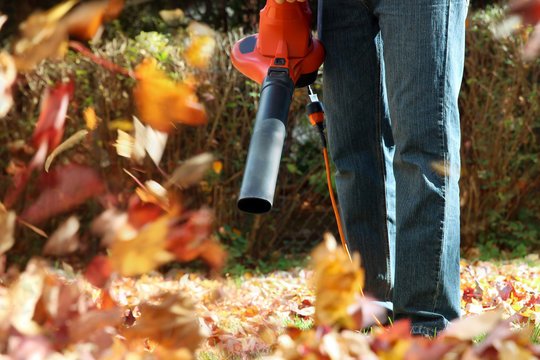
Grip and body position matter more than many people realize. If you hold the blower badly, you will get tired faster and lose control of the airflow. That leads to uneven cleanup and sore arms.
Credit: stock.adobe.com
Use a stable stance
Stand with your feet about shoulder-width apart. Keep one foot slightly ahead of the other for balance. This helps you stay steady when the machine pushes back a little, especially with stronger gas models.
Point the nozzle at a low angle
For most yard work, the nozzle should be aimed low, close to the ground, not straight down and not too high. A low angle moves leaves along the surface instead of blasting them into the air.
This is one of the most important ideas in how to use a leaf blower. The goal is not to shoot leaves upward. The goal is to push them smoothly toward your target pile.
Use arm movement, not just your wrists
Move the blower with your whole arm and upper body, not just your wrists. Short wrist-only movements make the airflow shaky and less effective. Smooth side-to-side motion gives better control and helps you cover a wider path.
Keep the nozzle a short distance from the ground
Do not press the nozzle directly into the grass or leaves. Hold it a few inches above the surface. This gives the airflow room to work. If you get too close, you may stir up dirt and damage tender grass.
Start blowing in a controlled pattern
Once you are ready, begin with short, controlled passes. Do not rush. The key is to move leaves in a planned direction without scattering them everywhere.
Use a side-to-side sweep
Begin at one edge of the area and sweep the blower slowly from side to side. Each pass should slightly overlap the last one. This helps move leaves in a steady line instead of leaving patches behind.
For lawns, make long passes. For patios, sidewalks, and driveways, shorter passes usually work better because hard surfaces can cause leaves and dust to bounce around.
Push leaves into one long line first
Do not try to make a perfect pile right away. First, gather the leaves into a line or row. Then work that line into a smaller pile. This is much easier than trying to blow a wide area into one tight spot in a single step.
Use a second pass for stubborn leaves
Some leaves stick to damp grass, corners, or rough pavement. Instead of blasting harder at the first try, make a second pass from a slightly different angle. Often, a small change in direction works better than more power.
Useful technique for corners and edges
Leaves often hide in corners, beside fences, and under shrubs. Aim the blower so the air moves leaves out of the corner rather than deeper into it. Use the edge of the air stream like a brush. Small nudges often work better than strong blasts.
Handle different yard surfaces carefully
Different surfaces need different handling. What works on a lawn may not work on a gravel path or flower bed. Adjusting your method saves time and protects your yard.
On grass
Use a lighter touch. Too much power can lift grass blades and remove loose topsoil or mulch. Keep the nozzle low but not pressed into the grass. If your blower has speed control, start low and increase only if needed.
On pavement
Patios, sidewalks, and driveways are easier to clean because leaves slide more freely. You can usually use a stronger airflow here. Still, watch for dust and small stones that may move with the leaves.
Around flower beds
Be careful near flowers, mulch, and decorative stones. High power can uproot plants, strip mulch, and scatter stones into the lawn. Lower the setting and aim along the bed edge rather than directly into it.
Near gutters and drains
Leaves near drains and gutter edges need extra attention. Clearing these spots helps prevent clogging and water problems. But do not blow debris directly into storm drains if local rules do not allow it. Move debris to a place where you can collect it safely.
If you want more general safety advice for outdoor power tools, the U.S. Consumer Product Safety Commission offers helpful guidance at cpsc.gov.
Collect, bag, or mulch the leaves
Blowing leaves is only part of the job. You also need a clean way to finish the pile. The best choice depends on how many leaves you have and what your local yard waste rules allow.

Credit: gettyimages.com
Use a tarp for easy cleanup
A tarp is one of the simplest tools for leaf collection. You can blow leaves onto it, then drag or carry it to your compost area or curb pile. This works especially well for medium to large yards.
Bag the leaves when needed
If your city requires bagging, wait until the leaves are in one place before putting them into bags. Do not fill bags too full. Heavy, overpacked bags tear easily and are hard to lift.
Dry leaves compress well, so you can usually fit more into each bag after a quick shake or press. Wet leaves are heavier, so use smaller loads.
Mulch leaves when possible
Some yards benefit from mulched leaves left on the lawn. If you have a mulching mower or a blower-vacuum that supports mulching, this can reduce waste and feed your soil over time. Just do not leave thick layers that block sunlight or airflow to the grass.
A beginner mistake is assuming all leaves must be removed. In some cases, a thin layer of shredded leaves can be helpful. The key is not to cover the lawn so deeply that it smothers the grass.
Avoid the mistakes that waste time
Knowing what not to do is just as helpful as learning the right steps. These mistakes are common, and they often make yard cleanup much harder than it needs to be.
- Using full power too early. High power is not always better. It can scatter leaves and dust, especially in open areas.
- Blowing in random directions. Without a target area, leaves keep moving around instead of being collected.
- Ignoring wet spots. Wet leaves need a different approach. If you treat them like dry leaves, they will clump and stick.
- Standing too close to the pile. If you stand inside your target area, you may blow leaves past it or back toward yourself.
- Not clearing debris first. Small rocks, twigs, and trash can become dangerous when the blower hits them.
One less obvious point: many people try to “finish” the pile too soon. It is better to keep the pile loose until the very end. A tight pile too early often breaks apart when you make one more pass.
Work faster with a few smart habits
If you want better results with less effort, these small habits make a big difference. They are simple, but they improve speed and control a lot.
Keep the nozzle moving
Long pauses in one spot can dig a hole in leaf piles or blow away topsoil. Keep the nozzle moving in a smooth path. Think of it like sweeping with a broom, not drilling in one place.
Blow leaves with gravity in mind
Use slopes and downhill paths to your advantage. If your yard has a slant, move leaves downhill toward a low collection area. That saves energy and reduces the chance of leaves rolling back uphill.
Use the right speed for the job
More air is not always better. A medium setting often gives better control than maximum speed. Reserve high power for heavy piles, wet clumps, or larger open spaces where scatter is less of a problem.
Take breaks before you get tired
Fatigue leads to poor control. When your arms and shoulders get tired, the blower becomes harder to aim. Short breaks keep your movement steady and help you finish with better results.
Clean and store the blower properly
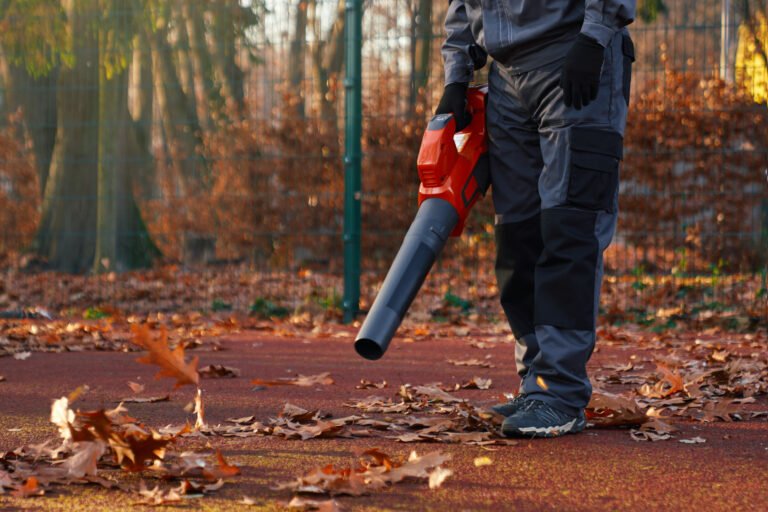
After the yard is done, a few minutes of care will help your blower last longer and start better next time.
Credit: hisworkmanshiplabor.com
Check for stuck debris
Turn off the machine and inspect the air intake, nozzle, and tube. Leaves, dust, and small bits of grass can build up there. Clearing them out helps maintain airflow and reduces strain on the motor.
Empty fuel or recharge batteries
If you use a gas blower and will not use it soon, follow the maker’s instructions for fuel storage. For battery models, recharge the battery before storing it, if the manual says to do so. Good storage habits protect the machine and make the next use easier.
Store it in a dry place
Keep the blower in a dry garage, shed, or storage room. Moisture can damage parts over time, especially if the tool is not used often.
Use the right approach for your yard size
The best way to use a leaf blower depends on how much ground you need to cover. A small patio and a large lawn need different strategies.
Small yards
For small spaces, keep the setup simple. Clear the area, choose one collection spot, and use short passes. A lightweight electric or battery blower is often enough.
Medium yards
Divide the yard into sections and finish one section at a time. This is the sweet spot for careful planning. You can move quickly without losing control.
Large yards
Large areas often benefit from a stronger gas blower or a high-capacity battery model. Work in zones, and do the farthest sections first. That way, you do not walk through already cleaned areas and track leaves back in.
Another detail beginners often miss: if you clean the edges first in a large yard, wind and movement can push leaves back into the middle. It is usually better to create a direction toward your final pile from the start.
FAQs
How do I use a leaf blower without blowing dirt everywhere?
Keep the nozzle low, use medium power, and avoid blasting directly into bare soil or dry mulch. It also helps to clean the area first and remove loose stones or trash before you start.
What is the best angle when using a leaf blower?
For most yards, aim the nozzle at a low angle close to the ground. This pushes leaves forward instead of lifting them into the air. A low angle gives you better control and less mess.
Can I use a leaf blower on wet leaves?
Yes, but it is harder. Wet leaves are heavier and tend to stick together. Use shorter passes, a slightly stronger setting if needed, and expect to spend more time than you would on dry leaves.
Should I blow leaves into a pile or a tarp first?
A tarp is often easier because you can collect the leaves in one place and carry them without sweeping them again. For larger yards, a loose pile may still be useful before moving the leaves onto a tarp or into bags.
How often should I clean my leaf blower?
Clean it after each use, especially around the intake and nozzle. A quick cleaning keeps airflow strong, helps the tool last longer, and makes the next job easier.
