
Hanging a heavy mirror can feel risky, especially when you do not want to use nails. Maybe you rent your home. Maybe your wall is delicate. Or maybe you simply want a cleaner, less damaged finish. The good news is that how to hang a heavy mirror without nails is not a mystery. With the right wall-safe method, a heavy mirror can stay secure for years.
The key is not just “what sticks.” It is matching the mirror weight, wall type, and hanger strength. A small mistake here can lead to cracked glass, damaged paint, or a mirror that falls later. That is why it is worth choosing the right method from the start.
In this guide, you will learn the safest no-nail options, when each one works best, what tools you need, and the mistakes people often miss. You will also learn how to test your wall before you trust it with a heavy mirror.
What makes a mirror safe to hang without nails
Before you pick a product, think about three things: the mirror weight, the wall surface, and how permanent you want the result to be. These three details decide whether a no-nail method will work well or fail quickly.
A light decorative mirror is very different from a large framed mirror. A mirror with a thick frame may put more pressure on the wall even if the glass itself is not extremely heavy. Also, a smooth painted wall behaves differently from brick, tile, or textured drywall.
For heavy mirrors, the safest no-nail choices usually involve high-strength adhesive systems, heavy-duty wall mounting strips, or support hardware that does not require nails. But not every product is made for every wall. Read the weight rating carefully and do not guess.
Weight matters more than size
People often look at mirror size first, but weight is the real issue. A small mirror with a thick wooden frame can weigh more than a much larger frameless one. Always check the mirror’s actual weight before choosing a mounting method.
If the mirror has no label, weigh it at home if possible. This simple step prevents many accidents. A method that supports 20 pounds is not safe for a 35-pound mirror, even if the mirror looks “not that heavy.”
Wall type changes everything
Most no-nail methods work best on smooth, clean, painted walls. Textured walls reduce contact, which weakens adhesive grip. Humid rooms can also lower strength over time.
Here is a simple view of what usually works best:
| Wall type | Best no-nail option | Notes |
|---|---|---|
| Painted drywall | Heavy-duty adhesive strips or mirror adhesive | Works well if the wall is clean and smooth |
| Tile | Mirror adhesive | Use products made for non-porous surfaces |
| Brick or concrete | Usually better to use non-nail adhesive supports only if rated for masonry | Not all adhesives grip rough surfaces well |
| Textured drywall | Limited no-nail options | Often less reliable for heavy mirrors |
Best methods for hanging a heavy mirror without nails
Not every method is right for a large mirror. Some are best for medium weight. Others are better for extra support. The safest choice depends on how much the mirror weighs and how long you need it to stay up.
1. Heavy-duty adhesive mounting strips
These strips are one of the most popular no-nail options. They use strong adhesive on both sides and are designed for smooth wall surfaces. Some versions can hold a surprising amount of weight when used correctly.
Best for: Medium-heavy mirrors on smooth painted walls
Why people like them: They are easy to use, removable, and do not leave holes.
What beginners miss: The surface prep matters more than the strip brand. If the wall has dust, moisture, or soft paint, the strip may fail even if the weight rating looks good.
To improve the hold, clean the wall with a mild cleaner and let it dry fully. Press the strip firmly for the full recommended time. Do not hang the mirror too soon.
2. Mirror adhesive
Mirror adhesive is a strong bonding glue made for securing mirrors directly to a wall. This is one of the most secure no-nail methods when it is used on the right surface.
Best for: Flat-backed mirrors on tile, glass-safe surfaces, or smooth wall materials
Why it works: It creates a direct bond between the mirror and the wall.
What beginners miss: Once mirror adhesive is applied, the mirror is often harder to remove cleanly. This is not the best choice if you plan to move the mirror often.
For safety, use only adhesive labeled for mirrors. Regular construction glue is not always safe for glass or reflective backing. Some adhesives can damage the mirror backing over time.
If you want a trusted technical reference before buying adhesive, you can review product guidance from a major hardware source like The Home Depot.
3. Adhesive mirror hooks or brackets
Some products use adhesive pads combined with hook-style support or small brackets. These can be more stable than simple strips, especially for framed mirrors with hanging wire or D-rings.
Best for: Framed mirrors with built-in hanging hardware
Why they help: They spread the load and keep the mirror from sliding.
What beginners miss: Many people forget to match the hook shape to the mirror’s back hardware. A hook that looks strong may still be the wrong fit.
This method is often better than strips alone when the mirror has a frame and hanging wire, because the hardware gives you a mechanical hold in addition to adhesive support.
4. Leaning with anti-tip support
If you do not want the mirror fully mounted, a heavy mirror can be leaned against the wall with hidden support or anti-tip safety straps. This is common for oversized floor mirrors.
Best for: Large floor mirrors or tall mirrors placed on the ground
Why it works: The mirror is not fully suspended, so the wall carries less direct force.
What beginners miss: A leaned mirror still needs stabilization. Without anti-tip support, it can slide, tilt, or fall if the floor shifts or someone bumps it.
This method is especially useful in bedrooms and living rooms, where you want a decorative mirror but do not want to drill or nail into the wall.
5. Velcro-style heavy mounting systems
Some heavy-duty hook-and-loop systems are made for larger wall items. They are stronger than common household Velcro because they are designed to hold more weight and resist movement.
Best for: Flat-backed mirrors with enough contact area
Why they work: They create a wide contact patch, which spreads force across the wall.
What beginners miss: These systems need firm pressure and the right cure time. If you hang the mirror too early, the bond may be weaker than expected.
How to choose the right method for your mirror
There is no single best answer for every mirror. The right method depends on the surface, the mirror back, and whether you want a temporary or long-term solution.
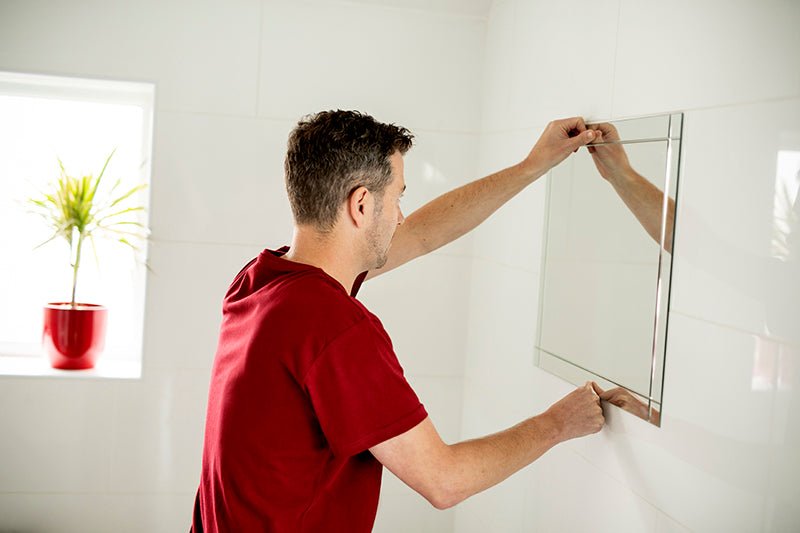
Credit: shop.velcro.co.uk
Use adhesive strips when…
Choose heavy-duty strips if the mirror is moderately heavy, the wall is smooth, and you want a removable option. This is a good choice for renters and for mirrors that may come down later.
Use mirror adhesive when…
Choose mirror adhesive if the mirror is heavier, flat-backed, and you want a more permanent result. This is one of the strongest no-nail methods, but it is less forgiving if you make a placement mistake.
Use a hook or bracket system when…
Choose adhesive hooks or brackets if your mirror already has a hanging wire, D-rings, or another frame-mounted support point. This gives a more secure grip than pure surface bonding alone.
Use a leaning setup when…
Choose a lean-and-secure method if the mirror is very large or if the wall surface is not ideal for adhesives. This is often the safest option when full wall mounting is not practical.
Tools and materials you should gather first
Good prep makes the job easier and safer. Before starting, gather everything you need so you do not have to stop halfway through the process.
- Heavy-duty adhesive strips, mirror adhesive, or adhesive brackets
- Rubbing alcohol or mild cleaner
- Soft cloth or lint-free towel
- Measuring tape
- Pencil or removable marking tape
- Level
- Helper for larger mirrors
- Protective gloves if using adhesive glue
- Spacer blocks or temporary support if needed
One small but important step: make sure the wall and mirror are at room temperature. Adhesives often perform better when the room is not too cold or humid.
Step-by-step: how to hang a heavy mirror without nails
The exact steps depend on the method, but the overall process is similar. The goal is to make sure the mirror is centered, level, and fully supported before the adhesive starts carrying weight.
1. Check the weight and the wall
Start by confirming the mirror weight. Then inspect the wall surface. If the wall is dusty, oily, textured, or damp, clean it and let it dry. Do not skip this part. Adhesive systems need a clean surface to bond well.
2. Mark the exact position
Use measuring tape and a pencil to mark where the mirror should sit. If you are hanging above furniture, leave enough space so the mirror does not feel crowded. Use a level so the mirror does not look tilted, even by a little.
Non-obvious tip: Many mirrors look level at the top but still feel wrong because the wall is not perfectly straight. Always check the final position from a few steps back, not just with the level.
3. Clean the wall and the mirror back
Wipe the wall with rubbing alcohol or a mild cleaner. Do the same for the mirror back if the adhesive will touch it. Let everything dry fully before applying anything.
Grease, dust, and old paint residue can weaken the bond. This is one of the most common reasons no-nail mirror installs fail later.
4. Apply the support system
Follow the product instructions closely. Place strips evenly if you are using adhesive strips. If you are using mirror adhesive, apply it in the recommended pattern. For brackets, make sure they are aligned and firm.
Do not try to improve the result by adding random extra adhesive unless the product instructions allow it. More is not always better. Too much adhesive can create uneven pressure or visible bulges behind the mirror.
5. Press firmly and hold the mirror in place
Press the mirror against the wall with steady pressure. Some products need 30 seconds. Others need much longer. Use a helper if the mirror is large or awkward.
If the product recommends a curing time, respect it. Hanging the mirror too soon is a silent mistake many people make. It may seem fine at first, then fail hours or days later.
6. Add temporary support if needed
If the mirror is heavy, support it from below while the adhesive sets. You can use temporary blocks, painter’s tape, or a helper. The idea is to reduce downward pull during the first hours of curing.
7. Let it cure fully before use
This step matters a lot. Some adhesives need a few hours. Others need 24 to 72 hours. During that time, do not bump the mirror, shift it, or clean around it aggressively.
Common mistakes that cause mirrors to fall
Many mirror failures are not caused by weak products. They happen because of small errors during setup. Knowing these mistakes can save you from damage and stress.
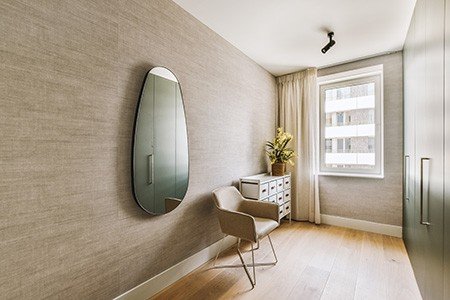
Credit: worstroom.com
Using the wrong adhesive for the wall
A product may be strong, but not for your surface. Smooth painted drywall, tile, and textured walls all behave differently. Always match the product to the wall type.
Ignoring the mirror’s real weight
Do not estimate. Heavy mirrors need real support. If the weight is close to the product limit, choose a stronger method or add a backup support system.
Skipping wall cleaning
Dust and grease are small problems that create big failures. Even a thin layer can reduce adhesion. A quick cleaning step is one of the easiest ways to improve safety.
Not waiting long enough
Many people hang the mirror too soon because it “feels stuck.” Adhesive needs time to reach full strength. Do not test it early.
Using damaged backing or weak frame points
If the mirror backing is cracked or the frame is weak, the mounting method may be strong but the mirror itself may fail. Check the hardware and backing before installation.
Extra safety tips for long-term hold
Some details do not seem important at first, but they make a real difference over time.
Keep humidity in mind
Bathrooms, kitchens, and laundry rooms can be harder places for adhesive systems. Steam and moisture can weaken some products. If you are hanging a mirror in one of these rooms, choose a product that is rated for humid spaces.
Use more contact area when possible
Spreading support across a wider surface usually gives better stability than using one small point. This is why full strips or broader adhesive systems often work better than tiny pads for heavy mirrors.
Check the mirror after the first day
Look at the mirror after 24 hours. Make sure it is still level and tight against the wall. A tiny shift early on may be a warning sign. Catching it early is much easier than dealing with a fall later.
Keep children and pets in mind
If a child or pet could bump the mirror, choose a more secure method or use a leaning mirror with anti-tip support. A safe setup should handle real life, not just an empty room.
When you should not use a no-nail method
There are times when “without nails” is simply not the safest choice. If the mirror is very large, very heavy, or going on a difficult wall, a no-nail method may not be enough.
Be careful if the wall is damaged, peeling, damp, or heavily textured. Be careful also if the mirror has fragile backing, unusual frame construction, or a weight near the product limit. In those cases, professional mounting or a different hardware solution may be safer.
The goal is not just to avoid nails. The goal is to keep the mirror secure for the long term.
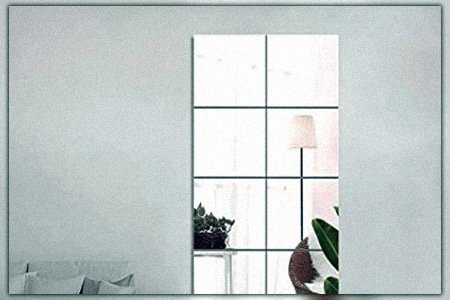
Credit: worstroom.com
Final thoughts on safe no-nail mirror hanging
Learning how to hang a heavy mirror without nails is mostly about preparation and honest limits. The best method is the one that matches your mirror, your wall, and your comfort level. For some homes, heavy-duty adhesive strips are enough. For others, mirror adhesive or a supported leaning setup is the safer answer.
Take your time, read the weight rating, clean the surface well, and let the adhesive cure fully. Those simple steps do more for safety than any fancy product claim. If you choose carefully, you can get a clean look without holes in the wall and without the stress of a mirror that feels unsafe.
FAQs
1. Can a heavy mirror really stay up without nails?
Yes, a heavy mirror can stay up without nails if you use the right product for the mirror weight and wall type. Heavy-duty adhesive strips, mirror adhesive, and strong bracket systems can work well when installed correctly.
2. What is the safest way to hang a heavy mirror without nails?
The safest option depends on the wall and the mirror. For a flat-backed mirror on a smooth wall, mirror adhesive is often very secure. For a framed mirror, heavy-duty adhesive hooks or brackets may be better. If the mirror is very large, a leaning setup with anti-tip support can be safest.
3. Will adhesive strips damage the wall?
Good-quality adhesive strips are usually made to remove more cleanly than glue or nails, but damage can still happen if the paint is weak or the strips are pulled off too fast. Follow the removal instructions carefully to reduce the chance of damage.
4. Can I use no-nail methods on textured walls?
Textured walls are harder for adhesive systems because they reduce contact. Some products may still work, but the hold is often weaker. For a heavy mirror, a textured wall usually calls for extra caution or a different mounting plan.
5. How long should I wait before trusting the mirror to hold fully?
Wait for the full cure time listed by the product. This may be a few hours or up to 72 hours, depending on the adhesive. Do not assume it is ready just because it feels stuck right away.
