
A stripped screw can turn a small repair into a long, frustrating job. The head slips, the driver spins, and the screw refuses to move. This happens to DIY beginners and skilled repair people alike. The good news is that you can still remove it with the right method.
If the screw is stuck deep, damaged badly, or already rounded off, how to drill out a stripped screw becomes one of the most reliable fixes. It takes patience, the right bit, and careful control. The goal is not to destroy the screw and the material around it. The goal is to remove the screw cleanly so you can finish the repair.
This guide walks you through the full process in simple steps. You will learn what tools to use, how to drill safely, how to avoid damaging the surface, and what to do if the screw still will not come out. You will also see a few practical tips that many beginners miss.
What makes a stripped screw hard to remove
A stripped screw has damaged drive slots or a ruined head. That means your screwdriver, drill bit, or driver bit cannot grip it properly. The more you try to force it, the worse the damage becomes. In many cases, the screw head becomes smooth, rusted, or partially buried in the material.
Some screws strip because the wrong bit was used. Others strip because too much force was applied at the wrong angle. Rust, old paint, and corrosion can also lock the screw in place. If the screw is in soft wood, it may spin without backing out. If it is in metal, the head may be too hard for normal tools to bite into.
One thing beginners often miss is that the screw is usually a two-part problem: the head is damaged, and the threads are stuck. Drilling helps with the head first. Then you can deal with the shaft or the leftover piece if needed.
Tools and materials you should gather first
Before you start, get everything ready. Drilling is easier when you do not stop in the middle to search for tools. Here is what you may need:
- Variable-speed drill
- Small drill bits, preferably metal-cutting bits
- Left-handed drill bits, if available
- Screw extractor set
- Center punch or automatic punch
- Hammer
- Pliers or locking pliers
- Safety glasses
- Work gloves
- Lubricant or penetrating oil
- Vacuum or small brush for debris
If you want a simple rule, choose the smallest useful drill bit first. Many people start too large and damage the surrounding material. A smaller bit gives you better control and a cleaner result.
For drill bit guidance and general safety advice, the Occupational Safety and Health Administration is a solid authority.
Step 1: Stop and inspect the screw
Do not begin drilling right away. First look closely at the screw. Ask yourself these questions:
- Is the screw head slightly damaged or completely rounded?
- Is the screw exposed enough for pliers to grip it?
- Is the screw made of soft metal or hard steel?
- Is it rusty, painted over, or glued in place?
- Is the screw in wood, plastic, or metal?
This matters because the best removal method depends on the situation. If enough head is sticking out, pliers may work better than drilling. If the screw is only partly stripped, a rubber band or a larger bit may save time. But if the head is badly damaged, drilling is the right choice.
Another small but useful point: check what is around the screw. If it is near a finished surface, glass, tile, or wiring, you need extra care. A drill can slip fast. Protect nearby areas before you move ahead.
Try penetrating oil first if the screw is rusted
If the screw looks corroded, spray a little penetrating oil around the head and let it sit for 10 to 20 minutes. For very rusty screws, wait longer. Oil will not fix a stripped head, but it can make drilling and extraction easier by loosening the threads.
Step 2: Mark the center of the screw
The most important part of drilling is keeping the bit centered. If the bit slips off to one side, it can damage the material or make the screw harder to remove. That is why a center punch helps.
Place the tip of the punch in the middle of the screw head. Tap it lightly with a hammer to create a small dent. This tiny mark gives the drill bit a starting point. If you do not have a punch, you can use a nail, but the result may be less precise.
This step is easy to skip, but it saves time later. A centered hole gives the extractor or drill bit a better chance of biting into the screw.
Step 3: Choose the right drill bit size
Use a drill bit that is small enough to start cleanly in the center mark. The first hole should be narrow, not wide. If the screw is small, go very slowly. If the screw is larger, you still do not want to jump to a big bit immediately.
In many cases, a high-speed steel bit or cobalt bit works well on metal screws. For hard or rusted screws, a left-handed drill bit can be even better. Sometimes the reverse spin of the bit loosens the screw as it drills. That is a helpful bonus, not a guarantee, but it is worth trying.
Here is a simple size approach:
| Screw condition | Best starting bit choice | Why it helps |
|---|---|---|
| Slightly stripped | Small metal bit | Creates a clean pilot hole with control |
| Rounded or rusted | Left-handed bit if available | May loosen the screw while drilling |
| Deeply stuck | Small bit plus extractor | Prepares the screw for removal tool grip |
One beginner mistake is using a bit that is too large because they want speed. That often destroys the screw head before you are ready. Start small, then increase only if needed.
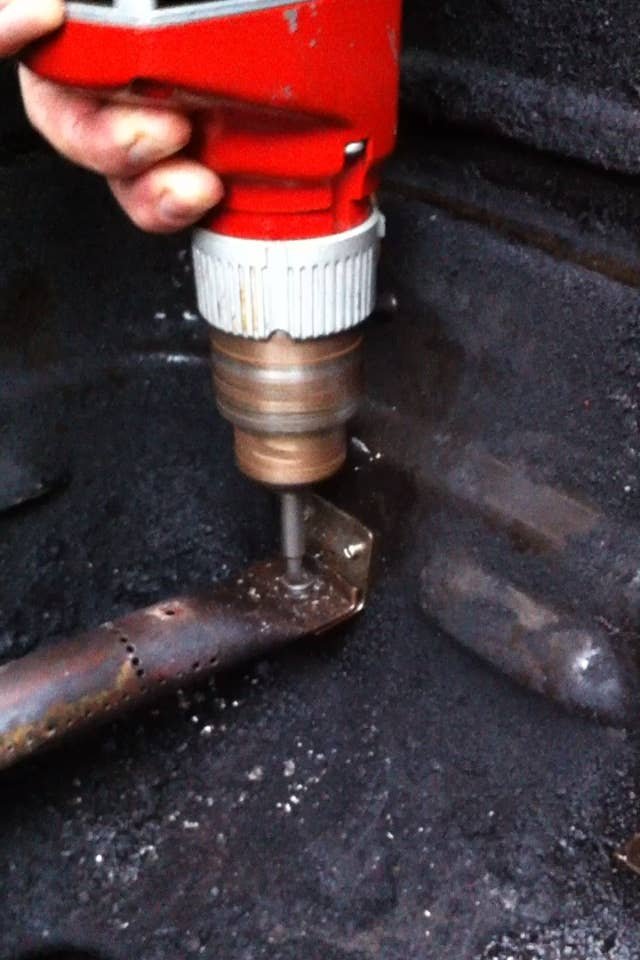
Credit: dengarden.com
Step 4: Drill a straight pilot hole
Put on your safety glasses. Hold the drill steady and keep it in line with the screw. Start at a slow speed. Let the bit do the work. Do not push hard. Pressure should be light and controlled.
Drill into the center mark and stop often to check your position. If the bit begins to wander, pull back, re-center, and continue. You are trying to create a straight hole in the middle of the damaged screw head.
If the screw is metal, use a bit made for metal and avoid overheating it. A few drops of cutting oil can help. If the screw is in wood, be careful not to drill too deep and enlarge the hole in the surrounding wood.
How deep should you drill?
For many screws, you only need to drill far enough to create a hole for a screw extractor or to weaken the head. You do not usually need to drill all the way through the screw at first. Too much depth can damage the threads or the material below.
A good rule is to drill just deep enough to give your next tool something to grip. If you are not sure, stop and check often. It is better to drill less and continue than to overdrill and create a bigger repair job.
Step 5: Use a screw extractor if the screw still holds
If the screw does not come out after drilling the pilot hole, use a screw extractor. This tool has reverse threads that dig into the screw as you turn it counterclockwise. It is one of the best answers for how to drill out a stripped screw when the screw is badly damaged.
Choose an extractor that matches the size of your drilled hole. Insert it into the hole and tap it lightly if needed. Then turn it counterclockwise with a wrench, handle, or drill set to reverse at very low speed. The extractor should bite into the screw and begin backing it out.
Do not force it too hard. Extractors are strong, but they can snap if abused. If the extractor feels stuck, stop and add a little penetrating oil. Wait a few minutes and try again.
Why extractors sometimes fail
Extractors fail when the hole is too small, too shallow, or off center. They also fail when too much torque is applied. A broken extractor is a bigger problem because it is hardened steel and much harder to drill. Careful setup is the best way to avoid that outcome.
Step 6: Increase the hole if needed
If the first small hole does not work, you may need to enlarge it little by little. This is often necessary for very damaged screws. Use the next bit size up and drill slowly. Check often so you do not go too wide too fast.
When you enlarge the hole, you weaken the screw head more and give the extractor a better grip. In some cases, the screw head will break away from the shaft. If that happens, remove the loose part and then grip the remaining shaft with pliers.
Another useful insight: many screws do not need full extraction after the head is removed. Once the attached part is free, the leftover shaft may stick out enough to turn with locking pliers.
Step 7: Remove the remaining shaft
If the head comes off but the threaded shaft stays in the hole, use locking pliers to twist it out. Grip the shaft firmly and turn it counterclockwise. If it does not move, apply more penetrating oil and wait.
For screws buried in wood, the shaft may loosen once the pressure from the head is gone. For screws in metal, the shaft may remain tight because the threads still hold hard. Gentle back-and-forth movement often helps more than one hard twist.
:max_bytes(150000):strip_icc():format(webp)/ways-to-remove-a-stripped-screw-5078928-07-aae4bddbda8244cd9ce2febf0a355e5f.jpg)
Credit: thespruce.com
What to do if the shaft breaks flush
If the screw breaks off level with the surface, you still have options. You can drill a deeper pilot hole and use an extractor sized for the shaft, or you can use a left-handed bit to try to spin it out. In metal repairs, a thread repair kit may be needed if the threads are damaged.
Common mistakes to avoid
Many people make the same errors when they try to remove a stripped screw. Avoid these and your chance of success goes up fast.
- Using the wrong drill speed – Too fast can overheat the bit and damage the screw. Slow is safer.
- Starting with a bit that is too large – This can remove too much material too soon.
- Skipping the center punch – The bit can wander and damage the surface.
- Applying heavy pressure – This often makes the bit slip or break.
- Forcing a stuck extractor – Broken extractors are difficult to remove.
- Ignoring rust or corrosion – Penetrating oil can save time and reduce damage.
One non-obvious mistake is forgetting to clear debris from the hole. Metal shavings can hide the center and make the extractor sit poorly. Blow out or brush away debris before each step.
How to protect the surrounding material
Drilling out a stripped screw is not just about the screw. You also need to protect the surface around it. In wood, tape around the head can help reduce scratches. In metal, a small piece of scrap wood or plastic can protect nearby areas from slipping tools. On painted surfaces, use light pressure and keep the drill square.
If the screw is in a soft material like particleboard or drywall anchors, be extra careful. These materials can crumble easily. In that case, the real fix may be replacing the anchor or repairing the hole after the screw is out.
A useful trick is to place a small piece of painter’s tape over the screw before centering your punch. The tape can help keep the bit from skating at the start, especially on smooth surfaces.
When drilling is not the best first choice
Even though this article focuses on how to drill out a stripped screw, drilling is not always the first move. If the screw head still has a small amount of grip, a manual impact driver or a correct-size driver bit may remove it without drilling. If the screw head sticks out, locking pliers may work faster and with less damage.
Use drilling when the head is truly worn out or when other methods failed. That is the smartest way to save the surrounding material. Drilling should be a controlled fix, not a random attempt.
After the screw is out
Once the screw is removed, inspect the hole and the threads. If the hole is clean, you may be able to replace the screw with a new one of the same size. If the hole is enlarged, you may need a larger screw, filler, or a thread repair solution.
Clean away all shavings before reassembly. If the screw failed because it was rusted or too tight, consider using a better-quality replacement. A coated or stainless screw may last longer in wet or outdoor areas.
This is also the right time to check the tool that caused the stripping. A worn-out screwdriver bit is a common hidden problem. Even a good screw will strip if the bit is the wrong size or too rounded.
Simple step-by-step summary
If you want the short version, here it is:
- Inspect the screw and decide if drilling is needed.
- Apply penetrating oil if rust is present.
- Mark the center with a punch.
- Choose a small metal drill bit or left-handed bit.
- Drill slowly into the center of the screw.
- Use a screw extractor if the screw stays stuck.
- Enlarge the hole only if needed.
- Remove any leftover shaft with pliers.
- Clean the area and replace the screw or repair the hole.
This approach works because it moves in stages. You start with the least damaging option and only go further when needed. That is the safest way to handle a stripped screw without creating a bigger repair.
:strip_icc():format(webp)/BHG-home-improvement-advice-expert-advice-how-to-remove-stripped-screw-06_31239-16a9b36dbd3b40788f63ce09dbe4676c.jpg)
Credit: bhg.com
Extra tips that make the job easier
Two things beginners often overlook are heat and patience. A short burst of warm air from a heat gun can help loosen rust or old adhesive around the screw. Do not overheat paint, plastic, or thin metal. Use just enough heat to help, not enough to damage the material.
Another useful tip is to keep your drill battery fully charged. A weak drill can lose torque halfway through the job, which increases the chance of slipping. If you are working on hard metal, a stronger drill and sharper bit make a big difference.
If the screw is in a delicate project, practice on a spare piece first. That gives you a feel for the speed and pressure before you touch the real workpiece. Small practice can save a costly mistake.
Frequently asked questions
1. What is the safest way to start removing a stripped screw?
The safest way is to inspect the screw first, apply penetrating oil if needed, and mark the center with a punch before drilling. Starting slow helps keep the drill bit centered and reduces damage.
2. Can I drill out a stripped screw without a screw extractor?
Yes, sometimes. If the drill bit bites into the screw enough, the screw may back out on its own, especially with a left-handed bit. If not, an extractor gives you a better chance of removal.
3. What drill bit should I use for a stripped screw?
Use a small metal-cutting bit to start. If possible, try a left-handed drill bit first because it may loosen the screw while drilling. Choose a bit that matches the screw size and material.
4. How do I avoid damaging the surface around the screw?
Drill slowly, keep the bit centered, and use a punch mark to guide the drill. Painter’s tape and light pressure can also help protect the surface from scratches or slips.
5. What if the screw breaks off inside the material?
If the screw breaks off flush, drill a new small hole in the center of the remaining shaft and try an extractor again. If that fails, you may need to repair the hole or replace the threaded insert.
