
If you need to hang a house number, outdoor light, camera, sign, or shelf on an exterior wall, you may need to work with stucco. It can feel hard at first because stucco looks solid and brittle at the same time. If you rush, you can crack the surface, damage the wall behind it, or make the hole too loose for a fastener.
The good news is that how to drill into stucco is not difficult when you use the right bit, the right speed, and a careful step-by-step method. The key is to go slow, drill cleanly, and understand what is under the stucco before you start. A small amount of planning makes the job much safer and easier.
In this guide, you will learn how to drill into stucco safely, what tools to use, how to avoid common mistakes, and how to get a strong hold for screws and anchors. You will also see practical tips that help beginners work with confidence on the first try.
What Stucco Is and Why It Needs Careful Drilling
Stucco is a hard exterior finish made from cement, sand, and water. It is strong, but it can also chip or crack if you use the wrong tool or force. Most stucco walls are not only stucco. They often have layers behind them, such as building paper, wood sheathing, foam board, or masonry.
That is why drilling into stucco is not the same as drilling into plain wood or drywall. If you drill too fast, the bit can skate across the surface. If you use too much pressure, the stucco can break at the edge of the hole. If you do not know what is behind the stucco, you may hit a wire, pipe, or weak layer that will not hold a screw well.
The safest approach is to treat stucco like a hard shell that needs support. Mark the spot carefully, use the correct bit, and let the drill do the work. That simple mindset prevents many problems.
Tools and Materials You Should Gather First
Before you begin, collect everything you need. Starting and stopping mid-job increases the chance of mistakes. A complete setup makes the work smoother and cleaner.
| Item | Why it helps |
|---|---|
| Drill | Provides steady rotation and control |
| Masonry drill bits | Designed to cut through hard stucco |
| Hammer drill | Helpful for thicker or harder stucco |
| Painter’s tape | Reduces bit slipping and helps mark the spot |
| Measuring tape and pencil | Helps you place holes accurately |
| Wall anchors | Give screws a stronger grip |
| Screws | Used with anchors or direct mounting hardware |
| Safety glasses | Protects eyes from dust and chips |
| Dust mask | Useful when drilling creates fine dust |
| Vacuum or brush | Keeps the hole clear for better anchor fit |
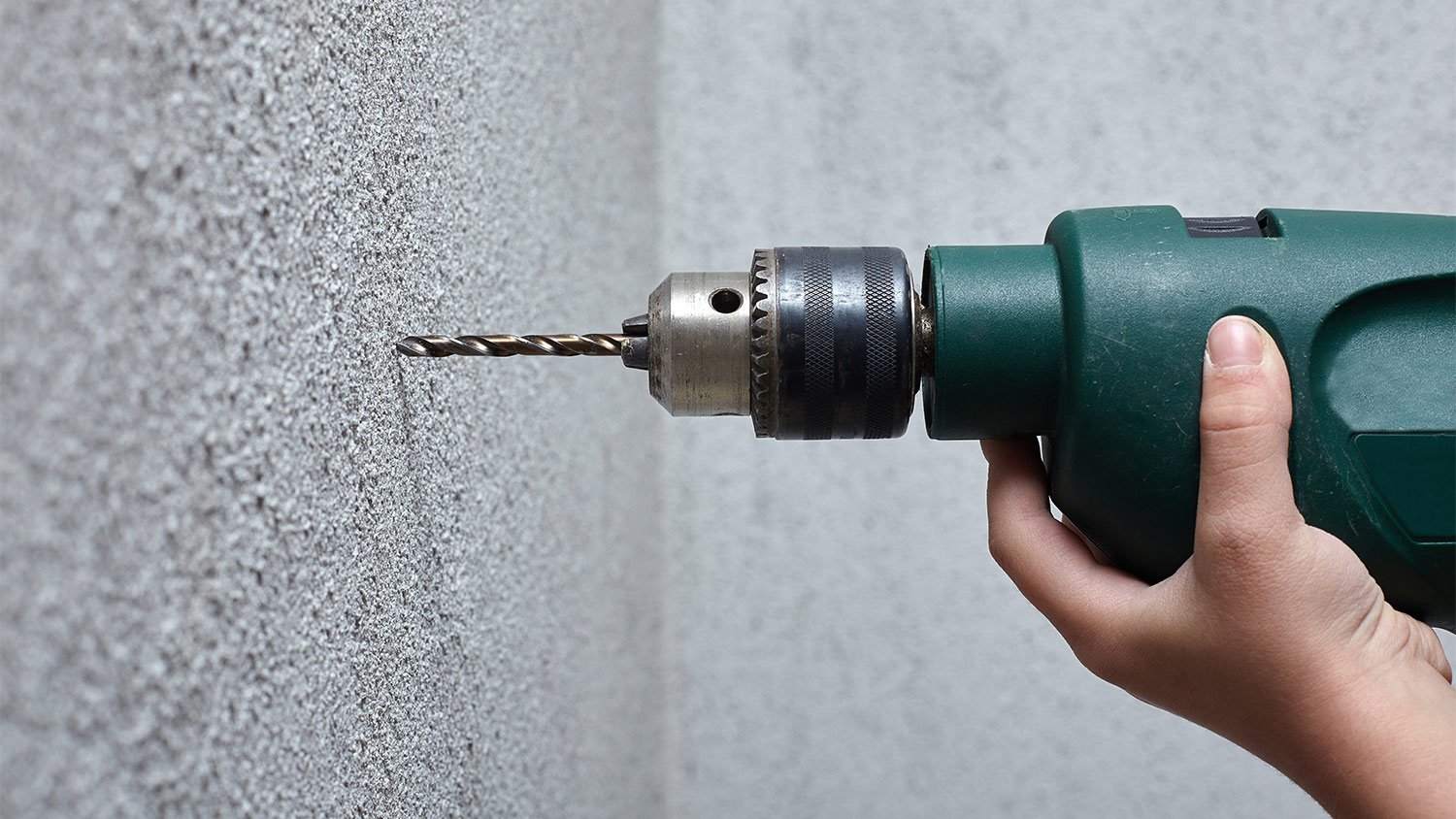
If you are unsure which drill bit to use, choose a masonry bit. For tougher stucco or thicker exterior walls, a hammer drill can make the task much easier. It adds a light pounding action while the bit turns. That extra movement helps the bit cut into hard material faster.
For a broader safety reference on masonry and drill selection, you can also check this helpful guide from Family Handyman.
How to Drill Into Stucco Safely and Easily
Follow these steps in order. Do not rush through them. A careful process gives you a cleaner hole and a stronger result.
1. Check the wall first
Before drilling, inspect the area. Look for vents, electrical fixtures, downspouts, pipes, light wires, and any signs of previous repairs. If you are drilling near a window, door, corner, or utility line, be extra careful.
One smart step many beginners skip is checking the inside of the wall as well. If possible, ask what is on the other side of the spot. Drilling into stucco without knowing the hidden structure can lead to broken anchors or dangerous damage. This is especially important when you plan to hang something heavy.
2. Mark the exact point
Measure carefully and mark the hole location with a pencil. If the surface is dusty or rough, place a small piece of painter’s tape over the spot and mark on the tape. This gives your drill bit a better start and helps prevent slipping.
For a single hole, make your mark simple and clear. For multiple holes, measure twice before drilling. A small error can make a bracket crooked, and stucco holes are harder to correct after the fact.
3. Choose the right drill bit
Use a masonry bit that matches the size needed for your screw or anchor. The hole should not be too large, or the anchor will spin. It should not be too small, or the anchor may not fit and could crack the stucco when forced in.
Non-obvious tip: Many people assume a bigger bit is safer because it creates less resistance. That is not true. A hole that is too wide can weaken the mounting point and reduce holding power. Always match the bit size to the anchor instructions.
4. Start with low speed
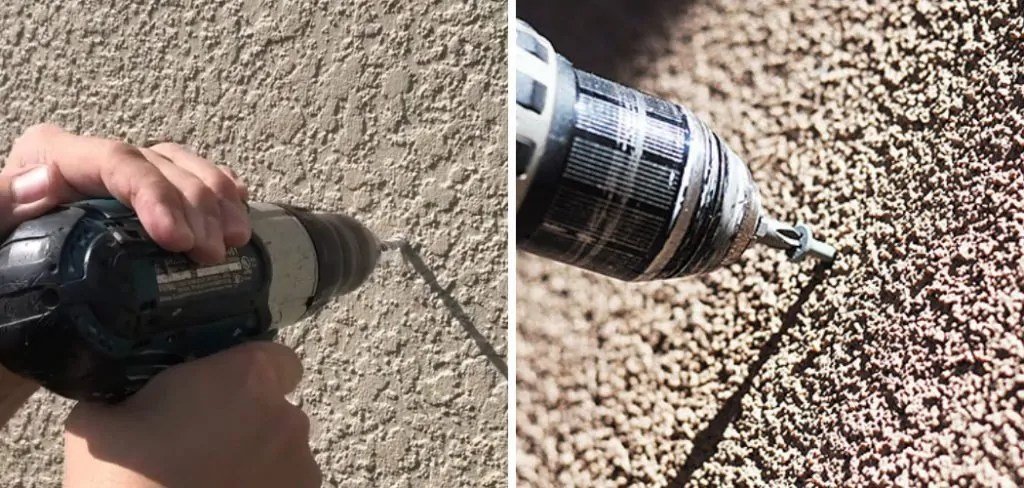
Place the drill bit on your mark and begin at a low speed. Let the tip bite into the surface before increasing speed. This helps the bit stay in place and reduces chipping around the hole.
Do not press hard at the start. A light, steady push is better. The bit should cut into the stucco, not smash through it. If you push too hard, the outer layer may crack before the hole is properly formed.
5. Drill straight and steady
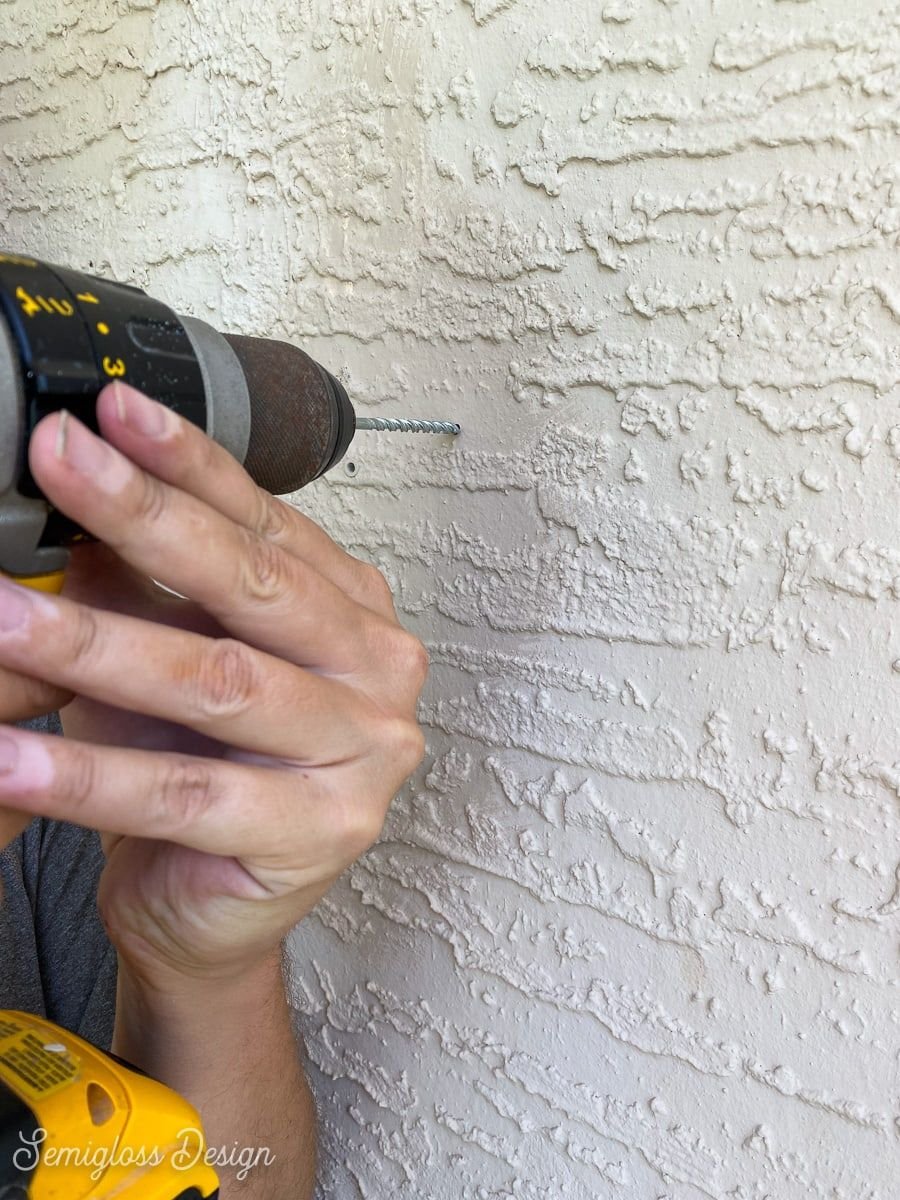
Keep the drill as straight as possible. A tilted hole can cause the anchor to sit poorly or make the screw pull sideways. If you are drilling overhead or at an awkward angle, go even slower so the bit does not wander.
For thicker stucco, drill in small stages. Stop once or twice to pull the bit out and remove dust. This keeps the hole cleaner and reduces heat. Heat can wear out the bit faster and make drilling feel harder than it should.
6. Switch to a hammer drill if needed
If the stucco is hard and the standard drill struggles, a hammer drill can help. Use the hammer function only for masonry-type surfaces. If you are not sure what is under the stucco, make sure the spot is safe before switching to a stronger setting.
Important insight: A hammer drill is helpful, but more force is not always better. On softer stucco, too much hammer action can enlarge the hole too quickly or chip the surface. Use the lightest effective setting first.
7. Stop at the right depth
Drill only as deep as needed for the anchor or screw. If your drill does not have a depth stop, wrap a small piece of tape around the bit to show the target depth. This simple trick keeps you from drilling too far.
Going too deep can be a problem when there is a thin backing layer behind the stucco. It may also reduce the grip of some anchors. For light items, depth control is one of the easiest ways to improve the final result.
8. Clean out the hole
When the hole is finished, remove dust with a vacuum, brush, or by gently blowing it out. A clean hole helps the anchor seat properly and improves holding strength. Dust left inside can make the anchor feel loose.
This step seems small, but it matters a lot. Many weak mounts happen because the hole was not cleared before the anchor was inserted.
9. Insert the anchor or fastener
Choose the right anchor for the job. Light items may need a plastic masonry anchor. Heavier items may need a stronger anchor or a different mounting method. Follow the anchor maker’s size and depth guidance.
Push the anchor in carefully. If it does not fit easily, do not force it with heavy hammering. A little tap is normal, but hard pounding can crack the stucco around the hole.
10. Install the screw and test the hold
After the anchor is seated, drive the screw in slowly. Stop when it feels snug. Do not overtighten. A screw that is forced too far can strip the anchor or damage the surrounding material.
Once installed, give the item a gentle test. If it moves too much, the anchor may be the wrong size, the hole may be too large, or the wall may not be suitable for that load. It is better to correct it now than after the item falls.
Best Practice for Different Stucco Surfaces
Not all stucco walls are the same. The backing, thickness, and finish can change how you drill. Knowing the surface type helps you choose the right method.
Credit: toolsli.com
Traditional stucco over wood framing
This is common on homes with exterior wood walls. The stucco layer is hard, but the backing may be wood or sheathing. Use a masonry bit for the stucco layer, then continue carefully if needed. The final fastener may need an anchor designed for mixed materials.
Stucco over foam board
Some modern walls use foam behind the stucco. These walls can behave differently because the outer layer is hard, but the inner layer is softer. If you drill too deeply, the anchor may not hold well in the foam alone. In this case, choose hardware made for foam-backed walls or fasten into a structural stud if possible.
Stucco over masonry
If the stucco is applied over concrete block or brick, you are drilling through a very hard surface. A hammer drill usually helps here. Use masonry anchors meant for concrete or block, and make sure your hole depth is accurate.
Thin decorative stucco patches
Small repair areas or decorative finishes can be more fragile than full wall sections. Go slower than usual and avoid heavy pressure. The goal is to make a clean hole without spreading cracks beyond the patch.
Common Mistakes That Cause Cracks or Loose Holes
Most problems happen because people try to rush the job. If you avoid these mistakes, your results will be much better.
- Using a wood bit instead of a masonry bit — Wood bits are not made for hard exterior finishes and can slip or burn out quickly.
- Drilling too fast from the start — High speed at the beginning often chips the stucco surface.
- Pressing too hard — Excess force can crack the wall or make the hole uneven.
- Skipping dust cleanup — Dust can keep anchors from seating properly.
- Using the wrong anchor size — A poor fit leads to weak holding power.
- Overtightening screws — This can strip the anchor or crack the hole edge.
One mistake beginners often miss is ignoring vibration. Even if the hole looks fine, repeated vibration from power tools can widen the opening little by little. That is why a steady hand and moderate speed work better than aggressive drilling.
Credit: angi.com
How to Choose the Right Anchor for the Job
The anchor matters just as much as the hole. A strong hole with the wrong anchor can still fail. Choose based on the weight of the item and the wall type.
- Plastic masonry anchors are good for light items like small fixtures or signs.
- Metal sleeve anchors are stronger and often used for heavier outdoor items.
- Toggle or specialty anchors may work in certain hollow or mixed-wall situations.
- Direct masonry screws can work if the backing material is suitable and the product is rated for the load.
If the item is heavy, do not trust stucco alone. Try to fasten into a stud, block, or other structural support whenever possible. Stucco is a finish layer, not always a load-bearing surface.
Non-obvious tip: Outdoor items often fail because of wind, not just weight. A light sign can pull hard in strong wind. When in doubt, choose hardware with more strength than you think you need.
How to Patch Small Mistakes
Even with care, a hole may turn out slightly off-center or a small chip may appear around the edge. Small damage is usually fixable.
For tiny chips, clean the area and use an exterior patch compound that matches stucco as closely as possible. For a slightly oversized hole, use the correct anchor type rather than trying to stuff the hole with random material. A messy fix often becomes a weak fix.
If the hole is badly cracked, stop and reassess. Drilling a second hole too close to a damaged one can make the problem worse. Sometimes it is better to move the location a few inches and start over.
Safety Tips You Should Not Skip
Drilling into stucco is simple, but safety still matters. Fine dust can irritate eyes and lungs, and exterior walls can hide electrical or plumbing hazards.
- Wear safety glasses every time.
- Use a dust mask if the dust is heavy.
- Keep hands away from the spinning bit.
- Check for wires, pipes, and fixtures before drilling.
- Use a stable ladder if the hole is high on the wall.
- Turn off nearby power if there is any chance of hitting wiring.
Another useful habit is to drill during dry weather when possible. Wet stucco can behave unpredictably, and moisture can make the surface harder to read. Dry conditions usually give cleaner results.
When You Should Call a Professional
Some jobs are small and easy. Others are not worth the risk. Call a pro if you are drilling near electrical service, gas lines, water lines, or structural elements you do not understand. You should also get help if the item is heavy, such as a large awning, heavy shelf, or mounted security system.
If the wall is badly cracked, soft, crumbling, or previously repaired in a rough way, a professional can tell you whether it is safe to mount anything there. A small service call can prevent a costly wall repair later.
Credit: pinterest.com
Simple Step Recap for a Clean Result
- Inspect the wall and check for hidden hazards.
- Mark the spot clearly.
- Use a masonry bit of the correct size.
- Start slowly with light pressure.
- Keep the drill straight.
- Use a hammer drill only when needed.
- Control the depth.
- Clear out dust.
- Insert the anchor carefully.
- Install the screw without overtightening.
That is the core process for how to drill into stucco without causing unnecessary damage. Slow, careful work almost always gives better results than fast work.
FAQs
1. Can I drill into stucco without a hammer drill?
Yes, in many cases you can. A regular drill with a good masonry bit is enough for lighter jobs and thinner stucco. If the wall is hard or thick, a hammer drill will make the work easier and faster.
2. What kind of drill bit should I use for stucco?
Use a masonry drill bit. It is made for hard materials like stucco, brick, and concrete. A wood or metal bit is usually not the right choice and may wear out fast or slip on the surface.
3. How do I stop stucco from cracking when drilling?
Start at low speed, use light pressure, and keep the drill steady. Painter’s tape can also help reduce slipping. Most cracks happen when the drill is rushed or forced into the wall.
4. What anchor is best for stucco?
It depends on the weight of the item and the backing behind the stucco. Light items often work with plastic masonry anchors, while heavier items may need stronger metal anchors or a mount into a stud or masonry base.
5. Can I screw directly into stucco?
Sometimes, but it is not always the best choice. Stucco alone may not hold a screw well, especially for anything with weight or movement. Using the right anchor usually gives a safer and stronger result.
