
Drilling into concrete can feel hard at first. The surface is tough, the bit can slip, and the dust can get messy fast. But with the right tool, the right bit, and a steady method, you can make clean, precise holes without damaging the wall or wasting time.
If you are hanging shelves, fixing anchors, mounting a TV bracket, or running cables, learning how to drill into concrete the right way will save you from cracked holes and broken bits. The key is not force. It is control. Concrete gives better results when you work slowly, use the correct hammer drill or rotary hammer, and let the bit do the cutting.
This guide walks you through the full process step by step. You will learn what to use, how to mark the spot, how to drill safely, and how to avoid the mistakes that ruin clean holes. By the end, you will be able to drill concrete with more confidence and much better results.
What you need before you start
Good results begin before the drill even touches the wall. Concrete is not like wood or drywall. It is dense, gritty, and often uneven inside. A simple twist drill is usually not enough. You need the right setup if you want a clean hole that matches your anchor or fastener.
Here is a quick view of what matters most:
| Tool or item | Why it matters |
|---|---|
| Hammer drill or rotary hammer | Provides impact power to break concrete while drilling |
| Masonry drill bit | Designed for concrete, brick, and stone |
| Measuring tape and pencil | Helps place the hole accurately |
| Masking tape | Reduces bit wandering and helps mark depth |
| Vacuum or brush | Clears dust so the hole stays accurate |
| Safety glasses and mask | Protects your eyes and lungs from concrete dust |
| Wall anchor or fastener | Matches the hole size and supports the load |
Non-obvious tip: the drill bit must match the anchor size exactly, not “close enough.” A hole that is even a little too wide can make the anchor spin or pull out later. That small mismatch is one of the most common reasons concrete mounts fail.
Another detail beginners miss: not all concrete is the same. Old concrete can be harder and more brittle. New concrete can seem softer at first but may contain hidden aggregate that slows the bit. If you feel sudden resistance changes while drilling, do not push harder. Adjust your speed and let the bit clear the material.
Choose the right drill
If you are only making a few small holes for light fixtures or anchors, a good hammer drill is often enough. For larger holes, thicker concrete, or repeated work, a rotary hammer is better. It delivers stronger impact with less strain on your hands.
A standard drill without hammer action may work on very soft masonry, but it is usually the wrong choice for real concrete. You will likely overheat the bit, drill slowly, and get a rough hole.
Choose the right bit
Use a masonry bit with a carbide tip. That tip is made to handle the abrasive nature of concrete. For deeper or more frequent work, premium masonry bits last longer and stay sharper. If you need a larger opening for pipe or cable, use a hole saw or core bit made for masonry.
Do not use a wood bit or metal bit on concrete. It may seem to cut for a moment, but it will dull fast and can overheat. The bit may also walk across the surface and damage the finish.
Mark the hole carefully
Clean holes start with clean marking. Measure twice, then mark the exact spot with a pencil or marker. If the hole needs to line up with hardware, check the spacing before drilling. A tiny placement error can cause a bracket to sit crooked or an anchor to miss its target.
After marking the point, place a small piece of masking tape over the spot. Then mark the hole on the tape. This helps the bit grip the surface better and can reduce slipping on smooth concrete.
If you need several holes in a row, use a level or straight edge. Do not trust your eye alone. Concrete surfaces often look level when they are not.
Check what is inside the wall
Before you drill, make sure the spot is safe. Concrete walls and slabs can contain electrical lines, plumbing, or rebar. A wall scanner can help you avoid a serious mistake. If you hit rebar, the bit may stop suddenly, spark, or become damaged.
For outdoor slabs or older buildings, also think about the depth. Some concrete surfaces are thin on top of another material. If you drill too deep, you may break through something you did not expect.
Set up for safe, accurate drilling
Once the hole is marked, prepare the work area. Clear dust, remove loose objects, and make sure you have stable footing. If you are working overhead, use a secure ladder and keep one hand free when possible.
Wear safety glasses, a dust mask, and hearing protection. Concrete drilling is loud and dusty. The dust may look harmless, but repeated exposure is not. If the space is enclosed, open a window or use a vacuum nearby.
Set your drill to hammer mode if your tool has that feature. If the drill has clutch or speed settings, start low. High speed is not your friend at the beginning. A slow, controlled start helps the bit bite into the surface without skating away.
:max_bytes(150000):strip_icc():format(webp)/SPR-how-to-drill-into-concrete-5025037-05-9a526b7f5644432fa2241f2a440bb000.jpg)
Credit: thespruce.com
Control the depth
Decide how deep the hole needs to be before you begin. If you are installing an anchor, the hole should usually be slightly deeper than the anchor length so dust does not block it. You can wrap tape around the bit at the desired depth as a quick guide.
This small step saves time later. A hole that is too shallow can stop the anchor from seating fully. That can reduce holding power and make the fitting sit unevenly.
How to drill into concrete the right way
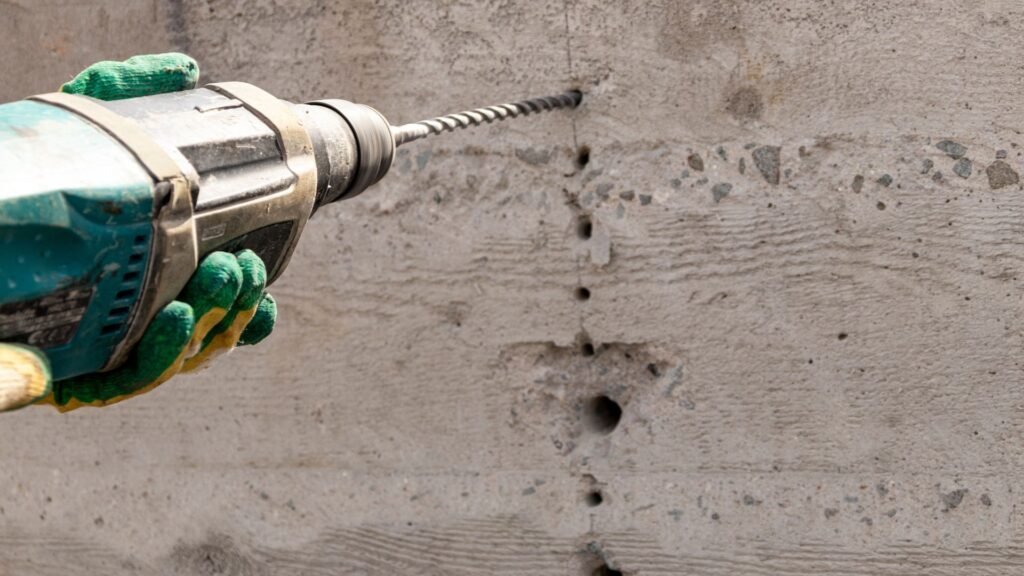
Now comes the actual drilling. Keep the drill perpendicular to the surface unless your project needs a slight angle. A straight hole gives the best fit for anchors and hardware. Hold the drill firmly with both hands and position the bit on your marked point.
- Place the bit on the mark and start the drill at low speed.
- Apply light, steady pressure. Do not force the tool into the concrete.
- Let the hammer action do the work while you guide the drill.
- Keep the drill straight so the hole stays even.
- Pull the bit out once in a while to clear dust from the hole.
- Continue until you reach the needed depth.
The biggest mistake people make when learning how to drill into concrete is pushing too hard. That does not make the bit cut faster. It can reduce hammer action, overheat the bit, and make the hole rough. A steady hand and a moderate pace usually work better than force.
As the bit goes deeper, the sound may change. That is normal. The tool may also vibrate more or less depending on the aggregate inside the concrete. Keep your grip firm and stay patient.
How much pressure should you use?
Use enough pressure to keep the bit engaged, but not so much that the drill bogs down. Think of it as guiding the tool, not driving it. If the drill slows too much, back off slightly and let it recover. If it wanders, reset your position and begin again from the mark.
Non-obvious tip: if your bit stops cutting well, the problem is often dust inside the hole rather than the concrete itself. Concrete dust acts like a plug. Clearing the hole every few seconds helps maintain speed and keeps the hole more precise.
When to stop and clear dust
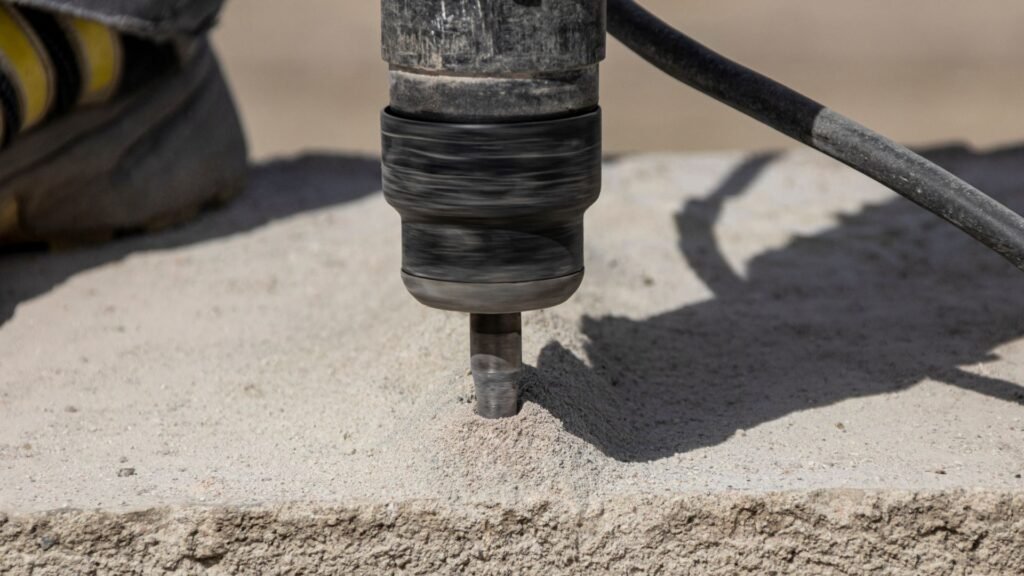
For shallow holes, one or two pauses may be enough. For deeper holes, pull the bit out several times during drilling. You can use a vacuum, compressed air, or a brush to remove debris. A clean hole helps the anchor seat properly and prevents binding.
Do not blow dust with your mouth. That puts fine particles into the air and back toward your face. A vacuum is safer and cleaner.
Finish the hole cleanly
When you reach the target depth, stop the drill and pull the bit out while it is still spinning slowly. This helps lift loose dust out of the hole. Then clean the opening with a vacuum, brush, or both. The cleaner the hole, the better your anchor will hold.
Check the hole size and depth before moving on. If the fit seems too tight, do not force the anchor in with a hammer unless the anchor type allows it. If it seems too loose, the hole may be oversized or the wrong bit may have been used.
For the best result, insert the anchor gently and make sure it seats flush. If you are using a screw directly into a concrete anchor, keep the screw straight and avoid overtightening.
What to do if the hole is rough
Sometimes the edges chip a little. This can happen near aggregate or when the drill starts too fast. Small chips are normal. Big breakouts are not. If the hole is badly damaged, move it slightly and start over. Trying to fix a blown-out hole usually wastes more time.
For decorative or highly visible work, test in a less noticeable spot first if possible. Concrete can vary more than people expect, even in the same wall.
Common mistakes that ruin concrete holes
Even a good drill can give poor results if the method is wrong. These mistakes show up often, especially with first-time users.
- Using the wrong bit: A non-masonry bit will wear out quickly and cut badly.
- Skipping hammer mode: Without impact, concrete drilling becomes slow and frustrating.
- Pushing too hard: Too much pressure can stall the drill and damage the bit.
- Not clearing dust: Dust buildup can block the hole and reduce accuracy.
- Drilling at the wrong size: A hole that is too wide weakens the anchor hold.
- Ignoring rebar: Hitting steel can stop the job and damage the bit.
One mistake deserves special attention: many people think a larger hole will make installation easier. In reality, it often creates a weaker hold. With concrete anchors, tight fit matters. If the hole is too large, the fastener may spin, loosen, or fail under load.
Another mistake is using a worn bit and expecting a clean hole. Concrete bits do wear down, especially after repeated use. If the tip looks rounded or the drilling feels unusually slow, replace the bit before the next job.
Credit: concretecuttersauckland.co.nz
How to handle hard spots and rebar
Sometimes the drill suddenly stops cutting. You may have hit a hard stone, a dense pocket, or steel reinforcement. Do not keep forcing the bit in the same spot. That can overheat the tool and damage the bit.
If you hit a very hard spot, pull the bit out, clear the dust, and try again with a little patience. If you suspect rebar, stop and reassess. Moving the hole a small distance may be safer than fighting through steel. A rebar detector or scanner is useful before drilling in structural concrete.
If you must drill into reinforced concrete, use a high-quality rotary hammer and the correct bit, and expect slower progress. Even then, it is better to avoid rebar when possible unless the work is designed for it.
Drilling larger holes
For larger holes, start with a smaller pilot hole if your tool and bit set allow it. This can help guide the larger bit and reduce wandering. However, not every project needs a pilot hole. For many anchors, the correct-size masonry bit is enough if you keep the drill steady.
Large diameter holes create more dust and heat. Pause more often and make sure the bit stays cool enough to work safely. If the material starts to crumble, slow down and check your technique.
Keep your tools in good shape
Good drilling is not only about the wall. It is also about the tools. After the job, clean the bit and remove concrete dust from the drill body. Dust can shorten the life of moving parts and make future drilling less smooth.
Inspect the bit tip. If the carbide edge is chipped or worn unevenly, replace it. A damaged bit can create rough holes and make the drill work harder than necessary.
Store masonry bits in a dry place. Rust is not always obvious at first, but it can affect performance over time. A bit that looks only slightly dull today may become a poor performer on the next job.
When to call a pro
Most small drilling jobs are manageable for a careful homeowner or DIY user. But some situations are better handled by a professional. If the concrete is structural, heavily reinforced, unusually thick, or tied to a critical load-bearing part of the building, a pro can help you avoid costly damage.
You should also consider expert help if you need many holes in a very tight pattern, if the surface is already cracked, or if you discover hidden utilities. In those cases, the risk is higher than the cost of getting advice.
For technical drilling questions, it can help to review the manufacturer guidance for your drill and bits. A reliable source like Hilti offers useful product and application information for concrete drilling tools.
Credit: concretecuttersauckland.co.nz
Simple drill sequence to remember
If you want the short version, keep this order in mind:
- Choose a hammer drill or rotary hammer.
- Use a masonry bit that matches the anchor.
- Mark the hole carefully and check for hidden lines.
- Set the drill to hammer mode.
- Start slowly and keep the drill straight.
- Use light pressure and clear dust often.
- Drill to the right depth.
- Clean the hole before inserting the anchor.
This simple order is the foundation of how to drill into concrete with clean, precise results. It keeps the process controlled and reduces the chance of mistakes.
Frequently asked questions
1. Can I drill into concrete with a regular drill?
A regular drill may work on very soft masonry, but for real concrete, a hammer drill is much better. Without hammer action, the job is slower, harder, and more likely to damage the bit.
2. What kind of bit should I use for concrete?
Use a masonry bit with a carbide tip. It is made for abrasive materials like concrete, brick, and stone. For large holes, use a masonry hole saw or core bit designed for the task.
3. Why does my drill keep slipping on concrete?
This usually happens when the bit is not starting well, the surface is too smooth, or the drill is started too fast. A small piece of masking tape and a slow start can help the bit stay in place.
4. How do I know how deep to drill?
Check the length of the anchor or fastener and drill slightly deeper so dust does not block the fit. Wrapping tape around the bit is an easy way to mark the target depth.
5. What should I do if I hit rebar?
Stop drilling and reassess. Forcing through steel can damage the bit and create an unsafe hole. If possible, move the hole slightly or use a scanner before drilling again.
