
If you need to make a clean cut in steel, aluminum, rebar, bolts, or sheet metal, an angle grinder can do the job fast. It is one of the most useful tools in a workshop, garage, or job site. But it is also one of the easiest tools to use the wrong way.
That is why learning how to cut metal with an angle grinder is not only about speed. It is about control, safety, and choosing the right disc for the right metal. A small mistake can break the disc, damage the workpiece, or cause injury. A careful method makes the cut smoother and much safer.
In this guide, you will learn the full process step by step. You will also learn the safety habits many beginners miss, how to avoid common mistakes, and how to get cleaner results with less effort.
What you need before you start
Before cutting, gather everything you need. This saves time and reduces risk. Many accidents happen when people stop in the middle of a job to search for a tool or adjust the workpiece.
For most metal cutting jobs, you will need:
- An angle grinder with a guard installed
- The correct metal-cutting disc
- Safety glasses or a full face shield
- Hearing protection
- Work gloves
- Long sleeves and non-synthetic clothing
- Clamps or a vise
- A marker or soapstone for marking the cut line
- A brush or rag to clean the metal before cutting
One of the most important choices is the disc. Use a thin cut-off wheel made for metal, not a grinding wheel. Cutting wheels are designed to slice through metal. Grinding wheels are for shaping and smoothing. Using the wrong one can cause poor results and higher risk.
If you want to check general tool safety standards, OSHA is a reliable authority for workplace safety guidance.
Choose the right disc size and material
Most people focus on the grinder, but the disc matters just as much. A 4.5-inch grinder is common for home use, and it works well for many cutting tasks. Larger grinders can cut deeper, but they also need more control.
Use a disc that matches the material:
- Steel: Standard metal cut-off wheel
- Stainless steel: Wheel rated for stainless, so you do not contaminate the surface
- Aluminum: A disc that resists loading and clogging
- Thin sheet metal: Thin cut-off disc for cleaner control
A small but important detail: check the disc speed rating. It must match or exceed the grinder’s no-load RPM. This is a safety rule, not just a technical detail.
Prepare the metal and your work area
A clean, stable setup makes cutting easier and safer. Do not hold the metal with one hand and the grinder with the other if you can avoid it. Loose material can move, pinch the disc, or kick back.
Start by cleaning the surface. Remove dirt, grease, rust flakes, and paint near the cut line. A clear line helps you stay accurate, and a cleaner surface gives you better disc contact.
Then mark your cut line with a marker, paint pen, or soapstone. If the line must be exact, measure twice and mark from the same reference edge each time. This simple habit prevents small errors that become big problems later.
Secure the piece properly
Clamp the metal firmly to a stable bench, sawhorse, or vise. The workpiece should not rock, twist, or bounce. If the part is long, support the free end so it does not sag under its own weight.
Here is a useful rule: if the cut piece may fall or close on the disc, plan where the metal will move as the cut finishes. That movement can trap the wheel and cause kickback. Many beginners miss this because they focus only on the start of the cut.
Clear the area around you
Metal cutting throws sparks, hot dust, and small fragments. Keep flammable items away, including rags, paper, fuel cans, sawdust, and solvent containers. Sparks can travel farther than people expect.
Also think about your footing. Stand on a dry, level surface with enough space to move the grinder naturally. If you feel cramped, your cut will probably be less controlled.
Set up the grinder the safe way
Before plugging in the tool, inspect it carefully. Check the cord, switch, guard, and side handle. Make sure the disc is not cracked, chipped, or bent. Never use a damaged wheel. Even a small crack can grow fast when the wheel spins at high speed.
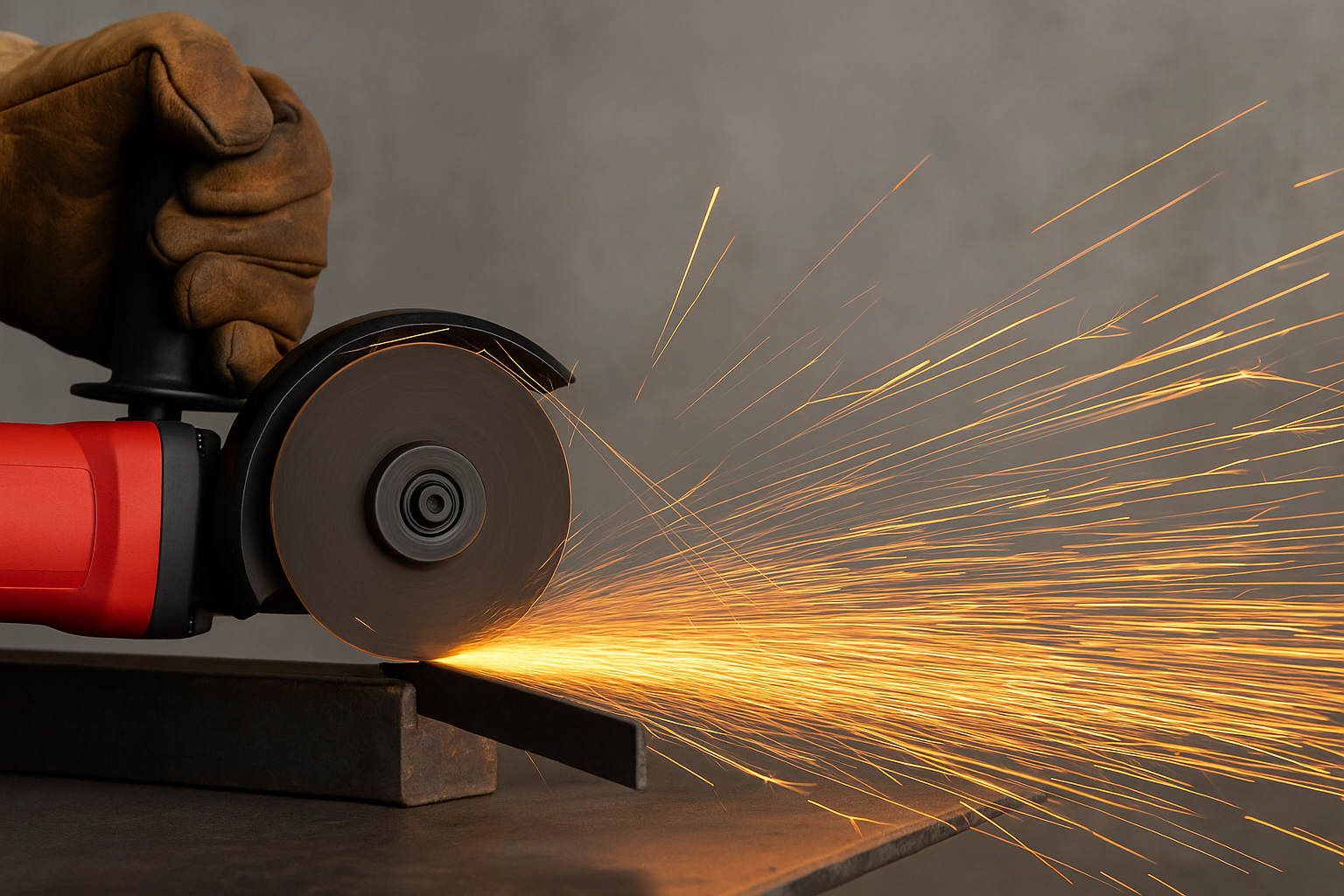
Install the guard so it deflects sparks and debris away from your body. Do not remove it to “see better.” The guard is part of the safety system, not an optional extra.
Attach the side handle if your grinder has one. It gives you better control and helps you resist torque when the disc bites into the metal.
Credit: yurigroup.com
Do a quick test run
Before cutting, let the grinder spin for a few seconds away from the workpiece. Listen for strange noise, vibration, or wobble. A smooth sound is a good sign. If the disc shakes or scrapes, stop and fix the problem before you cut.
This small test can prevent a bad cut and reduce the chance of disc failure. It only takes a moment, but it tells you a lot about the tool’s condition.
How to cut metal with an angle grinder step by step
Now you are ready for the actual cut. Move slowly. Good cuts come from control, not force. Let the wheel do the work.
-
Stand in a balanced position.
Place your feet shoulder-width apart. Keep your body slightly to the side of the wheel path, not directly behind it. This gives you more control if the grinder slips.
-
Hold the grinder with both hands.
Use one hand on the main handle and the other on the side handle. Keep a firm but not tense grip. Tension can make your hands shake.
-
Bring the wheel to full speed before touching metal.
Do not force the disc into the metal while it is still speeding up. Let it reach full RPM first.
-
Touch the wheel to the line gently.
Start with light pressure. Begin with a small groove, also called a kerf, to guide the disc. This first pass is about control, not depth.
-
Follow the line steadily.
Keep the wheel moving along the mark. Do not twist the grinder side to side. Let the wheel cut in a straight path.
-
Use several light passes for thicker metal.
For thick steel, do not try to cut all the way through in one pass. Make a shallow groove first, then deepen it gradually.
-
Watch the sparks and the sound.
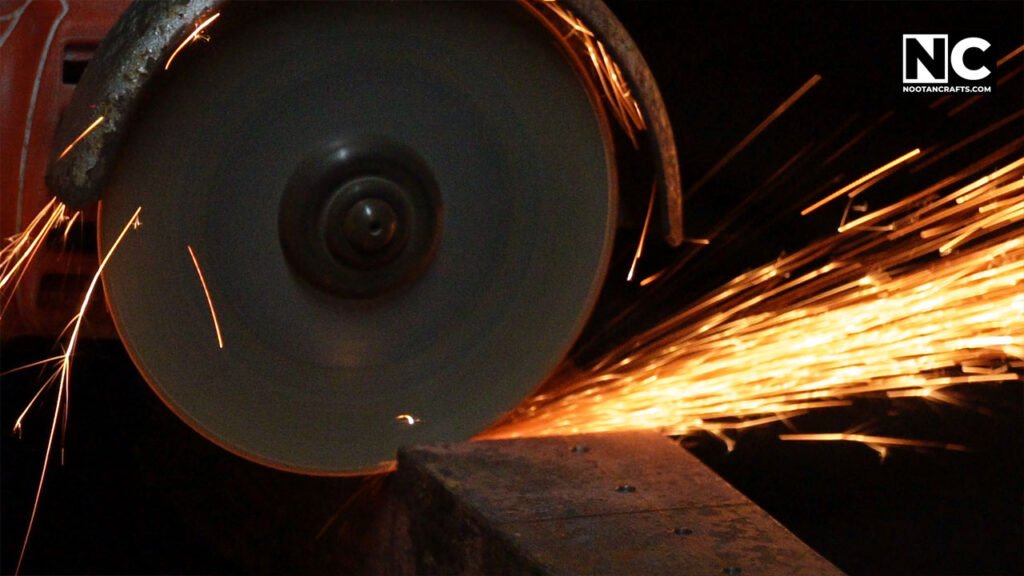
Steady sparks and a smooth cutting sound usually mean the disc is working well. If the sound changes sharply or the grinder slows down, reduce pressure and check for binding.
-
Finish carefully.
As you get close to the end of the cut, support the metal if needed so it does not drop suddenly. Slow down and stay aligned until the piece separates cleanly.
One beginner mistake is pushing too hard. That makes the disc overheat, wear out faster, and increase the chance of kickback. A second mistake is cutting with the side of a cut-off wheel. These wheels are made for edge cutting, not side grinding.
Adjust your cut for different metals
Not all metals behave the same. Thin steel cuts quickly but can warp from heat. Aluminum cuts faster than many people expect, but it can clog the wheel. Stainless steel is tougher and can take more time. Rebar often has rough surfaces that grab the disc if you rush.
For thin materials, use light pressure and move steadily. For thicker stock, keep the wheel square to the cut and take your time. If the metal gets very hot, pause and let it cool. Heat can change the shape of the workpiece and make the final cut less accurate.
How to stay safe while cutting
Safety is not one step. It is the way you work from start to finish. A grinder cut can go wrong in seconds, so your habits matter.
Wear full eye protection. Normal glasses are not enough. Sparks, grit, and small wheel fragments can fly upward or sideways. A face shield gives extra coverage, but it should be used with safety glasses, not instead of them.
Protect your hearing too. Angle grinders are loud, and long exposure can damage hearing over time. Gloves help protect your hands from sparks and sharp edges, but they should fit well. Loose gloves can catch on the tool.
Watch for kickback
Kickback happens when the wheel binds in the cut and the grinder suddenly moves back or sideways. It is one of the main risks when using an angle grinder.
To reduce kickback:
- Keep a firm grip with two hands
- Do not twist the wheel in the cut
- Support the workpiece so it does not close on the disc
- Use the correct disc for the job
- Let the wheel cut at its own speed
Another detail many beginners miss is body position. If the grinder kicks back, you want the tool to move away from you, not into you. Standing slightly off-line helps.
Control sparks and fire risk
Sparks are normal, but they are still hot metal. Never cut near gas, dust, spray cans, or wood shavings. If you are cutting indoors, make sure the area is clear and well ventilated.
Keep a fire extinguisher nearby if you are working on larger projects. It is a simple precaution that can save a lot of trouble.
Get cleaner results with better technique
If you want a better finish, the answer is usually not more power. It is better control.
Try these practical habits:
- Mark the line clearly before cutting
- Use a sharp, thin wheel
- Start with a light scoring pass
- Keep the grinder moving at a steady pace
- Support the material so it does not flex
- Let the disc cool if it starts to smell hot or lose cutting speed
If the cut edge needs to be smoother afterward, switch to a grinding wheel or flap disc after the cut is complete. Do not use the cut-off wheel to “clean up” by pressing its side against the edge.
For some jobs, it helps to cut just outside the marked line, then finish the edge with a file or abrasive disc. This gives you more control over the final shape.
Credit: empireabrasives.com
Common mistakes that ruin the cut
Beginners often make the same avoidable errors. If you know them early, you can save time and discs.
Using the wrong disc: A grinding wheel is not the same as a cutting wheel.
Forcing the tool: Too much pressure leads to heat, wear, and binding.
Poor clamping: If the workpiece moves, the cut becomes unsafe and inaccurate.
Cutting at the wrong angle: Keep the disc aligned with the cut line as much as possible.
Ignoring the end of the cut: The last part is often where the piece shifts and pinches the wheel.
After the cut: finish the job properly
When the cut is done, do not rush to touch the metal. The edge and the disc may still be hot. Set the grinder down only after the wheel has fully stopped spinning.
Inspect the cut edge. It may have burrs, sharp corners, or a small amount of slag. Remove these with a file, flap disc, or deburring tool. This makes the piece safer to handle and often improves how it fits into the next step of your project.
Clean the area and check the disc again. If the wheel is worn down, cracked, or chipped, replace it before the next job. Do not save a damaged wheel “for later.”
When you should not use an angle grinder
An angle grinder is useful, but it is not the best tool for every cut. For very precise cuts, cold saws, band saws, or chop saws may be better. For some thin or delicate materials, a grinder can leave too much heat or too rough an edge.
If the piece is unstable, too large to secure, or too close to flammable material, stop and choose another method. Good tool choice is part of safe work.
Quick reference for safer cutting
| Step | What to do | Why it matters |
|---|---|---|
| Choose disc | Use a metal cut-off wheel rated for your grinder speed | Reduces breakage and improves cutting control |
| Prepare workpiece | Clean, mark, and clamp the metal firmly | Prevents movement and improves accuracy |
| Check tool | Inspect guard, cord, handle, and disc before use | Catches damage before it becomes dangerous |
| Cut | Use light pressure and steady passes | Helps avoid kickback and overheating |
| Finish | Let the wheel stop, then deburr the edge | Leaves a safer and cleaner result |
Once you understand the process, how to cut metal with an angle grinder becomes much easier. The main idea is simple: use the right disc, secure the metal, stay balanced, and let the tool work at its own pace. The safest cut is usually the one done with patience.
Credit: nootancrafts.com
FAQs
Can an angle grinder cut all types of metal?
An angle grinder can cut many metals, including steel, stainless steel, aluminum, rebar, bolts, and sheet metal. The key is using the correct cut-off wheel for the material and thickness.
What disc should I use to cut metal with an angle grinder?
Use a thin cut-off wheel made for metal. Do not use a grinding wheel for cutting. For stainless steel or aluminum, choose a wheel rated for that specific material.
How deep can an angle grinder cut?
The cutting depth depends on the disc size and grinder type. A 4.5-inch grinder usually cuts shallow to medium-depth metal well, while larger grinders can cut deeper. Always keep the wheel size and RPM rating within the tool’s limits.
Why does my angle grinder kick back when cutting metal?
Kickback often happens when the wheel binds, the workpiece moves, or the disc is forced too hard into the cut. Secure the metal well, use light pressure, and keep the wheel aligned to reduce this risk.
How do I make a cleaner cut with an angle grinder?
Mark the line carefully, clamp the metal firmly, and make several light passes instead of one hard pass. A thin, sharp cut-off wheel also helps create a cleaner edge with less heat and roughness.
