
Vinyl siding can look clean and bright for years, but only if you remove dirt, mold, algae, and pollution before they build up. A pressure washer can make the job much faster, but it can also cause damage if you use too much force or spray the wrong way. The good news is that how to clean vinyl siding with a pressure washer is simple once you understand the safe method.
This guide will show you how to clean vinyl siding the right way, with clear steps, useful tips, and common mistakes to avoid. You will learn how to prepare the house, choose the right nozzle, mix a safe cleaning solution, and wash the siding without forcing water behind the panels.
If you want your home to look fresh again without causing cracks, leaks, or streaks, follow the steps below carefully. A little control matters more than raw power.
What you should know before you start
Vinyl siding is strong, but it is not made for high-force cleaning. Many people think a pressure washer is all about power. That is not true. For siding, the real skill is using the lowest pressure that still gets the job done. Too much pressure can loosen panels, push water into wall gaps, or leave permanent marks.
Another thing beginners often miss is that dirt on vinyl siding is not always just dirt. Green stains are often algae. Black spots may be mildew. Gray film can come from air pollution or dust. If you only use water, the surface may still look dull. That is why a good cleaning solution matters as much as the washer itself.
Before washing, look at the siding closely. Check for cracks, loose nails, broken caulk, and open seams. If water can already get behind the siding, pressure washing can make the problem worse. A few minutes of inspection can save a costly repair later.
Choose the right equipment
You do not need a large commercial machine to clean vinyl siding. In many cases, a consumer-grade pressure washer is enough. What matters is control.
| Item | What to look for | Why it matters |
|---|---|---|
| Pressure washer | 1,200 to 2,000 PSI is usually enough | Low pressure reduces siding damage |
| Nozzle | 40-degree tip or soap nozzle | Gives a wider, gentler spray |
| Cleaning solution | Vinyl-safe siding cleaner or mild soap mix | Helps lift grime and organic growth |
| Soft brush | Long-handled, non-abrasive | Useful for stubborn spots |
| Ladder or extension wand | Stable and tall enough for upper areas | Reduces unsafe reaching |
Also, use a garden hose for pre-rinsing and a pair of safety glasses. If your washer allows detergent use, make sure the soap system works properly before you begin. Some beginners try to spray soap through the high-pressure tip. That is not ideal. Soap should go on gently, not at full pressure.
Protect the area around the house
Pressure washing can make a mess. Water, dirt, and soap will move quickly across windows, plants, decks, and outdoor furniture. Before you begin, close all windows and doors. Move anything that can be damaged. Cover electrical outlets and outside fixtures if needed.
Plants deserve special care. Even mild cleaners can bother leaves if left on them. Water plants with plain water before and after washing. Wet leaves are less likely to absorb cleaning solution. This small step is often ignored, but it helps a lot.
How to clean vinyl siding with a pressure washer safely
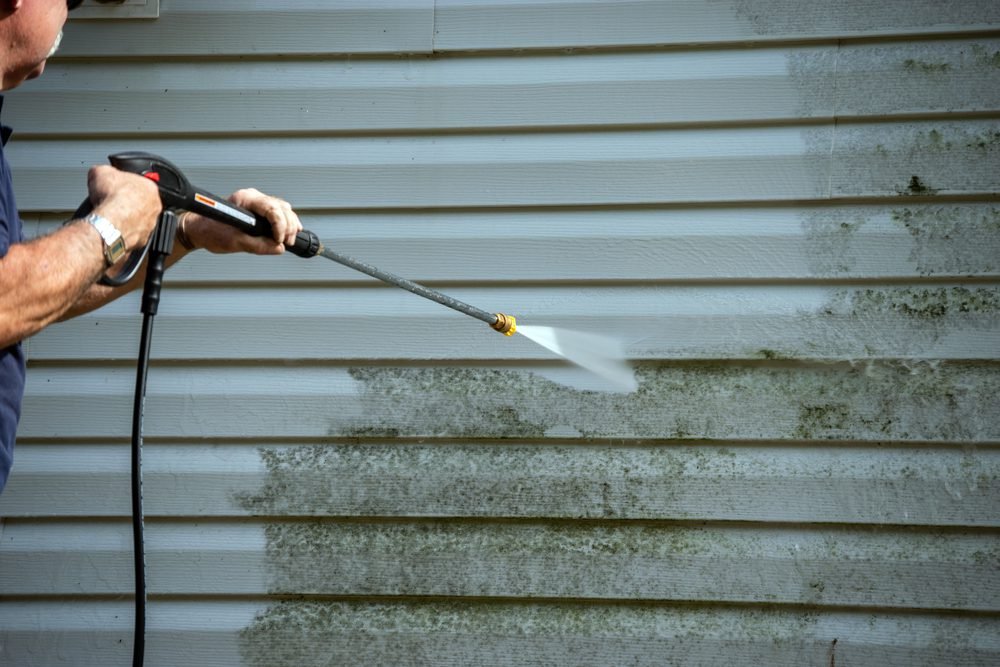
Once the area is ready, you can begin cleaning. The goal is not to blast the siding. The goal is to rinse and lift dirt in a controlled way. Work from top to bottom so dirty water runs downward instead of across clean sections.
1. Rinse the siding first
Start with a low-pressure rinse using a wide spray pattern. This removes loose dust, cobwebs, and surface dirt. It also cools the siding if it has been sitting in the sun. Cleaning hot siding can leave streaks and cause soap to dry too fast.
Hold the wand at a slight angle, not straight at the seams. Keep the spray moving. Do not stay in one spot. Vinyl siding does not need close, aggressive blasting. A soft rinse already makes the rest of the job easier.
2. Apply the cleaning solution
Use a vinyl-safe cleaner or a mild house-washing soap mixed according to the label. A gentle solution is usually enough for normal dirt. For mold or algae, choose a cleaner made to handle organic growth. One useful reference for safe home cleaning practices is the U.S. Environmental Protection Agency, especially if you want to understand safer product use around your home.
Apply the soap from the bottom upward if the product instructions suggest it. This can help reduce streaking on some surfaces. However, always follow the cleaner label. Some products work best with top-down application. The key is to let the cleaner sit for the recommended dwell time, but never let it dry on the siding.
Non-obvious tip: on warm days, work in smaller sections. Many people try to soap the whole house at once, but the cleaner can dry before they rinse it. That leads to spots and uneven results. A section-by-section approach gives a cleaner finish.
3. Lightly scrub problem spots
Some stains need extra help. Use a soft brush on areas with heavy buildup, under window trim, or near downspouts. Do not use steel wool or a stiff brush. Those can scratch the vinyl surface and make dirt stick more easily later.
If you see black streaks or green patches, let the cleaner sit for a short time before brushing. Rubbing too early often wastes effort. A proper soak can loosen the growth and make brushing easier.
4. Rinse with the correct pressure
This is the most important part of how to clean vinyl siding with a pressure washer. Use low to moderate pressure and a wide-angle nozzle. Keep the wand moving steadily. Hold it at least a few feet from the wall unless your machine and nozzle clearly allow a safer distance.
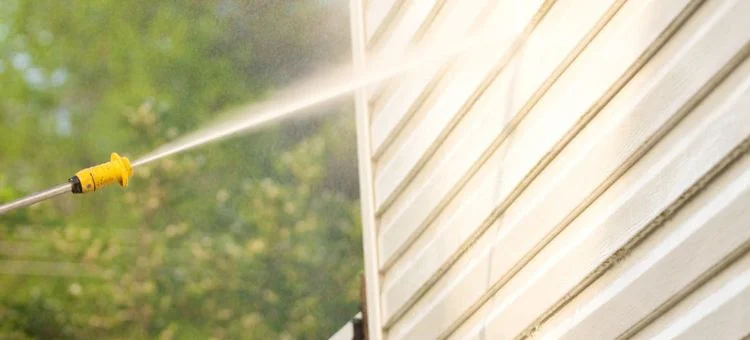
Always spray downward or across the siding at a slight angle. Never spray upward under the panels. That can force water behind the siding and into the wall structure. It may not show right away, but trapped water can cause problems later.
Another detail many homeowners miss: rinse from the cleaner section into the dirty section. In other words, work in a way that pushes grime down and away from clean areas. Random spraying often creates streaks and missed patches.
5. Repeat where needed, but do not overdo it
If a section still looks dirty, repeat the soap-and-rinse process. Do not respond by turning up the pressure first. More pressure is not always the answer. On vinyl siding, stronger pressure can create a dull, uneven surface called etching-like wear or leave visible wand marks.
When a stain stays after two gentle passes, stop and check the cause. It may be oxidation, old paint transfer, or deep staining. Those problems need a different solution, not just more force.
The best pressure washer settings for vinyl siding
There is no single perfect setting for every home, but there are safe ranges that work well in most cases. If your machine is adjustable, start low and test on an unimportant area first.
| Setting | Recommended range | Why |
|---|---|---|
| Pressure | 1,200 to 1,800 PSI | Strong enough to clean, gentle enough for vinyl |
| Nozzle angle | 25 to 40 degrees | Wide spray reduces impact |
| Distance from siding | About 12 to 36 inches | Helps avoid damage and water intrusion |
| Water temperature | Cold to warm | Hot water is usually not needed |
If you are using a pressure washer with a very strong engine, do not assume it is better for siding. Large machines can be useful, but only if you can lower the pressure enough. In many homes, a soft wash system or a pressure washer with a soap attachment is safer than brute force.
:strip_icc():format(webp)/GettyImages-1336188285-00b715bd46b74597a20d3bbd3577f139.jpg)
Credit: bhg.com
Use the right nozzle for the job
A 40-degree nozzle is usually the safest choice for general washing. It spreads the spray over a wider area, which lowers the force on the siding. A soap nozzle is even gentler and is good for applying detergent. Avoid narrow tips unless you truly know how to control them, because they focus the spray too tightly.
Non-obvious tip: always test your nozzle on a small hidden spot first, such as behind a bush or near the bottom edge. This helps you see if the pressure is too strong before you wash the visible front of the house.
Common mistakes that damage vinyl siding
Many siding problems happen because the washer was used incorrectly, not because the siding was weak. Here are the mistakes that cause the most trouble.
Credit: pressurekinginc.com
Spraying upward under the panels
This is one of the biggest mistakes. Vinyl siding overlaps in a way that helps shed water downward. Spraying upward can push water behind the panels and into the wall. That may lead to damp insulation, mold growth, or hidden damage.
Using too much pressure
High pressure can crack old siding, bend panels, and remove surface finish. It can also drive water into places you cannot see. If you have to stand very close to remove dirt, the pressure is probably too high.
Letting soap dry on the wall
Dry cleaner leaves marks and can be harder to remove later. Clean one section at a time, especially in sun or wind. Shade helps, but timing matters even more.
Ignoring oxidation
Sometimes vinyl siding has a chalky white residue on the surface. That is oxidation, not dirt. Pressure washing alone will not fix it, and too much scrubbing may make the finish look uneven. If you notice this, use a cleaner made for oxidized vinyl and test carefully first.
Washing dirty gutters and siding at the same time without a plan
Water from dirty gutters can streak fresh siding. If your gutters are heavily stained, clean them separately or rinse them in a controlled way so they do not undo your work.
How often should you clean vinyl siding?
Most homes need a full wash once a year. Homes near trees, busy roads, lakes, or humid areas may need cleaning more often. If you see green film, dark streaks, or dust collecting in shaded areas, do not wait too long.
Regular maintenance is easier than deep cleaning. A light wash once a year is faster than trying to remove years of buildup. It also keeps your siding looking newer and helps you notice small repair problems sooner.
One practical habit: after storms or during seasonal yard work, take a quick look at the north side of the house, lower wall sections, and areas under windows. These spots collect grime first. Catching buildup early makes future cleaning much easier.
When pressure washing is not the best choice
Although pressure washing works well for many homes, it is not always the right method. If your vinyl siding is old, brittle, badly cracked, or already loose, high-pressure cleaning may do more harm than good. In that case, a soft wash method or professional help may be safer.
You should also avoid pressure washing during freezing weather. Water can get into small gaps and freeze later. Very hot sunny days are also not ideal because cleaner dries too fast. Mild weather and cloudy conditions often give the best results.
If your siding has heavy mold, deep oxidation, or repeated staining from a roof leak or gutter issue, cleaning alone will not solve the source of the problem. Fix the cause first, then wash the siding.
Simple maintenance tips to keep vinyl siding clean longer
Good cleaning is not just about the wash day. Small habits can keep siding cleaner for longer and reduce how often you need a deep wash.
- Trim trees and bushes so they do not touch the siding.
- Keep gutters clear so dirty water does not run down the walls.
- Rinse down dusty areas lightly between full washes.
- Check for leaks around windows and trim after storms.
- Remove mildew early before it spreads.
Another useful point: if you live in a humid area, shaded walls often grow algae faster than sunny walls. Do not judge the whole house by one clean side. The north-facing wall may need more attention than the front.
Credit: jimthehandyman.com
Final thoughts
Learning how to clean vinyl siding with a pressure washer is mostly about control, not force. When you use the right nozzle, mild cleaning solution, and safe spray direction, the job becomes simple and effective. You can remove grime, brighten the exterior, and protect the surface at the same time.
Take your time, test a small area first, and keep the spray moving. If you avoid high pressure and upward spraying, your siding will stay in much better shape. The safest cleaning method is usually the one that looks calm, steady, and almost too gentle. That is exactly what vinyl siding needs.
FAQs
1. Can I use any pressure washer on vinyl siding?
No. You should use a washer with adjustable pressure and a wide nozzle. A lower setting is safer for vinyl siding. Very strong machines can damage panels if you are not careful.
2. What PSI is safe for cleaning vinyl siding?
In many cases, 1,200 to 1,800 PSI is enough. The safest option is to start low and test a hidden spot first. More pressure does not always clean better.
3. Do I need soap to clean vinyl siding?
Soap is not always required, but it helps a lot with dirt, mildew, and algae. Water alone may not remove stains fully. Use a vinyl-safe cleaner or mild house-washing detergent.
4. Should I clean vinyl siding from the top or bottom?
Begin at the top and work downward when rinsing. This helps dirty water run down over unclean areas instead of clean ones. Follow the cleaner instructions if they suggest a different soap application method.
5. How do I know if I am using too much pressure?
If the siding looks warped, the paint-like finish changes, water gets forced behind panels, or the spray leaves visible marks, the pressure is too high. Back off right away and switch to a wider nozzle or lower setting.
