
If you are planning a wall project, one of the first questions is simple: how thick is drywall? The answer matters more than many people think. Drywall thickness affects wall strength, fire safety, sound control, and even how smooth your finished wall looks.
Most homes use standard drywall sheets, but not every room needs the same thickness. A bedroom wall is not the same as a garage wall. A ceiling is not the same as a curved wall. When you know the right thickness, you can avoid common mistakes, save money, and get a better result.
This guide explains the most common drywall thicknesses, where each one is used, and how to choose the right option for your project. You will also learn a few details beginners often miss, like why a slightly thicker board can make a big difference in noise control and how drywall thickness works with framing and finishes.
Common drywall thicknesses used in homes
Drywall comes in several standard thicknesses, but a few sizes are used most often. In the United States, drywall is usually measured in inches. The most common sizes are 1/4 inch, 3/8 inch, 1/2 inch, and 5/8 inch.
Here is a simple overview of how each one is usually used:
| Drywall thickness | Common use | Main benefit |
|---|---|---|
| 1/4 inch | Curved walls, repair layers, covering damaged surfaces | Very flexible and lightweight |
| 3/8 inch | Older homes, wall overlays, light remodeling | Thinner and easier to handle than standard board |
| 1/2 inch | Most interior walls and ceilings | Balanced strength, cost, and ease of use |
| 5/8 inch | Fire-rated walls, sound control, ceilings, commercial spaces | Stronger, stiffer, and better at reducing noise |
If you are asking how thick is drywall in a typical house, the most common answer is 1/2 inch. That is the standard choice for many interior walls. But the right thickness depends on the job, not just the average.
Why drywall thickness matters more than people expect
Drywall is not only a flat surface for paint. It helps shape how a room performs. Thicker drywall is usually stronger and more stable. It can also reduce sound transfer and improve fire resistance when the right type is used.
One detail many beginners miss is that drywall thickness changes how the wall feels during the finishing stage. Thinner boards can flex more, which makes them harder to keep smooth. Thicker boards are easier to keep flat, especially on ceilings where gravity works against you.
Another point people often overlook is that drywall thickness must match the structure behind it. A thicker board is not always better if the framing is weak, uneven, or spaced too far apart. In some cases, the better solution is not more thickness, but better installation and proper fastening.
How thick is standard drywall in most homes?
The standard drywall thickness for most residential walls is 1/2 inch. This size is common because it offers a good balance between cost, weight, and performance. It is also easy for installers to work with and widely available in most stores. For a broader material overview, see our guide on what drywall is.
For ceilings, many builders also use 1/2 inch drywall, though 5/8 inch is often chosen when extra stiffness is needed. Ceilings are harder on drywall than walls because the panels must hang overhead. If the board is too thin, it may sag over time, and thicker panels also affect project weight, which we cover in our drywall weight guide.
In older homes, you may find 3/8 inch drywall or even other materials that look similar. These thinner sheets were more common in certain periods, especially for wall repairs and overlays. If you are replacing old drywall, do not assume the original thickness is the best option for a modern repair, and remember that Sheetrock vs drywall is mostly a naming and brand distinction.
1/2 inch drywall
This is the most common choice for interior walls. It is often used in bedrooms, living rooms, hallways, and many ceilings. It is light enough to handle but strong enough for everyday use.
Use 1/2 inch drywall when:
- You want a standard wall surface for most rooms.
- You need a cost-effective material.
- You are working on a typical residential project.
5/8 inch drywall
This thicker board is often used where strength and noise control matter more. It is also a better choice for ceilings because it is less likely to sag. Many fire-rated wall assemblies use 5/8 inch drywall because it performs better in high-heat conditions.
Use 5/8 inch drywall when:
- You need better fire resistance.
- You want better sound reduction.
- You are installing drywall on a ceiling or a larger span.
3/8 inch drywall
This thinner board is less common in new construction, but it still has useful jobs. It can be used for overlays, small repairs, or matching the thickness of older walls. It is easier to cut and handle, but it is not as strong as 1/2 inch board.
Use 3/8 inch drywall when:
- You are repairing an older wall with thinner existing material.
- You need to add a layer over an existing surface.
- You want a lighter sheet for a limited task.
1/4 inch drywall
This is the thinnest common drywall size. It is not used for normal wall framing in most cases. Instead, it is useful for curved surfaces, patch layers, and special renovation work where flexibility matters more than strength.
Use 1/4 inch drywall when:
- You are covering a curved wall or arch.
- You need a thin overlay for a repair.
- You are working on a surface where flexibility is important.
How drywall thickness affects sound, fire, and strength
Drywall thickness changes more than appearance. It also affects how the wall performs in everyday life. If you choose the wrong thickness, you may end up with more noise, less durability, or a ceiling that does not hold up well over time.
Credit: resin-expert.com
Sound control
Thicker drywall usually helps reduce sound better than thinner drywall. A 5/8 inch sheet has more mass, so it blocks more noise. This is why it is often used in shared walls, home offices, and bedrooms where privacy matters.
Still, thickness alone is not enough. Sound control also depends on insulation, wall framing, sealing gaps, and the number of layers used. A thick board with poor installation may still let noise pass through.
Fire resistance
In fire-rated assemblies, 5/8 inch drywall is often preferred because it can slow heat spread better than thinner panels. That does not mean every thick panel is automatically fire-rated. The full wall system matters, including the framing, number of layers, and type of board.
For important safety projects, always check local building rules. The National Fire Protection Association offers useful safety guidance, but your local code requirements should always be the final rule for your project.
Strength and durability
Thicker drywall is generally more durable. It resists dents better and feels more solid on the wall. This matters in busy areas like hallways, kids’ rooms, and garages.
One beginner mistake is choosing thin drywall to save money, then spending more later on repairs. In high-traffic spaces, the cheaper sheet can become the more expensive choice over time.
Choosing the right thickness for each room
Not every room needs the same drywall thickness. The best choice depends on how the space is used and what the wall must do.
Bedrooms and living rooms
Most homes use 1/2 inch drywall in these rooms. It is the standard choice because it is easy to install and works well for normal use. If the room needs better noise control, a thicker board or an extra layer may be better.
Bathrooms
Bathrooms usually use 1/2 inch drywall on the walls, but moisture-resistant drywall may be needed in certain areas. Thickness is not the only issue here. Moisture resistance matters just as much, if not more, than the exact board size.
Kitchens
Kitchen walls often use 1/2 inch drywall too. The main concern is not thickness alone, but durability around busy work areas. If a wall is likely to take more bumps, a stronger board or careful reinforcement may help.
Ceilings
Ceilings often need extra care. While 1/2 inch drywall is common, 5/8 inch is often a better choice where sagging could be a concern. This is especially true for large rooms or wider framing spacing.
Garages and utility rooms
Many garages use 5/8 inch drywall, especially when fire protection is part of the design. Utility areas may also need thicker or special drywall depending on what equipment is present and what local code requires.
Drywall thickness and framing spacing
The distance between studs also affects which drywall thickness works best. Common framing spacing is 16 inches on center, but some ceilings and walls use 24 inches on center. Wider spacing can make thin drywall more likely to flex or sag.
Here is a simple way to think about it:
- 16-inch spacing: 1/2 inch drywall is usually fine for many walls.
- 24-inch spacing: 5/8 inch drywall is often a safer choice, especially on ceilings.
This is one of the most useful details beginners miss. The board thickness should match the support behind it. A thicker panel can help, but it is not a cure for poor framing.

Credit: texasprecisionpainting.com
How to measure drywall thickness correctly
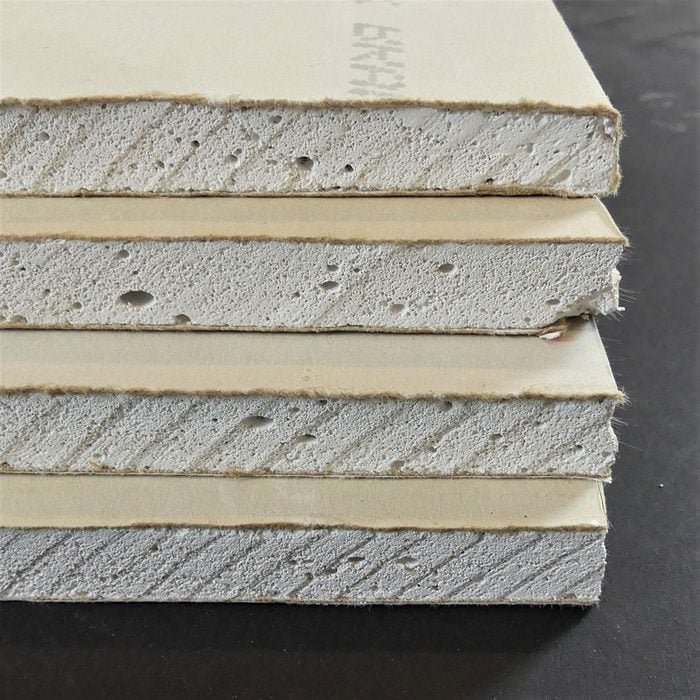
If you are replacing drywall or matching an existing wall, measuring correctly is important. Do not guess based on how the sheet looks. A small difference can affect joint alignment, trim fit, and the finished surface.
Simple ways to check thickness
- Use a tape measure or ruler on the exposed edge of a sheet.
- Check the printed markings on the back of the drywall, if visible.
- Measure a broken corner or cut edge to confirm the size.
- If the wall is finished, compare it with nearby openings such as outlets or door trim.
Be careful when measuring a finished wall. Paint, joint compound, and texture can make the surface seem thicker than the board itself. If you need the exact thickness for repair work, measure an exposed edge whenever possible.
Common mistakes when choosing drywall thickness
Many drywall problems start before the first sheet is installed. Choosing the wrong thickness can make the rest of the job harder.
Picking the thinnest board to save money
This is a common mistake. Thin drywall may cost less upfront, but it can flex more, dent more easily, and perform poorly on ceilings. The cheapest sheet is not always the best value.
Ignoring ceiling needs
Some people use the same drywall on walls and ceilings without thinking about the difference. A ceiling needs more stiffness. If you ignore that, the board may sag or crack later.
Forgetting about sound or fire needs
Many buyers focus only on thickness and forget the job the wall must do. If you need sound control or fire resistance, the right drywall type and thickness both matter.
Not matching the existing wall
If you are doing a repair, thickness mismatch can create a lumpy surface. Trim may not sit right, and the finish may show the patch. Matching the original thickness is often the smarter move for repairs.
Does thicker drywall always mean better drywall?
Not always. Thicker drywall has advantages, but it is not the right answer for every project. It costs more, weighs more, and can be harder to carry and install. If the space does not need extra strength, standard 1/2 inch board is often the best choice.
The best drywall is the one that fits the room, the framing, and the goal of the project. For example, a small closet does not usually need 5/8 inch board. But a ceiling over a wide span may benefit from it. The right choice is practical, not just stronger.
Another non-obvious point: using thicker drywall can slightly reduce the chance of small surface damage from everyday use, but it does not make a wall indestructible. Proper fastening and finishing still matter more than thickness alone in many cases.
Quick guide to choosing the right drywall thickness
If you want a simple rule, use this:
- 1/4 inch for curves and special overlay work.
- 3/8 inch for light repairs and older wall matching.
- 1/2 inch for most interior walls.
- 5/8 inch for ceilings, sound control, and fire-rated areas.
This guide answers the question how thick is drywall in a practical way: the most common answer is 1/2 inch, but the best answer depends on the room, the framing, and the performance you want.
Credit: familyhandyman.com
Final thoughts before you buy
Drywall thickness may seem like a small detail, but it affects the whole project. If you choose the right size from the start, your walls are more likely to stay flat, strong, and quiet. You also reduce the chance of trouble with ceilings, trim, or finishing later.
For most home projects, 1/2 inch drywall is the safe standard. If you need better stiffness, better sound control, or better fire performance, 5/8 inch is often the better option. Use thinner board only when the job truly calls for it, such as curves, overlays, or matching an older wall.
Before buying, check the room use, framing spacing, and local building requirements. That small step can save time, money, and frustration later.
FAQs
How thick is drywall in most houses?
In most houses, drywall is 1/2 inch thick. This is the standard choice for many interior walls and some ceilings because it offers a good balance of cost, strength, and ease of installation.
Is 5/8 inch drywall better than 1/2 inch?
It is better for some jobs, but not all. 5/8 inch drywall is stronger, better for sound control, and often used on ceilings or fire-rated walls. For normal rooms, 1/2 inch is usually enough.
Can I put new drywall over old drywall?
Yes, in some cases you can install new drywall over old drywall. This is often called an overlay. You must still check thickness, wall flatness, and trim depth so the finished wall does not look uneven.
What thickness drywall is best for ceilings?
Many ceilings use 1/2 inch drywall, but 5/8 inch is often better when you want more stiffness or less sagging. The best choice also depends on stud spacing and room size.
How do I know what thickness my current drywall is?
The easiest way is to measure an exposed edge, such as at a cutout, broken corner, or unfinished opening. You can also check markings on the back of the board if they are visible.
