
Lightning looks like a quick flash in the sky, but it is far more powerful than most people imagine. In a single strike, nature can release a huge burst of energy in a tiny fraction of a second. That is why lightning can split trees, damage buildings, start fires, and even injure people from a distance.
So, how much energy is in a lightning bolt? The answer is surprising, because it depends on the strike. Some bolts are weaker, while others are extreme. Still, even an average lightning bolt carries a massive amount of power compared with everyday things we use at home.
In this article, we will break down the energy in lightning in simple terms. You will see how scientists measure it, why the numbers vary, what that energy can actually do, and why lightning is both beautiful and dangerous. The goal is to make the science easy to understand without losing the real scale of the event.
What lightning really is
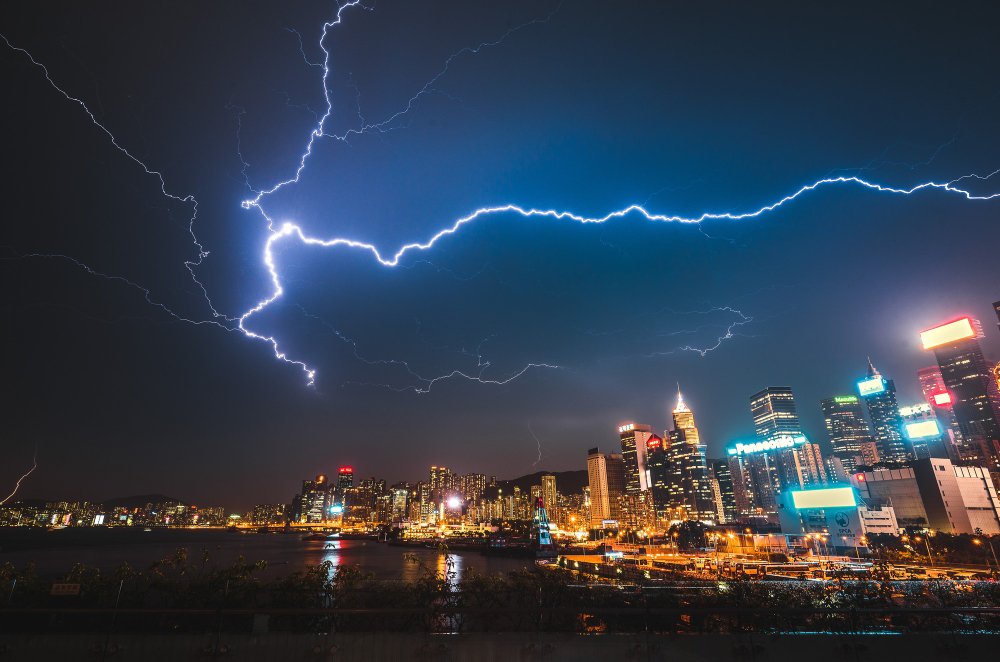
Lightning is a giant electrical discharge in the atmosphere. It happens when electric charges build up in clouds and between the cloud and the ground. When the difference becomes strong enough, electricity jumps through the air in one fast strike.
This is not like the small spark from a battery. A lightning bolt is much hotter, much more powerful, and much more sudden. It can travel miles, and the air around it expands so quickly that we hear thunder.
To understand the energy in lightning, it helps to think about three parts. For safer everyday electrical checks, our ground testing with a multimeter guide explains a much lower-risk way to think about voltage and continuity.
- Voltage — how strong the electrical push is
- Current — how much electricity flows
- Time — how long the strike lasts
Lightning is powerful not only because of high voltage, but also because the current is huge. That is why it is dangerous even though it lasts only a very short time.
How much energy is in a lightning bolt?
The short answer is this: an average lightning bolt can carry about one billion joules of energy, though the real number can be much lower or much higher.
That is a big range, so let’s make it clearer. Some lightning strikes may contain around 500 million joules. Stronger bolts may reach 5 billion joules or more. In rare cases, the energy can be even greater.
What does one billion joules mean in practical terms? It is roughly:
- enough to power a 100-watt light bulb for about 115 days
- similar to the energy in about 250 kilowatt-hours of electricity
- roughly equal to the energy in small amounts of gasoline, though lightning releases it in a much more violent way
But there is an important catch. Even though a lightning bolt may contain a lot of energy, it lasts for only a tiny moment. Because of that, we cannot easily capture and use it like normal electricity.
A simple way to picture the scale
Imagine a bathtub filled with water. A lightning bolt is like dumping that whole bathtub out in a fraction of a second through a thin pipe. The total amount of water matters, but the speed of release matters too. Lightning is the same idea, only with electrical energy.
This is why lightning is so dramatic. It is not just a lot of energy. It is a lot of energy arriving almost instantly.
Why the energy number changes from bolt to bolt
Not every lightning strike is the same. Some are short and weak. Others are long and powerful. The energy changes because the conditions in the storm change.
Here are the main reasons:
- Length of the bolt — longer strikes usually involve more energy
- Current strength — a higher current means more energy released
- Number of return strokes — many lightning bolts flash more than once along the same path
- Where the strike goes — cloud-to-ground lightning and cloud-to-cloud lightning can differ
- Storm intensity — stronger storms often create more powerful discharges
One non-obvious point many beginners miss is that a lightning bolt is often not just one single pulse. It can have multiple bursts in the same channel. That means the flash you see may hide a series of electrical surges, not just one clean event.
Another detail people often miss is that lightning energy is spread across a huge path of hot, moving air. The energy is not concentrated in one neat place. It is part electrical, part heat, and part shock wave. That is one reason the effects are so destructive.
How scientists measure lightning energy
Scientists do not simply guess the energy in a lightning bolt. They measure the voltage, current, and duration of the strike, then estimate the total energy from those values. For a practical low-voltage comparison, see how basic readings work in our battery testing with a multimeter guide.
A basic idea is this:
Energy = Voltage × Current × Time
That formula is simplified, but it gives the general picture. Lightning has extremely high voltage, often in the millions or even billions of volts. The current can be tens of thousands of amps. Even if the strike lasts only a tiny part of a second, the total energy can still be enormous.
Scientists use instruments such as:
- field sensors
- fast cameras
- radio detectors
- ground-based measurement towers
- satellite observations
For a deeper scientific look at lightning, the National Severe Storms Laboratory offers a reliable explanation of how lightning forms and behaves.
Credit: genserveinc.com
Why the exact measurement is hard
Measuring lightning is difficult because it happens so fast and often in dangerous storm conditions. Instruments must survive extreme conditions and still record data in milliseconds or less. Also, each strike is different, so researchers often work with estimates rather than perfect readings.
That is why you will see different numbers in different sources. The range is real, not a mistake.
Energy compared with everyday things
Lightning energy sounds abstract until you compare it with familiar objects. These comparisons help make the scale easier to understand.
| Energy source | Approximate energy | What it means |
|---|---|---|
| Average lightning bolt | About 1 billion joules | Huge energy released in less than a second |
| 100-watt light bulb | 100 joules per second | Lightning could power it for months, in theory |
| Household electricity use | Varies by home | One bolt contains far more energy than many home devices use at once |
| Small amount of gasoline | Millions of joules per liter | Lightning can be compared to a small fuel amount, but much faster |
These comparisons are useful, but they can also be misleading if taken too literally. Lightning and gasoline are not the same type of energy release. Gasoline burns in a controlled chemical reaction. Lightning is an electrical discharge through air. The danger comes from how fast the energy is released, not just from the number itself.
What lightning energy can do
A lightning bolt can do real damage because it carries a lot of power in a very short time. The energy may heat air to around 30,000 kelvin, which is hotter than the surface of the sun. That heat can crack wood, melt metal parts, and ignite dry material.
Here are some common effects:
- Start fires — especially in dry forests or rooftops
- Shatter trees — rapid heating turns moisture inside wood into steam
- Damage electronics — power surges can travel through wiring
- Injure people — current can move through the body or nearby ground
- Break concrete or stone — trapped moisture can expand and crack materials
One surprising effect is the “explosive” damage in trees and rocks. This happens because lightning can heat moisture so quickly that it becomes steam and expands fast. The pressure can tear the material apart from the inside.
Another important point is that lightning damage is not always direct. A strike can hit a tree, a power line, a roof, or even the ground nearby, and the energy can still spread into surrounding objects. That is why shelter matters so much during storms.
Can we use lightning as power?
In theory, lightning seems like a great energy source. It is powerful, free, and natural. In practice, it is almost impossible to use in a useful way.
The reason is simple: lightning is too unpredictable. We do not know exactly when or where it will strike. It also lasts for too little time, so storing the energy would be very hard. Any system built to capture it would need to survive extreme voltage, heat, and current.
There is also another problem. Even if we could collect the energy from one strike, the total amount would not solve our energy needs in a practical way. The storm would not provide a steady supply. Energy grids need control and reliability, not random bursts.
So while the idea is exciting, lightning is not a realistic power source for homes or cities.
Credit: homegrail.com
Why this matters for real energy systems
This is a good lesson in energy science. A large amount of energy is not automatically useful. Usable power also depends on timing, control, storage, and safety. Lightning has massive energy, but it fails badly in all four of those areas.
How lightning compares to other natural forces
Lightning is one of the most intense electrical events on Earth, but it is not the only powerful natural force. Volcanoes, earthquakes, and hurricanes also release huge energy. The difference is that lightning is very fast and very concentrated.
For example, a hurricane moves energy over many hours or days. A lightning strike delivers energy in milliseconds. That sudden release is what makes it so dramatic and dangerous.
Think of it like this:
- Earthquake — power spread through moving ground
- Hurricane — power spread through wind and rain over time
- Lightning — power concentrated into one quick electric burst
This is another non-obvious detail: lightning can seem small because the flash is thin, but the narrow shape hides a huge amount of energy. Size alone is not a good guide to power.
How to stay safe during lightning
Understanding how much energy is in a lightning bolt is not only interesting. It also shows why lightning safety matters. Even a single strike can be life-threatening.
Here are the safest actions during a storm:
- Go inside a substantial building or a hard-topped car.
- Avoid open fields, hilltops, and water.
- Stay away from windows, plumbing, and electrical devices. After a storm, never test damaged equipment casually; our motor testing with a multimeter guide is only for controlled, de-energized troubleshooting.
- Do not shelter under isolated trees.
- Wait at least 30 minutes after the last thunder before going back outside.
If you can hear thunder, you are close enough to be struck. That rule is simple and helpful. Thunder is not a background sound. It is a warning that lightning is near.
Why people underestimate lightning
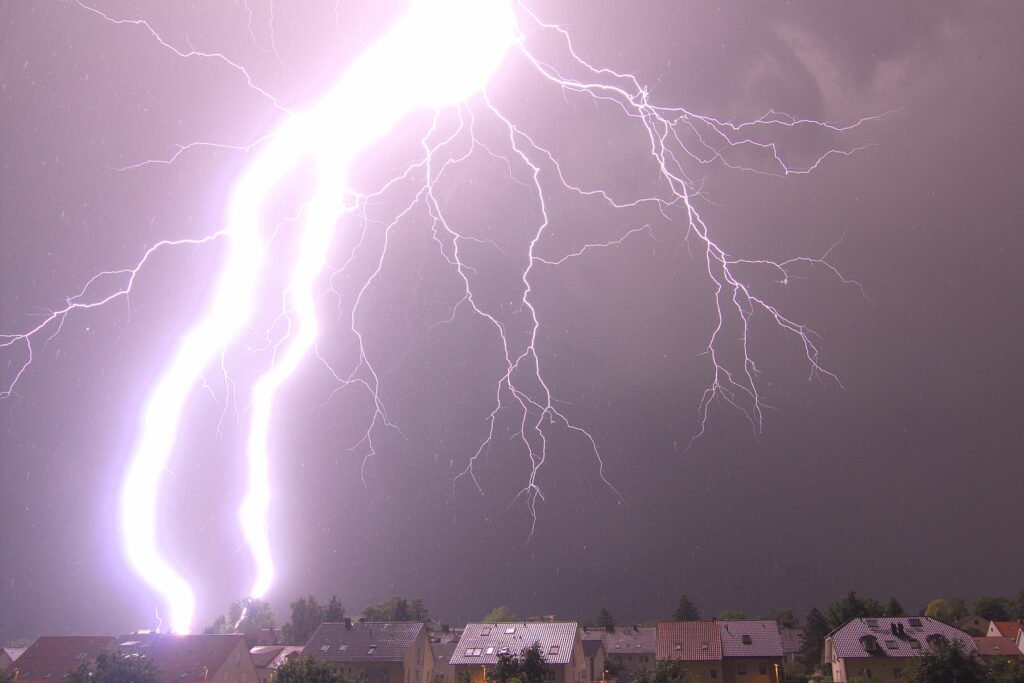
Many people think lightning is just a bright flash with a loud sound. But that view misses the scale of the event. Lightning can carry energy on the level of an explosion, even though it looks quick and thin.
People also tend to focus on the visible strike and forget about the invisible parts: the electric field, the heat, the current, and the shock wave. Those hidden parts are what make lightning such a strong natural force.
The biggest reason people underestimate it is that lightning is familiar. We see it often in movies, videos, and real storms. Familiar things can seem smaller than they are. In reality, lightning is one of the most concentrated energy events in everyday nature.
Credit: news.agu.org
Final thoughts on lightning energy
So, how much energy is in a lightning bolt? In simple terms, an average strike may carry about one billion joules, with a wide range above and below that number. That is enough energy to power many things for a long time, but lightning releases it in an instant, which makes it powerful, dangerous, and hard to control.
The real surprise is not just the number. It is the speed. Lightning shows how nature can turn stored energy into an intense flash faster than most people can imagine. That is why it remains one of the most dramatic events in the sky.
If you remember one thing, let it be this: lightning is not just light and sound. It is a huge burst of electrical energy, and that is what makes it both fascinating and dangerous.
FAQs
1. How much energy is in a lightning bolt on average?
An average lightning bolt carries about one billion joules of energy, though the exact amount can vary a lot from strike to strike.
2. Can a lightning bolt power a house?
In theory, one strike has enough energy to power many home devices. In practice, it cannot be used easily because it is too fast, too random, and too dangerous to capture safely.
3. How hot is lightning?
Lightning can heat the air to around 30,000 kelvin, which is several times hotter than the surface of the sun. That extreme heat is why it can cause fire and damage.
4. Why does lightning sometimes destroy trees?
Lightning can heat the moisture inside a tree so quickly that it turns to steam. The sudden expansion can split the tree apart or blow off bark.
5. Is all lightning the same strength?
No. Some bolts are weaker, while others are much stronger. The energy depends on factors like current, voltage, strike length, and how the storm is behaving.
