
If you are hanging drywall, one small question can save you from big trouble later: how many screws do i need per sheet of drywall? The answer is not the same for every job, but there are clear rules that help you get it right. Too few screws can cause loose boards, cracked joints, or noisy walls. Too many screws can damage the paper face and make finishing harder.
The good news is that you do not need to guess. The screw count depends on the sheet size, wall or ceiling use, framing spacing, and drywall thickness. Once you understand the basic pattern, you can estimate your screw needs fast and work with more confidence.
In this guide, you will learn the normal screw count for a standard drywall sheet, where each screw should go, how spacing changes for walls and ceilings, and the common mistakes that waste time and materials. You will also get a simple way to estimate screws for an entire room, so you can buy the right amount before you start.
Start with the standard screw count
For a typical 4-foot by 8-foot drywall sheet, most installers use 32 screws on walls when the framing is spaced 16 inches on center. That number is a practical starting point, not a strict law. It gives good support for the sheet without overdriving screws into the paper face.
Here is the basic idea: each edge needs enough fasteners to hold the drywall flat against the studs, and the field area needs screws to stop the board from flexing. The count changes if the sheet is taller, longer, or installed on a ceiling.
For a standard 4×8 sheet on a wall, the common pattern is:
- About 6 screws on each vertical edge
- About 4 screws on each middle stud crossing the sheet
That usually adds up to around 32 screws per sheet. Some installers use slightly more or less depending on local practice and how straight the framing is. The main goal is firm contact at every stud line.
What changes the screw count
Not every drywall sheet needs the same number of screws. A few job details make a real difference. If you ignore them, you may buy too few screws or place them in the wrong spots.
Sheet size
Large sheets need more screws than small ones because they cover more framing. A 4×12 sheet needs more fasteners than a 4×8 sheet. The longer the board, the more stud lines it crosses, and each crossing needs proper support.
Wall or ceiling use
Ceilings usually need more screws than walls. Gravity pulls the board downward, so the fasteners must hold the sheet tighter. Ceiling drywall also tends to sag if the screw pattern is too wide.
Framing spacing
If studs are spaced 16 inches on center, the sheet crosses more framing members than if studs are at 24 inches on center. More framing contact often means more screws. Wider spacing also means each screw has to do more work, so the placement becomes even more important.
Drywall thickness
Thicker drywall, such as 5/8-inch boards, is often used on ceilings or for fire resistance. These sheets are heavier, so they may require a slightly tighter screw pattern in some situations.
Condition of the framing
Old, bowed, twisted, or uneven studs can change everything. If the framing is not flat, you may need extra screws to pull the sheet snug without leaving ridges or hollow spots. But be careful: screws should help the board sit flat, not crush it.
Recommended screw spacing for common drywall jobs
Most screw counts come from spacing rules. If you know the spacing, you can estimate the total much more easily. A tight, even pattern is usually better than random screw placement.
| Drywall area | Typical screw spacing | Practical note |
|---|---|---|
| Wall edges | About 8 inches apart | Keep screws close enough to hold the edge flat |
| Wall field | About 12 inches apart | Use on intermediate studs across the sheet |
| Ceiling edges | About 7 inches apart | Helps prevent sagging near the seams |
| Ceiling field | About 7 to 8 inches apart | Ceilings often need a tighter pattern than walls |
These spacing numbers are useful because they show the logic behind the total screw count. You are not just placing screws for no reason. You are spacing them to keep the board supported across the full sheet.
How many screws for a 4×8 sheet of drywall
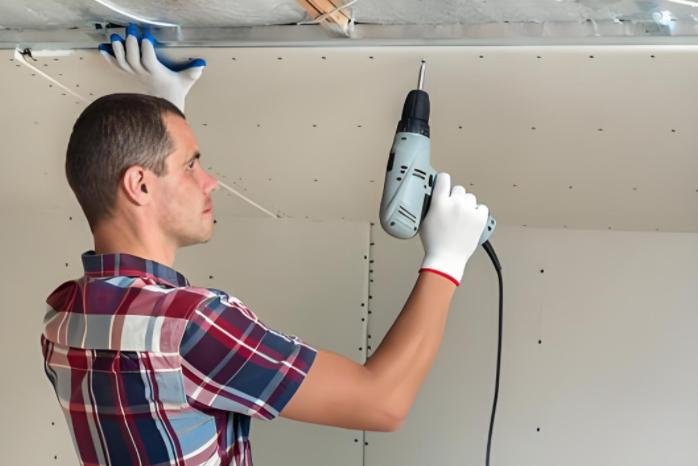
A 4×8 drywall sheet is the most common size, so it helps to know the expected fastener count for it.
Credit: kenenghardware.com
For walls
On a wall with studs 16 inches on center, a 4×8 sheet usually needs about 28 to 32 screws. The exact number depends on where the sheet lands on the studs and whether the top or bottom edge ends on a framing member.
A simple rule is this:
- Use enough screws to hit every stud line the sheet crosses
- Place screws about 8 inches apart on edges
- Place screws about 12 inches apart in the middle area
If your sheet lands cleanly on a standard wall, 32 screws is a safe estimate.
For ceilings
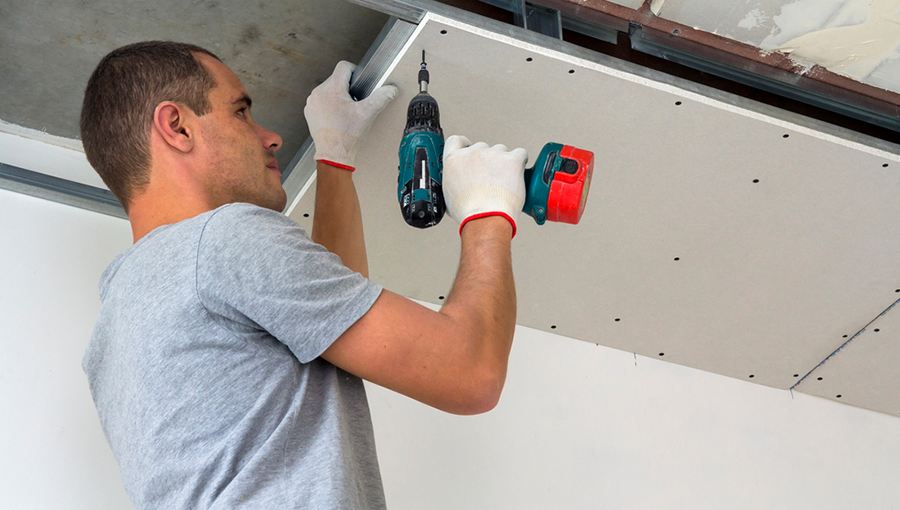
For ceilings, the same 4×8 sheet often needs 32 to 40 screws. The higher number helps keep the board from sagging over time. If the drywall is 5/8-inch thick or the ceiling framing is less than perfect, lean toward the higher end.
Ceiling work is one place where beginners often use too few screws. The sheet may look fine at first, but later it can bow between framing members. That is much harder to fix after taping and painting.
How many screws for a 4×12 sheet of drywall
A 4×12 sheet is longer, so it crosses more studs. That means more screws are needed. For walls, a common estimate is 40 to 48 screws per sheet. For ceilings, you may need even more depending on the span and the framing layout.
Why the count rises so much is simple. A longer sheet has more points where it can flex. Each extra stud line adds more fastener points, and each point must be secure enough to hold the drywall flat.
If you are using 4×12 sheets, do not place screws too close together in one area and too far apart in another. Even spacing matters more than trying to “make up” for a few missing screws somewhere else.
How to estimate screws for an entire room
If you know how many sheets you will install, you can estimate your total screw needs in a few minutes. This helps you buy enough screws before the job begins.
Use this simple method:
- Count the number of drywall sheets.
- Choose a base screw count per sheet.
- Add extra screws for ceilings, cuts, and waste.
For example, if a room needs 20 sheets of 4×8 drywall on walls, and you use 32 screws per sheet, you need about 640 screws. Then add a small safety margin of 10% to 15% for waste, mistakes, and small repairs.
That means you may want to buy around 700 to 750 screws for the job. It is better to have a few left over than to stop in the middle of the work because you ran out.
A quick formula you can use
This simple formula works well for most projects:
Total screws = number of sheets × screws per sheet × 1.10
The extra 10% gives you a cushion. For ceilings or complicated rooms, use 15% instead.
Why screw placement matters as much as screw count
Many beginners focus on the number of screws only. But placement is just as important. A sheet with the “right” screw count can still fail if the screws are badly placed.
Here are the main placement rules to remember:
- Keep screws in a straight line along each stud
- Do not place screws too close to the drywall edge
- Do not break the paper face
- Drive each screw just below the surface, not deep into the board
One non-obvious point many beginners miss is that overdriving a screw weakens the hold more than using one fewer screw. If the head tears through the paper, the fastener loses strength. That creates a weak spot that may crack later, even if the total screw count is high.
Another important detail is that screws should not be random. They should follow the framing layout. A well-placed screw in the right stud line is much more useful than two screws in the wrong place.
Common mistakes that lead to drywall problems
Most drywall issues come from a few simple errors. If you avoid these, your installation will be much stronger and easier to finish.
Credit: uniwincollatedscrew.com
Using too few screws
When there are not enough screws, the sheet can move slightly against the framing. That movement may not be visible at first, but it can lead to cracks in joints and nail pops later.
Using too many screws
More screws do not always mean better results. Too many fasteners can damage the drywall face, slow down the job, and create extra finishing work. The goal is firm support, not a crowded screw pattern.
Missing the stud
If a screw misses the stud, it does not hold the board correctly. This is easy to do near edges or when the framing is uneven. Always check your lines before driving the screw fully.
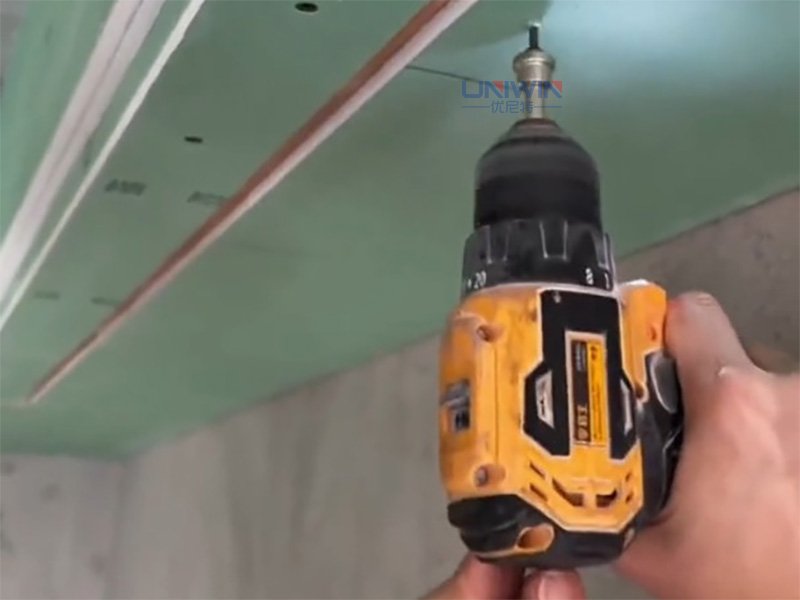
Driving screws too deep
When a screw head sinks too far, it tears the paper and weakens the hold. The head should sit just below the surface, not buried deep in the gypsum.
Ignoring ceiling sag
Ceilings are less forgiving than walls. If you use a wall-style screw pattern on a ceiling, the board may sag later. That is one of the most common beginner mistakes.
Drywall screw types and what to choose
Screw count is only part of the job. You also need the right screw type. Most drywall projects use coarse-thread or fine-thread screws, depending on the framing material.
Coarse-thread screws
These are usually used with wood studs. They grip wood well and are common in most home drywall projects.
Fine-thread screws
These are often used with metal studs. They bite into metal more smoothly and help reduce spinning.
The screw length also matters. For standard drywall on wood framing, many installers use screws long enough to penetrate the stud securely without going too far. If you are unsure, check your drywall thickness and framing type before buying.
For general fastening recommendations, the USG website is a useful authority because it provides product guidance from a major drywall manufacturer.
Do thicker drywall sheets need more screws?
Sometimes yes, sometimes no. A thicker sheet does not always need a much higher screw count, but it often benefits from a careful pattern. For example, 5/8-inch drywall used on ceilings may need tighter spacing than 1/2-inch drywall on walls.
Why? Because thicker sheets are heavier. They resist sagging better than thinner sheets, but they also put more load on each fastener. If the framing is uneven or the span is long, extra support helps.
So the real answer is not “thicker drywall always needs more screws.” The better answer is that thicker drywall often requires more careful fastening and sometimes a slightly higher screw count, especially overhead.
How to buy the right number of screws
Buying drywall screws is easier when you think in boxes, not loose counts. Many projects use hundreds or thousands of screws, so packaging matters.
Here is a practical approach:
- Estimate screws per sheet based on wall or ceiling use
- Multiply by the number of sheets
- Add 10% to 15% extra
- Round up to the nearest box
For example, if your project needs about 700 screws, buying one box of 1,000 is often smarter than buying two small packs. You get a better cushion for mistakes and future repairs.
This is another beginner mistake people often miss: they buy exactly what the math says, but construction jobs are not perfect math. Cuts, waste, damaged screws, and missed studs happen. A small overbuy is usually cheaper than a trip back to the store.
A simple answer you can use right away
If you only want the short version, here it is:
- 4×8 drywall sheet on a wall: about 28 to 32 screws
- 4×8 drywall sheet on a ceiling: about 32 to 40 screws
- 4×12 drywall sheet on a wall: about 40 to 48 screws
- 4×12 drywall sheet on a ceiling: often 48 or more, depending on framing
For most standard wall jobs, the best answer to how many screws do i need per sheet of drywall is around 32 screws per 4×8 sheet. That gives you a strong, practical starting point.
But remember the real goal: not just a number, but a stable, flat sheet that finishes well. If your framing is uneven, your ceiling is long, or your sheet is larger than standard, adjust the count as needed.
Credit: factorydirectsupply.com
Final thoughts
Drywall screws are small, but they do a big job. The right count keeps your sheets tight, your seams stable, and your finish smoother. The wrong count can lead to loose boards, cracked joints, and extra repair work later.
If you keep one idea in mind, let it be this: match the screw count to the sheet size, location, and framing, not just to habit. That is the smartest way to estimate, buy, and install drywall fasteners with confidence.
FAQs
1. How many screws do I need per sheet of drywall for a standard wall?
For a standard 4×8 drywall sheet on a wall, a good estimate is about 32 screws. Some jobs need a little less or a little more, but this is the most common starting point.
2. Do ceilings need more screws than walls?
Yes. Ceilings usually need more screws because the board must resist sagging. A 4×8 ceiling sheet often needs 32 to 40 screws, depending on framing and drywall thickness.
3. How far apart should drywall screws be?
On walls, screws are often about 8 inches apart on edges and 12 inches apart in the field. On ceilings, the spacing is usually tighter, often around 7 to 8 inches.
4. Can I use too many drywall screws?
Yes. Too many screws can tear the paper face, slow down installation, and make finishing harder. Use enough screws to hold the sheet firmly, but do not crowd the board.
5. How do I estimate screws for a whole room?
Multiply the number of drywall sheets by the average screws per sheet, then add 10% to 15% extra. For example, 20 sheets at 32 screws each means about 640 screws, so buying around 700 to 750 screws gives you a safe margin.
