
If you have ever stood near a leaf blower and felt your ears ring, you already know it can be loud. But loud is not a clear answer. Some models are only a bit noisy. Others sound closer to a motorcycle at close range. That is why many people ask, how many decibels is a leaf blower?
The short answer is that a leaf blower is often between 60 and 110 decibels, depending on the type, power source, and distance from the machine. Small electric models are usually on the lower end. Gas-powered blowers are often much louder.
In this guide, you will learn what those numbers really mean, how to compare different models, why distance matters, and how to protect your hearing and your neighbors. If you want to buy one, use one, or simply understand the noise, this article will give you a clear picture.
What leaf blower noise numbers really mean
Decibels measure sound strength. The scale is not simple, though. It is not like temperature, where 80 is only a little more than 70. In decibels, a small number change can mean a big jump in loudness.
For example, a leaf blower at 70 dB may seem manageable for short use. A model at 90 dB can feel much more aggressive. At 100 dB or more, the sound can become painful with long exposure and may harm hearing faster than many people expect.
When you ask how many decibels is a leaf blower, you are really asking two things:
- How loud is it at the operator’s ear?
- How much noise does it make for people nearby?
Those are not always the same. A blower may be measured at the user’s position, at a set distance, or according to a test standard. That is one reason product labels can look confusing.
Another point many beginners miss is that sound level and annoyance level are not the same. A steady hum may be less stressful than a sharp, high-pitched noise, even if the dB number is similar. Leaf blowers often create a harsh sound that feels louder than the number suggests.
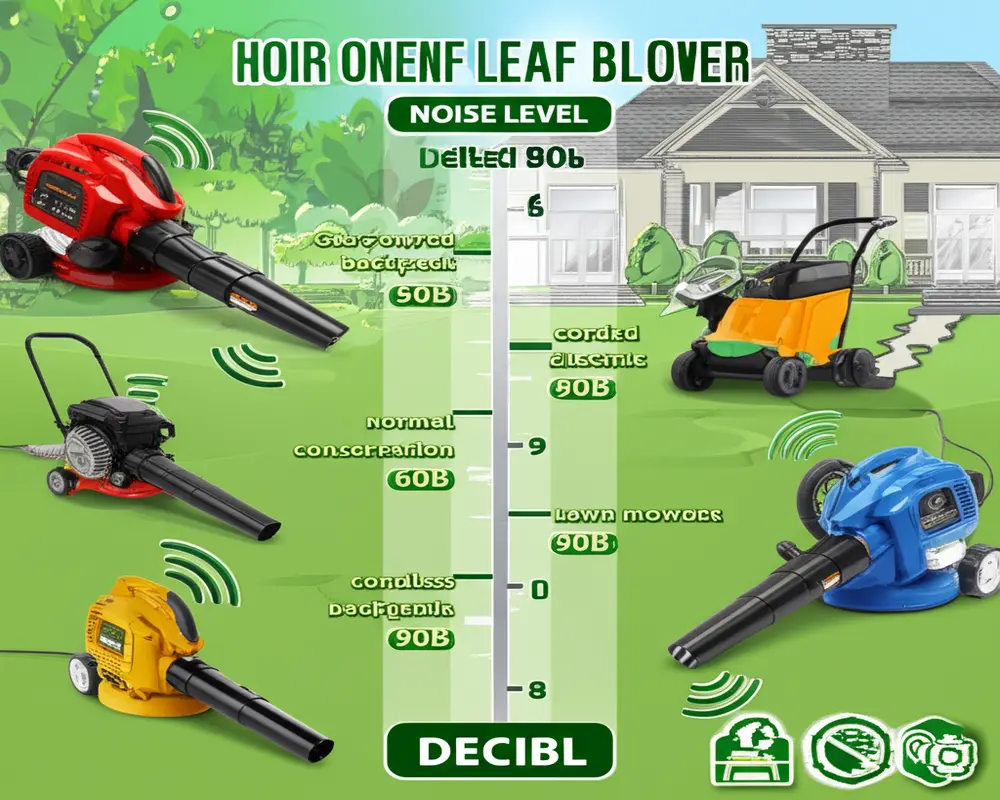
Typical decibel ranges by leaf blower type
Different leaf blowers produce very different noise levels. The fuel source, motor design, fan speed, and housing all matter. Here is a simple range you can use as a starting point.
| Leaf blower type | Typical decibel range | Noise feel |
|---|---|---|
| Handheld electric | 60–75 dB | Moderate, often acceptable for short use |
| Cordless battery blower | 65–85 dB | Usually quieter than gas, but still noticeable |
| Gas-powered handheld | 85–105 dB | Very loud, often needs hearing protection |
| Backpack gas blower | 90–110 dB | Very loud, especially at full throttle |
| Commercial or high-output blower | 95–115 dB | Extremely loud, can be hard on ears and neighbors |
These are general ranges, not exact rules. Some quiet electric models can be lower. Some powerful gas blowers can be higher. The manufacturer’s official sound rating is the best source for a specific model.
A useful detail is that many battery blowers are quieter in a real yard than a gas model, even if the printed dB number is not dramatically lower. The sound quality is often smoother. That makes them feel less harsh during use.
Why the same leaf blower can sound louder or quieter
One common mistake is to trust the decibel number without thinking about how the number was measured. A blower may be listed at one distance, but the actual feeling changes fast when you move closer or farther away.
Distance changes everything
Sound gets weaker as you move away from the source. That means a blower that measures 100 dB near the motor may sound much softer a few yards away. This is why the person using the blower often hears far more noise than someone standing across the street.
In simple terms, distance is one of the best noise control tools you already have. If you are not the operator, standing farther away helps. If you are the operator, using longer nozzles and smart technique can keep the loudest part of the machine farther from your body.
The surface around you matters too
Leaf blowers sound louder in spaces that bounce sound back. A narrow alley, garage entrance, fence line, or walled patio can make the noise feel stronger. Soft ground, grass, and open space may reduce the harshness a little.
High-pitched sound feels more annoying
Two blowers can have similar dB levels, yet one feels much worse. That is because the tone matters. A high-pitched whine or a rough engine note can be more tiring than a lower, smoother sound. This is why some quiet-looking electric blowers still bother people nearby.
Non-obvious insight: airflow design affects noise
Many people think motor power is the only reason a blower is loud. It is not. Poor airflow design can create turbulence, and turbulence creates noise. A well-designed blower may move air efficiently with less sound than a badly designed one that has the same power rating.
How loud is a leaf blower compared with everyday sounds?
It helps to compare leaf blower noise with familiar sounds. That makes the decibel scale easier to understand.
- Normal conversation: about 60 dB
- Vacuum cleaner: about 70 dB
- Busy traffic: about 80–85 dB
- Gas leaf blower: often 90–110 dB
- Rock concert near speakers: often 110–120 dB
This comparison shows why people notice leaf blower noise so strongly. Many gas models are louder than traffic and much louder than a conversation. At close range, some can feel closer to industrial equipment than a home yard tool.
Another thing beginners miss is that short exposure and long exposure are different risks. A quick blast of noise may be annoying. Hours of repeated use can be a hearing issue. That is why professionals often wear ear protection even when the machine seems “not that bad” at first.
Credit: gardenitemreviews.com
What decibel level becomes unsafe?
The risk depends on both loudness and time. Sound that seems bearable for a few minutes may become harmful after longer exposure. A blower in the 85 dB range can already be a concern with repeated use. Anything above that deserves more caution.
The U.S. National Institute for Occupational Safety and Health explains that hearing damage risk rises as sound exposure increases. You can learn more from the CDC/NIOSH noise and hearing protection guidance.
Here is the practical idea: if a blower forces you to raise your voice to talk to someone nearby, it is probably loud enough to take seriously. If you feel ringing in your ears after use, the sound was too much for your hearing.
Do not rely on “getting used to it.” Your ears do not build real protection from repeated loud exposure. The damage can happen slowly, and you may not notice it until later.
How manufacturers measure leaf blower noise
Not all noise ratings are measured the same way. This is one of the main reasons people get confused when shopping.
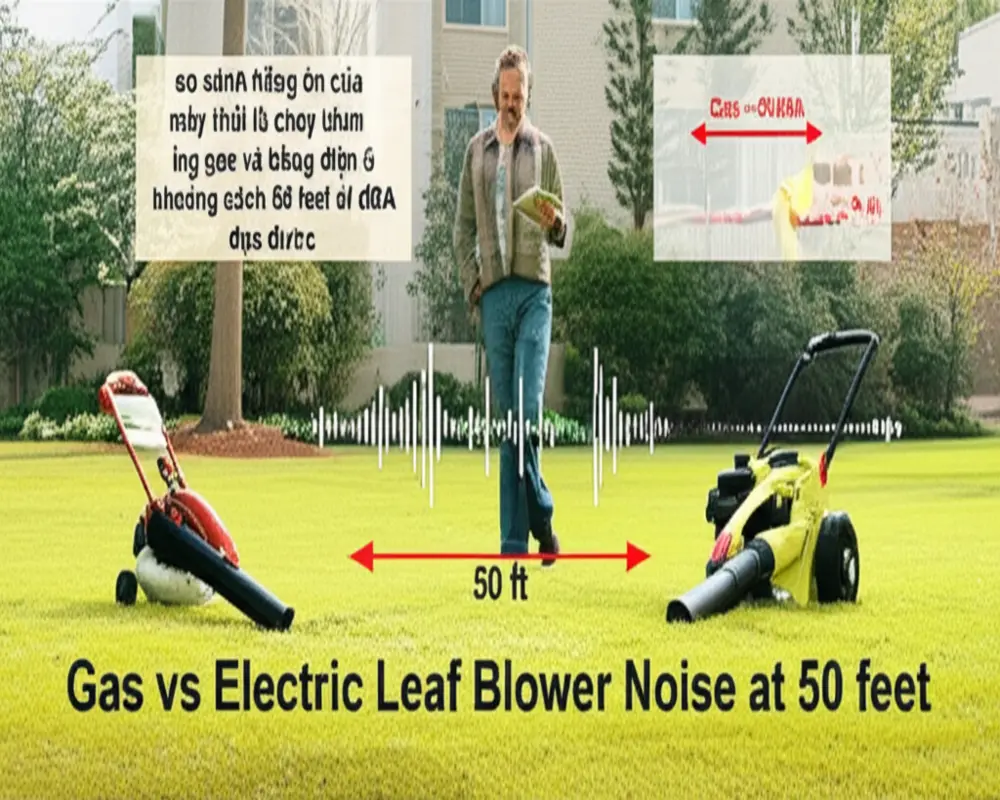
Some brands list the sound at the operator’s position. Others use a test distance, often around 50 feet or another standard set by testing rules. A blower can sound very different depending on where the microphone is placed.
Also, manufacturers may test with different operating settings. A blower on low speed may look quiet on paper. The same model on full power may be much louder in real use. That is why it is smart to check whether the rating refers to low, medium, or max output.
Look for these details when possible:
- Sound level at the operator’s ear
- Sound level at a set distance
- Whether the rating is for low or maximum speed
- Whether the number follows a recognized test standard
If a product page does not explain the rating clearly, treat the number as only a rough guide. In that case, reviews and real-world user feedback can be helpful.
How to choose a quieter leaf blower
If noise matters to you, do not start with power alone. Start with the places you will use it and how often. A massive blower may be too much for a small yard. A lighter model may be enough and much easier on your ears.
Credit: gardenitemreviews.com
Choose the right power source
In many cases, battery blowers are quieter than gas models. They also start faster and need less maintenance. For small to medium yards, they are often the best balance of noise and convenience.
Gas blowers still have their place for heavy-duty work, but they are usually the loudest choice. If you live close to neighbors, this matters a lot.
Check the actual dB rating, not just the brand promise
Terms like “quiet,” “low noise,” and “eco mode” are not enough by themselves. Look for the real decibel number. A blower can be marketed as quiet and still be loud enough to need hearing protection.
Look for variable speed control
This is a simple feature that often makes a big difference. If you can run the blower at a lower speed for light work, you can reduce noise. Many people use full power too often. In reality, full power is not always needed for dry leaves on a driveway or patio.
Non-obvious insight: nozzle choice changes perceived loudness
A narrow nozzle can increase air speed, but it can also make the sound sharper. A wider or better-shaped nozzle may move air more smoothly. That can make the blower feel less irritating, even if the motor is the same.
How to reduce leaf blower noise in real use
You may not be able to make a blower silent, but you can reduce the noise impact a lot. Small habits matter.
- Use the lowest power setting that still works. Many jobs do not need full blast.
- Keep the nozzle close to the ground. This helps move debris efficiently so the blower does not stay on high power too long.
- Work in short passes. Short bursts are often more effective than one long noisy session.
- Avoid blowing into walls or tight corners. Reflected sound can make the blower seem louder.
- Choose the right time of day. Midday use is often better than early morning or late evening.
- Wear ear protection. Simple earmuffs or plugs can lower the risk a lot.
If you use a blower often, hearing protection is not optional. It is a basic safety step. Even if the tool feels manageable now, long-term exposure can add up.
Also, remember that noise control is not just about your ears. It is about being a better neighbor. A quieter routine can reduce complaints and stress in the area around your home.
Why local noise rules matter
Some cities and towns have rules about when and how leaf blowers can be used. These rules may cover allowed hours, noise limits, or even the type of machine you can use. In some places, very loud gas blowers are restricted.
This matters because a blower that seems normal to you may be illegal or heavily limited in your area. Before you buy a new model, it is wise to check local rules. That saves money and avoids problems later.
If you are a homeowner, local noise rules may also affect your relationship with neighbors. A quieter blower and smart timing can prevent a lot of conflict.
Common mistakes people make when judging leaf blower noise
People often assume all blowers are roughly the same. They are not. A small battery model and a powerful backpack gas blower can feel like two different tools from two different worlds.
Another common mistake is thinking that a lower decibel number always means “safe.” It does not. Exposure time matters. A 85 dB blower used for a long job can still be harmful.
Some buyers also focus only on air speed or volume. Those numbers help with performance, but they do not tell the full noise story. A machine with strong airflow may be efficient, but it may also be louder than you want for a quiet neighborhood.
Finally, many people forget about their own comfort. If the blower is so loud that you avoid using it, that is a sign you chose the wrong type for your needs.
Practical buying advice for quieter homes
If your main goal is low noise, here is the simplest rule: start with a battery blower from a trusted brand, then check the real dB rating and user reviews. For many homes, that gives the best mix of quiet use and enough power for everyday cleanup.
If you have a very large yard with heavy leaves, you may still need a stronger blower. In that case, look for the lowest noise rating you can find in the power class you need. Do not buy more power than your yard really requires.
One final point: the best blower is the one you can use comfortably and responsibly. If it is too loud, you will likely use it less, avoid maintenance, or disturb the people around you. A balanced choice is often the smartest choice.

Credit: rateitgreen.com
FAQ
How many decibels is a leaf blower on average?
Most leaf blowers fall between 60 and 110 decibels. Electric models are usually quieter, while gas-powered blowers are usually louder. The exact number depends on the model, power source, and how the sound is measured.
Is 70 dB loud for a leaf blower?
Seventy decibels is not extreme, but it is still clearly audible. For a leaf blower, 70 dB is usually on the quieter side. It may be fine for short jobs, but you should still pay attention to exposure time and comfort.
Do battery leaf blowers make less noise than gas models?
Yes, most battery leaf blowers are quieter than gas models. They often have a smoother sound and less engine harshness. Still, some powerful battery units can be surprisingly loud, so it is best to check the actual decibel rating.
Can a leaf blower damage hearing?
Yes. Loud leaf blowers can damage hearing, especially with repeated or long use. If a blower is above about 85 dB, hearing protection is a smart choice. If your ears ring after use, the sound level was too high.
What is the quietest type of leaf blower?
In most cases, a small electric or battery-powered blower is the quietest option. The quietest choice for you will also depend on how much power you need. A model that is too weak may make you run it longer, which reduces the noise advantage.
