
Concrete looks strong, but it can still get dirty fast. Oil drips, mud, algae, rust marks, and old stains can make a driveway, patio, or garage floor look worn out. The good news is that you do not always need heavy equipment to fix it. In many cases, you can get very good results with simple tools you already have at home.
If you want to know how clean concrete without pressure washer, the key is to match the cleaning method to the stain. Some marks need soap and scrubbing. Others respond better to vinegar, baking soda, or a degreaser. A few stains need a little patience, not force. With the right method, you can save water, avoid surface damage, and still make the concrete look much better.
This guide shows easy, effective ways to clean concrete by hand. You will also learn what works on different stains, what mistakes to avoid, and how to keep the surface cleaner for longer.
Start by looking at the type of stain
Before you scrub anything, take a close look at the concrete. This step matters more than many people think. Concrete is porous, which means liquids can sink in. That is why one cleaner may work well on mud but fail on grease.
Here is the basic rule: use the gentlest method that can still do the job. Strong cleaners are useful, but they can also change the color of the surface if used too often or left on too long. Test any cleaner on a small hidden area first, especially if the concrete is colored, stamped, or sealed.
| Stain type | Best first method | Extra help if needed |
|---|---|---|
| Dust, dirt, and mud | Broom, water, mild soap | Hard brush |
| Grease and oil | Absorbent material, dish soap, degreaser | Paste or poultice |
| Rust stains | Vinegar or rust cleaner | Scrubbing brush |
| Mold, mildew, algae | Vinegar or oxygen cleaner | Brushing and dwell time |
| Tire marks | Baking soda paste or degreaser | Stiff nylon brush |
| Paint drips | Scraper and suitable solvent | Spot treatment |
Gather simple tools before you begin
You do not need fancy gear to clean concrete well. In fact, a few basic items are often enough for most jobs.
- A broom or push broom
- A bucket
- Warm water
- Mild dish soap
- Stiff nylon brush or deck brush
- Scrub brush for small spots
- Microfiber cloths or old towels
- Baking soda
- White vinegar
- Commercial concrete degreaser
- Rubber gloves
- Garden hose, if available
One smart detail many beginners miss: the brush matters as much as the cleaner. A nylon brush is usually best. Metal brushes can scratch the surface and may leave tiny marks that hold dirt later. Also, use separate brushes for grease, rust, and mildew if possible. That helps stop stains from spreading.
Do the basic cleaning first
Always start by removing loose dirt. If you skip this step, the grit can turn into mud while you scrub, which only makes the job harder.
- Sweep the concrete well.
- Pick up leaves, stones, and trash.
- Scrape off dried mud or stuck debris with a plastic scraper.
- Rinse the area lightly with water, if possible.
For a patio or driveway, this basic step can already make the surface look much better. If the concrete only has surface dirt, you may not need a stronger cleaner at all.
Use soap and water for everyday grime
For light dirt, food spills, and general buildup, warm water and dish soap are often enough. This is one of the safest methods for plain concrete.
How to do it
- Mix a few drops of dish soap into a bucket of warm water.
- Pour or spread the solution over the dirty area.
- Let it sit for 5 to 10 minutes.
- Scrub in circles with a stiff nylon brush.
- Rinse with clean water.
- Repeat if needed.
This method works well because soap breaks up light oils and grime without being too harsh. It is especially useful for garage floors, front steps, and covered patios.
Tip: Do not use too much soap. Too many suds can leave a slippery film behind. A little soap goes a long way.
Remove oil and grease without a pressure washer
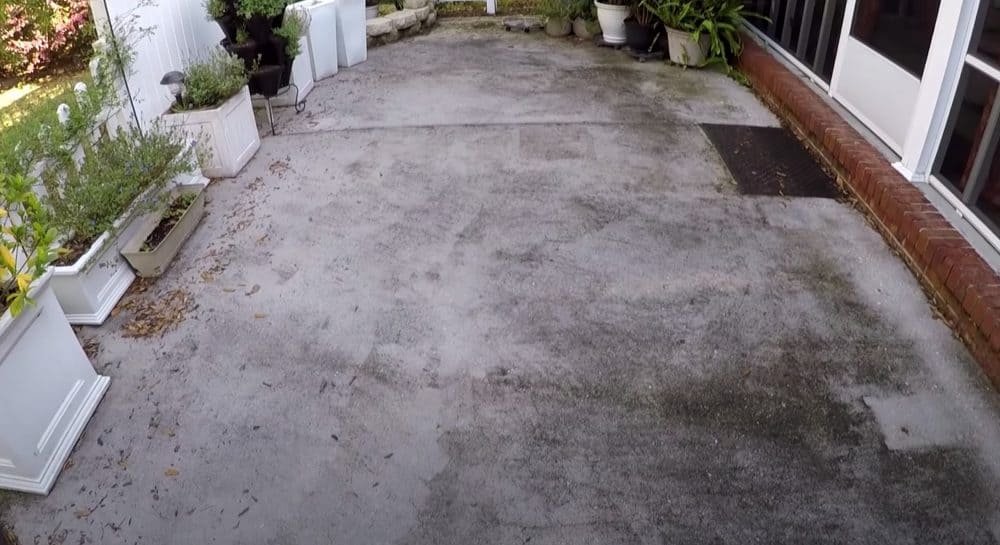
Oil stains are some of the hardest stains on concrete. The problem is not just the top layer. Oil can sink into the pores and stay there. That is why quick action helps.
Credit: madbackyard.com
Fresh oil stains
If the stain is still fresh, cover it with an absorbent material first. Cat litter, baking soda, cornstarch, or sawdust can help pull oil out of the surface.
- Cover the stain with absorbent material.
- Press it down gently.
- Leave it for several hours or overnight.
- Sweep it up.
- Apply dish soap or degreaser.
- Scrub and rinse.
Older oil stains
Old oil stains often need a stronger cleaner. A concrete degreaser works well here. Read the label and follow the directions. Some products need to stay on the stain for a few minutes before scrubbing. Others work better when kept damp.
One useful trick: make a thick paste with baking soda and water, then rub it into the stain. It will not solve every oil stain, but it can help lift lighter marks. For deep stains, repeat the process more than once. Concrete is forgiving, but it often needs more than one round.
Another point many people miss: hot water helps grease cleaning. Warm water works better than cold water because it loosens oily residue faster. Just do not use boiling water on sealed or weak concrete, since sudden heat can create problems.
Clean mold, mildew, and algae safely
Green, black, or slippery growth on concrete is not only ugly. It can also become a safety problem. This often happens in shaded, damp areas like backyard paths, pool decks, and north-facing steps.
A simple vinegar solution can work on light growth. For heavier buildup, oxygen-based cleaners can be a better choice. If you want a reliable safety reference for cleaning products and handling them correctly, the U.S. Environmental Protection Agency offers useful guidance on safe chemical use and surface treatment.
Vinegar method
- Mix equal parts white vinegar and water.
- Apply it to the affected area.
- Leave it for 10 to 15 minutes.
- Scrub with a stiff brush.
- Rinse with clean water.
Do not use vinegar on every type of concrete without testing first. It can dull some finishes if left too long. It is usually fine for plain outdoor concrete when used carefully and rinsed well.
For slippery growth
If the surface feels slick, use a brush with firm strokes. The growth often sits in tiny surface pits, so scrubbing matters. In shaded places, cleaning alone may not solve the problem forever. Try to improve drainage, trim plants, or let more sunlight reach the area.
Deal with rust stains and mineral marks
Rust stains often come from metal furniture, tools, or garden equipment left on wet concrete. They can look permanent, but they are often treatable.
For light rust stains, vinegar may help. For stronger marks, use a rust remover made for concrete. Follow the label closely, because some rust removers are acidic and should not stay on the surface too long.
Simple rust stain steps
- Wet the stain lightly.
- Apply vinegar or rust remover.
- Wait as directed.
- Scrub gently.
- Rinse well.
Hard water can leave white mineral deposits, too. These often look like chalky spots or pale crust. A gentle acid cleaner may help, but always test first. On decorative concrete, it is safer to start with mild cleaning before moving to stronger products.
Lift tire marks from driveways and garage floors
Tire marks are common on concrete driveways and garage floors. They happen when rubber heats up and transfers to the surface. These marks can be stubborn, but they usually respond to the right cleaner and a strong brush.
Try a baking soda paste first. Spread it over the mark, wait a few minutes, then scrub. If that does not work, use a concrete degreaser. Tire marks often contain both rubber and road grime, so a grease-focused cleaner can help more than plain soap.
Non-obvious tip: tire marks are easier to remove when the concrete is dry. If the floor is already wet, the mark can spread into the pores and look worse. Clean dry first, then rinse after scrubbing.
Handle paint stains with care
Paint on concrete needs a different approach depending on whether it is fresh or old.
Fresh paint
If the paint is still wet, blot it immediately with paper towels or cloths. Do not rub hard, because that pushes the paint deeper into the surface. After blotting, use water for water-based paint or the correct solvent for oil-based paint.
Dried paint
Old paint may need scraping. Use a plastic scraper first. Then treat the spot with a cleaner made for the paint type. Small spots often respond to repeated softening and scraping rather than one strong attempt.
Be careful with solvents. They can work fast, but they may also damage sealers or change the look of the concrete. Use only what is needed.
Make a simple cleaning paste for spot treatment
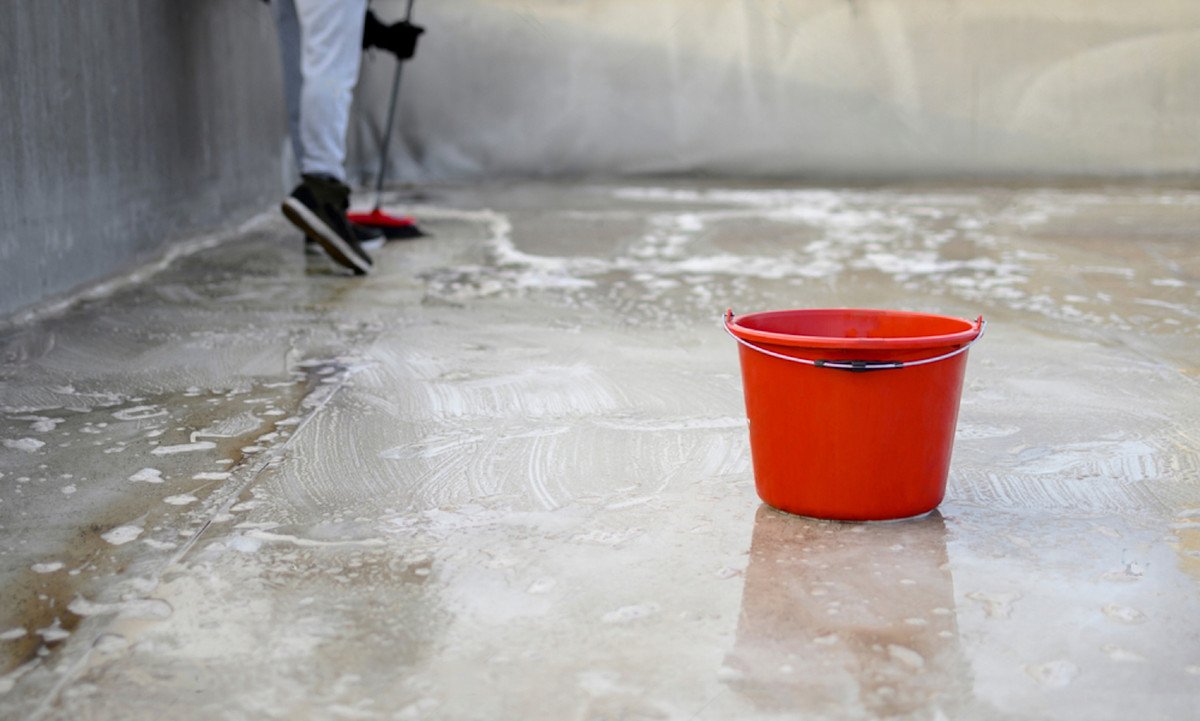
When a stain is small but stubborn, a paste can be better than a liquid. It stays in place and gives the cleaner more time to work.
Credit: grimebusterswash.com
Basic baking soda paste
- 1/2 cup baking soda
- Just enough water to form a thick paste
Apply the paste to the stain, then let it sit for 15 to 30 minutes. Scrub and rinse. This works best on light grease, small scuffs, and general dirty spots.
For tougher stains
You can also try a stronger paste with a concrete-safe degreaser. The idea is the same: keep the cleaner on the stain long enough to work. This is especially useful on vertical surfaces, like concrete walls or foundation edges, where liquid cleaners run off too quickly.
Another useful insight: a paste often beats hard scrubbing. Many people press too hard too soon. It is usually better to let the cleaner sit, then scrub with steady pressure. That protects the concrete and saves your arms.
Know when to rinse, repeat, or stop
It is tempting to keep scrubbing until every mark disappears. But sometimes the best move is to stop and reapply the cleaner. Concrete stains often fade in stages.
Here is a simple way to think about it:
- If the stain is lighter after the first round, repeat the same method.
- If there is no change, try a different cleaner made for that stain type.
- If the surface starts to look dull or rough, stop and rinse immediately.
Do not mix chemicals unless the product label says it is safe. For example, never mix bleach with vinegar or ammonia. That can create dangerous fumes. If you are unsure, rinse well before trying a different product.
Speed up drying and improve the final result
After cleaning, let the concrete dry fully. This helps you see whether the stain is truly gone or just hidden while wet. Some marks fade more as the surface dries.
You can speed drying by using towels, opening nearby gates, or letting air move through the area. On outdoor slabs, sun and breeze usually help. On garage floors, keep the area open and avoid driving on it too soon.
If the concrete still looks patchy after drying, spot clean the remaining areas instead of redoing the whole surface. This saves time and avoids unnecessary wear.
Common mistakes that make concrete harder to clean
Many cleaning problems come from simple mistakes, not bad products. Avoiding these can make the whole job easier.
- Using the wrong cleaner for the stain type
- Scrubbing with metal brushes that scratch the surface
- Skipping the sweep before washing
- Letting cleaner dry on the concrete
- Mixing chemicals without checking safety
- Rushing oil stains before the absorbent material has time to work
- Ignoring test spots on colored or sealed concrete
One mistake stands out more than the others: many people rinse too soon. Some cleaners need a short dwell time to work. If you wash them off right away, they can do very little. Read the directions and give the product time to act.
How to keep concrete cleaner for longer
Once the surface is clean, a few habits can slow future buildup. This does not require a big project. Small changes help a lot.
- Sweep regularly so dirt does not grind into the surface.
- Clean spills quickly, especially oil and paint.
- Move metal furniture or tools off wet concrete.
- Trim plants near patios and walkways to reduce shade and moisture.
- Use mats in garages or work areas.
- Seal concrete if the area gets stained often.
Sealing is not required for every slab, but it can make cleaning easier in the future. Sealed concrete tends to resist stains better, though it still needs care. If you choose a sealer, make sure it is suited to the surface and the type of use.
A simple step-by-step method for most concrete surfaces
If you want one easy process that works for many situations, use this.
- Sweep the area well.
- Identify the stain type.
- Choose the right cleaner.
- Test in a small hidden spot.
- Apply the cleaner and wait the suggested time.
- Scrub with a nylon brush.
- Rinse with clean water.
- Repeat only where needed.
- Let the surface dry fully.
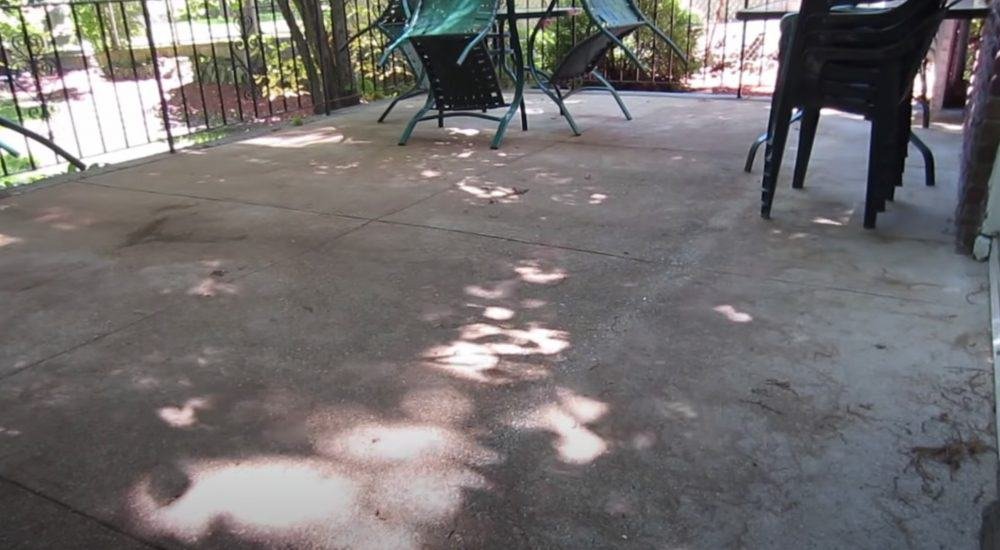
This process is simple, but it is also effective. It works because it respects how concrete behaves. Concrete is strong, but it is not smooth like glass. It holds dirt inside tiny pores, so cleaning takes patience and the right method.
Credit: madbackyard.com
When a professional may be the better choice
Most normal stains can be handled at home. Still, there are times when professional help makes sense. If the concrete has deep chemical damage, old sealant failure, or large stained areas that do not respond to cleaning, a specialist may save time and prevent further damage.
Professional cleaning is also worth considering for expensive decorative concrete, stamped surfaces, or commercial areas with heavy buildup. In those cases, the wrong cleaner can cost more than the service itself.
FAQs
Can I clean concrete with just water and a brush?
Yes, for light dirt, dust, and mud, water and a stiff nylon brush may be enough. If the stain is oily, rusty, or green with mold, you will usually need a cleaner such as soap, vinegar, or a concrete-safe degreaser.
Does vinegar damage concrete?
Vinegar can be safe for some concrete jobs if it is diluted and rinsed well, but it should be used carefully. Do a small test first, especially on sealed, polished, or colored concrete.
What is the best way to remove oil from concrete without a pressure washer?
Start with an absorbent material like cat litter, baking soda, or cornstarch. After that, apply dish soap or a degreaser, scrub with a stiff nylon brush, and rinse. Older stains may need more than one treatment.
How do I clean stained concrete in a garage?
Sweep first, then treat the stain based on what caused it. Soap works for general grime. Degreaser works for oil and tire marks. For stubborn spots, let the cleaner sit for a few minutes before scrubbing.
Can I use bleach on concrete?
Bleach can help with mold and mildew, but it should be used with care. Never mix it with vinegar, ammonia, or other cleaners. Always rinse well after use and test a small area first if the concrete is colored or sealed.
