
If you have ever stood in a tool aisle and looked at a framing nailer and a finish nailer, you are not alone. They look similar at first glance. Both use nails. Both save time. Both make building faster. But they are made for very different jobs.
Choosing the wrong one can lead to weak joints, ugly holes, or a tool that simply feels wrong for the task. That is why understanding framing nailers vs finish nailers whats difference matters before you buy or start a project.
The short version is simple: one tool is built for heavy structural work, and the other is built for clean, detailed woodworking. The longer answer is much more useful, because the right choice depends on nail size, power, precision, and the kind of project you want to finish well.
Why these two nailers are not interchangeable
Framing nailers and finish nailers may both drive nails, but they solve different problems. A framing nailer is made to join large pieces of wood in strong, load-bearing projects. A finish nailer is made to attach trim, molding, and other visible pieces without leaving large marks.
This difference changes almost everything: the nail size, the tool weight, the power level, and even the kind of trigger control you need. If you try to use a framing nailer for delicate trim, you can split the wood or leave holes that are hard to hide. If you try to use a finish nailer for wall framing, the joint will not be strong enough.
So the real question is not which tool is “better.” The better question is: what are you building?
The main difference in one clear view
Here is the easiest way to think about it. A framing nailer is for strength. A finish nailer is for appearance.
| Feature | Framing Nailer | Finish Nailer |
|---|---|---|
| Main use | Framing, sheathing, subfloors, heavy construction | Trim, molding, cabinets, baseboards, finish carpentry |
| Nail size | Larger nails, usually 0.113″ to 0.148″ diameter | Smaller nails, usually 15-gauge or 16-gauge |
| Holding power | Very high | Moderate |
| Visible hole size | Larger holes, harder to hide | Smaller holes, easier to fill |
| Tool size and weight | Bigger and heavier | Lighter and easier to handle |
| Common result | Strong structural connection | Clean, neat finish |
This table gives the basic idea, but there is more to it than size alone. The nail shape, the angle of the magazine, and the type of project all matter too.
What a framing nailer does best
A framing nailer is designed for large construction jobs. It drives thick nails into heavy lumber fast and with strong force. Builders use it for wall framing, roof framing, floor joists, and other tasks where the connection must be strong enough to hold weight.
Most framing nailers fire nails that are much thicker than finish nails. That extra thickness gives them more holding power. In many cases, a framing nailer can replace hand nailing for repetitive structural work and save a huge amount of time and effort.
Common jobs for a framing nailer
- Building house frames
- Installing roof trusses
- Putting down subflooring
- Fastening wall studs
- Attaching sheathing
- Outdoor deck framing
A framing nailer is not meant for delicate work. It is a power tool for speed and strength, not fine detail. The nail heads are larger, and the holes they leave are more visible. That is fine when the area will later be covered by drywall, siding, or other materials.
Why framing nailers feel powerful
Part of what makes framing nailers useful is their force. They are built to drive long nails into dense wood without failing. That power is helpful, but it also means you need more control. If you are new to nail guns, a framing nailer can feel aggressive compared with smaller tools.
One thing beginners often miss is that more power does not always mean better results. In rough construction, yes, power matters. But if the wood is thin or the project is visible, that same power can cause splitting or dents.
What a finish nailer does best
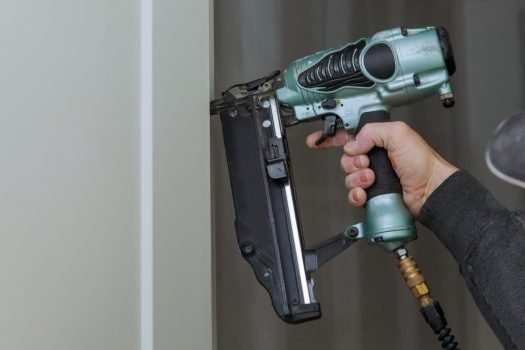
A finish nailer is built for cleaner work. It drives thinner nails that hold trim and moldings in place while leaving a much smaller hole. That smaller hole is easier to hide with a little filler or paint, which is why finish nailers are so common in carpentry and home improvement.
Finish nailers are used where appearance matters. They are perfect for baseboards, crown molding, door casings, window trim, and cabinet trim. They give enough holding strength for these tasks without damaging the surface as much as a framing nailer would.
Credit: buildeazy.com
Common jobs for a finish nailer
- Installing baseboards
- Attaching crown molding
- Fitting door and window trim
- Assembling cabinets
- Installing chair rails
- Securing decorative wood pieces
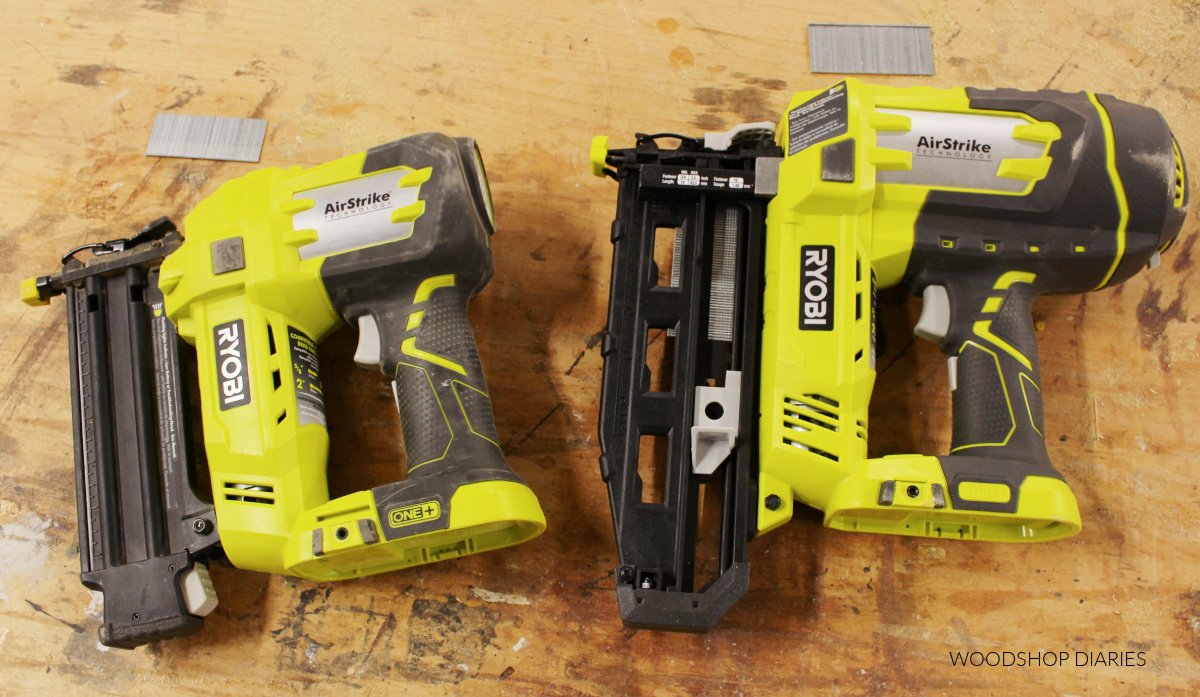
Finish nailers come in two very common sizes: 15-gauge and 16-gauge. A 15-gauge finish nailer uses slightly thicker nails and gives a bit more holding strength. A 16-gauge finish nailer uses thinner nails and leaves a smaller hole, which is useful for more delicate trim.
Here is a helpful way to remember it: if the piece of wood will be seen up close, the finish nailer is usually the better choice.
Nail size is the biggest clue
If you want to understand framing nailers vs finish nailers whats difference, start with nail size. Nail size affects strength, hole size, and the type of wood the tool can handle.
Framing nailers use large nails, often between 2 inches and 3.5 inches long. These nails are thick enough to hold framing lumber together. They are made for structural work, where the main goal is strength.
Finish nailers use thinner nails, usually between 1 inch and 2.5 inches long. These nails are enough for trim and finish work, but they are not designed for heavy structural loads.
That difference also affects how the wood looks after nailing. Framing nails leave larger marks. Finish nails leave smaller pinholes that are much easier to patch and paint over.
What beginners often overlook
Many first-time buyers focus only on length. But thickness matters just as much. A longer nail is not always better. A thick framing nail in thin trim can split the wood. A thin finish nail in a wall frame may not hold long enough.
Another detail people miss is that nail shape and angle matter too. Some framing nailers use clipped-head nails, while others use full-round-head nails. Full-round-head nails are often preferred for code compliance in some structural work because they offer better holding strength.
How the tools feel in your hand
Framing nailers are usually larger and heavier. They need to be, because they drive big nails with force. This makes them a little harder to use in tight spaces or overhead work. If you are framing walls all day, the extra size is normal. If you are installing trim in a finished room, it can feel bulky.
Finish nailers are lighter and easier to control. That makes them a better choice when you want accuracy. They are easier to line up along trim, especially when working near corners, painted walls, or already installed cabinets.
This difference affects comfort too. A heavy framing nailer can wear you out faster if you are working overhead. A lighter finish nailer is easier to handle for long detail jobs.
Accessibility matters more than many people think
One non-obvious point: tool size affects not just comfort, but accuracy. When the tool body is too large, it becomes harder to place the nail exactly where you want it. That is a big deal with trim work, where even a small mistake can show after painting.
So do not only ask, “Can this tool drive the nail?” Also ask, “Can I place it cleanly in the space I have?”
Power source and trigger styles
Both framing nailers and finish nailers can come in pneumatic, cordless, or electric versions. Pneumatic tools are powered by air from a compressor and are common in professional work. Cordless models are popular for convenience and portability.
Regardless of power source, the trigger style matters. Some nailers have a sequential trigger, which fires only when you press the nose and then pull the trigger. Others have a contact trigger, which can fire more quickly as you move across a surface. Fast is useful, but it also needs more care.
For detailed finish work, controlled placement is often more important than speed. For framing, speed and repetition are usually more important than perfect precision on every shot.
Credit: woodshopdiaries.com
Do not ignore compressor needs
If you buy pneumatic tools, remember that framing nailers often need more air volume than finish nailers. A small compressor may keep up with a finish nailer just fine, but it may struggle with a framing nailer during heavy use.
This is a common buying mistake. People choose the nailer, then discover their compressor cannot match it. If you already own a compressor, check its air delivery before buying.
Which one should you choose for your project?
The right tool depends on the type of work you do most often. If you build decks, frame walls, or do rough carpentry, choose a framing nailer. If you install trim, build furniture, or work on visible interior finishes, choose a finish nailer.
For homeowners, a finish nailer is often the better first purchase because it fits many common DIY jobs. Baseboards, casing, and molding are common in home projects. A framing nailer is more specialized unless you regularly do structural work.
If you are buying one tool for occasional use, think about what will save you the most time on your real projects, not on imaginary ones.
Best choice by project type
- House framing: Framing nailer
- Deck building: Framing nailer
- Subfloor installation: Framing nailer
- Baseboards and trim: Finish nailer
- Crown molding: Finish nailer
- Cabinet trim: Finish nailer
Can one tool replace the other?
In most real projects, no. They overlap only a little. A framing nailer can be too strong and too rough for visible trim work. A finish nailer usually does not have the power or nail size needed for structural jobs.
There are a few rare cases where a strong 16-gauge finish nailer may help with light assembly or small wood pieces. But that is not the same as replacing a framing nailer. The tools are made for different levels of strength and visual finish.
One smart approach is to think in layers. Use the framing nailer for the hidden strong structure. Then use the finish nailer for the visible surface pieces.
Common mistakes when buying the wrong nailer
Many people make the same errors when choosing between these tools. Avoiding them can save money and frustration.
1. Buying for price instead of use
A cheap tool is not helpful if it is wrong for the job. The right type of nailer matters more than the lowest price.
2. Choosing based only on reviews
Reviews are useful, but they cannot tell you what kind of work you do. A tool that is perfect for a carpenter may be useless for a trim project.
3. Forgetting about the final look
If the wood will stay visible, hole size matters. A framing nailer may be too rough for work that will be painted and inspected up close.
4. Ignoring nail availability
Before buying, make sure the nail type is easy to find in your area. A tool is only useful if you can keep it loaded.
5. Overestimating power needs
Some buyers think more power is always better. In finish carpentry, that is not true. Clean placement often matters more than brute force.
A few practical buying tips
If you are still unsure, start by naming your top three projects. If they are mostly structural, go with a framing nailer. If they are mostly interior finish jobs, choose a finish nailer. If you do both, you may eventually need both tools.
Also think about weight, battery life, and maintenance. A cordless framing nailer is convenient, but it may be heavier. A pneumatic finish nailer is often lighter, but it needs a compressor and hose.
For product details and tool safety guidance, the Occupational Safety and Health Administration is a helpful authority to review before using nail guns on a job site.
Another good habit is to test the tool on scrap wood before starting your real project. This lets you check depth, force, and nail placement. Small test shots can prevent a lot of damage later.

Credit: reddit.com
Final takeaway
The difference between these tools is simple once you see the purpose behind each one. A framing nailer is built for strength, speed, and structural work. A finish nailer is built for clean appearance, smaller holes, and detailed carpentry.
If you remember only one thing, remember this: framing nailers build the hidden structure, while finish nailers complete the visible details. That is the heart of framing nailers vs finish nailers whats difference.
Pick the tool that matches the job, not the one that just looks more powerful. That choice will give you better results, less damage, and a much smoother build.
FAQs
1. Can I use a framing nailer for trim work?
It is not a good idea. A framing nailer uses thick nails and strong force, so it can split trim and leave large holes that are hard to hide.
2. Is a finish nailer strong enough for basic furniture?
Yes, for light furniture assembly and trim-style parts, a finish nailer can work well. But for structural joints, glue, screws, or stronger fastening may be needed.
3. What gauge nailer is best for baseboards?
A 15-gauge or 16-gauge finish nailer is usually best for baseboards. The 16-gauge leaves a smaller hole, while the 15-gauge gives a bit more holding power.
4. Do framing nailers and finish nailers use the same nails?
No, they do not. Framing nailers use much larger nails, while finish nailers use thinner nails made for visible carpentry work.
5. Which nailer should a beginner buy first?
For most homeowners, a finish nailer is the better first choice because it works well for common indoor projects like trim and molding. If you do framing or deck building, then a framing nailer makes more sense.
