
A circular saw is one of the most useful tools in any workshop or job site. It can cut fast, save time, and handle many materials when you use the right blade and setup. Many people think it is only for long straight wood cuts, but the real value is much bigger than that.
If you understand the right circular saw uses, you can do framing, trim work, sheet cutting, fence building, metal cutting, and even some clean finish cuts. The key is not just the tool itself. It is how you match the blade, support the material, and control the saw.
In this guide, you will learn 15 practical ways to use a circular saw for wood, metal, and more. You will also see what beginners often miss, what mistakes to avoid, and how to get safer, cleaner results.
Why a circular saw deserves a place in almost every workshop
A circular saw is popular because it is simple, portable, and powerful. You do not need a large table saw to make many useful cuts. With a good saw and the right blade, you can work on job sites, in garages, or even outdoors with ease.
Another reason people value this tool is speed. A circular saw is great when you need to cut large boards, trim framing lumber, or break down sheets before final fitting. It is often the fastest way to move from rough material to usable parts.
One important thing beginners miss is this: a circular saw is not only about power. Control matters more than force. A clean cut comes from stable support, correct depth, and a blade made for the material. A strong saw with the wrong blade can give poor results very quickly.
1. Cutting framing lumber for walls, floors, and roofs
This is one of the most common circular saw uses. Framing lumber like 2x4s, 2x6s, and joists is easy to cut with a standard saw blade. Builders use a circular saw every day for wall studs, floor framing, and roof work.
The saw is especially useful when you need many repeated cuts. You can set the lumber on sawhorses, mark each piece, and cut quickly without moving to a large machine.
Why it works well
- The cuts are usually straight and simple.
- Framing lumber does not need a perfect finish.
- The tool is easy to carry to the work area.
Tip: Let the blade reach full speed before touching the wood. This helps reduce tear-out and makes the saw feel smoother.
2. Breaking down plywood and sheet goods
Plywood, MDF, OSB, and particleboard are large and awkward to handle. A circular saw makes these sheets easier to manage. You can cut them into smaller pieces before final trimming.
This is one of the most practical uses for DIY projects because sheet goods are often too big for a small space. A straightedge or guide rail can help you make cleaner cuts. Without support, large sheets may splinter or shift.
Non-obvious insight: When cutting plywood, the direction of the finished face matters. Put the cleaner side facing down if you use a standard blade, because most circular saw blades cut upward on the top side. That simple choice can save time on cleanup.
3. Trimming doors to fit better
Sometimes a door rubs on the floor after new flooring is installed. A circular saw can trim the bottom edge so the door opens properly again. This is a careful job, but very practical.
You should clamp a straight guide on the door and use a sharp blade with fine teeth. Take a small amount off at a time. If you cut too much, the door may look uneven or leave a large gap.
Common mistake to avoid
Many people cut without marking the full line or checking hinge clearance first. Always confirm where the problem is before cutting. Sometimes the door only needs a little trim, not a full cut across the entire edge.
4. Making fast rip cuts in boards
A rip cut means cutting along the length of the wood. Circular saws are very good at this when you need long straight lines. This is useful for shelf boards, trim pieces, and custom lumber widths.
For best results, guide the saw with a straight board, aluminum guide, or clamp-on rail. Freehand rip cuts are possible, but they are harder to keep straight, especially for beginners.
Helpful detail: A rip-cut blade often has fewer teeth than a finish blade. That helps it cut faster and push out sawdust more easily. Using the wrong blade can make the saw struggle and leave rough edges.
5. Crosscutting boards to exact lengths
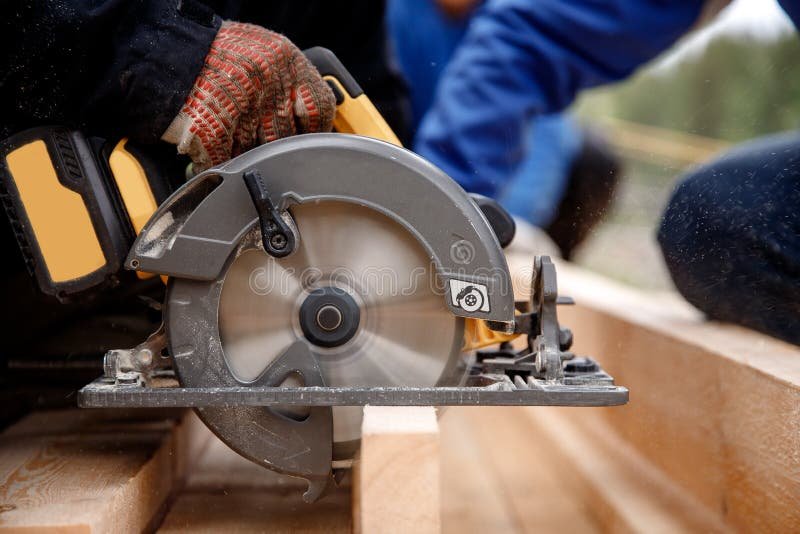
Crosscutting means cutting across the grain. This is one of the first tasks people learn with a circular saw. It is used for cutting studs, fence boards, deck parts, and general project material.
Crosscuts are easy when the board is supported well. If the wood hangs off the edge without support, the cut can pinch the blade or break the wood at the end. Use sawhorses, a workbench, or scrap support pieces.
A simple habit helps a lot: mark the cut line clearly on both sides when needed. This makes it easier to see if the blade starts drifting.
Credit: google.com
6. Cutting deck boards and outdoor lumber
Deck building is another area where circular saw uses stand out. Deck boards, joists, railing parts, and framing pieces are all common cuts for this tool. Outdoor lumber is often cut on site, so portability matters.
The saw is useful for trimming boards to match an uneven edge or fit around posts. When working outdoors, make sure the blade is right for treated lumber or rough construction material.
Non-obvious insight: Treated wood can be damp or dense. A dull blade will make the cut slower and increase burning. That can also shorten battery life on cordless models.
7. Making angled cuts for framing and trim
Many circular saws can tilt for bevel cuts. This makes them useful for roof framing, trim fitting, and angled joins. You can adjust the bevel angle to match the project, then cut along the marked line.
Angle cuts are important when two pieces need to meet neatly. For example, roof rafters and some trim work need exact angles to fit well. A circular saw can handle these tasks if you take your time and check the setting before cutting.
Good practice for angled cuts
- Set the angle with a clear scale.
- Test on scrap first.
- Keep the base plate flat during the cut.
8. Cutting shelving boards and furniture parts
If you build shelves, benches, or simple furniture, the circular saw is very useful. It can cut plywood panels, solid wood boards, and even some laminated materials. Many home projects begin with a saw like this.
For furniture, clean edges matter more than for framing. That means blade choice and cut support become more important. A fine-tooth blade usually gives better results on visible parts.
Tip: For better accuracy, measure from one fixed edge every time. Switching reference edges often causes small mistakes that add up across a project.
9. Trimming laminate flooring and underlayment
Circular saws are often used when installing laminate flooring or similar products. You can cut planks to length, trim end pieces, and shape boards for corners and edges. Underlayment also cuts well with the right blade or even a suitable general-purpose blade.
This is one of the best time-saving uses because flooring jobs require many repeated cuts. A circular saw lets you work quickly without needing a heavy shop saw.
For cleaner cuts, place the decorative face in the right direction and support the plank to reduce chipping. Small details matter a lot here because flooring is usually visible at eye level.
10. Cutting thin metal with the right blade
Yes, a circular saw can cut metal, but only with the proper blade and proper setup. Thin steel, aluminum, conduit, and metal roofing can sometimes be cut this way. The blade must be designed for metal, not wood.
This use is helpful when you need portable cutting on site. However, metal cutting creates sparks, heat, and sharp edges. You must wear eye protection and keep flammable material away.
For blade safety guidance and general circular saw best practices, the Occupational Safety and Health Administration provides useful information on power tool safety.
Important: Do not use a wood blade on metal. That is a dangerous mistake and can damage the blade or cause kickback.
11. Cutting PVC pipe and plastic boards
Circular saws can also cut certain plastics. PVC pipe, plastic trim boards, and some composite materials can be cut cleanly with the right blade and a light touch. This is useful for plumbing, outdoor trim, and utility work.
The main challenge is heat. Plastic can melt if the blade is too fast, too dull, or pushed too hard. A smooth feed rate helps prevent melting and rough edges.
When cutting pipe, secure it well so it does not roll. Rolling material is a common cause of crooked cuts and accidents.
12. Making plunge-style starter cuts for openings
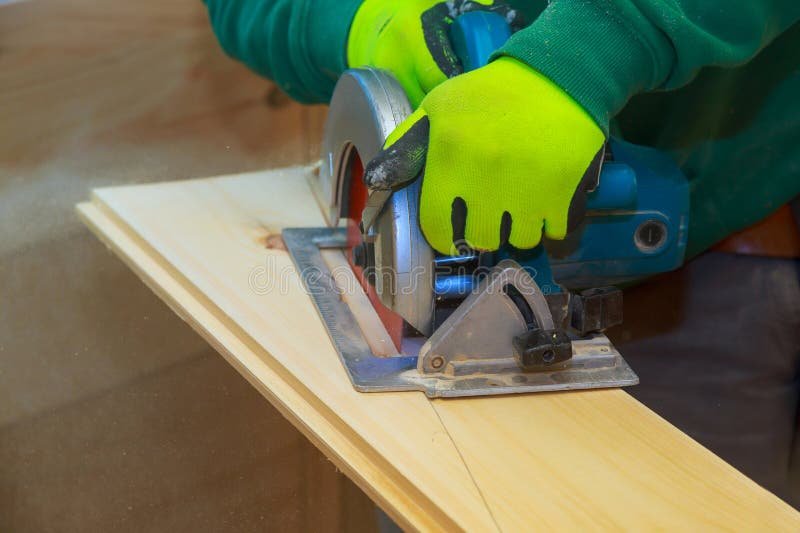
While a circular saw is not a true plunge saw in the same way some specialty tools are, it can still start cuts inside a surface with care. This is useful for openings in plywood, drywall backing, or subfloor sections when needed.
You begin by tilting the saw forward carefully so the front edge of the blade enters the material first. This requires experience and a stable grip. It is not the first technique every beginner should try, but it is very useful in the right situation.
Credit: dreamstime.com
When to be careful
If you cannot see under the saw base clearly, stop and think before starting. Hidden pipes, wires, and nails can turn a simple cut into a serious problem. Always check what is under the material first.
13. Cutting ceiling panels and wall boards during remodeling
During remodeling, a circular saw is often used for big sheet cuts before panels are lifted into place. This helps with wall sheathing, ceiling repair boards, and other large sections that are easier to fit after cutting.
Because these materials can be awkward overhead or in tight rooms, many people cut them outside or on a flat work surface first. This keeps the cut safer and cleaner.
Non-obvious insight: A small measurement error becomes much bigger when a panel is installed overhead. Always recheck the size after the first cut. A piece that fits on the floor may not fit once it is raised into place.
14. Shaping rough stock for garden and outdoor projects
Outdoor projects often use rough lumber, fence boards, garden bed boards, and reclaimed wood. A circular saw is ideal here because the material does not need a factory-perfect finish.
You can use it to build planter boxes, compost bins, garden edging, raised beds, and simple gates. The saw handles fast work well, even when the wood is not perfectly smooth.
One useful habit is to inspect reclaimed wood before cutting. Old nails, screws, and staples can damage the blade fast. A quick check with a magnet or visual inspection can save money.
15. Cutting miscellaneous materials on the job site
One of the biggest strengths of a circular saw is flexibility. On the right blade, it can handle many other material types used in construction and repair work. That may include fiber cement, corrugated boards, some composite products, and specialized panels.
This is why many tradespeople keep a circular saw nearby. It is often the tool that solves the quick cut when other tools are too slow or too bulky.
Always match the blade to the material
The saw itself is only part of the job. The blade choice decides how clean, safe, and efficient the cut will be. Wrong blade choices can lead to burning, rough edges, or dangerous kickback.
| Material | Best blade type | Result you can expect |
|---|---|---|
| Softwood framing lumber | General-purpose or framing blade | Fast cuts with acceptable finish |
| Plywood and MDF | Fine-tooth plywood blade | Cleaner edges, less tear-out |
| Metal | Metal-cutting blade | Safer cutting with fewer sparks than wrong blade use |
| PVC and plastic | Fine-tooth or plastic-safe blade | Less melting and smoother edges |
| Laminate flooring | Fine-tooth finish blade | Less chipping on visible edges |
How to get better results with a circular saw
Many poor cuts are not caused by the saw itself. They happen because the setup is weak. If you want better results, focus on support, marking, and blade depth.
- Support the workpiece well: Do not let the cut section drop before the blade finishes.
- Set the blade depth correctly: Let only a little more blade show than the material thickness.
- Use the right blade: This matters more than many beginners realize.
- Keep the shoe flat: A tilted base can ruin the line and reduce control.
- Move at a steady pace: Pushing too hard can burn wood or bind the blade.
Another thing beginners often miss: a dull blade can make a saw feel weak even if the motor is strong. If cuts start to burn or require more pressure, check the blade before blaming the tool.
Safety habits that protect your cuts and your hands
Circular saws are useful, but they demand respect. A few simple habits can prevent most accidents and improve cut quality at the same time.
- Wear eye protection every time.
- Use hearing protection for long cutting sessions.
- Keep both hands on the saw when possible.
- Wait for the blade to stop before setting the saw down.
- Check for nails, screws, and hidden wiring before cutting.
- Keep your body to the side of the blade path.
Kickback is one of the biggest risks. It can happen when the blade binds, the wood shifts, or the cut line closes behind the blade. Good support and correct depth reduce that risk a lot.

Credit: reddit.com
What beginners should remember before their first cut
If you are new to circular saw uses, start with simple straight cuts in softwood. Learn how the saw feels, how fast it cuts, and how it reacts when the material is supported well. That experience helps more than reading ten tips at once.
Do not try every material on the first day. Build confidence with a few safe practice cuts. Then move to plywood, angle cuts, and more advanced work after you feel in control.
The best users are not the ones who rush. They are the ones who set up the work properly, choose the right blade, and cut with steady hands.
FAQ
Can a circular saw cut metal?
Yes, a circular saw can cut thin metal if you use a blade made for metal. Do not use a wood blade on metal. That is unsafe and can damage the tool.
What is the most common use of a circular saw?
The most common use is cutting lumber for framing, such as 2x4s, joists, and boards. It is also very common for cutting plywood and other sheet goods.
Is a circular saw better than a jigsaw?
They do different jobs. A circular saw is better for long straight cuts. A jigsaw is better for curves, inside cutouts, and detailed shapes.
What blade should I use for clean wood cuts?
Use a fine-tooth or finish blade for cleaner cuts in plywood, trim, and visible wood surfaces. A framing blade is better for fast rough cuts.
Can I use a circular saw for DIY home projects?
Yes. It is one of the best tools for DIY work. You can use it for shelves, decks, furniture parts, flooring, repairs, and many other simple projects.
