
If you are building shelves, fixing furniture, or hanging a light piece of wood, you may wonder, can you use drywall screws in wood? The short answer is yes, sometimes. But “can” is not the same as “should.”
Drywall screws are made for one job: fastening drywall to wood or metal studs. They are cheap, easy to find, and fast to drive in. That makes them tempting for wood projects. Still, wood is not drywall. Wood puts more stress on fasteners, especially when the joint must hold weight, resist vibration, or stay strong for years.
In this article, you will learn when drywall screws might work in wood, where they fail, how they compare with better fasteners, and how to choose the right screw for the job without wasting time or risking a weak build.
What drywall screws are really designed to do
Drywall screws are made to pull drywall sheets tight against framing. Their job is simple: hold flat material in place without much movement. They are not built for strong structural joints or repeated stress.
Most drywall screws have a thin shank, sharp point, bugle head, and hard but brittle steel. That design makes them easy to drive into drywall and soft framing lumber. It also makes them more likely to snap under side pressure or heavy load.
The main thing to remember is this: drywall screws are holding screws, not joining screws. They can hold two pieces of wood together in some cases, but they are not the best choice when the joint must stay strong.
Why they seem to work at first
Drywall screws bite into wood quickly. They are thin, so they do not split small pieces as easily as thicker screws. They also sink fast with a drill or impact driver. Because of that, many beginners think they are a good general-purpose wood screw.
The problem is that short-term success can hide long-term weakness. A screw that feels tight today may loosen, snap, or pull out later.
Can you use drywall screws in wood for light projects?
Yes, you can use drywall screws in wood for very light, low-stress projects. For example, they may work for temporary fixes, jigs, shop helpers, or non-load-bearing trim pieces that do not face much force.
They are also sometimes used in dry indoor situations where the wood pieces do not move much. If a screw is only helping position a small part, and failure would not cause harm, drywall screws can be acceptable as a quick solution.
But if the joint supports weight, gets bumped often, or may twist over time, you should choose a better screw.
When drywall screws are a poor choice
Do not rely on drywall screws for:
- shelves that hold books or tools
- chairs, stools, or tables
- decking or outdoor structures
- cabinet frames and face frames
- anything that must resist vibration
- joints that may be taken apart and reassembled
These jobs need more strength, better thread design, and better resistance to bending or breaking.
The biggest risks of using drywall screws in wood
People usually think the main risk is weak holding power. That is true, but it is not the only issue. Several hidden problems can show up later.
1. They are more likely to snap
Drywall screws are made from hard steel that can be brittle. That means they can break suddenly instead of bending first. If a screw is loaded sideways, over-tightened, or used in a joint that shifts, the head or shaft may snap.
This is a serious problem in furniture and frames, where wood naturally expands, shrinks, and moves slightly with moisture changes.
2. They do not handle shear well
Shear force is the side-to-side force that tries to slide one board against another. Drywall screws are not great at resisting this type of stress. They are better at pulling material together than holding a joint against movement.
That is why a shelf bracket, corner joint, or stool leg needs a stronger fastener than a drywall screw.
3. They can strip out more easily
Because drywall screws are thin, they may not grip deeply enough in some wood types. In softwood, they may hold for a while but lose bite if the joint moves. In hardwood, they may strip or break during installation.
Once the threads strip, the screw no longer helps much. Replacing it with another drywall screw often does not solve the problem if the hole is already damaged.
4. They are not ideal for outdoor use
Most drywall screws are not made for outdoor moisture, rain, or changing weather. Corrosion can weaken them over time. If the coating fails, rust can form and reduce strength even faster.
If your project stays outside or in a damp area, use fasteners made for exterior use.
5. They can damage the look of the wood
Drywall screws are not always the best choice for clean woodworking. Their heads are made to sink into drywall, not to give a neat finish in wood. They can leave ugly recesses or be hard to hide properly.
For visible furniture or trim, better screws usually give a cleaner result.
Drywall screws vs wood screws
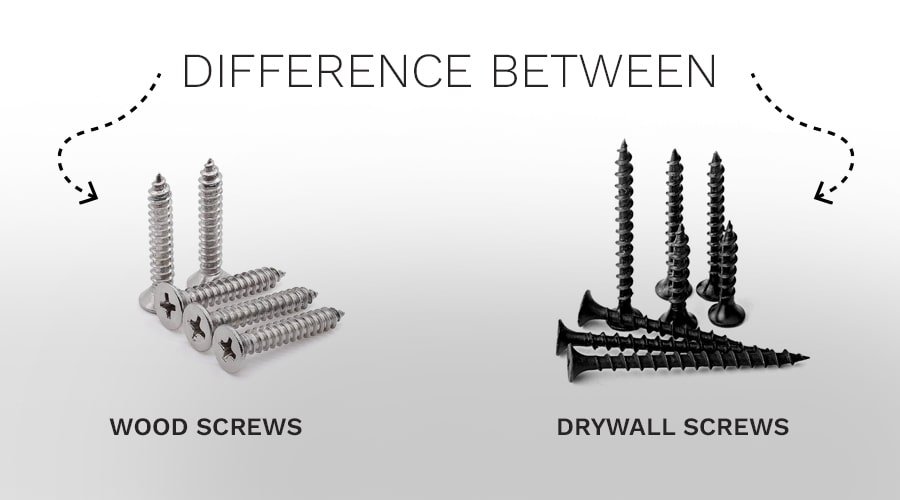
The difference matters more than many beginners realize. A wood screw is built for wood. A drywall screw is built for drywall-to-stud fastening. That sounds similar, but the design details are very different.
Wood screws usually have a stronger body, better thread pattern, and better performance under load. Some also have self-drilling or self-countersinking features for easier installation. They are made to resist pull-out and handle everyday stress in wood joints.
Drywall screws are thinner and harder. That makes them fast and cheap, but also more brittle. They work well in drywall, where the material itself is soft and the screw is not expected to carry much side load.
The table below shows the main difference in practical terms.
| Feature | Drywall screw | Wood screw |
|---|---|---|
| Main purpose | Attach drywall to framing | Join wood pieces |
| Strength in wood joints | Fair for light use | Better for general use |
| Resistance to bending | Lower | Higher |
| Pull-out resistance | Moderate to low | Better |
| Outdoor suitability | Usually poor | Better options available |
| Risk of snapping | Higher | Lower |
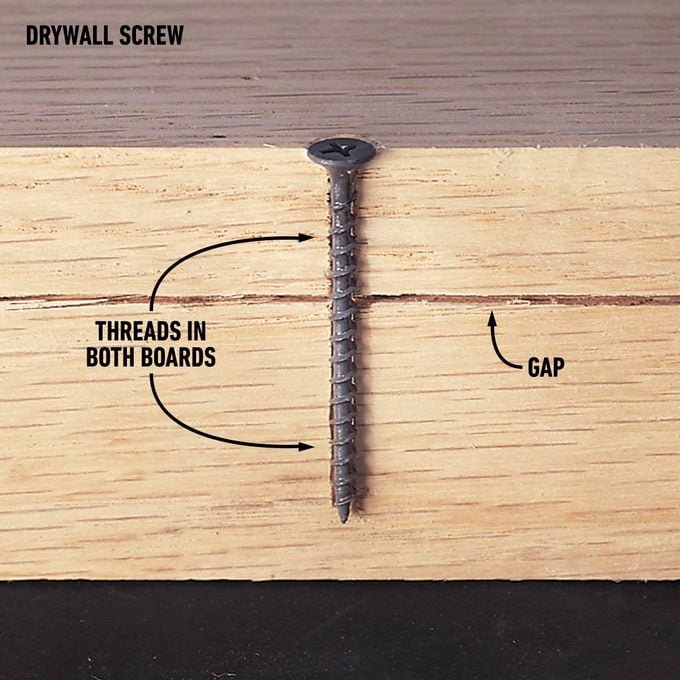
Credit: familyhandyman.com
Where drywall screws may be acceptable in wood
There are a few situations where drywall screws can be useful. The key is to keep the stress low and the consequences small if the screw fails.
Temporary shop projects
In a workshop, drywall screws are often used for jigs, stop blocks, and quick test setups. These parts do not need to last forever. If a screw fails, the damage is usually limited.
Non-structural indoor work
Some light trim or backer pieces inside a dry room may not need a premium fastener. If the part is mostly decorative and not holding weight, drywall screws can sometimes do the job.
Prototyping and practice
If you are testing a layout or learning how a joint fits together, drywall screws can be a low-cost choice. Just remember to replace them with proper screws in the final build.
Very soft wood in low-stress spots
Softwoods like pine may accept drywall screws fairly well in some situations. But “fits well” does not mean “best choice.” It only means the screw may get enough grip for a light-duty task.
What many beginners miss about screw strength
One common mistake is thinking that a screw is strong just because it feels tight in the hole. Tightness is only part of the story. Real strength depends on how the joint will behave after installation.
First, wood moves. It expands and shrinks with humidity. A fastener that seems fine on day one may loosen after a season of changes.
Second, load is not always straight down. Many joints fail because they are pushed sideways, twisted, or shaken. Drywall screws are weaker in those situations.
Third, pilot holes matter more than people think. Without the right pilot hole, even a good screw can split the wood. With the wrong screw type, a pilot hole cannot fix poor fastener design.
These are the kinds of details that separate a quick fix from a lasting build.
Better alternatives to drywall screws for wood
If your project involves real load, movement, or long-term use, choose a better fastener. The right screw depends on the job, but these are the most reliable options.
Credit: lpscrew.com
1. Wood screws
Traditional wood screws are the closest general-purpose alternative. They are designed for wood joints and usually hold better than drywall screws. They are a smart choice for furniture, trim, and basic carpentry.
2. Construction screws
Construction screws are strong, versatile, and common in framing and heavy wood projects. They often have sharp threads, corrosion resistance, and good holding power. Many modern builders prefer them over older-style fasteners.
3. Cabinet screws
Cabinet screws are made for clean, accurate woodworking. They help join cabinets, face frames, and other indoor furniture parts. They usually give a more professional result than drywall screws.
4. Deck screws
If the project is outdoors, deck screws are often a better fit. They are made to resist corrosion and weather. They also tend to hold better in exterior lumber than drywall screws.
5. Pocket-hole screws
For angled joinery, pocket-hole screws are useful because their shape and head design match the joint style. They are made to pull wood pieces together securely without splitting them easily.
If you want to learn more about choosing screws and fasteners, a reliable starting point is the Ace Hardware fastener guide, which can help you compare common options in plain language.
How to choose the right screw for wood
The best screw depends on five main things: load, wood type, environment, appearance, and whether the joint may need to come apart later.
1. Think about load first
If the screw must hold weight, do not choose based on price alone. A cheap screw that fails is more expensive in the long run. Use stronger fasteners for shelves, frames, and furniture.
2. Match the screw to the wood
Softwoods are easier to fasten, but they can still split. Hardwoods need more care and often need pilot holes. Drywall screws are not the best choice for hardwood because of breakage risk.
3. Consider indoor or outdoor use
Moisture changes everything. A screw that works indoors may fail outside. For outdoor projects, use corrosion-resistant screws made for exterior conditions.
4. Check the head style
Flat heads, trim heads, and bugle heads all behave differently. The right head helps the screw sit properly and look neat. Drywall screw heads are not always ideal for clean woodwork.
5. Do not ignore pilot holes
Even with the right screw, a pilot hole can prevent splitting and make driving easier. This matters especially in hardwood or near the edge of a board.
Common mistakes people make with drywall screws in wood
Many problems start before the screw is even driven in. These mistakes are easy to avoid once you know what to look for.
- Using drywall screws for furniture — Furniture gets movement and stress. That is where drywall screws often fail.
- Over-tightening them — This can snap the screw or strip the threads in the wood.
- Skipping pilot holes — The screw may split the wood or drive in at an angle.
- Using them outdoors — Moisture and rust shorten their life.
- Assuming all screws are basically the same — They are not. Small design changes make a big difference in strength.
How to use drywall screws in wood more safely
If you still need to use drywall screws in a light wood project, a few simple habits can reduce the risk.
Credit: woodbin.com
Use them only for low-stress jobs
Keep them away from load-bearing joints, vibrating parts, and outdoor use. Think of them as a budget option for minor tasks only.
Pre-drill when needed
A small pilot hole can lower the chance of splitting and make the screw easier to control. This is especially useful near edges or in harder wood.
Do not drive them too deep
Over-driving weakens the joint and can damage the screw head. Stop when the head is seated properly.
Use enough screws
A single drywall screw should not be trusted to carry a heavy load. But adding more screws is not always the answer either. If the fastener type is wrong, quantity does not fix the weakness.
The bottom line on strength
If your question is strictly, can you use drywall screws in wood, the answer is yes for light, low-risk work. But for real woodworking, they are usually not the best option.
The main issues are brittleness, weaker performance under side load, and lower long-term reliability. Wood projects often face movement, weight, and vibration. That is where better fasteners earn their place.
So use drywall screws only when the job is small, dry, and non-structural. For furniture, shelving, outdoor work, or anything important, choose wood screws, construction screws, deck screws, or another fastener made for the task.
That simple choice can save you from loose joints, broken screws, and repairs later.
FAQs
Can you use drywall screws in wood for furniture?
You can, but it is not a good idea for most furniture. Furniture faces load, movement, and stress. Wood screws or construction screws are much safer and stronger.
Why do drywall screws break so easily in wood?
Drywall screws are made from hard steel that can be brittle. They are thin and not designed for heavy side pressure or twisting, so they may snap instead of bending.
Are drywall screws stronger than wood screws?
No, not for wood projects. Wood screws are usually better for holding wood pieces together. Drywall screws are made for attaching drywall, not for strong wood joints.
Can drywall screws be used outdoors in wood?
Usually no. Most drywall screws are not made for outdoor moisture and can rust over time. Use deck screws or other exterior-rated screws instead.
What is the best replacement for drywall screws in wood?
For general indoor wood projects, wood screws or construction screws are the best replacement. For outdoor use, choose deck screws or exterior-rated fasteners.
