
If you are doing a home repair or a small DIY project, you may wonder if you can use wood filler and then put a screw in that spot. It sounds simple, but the answer depends on the type of filler, the size of the screw, and how much strength you need from that joint.
The short answer is that can you screw into wood filler is sometimes yes, but not always a good idea. Wood filler can help hide holes, dents, and damage. But it is not the same as solid wood. Some fillers hold a screw for light use. Others crumble or split when you try to drive a screw into them.
If you want the repair to last, you need to know when wood filler is strong enough, when it is not, and what safer options exist. That is what this guide will explain in clear, practical terms.
What Wood Filler Really Is
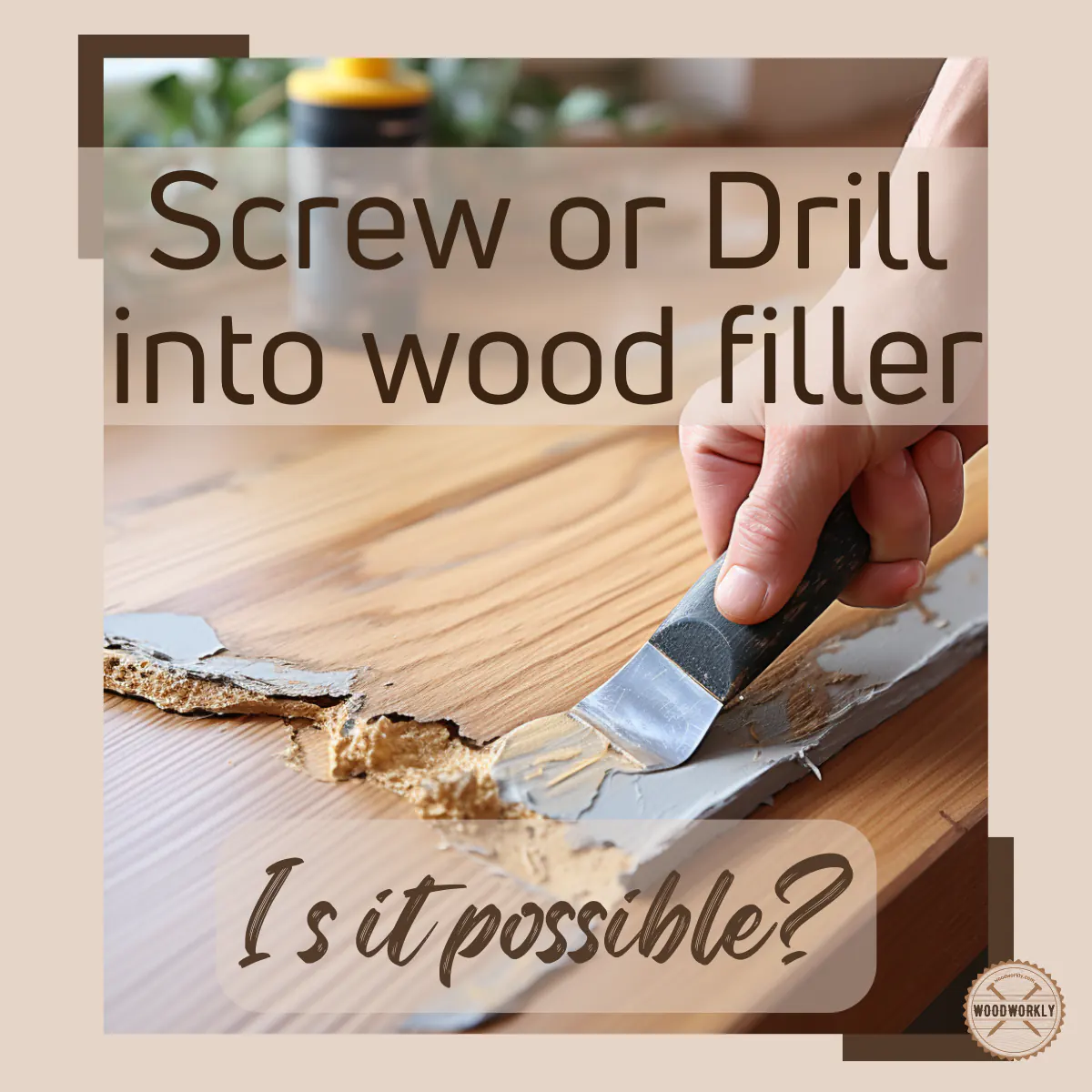
Wood filler is a repair material made to fill cracks, holes, dents, nail marks, and small surface damage in wood. It is usually made from wood fibers, binders, and other compounds that harden after drying.
It is important to understand one key point: wood filler is made for appearance and light repair, not for structural strength. It helps the surface look smooth again. It does not restore the full strength of the original wood.
There are two common types you will see in stores:
- Water-based filler – easy to sand, good for indoor jobs, but usually not very strong for holding screws.
- Solvent-based or epoxy-style filler – stronger and harder, better for tougher repairs, but still not equal to solid wood in every case.
Some products are labeled as wood putty, wood filler, or wood repair compound. These names are often used loosely, but the performance can be different. A soft putty may work fine for cosmetic touch-ups, while a harder filler may support small fasteners better.
So, Can You Screw Into Wood Filler?
Yes, sometimes you can screw into wood filler, but only under the right conditions. A screw may hold in hardened filler if the repair is small, the screw is short, and the load is light. For example, a tiny screw for a decorative piece may be fine.
But if the screw will support weight, carry repeated stress, or fasten a hinge, bracket, or shelf, wood filler is usually a poor choice. In those cases, the screw may loosen over time, strip out the filler, or crack the repair area.
Here is the simplest way to think about it:
- Light-duty use: sometimes okay
- Medium-duty use: risky unless the filler is strong and the repair is well done
- Heavy-duty use: not recommended
The reason is basic. Screws need something firm to grip. Solid wood has fibers that bite into the threads of the screw. Most fillers do not have that same fiber structure, so the grip is weaker.
What affects the result?
Several things decide whether a screw will hold.
- Type of filler – hard fillers hold better than soft ones.
- Depth of repair – shallow filler patches work better than deep ones.
- Screw size – small screws are safer than large ones.
- Load on the joint – a decorative screw is not the same as a load-bearing screw.
- Drying time – filler must be fully cured before any drilling or screwing.
When It May Work Well Enough
There are a few situations where screwing into wood filler can work fine. These are the cases where the screw is not doing much work.
Small cosmetic repairs
If you filled a small hole from a picture hook or nail and now want to place a light trim piece over it, the filler may be strong enough. The screw may only help hold a decorative item in place.
Very shallow holes
If the original hole was small and the filler only replaced a thin section near the surface, the screw may still find enough support. This is more likely when the screw also reaches into the original wood nearby.
Short screws in hard filler
Some high-quality epoxy fillers are much harder than basic paste fillers. A short screw may hold in these products for light use. Still, it is smart to test first if the part matters.
Non-structural use
Cabinet trim, small knobs, light decorative strips, and similar items may not need the same strength as a hinge or shelf bracket. In these cases, the filler may be acceptable if you are careful.
When You Should Not Rely on It
There are clear situations where you should not trust wood filler to hold a screw. This is where many DIY mistakes happen.
Credit: woodworkly.com
Hinges, brackets, and hardware
Door hinges, shelf brackets, drawer slides, and safety hardware need real strength. These parts move, pull, and carry weight. If you try to fasten them into filler, the screw may loosen quickly or tear out.
Repeated stress
If the screw will be removed and reinstalled, or if the part will vibrate or move often, the filler can wear out fast. Each turn weakens the material a little more.
Large or deep holes
When a hole is large, the filler block inside it may not be dense enough to hold a thread. The wider the hole, the less chance the screw has of staying tight.
Outdoor or wet areas
Moisture can weaken many fillers unless they are made for exterior use. Even if the filler feels hard at first, weather changes can make the repair less reliable over time.
If you need a general reference for wood repair and fastening basics, this guide from This Old House can be useful for comparing repair methods and materials.
How to Tell If the Filler Is Strong Enough
Before you put in a screw, inspect the repair carefully. A filler can look hard on the surface but still be weak inside.
Check hardness with a tool
Gently press the area with a screwdriver tip or fingernail. If it dents easily, it is not ready. Good filler should feel firm all the way through.
Look at the label
Product labels often tell you whether the filler is sandable, paintable, stainable, or suitable for structural repairs. If the product does not mention screw retention or strength, assume it is not meant for holding fasteners.
Let it cure fully
Dry-to-touch is not the same as fully cured. Some fillers may feel dry in an hour but still need much longer to gain full hardness. If you screw too soon, the material may collapse around the hole.
Test in an unseen spot
If the repair is important, test a small screw in a hidden area or scrap piece made with the same filler. This simple step can save time and prevent damage.
Best Way to Screw Into Filled Wood
If you decide the repair is light enough to try, use a careful method. Driving a screw directly into filler without preparation is one of the easiest ways to fail.
1. Make sure the filler is fully hardened
Wait for the full cure time listed on the product. If the room is cold or damp, allow extra time.
2. Mark the screw location
Use a pencil or awl to mark the exact point. Do not shift the screw around later, because that can widen the weak spot.
3. Drill a pilot hole
This is one of the most important steps. A pilot hole reduces the pressure on the filler and helps the screw start cleanly.
Use a drill bit slightly smaller than the screw core. If the hole is too large, the screw will not grip. If it is too small, the filler may split.
4. Use the right screw
Choose a screw that is short enough to reduce stress but long enough to reach nearby solid wood if possible. Fine-thread screws can sometimes grip better in harder filler, but the material still matters more than the thread style.
5. Drive slowly
Use low speed and stop if you feel resistance changes suddenly. Forcing the screw can crack the filler or strip the hole.
6. Stop as soon as the screw is seated
Over-tightening is a common mistake. Once the screw is snug, stop. Tightening further may destroy the grip.
Better Alternatives Than Screwing Into Filler
In many repairs, there is a better answer than trusting filler alone. These options often give a stronger and longer-lasting result.
Use a wood plug or dowel
If the hole is stripped or too large, you can glue in a wooden plug or dowel, then drill a new pilot hole. This gives the screw real wood to bite into. It is one of the most reliable repair methods for screw holes.
Move the screw slightly
If the original hole is ruined and the part allows it, shifting the screw location a little may be the easiest fix. Fresh wood is usually better than trying to rescue weak filler.
Use epoxy filler for stronger repairs
Epoxy fillers are harder and more durable than many basic wood fillers. They are often a better choice where you need more holding strength. Even then, they are not perfect for heavy loads.
Use a larger screw only when safe
A slightly larger screw may grip better if there is enough surrounding wood. But do not make the hole so big that the repair weakens the piece further. Bigger is not always better.
Reinforce from behind
For furniture or cabinet parts, adding a backing block or support piece can solve the problem more effectively than filling and hoping the screw holds.
| Repair method | Strength | Best use | Main risk |
|---|---|---|---|
| Basic wood filler | Low to medium | Small cosmetic repairs | Screw may strip out |
| Hard epoxy filler | Medium | Small light-duty fasteners | Still not equal to wood |
| Wood plug or dowel | High | Stripped screw holes | Needs more work and drying time |
| New hole in solid wood | High | Load-bearing hardware | May need repositioning |
For a stronger repair, match the filler choice with the right fastener setup. Start by choosing from the types of wood screws, then compare construction screws vs wood screws if the repair needs more strength. If you are tempted to use leftover drywall fasteners, check whether drywall screws work in wood and the differences between wood screws vs drywall screws. For installation and repair problems, see screw gun vs drill, how to drill out a stripped screw, and what self-tapping screws are used for.
Common Mistakes People Make
Many failed repairs happen because the filler was used the wrong way, not because the product was bad.
Credit: jennifermaker.com
Trying to use filler as if it were wood
This is the biggest mistake. Filler is a repair material, not a replacement for solid lumber.
Skipping the pilot hole
Driving a screw directly into filler puts too much pressure on the patch. A pilot hole is almost always the safer choice.
Using soft filler for hard jobs
Some fillers are great for small nail holes but not for screw retention. If the job needs strength, choose the right product from the start.
Not checking the original wood
Sometimes the filler is not the real problem. The surrounding wood may also be weak, rotten, or split. In that case, screwing into the repair area will fail no matter what.
Overtightening the screw
A common beginner mistake is thinking tighter means better. In filler, tighter often means damage.
Two Practical Examples
These examples show how the decision changes depending on the job.
Example 1: A tiny cabinet trim piece
You filled a small nail hole in a cabinet face and want to attach a light decorative strip. The screw is small, the strip has almost no weight, and the filler is hard. In this case, screwing into the filler may be fine if you drill a pilot hole and stop before over-tightening.
Example 2: A loose hinge on a door
You stripped a hinge screw hole, filled it, and want to reinstall the hinge. This is not a good use for filler alone. The door moves every time it opens, so the screw needs strong wood grip. A dowel repair or a new anchor point is much safer.
How to Choose the Right Repair Method
Ask yourself three simple questions before you decide.
What is the screw doing?
If it only supports decoration, filler may be enough. If it holds weight or movement, use a stronger repair.
How big is the damaged area?
Small holes are easier to repair with filler. Large or crushed areas usually need wood replacement, plugs, or reinforcement.
Will the joint move or carry stress?
Any moving joint should be treated as a strength problem, not just a surface repair. That is where filler often fails.
A useful rule is this: if the screw matters, the wood matters more than the filler. The best repair is the one that gives the screw real material to bite into.
Practical Tips for Better Results
These small details can make a noticeable difference.
- Use filler only after removing loose or rotten wood.
- Sand the repair smooth before marking the screw point.
- Choose a filler made for the job, not just the cheapest one.
- Wait longer than the minimum cure time if the screw is important.
- Keep the screw as short as possible while still doing the job.
- Test the repair with gentle pressure before full use.
One non-obvious point many beginners miss is that the edge of the repair can be weaker than the center. A screw placed too close to the edge of a filler patch is more likely to crack the material. Another important detail is that a filler can seem solid at room temperature but become softer in heat or humidity, which can slowly reduce screw grip over time.
Credit: woodworkly.com
Final Answer
So, can you screw into wood filler? Sometimes yes, but only for light-duty use and only with the right filler and careful prep. For cosmetic repairs and small fasteners, it may work well enough. For hinges, shelves, brackets, and anything load-bearing, it is usually the wrong choice.
If the screw has to stay tight for a long time, choose a repair that gives it real wood to hold. In most cases, that means a wood plug, dowel, or a fresh hole in solid material. Wood filler is useful, but it should be seen as a surface repair first, not a strong anchor point.
FAQs
Can you screw into wood filler without a pilot hole?
It is not a good idea. A pilot hole reduces pressure and lowers the chance of cracking or stripping the filler. If you skip it, the repair is much more likely to fail.
Will a screw hold in wood filler forever?
No. Even if it feels tight at first, filler does not grip like solid wood. Over time, vibration, weight, or movement can loosen the screw.
What is the strongest type of wood filler for screws?
Hard epoxy-style fillers are usually stronger than basic water-based fillers. Still, even strong fillers are best for light-duty use only.
Can I use wood filler for stripped screw holes?
Yes, but it is often not the best repair. For stripped holes, a wooden dowel or plug usually gives a stronger and more reliable result.
Is wood filler strong enough for cabinet hinges?
Usually no. Cabinet hinges need a firm, long-lasting grip. A dowel repair or a new solid anchor point is a much safer choice.
