
If you have ever stood in a room during a house fire drill, you may have wondered how safe the walls really are. Many people ask is drywall flammable because it looks simple, light, and easy to break. But drywall is not just a plain sheet on a wall. It has a special core that changes how it reacts to heat and fire.
The short answer is this: standard drywall is not very flammable, and it offers useful fire resistance. Still, that does not mean it is fireproof. In a real fire, drywall can fail, fall apart, or lose strength if the heat is high enough or the fire lasts long enough.
Understanding how drywall behaves in fire can help you make better choices for your home, garage, basement, or business. It can also help you understand why some walls last longer than others during a fire and why certain rooms need special drywall types.
How drywall reacts to fire
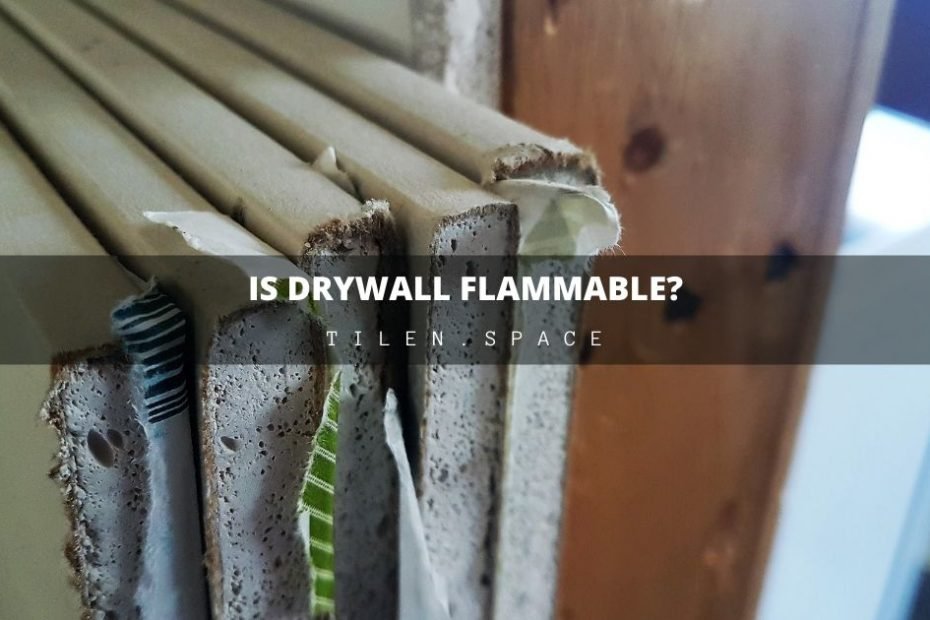
Drywall is made from a gypsum core wrapped in thick paper on both sides. Gypsum is a mineral that contains water in its natural structure. That water is one reason drywall performs better in fire than many other common building materials.
When heat hits drywall, the water inside the gypsum starts to turn into steam. This process takes time and heat energy. In simple words, the wall is using some of the fire’s energy to protect the space behind it. That is why drywall is considered a fire-resistant material, even though the paper facing can still burn.
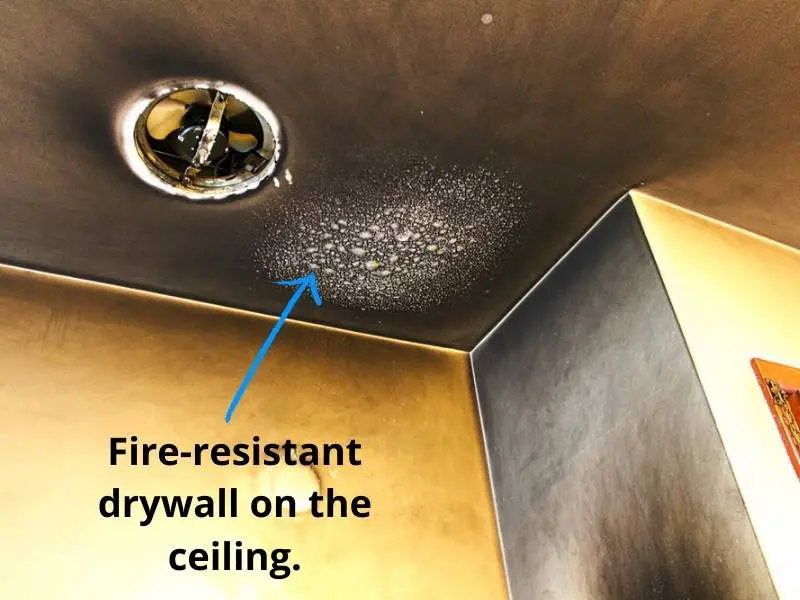
Standard drywall usually does not ignite easily on its own in normal household conditions. But if flames are strong enough, the paper surface can char, and the gypsum core can break down. Once the core is damaged, the wall loses much of its protection.
Why gypsum matters
Gypsum is the key reason drywall performs well in fire. It releases water vapor when heated, which slows the rise in temperature on the other side of the wall. This gives people more time to escape and may delay the spread of fire between rooms.
A common mistake is thinking the wall “survives” fire in the same way as metal or stone. It does not. Drywall works by slowing fire, not by stopping it forever. That difference matters a lot.
The paper facing is the weak point
The outer paper layer is what makes drywall easier to finish and paint, but it is also the part most likely to burn first. If the fire is small, the paper may only scorch. If the fire is intense, the paper can ignite and feed the flames for a short time.
This is one of the non-obvious details many beginners miss: even when the gypsum core is fire resistant, the paper facing can still be the first thing to fail. So the real fire performance of drywall depends on both layers working together.
Is drywall flammable in everyday use?
In most homes, drywall is not treated as a highly flammable material. You can usually place it in walls and ceilings without worrying that it will catch fire from normal room heat. This is one reason drywall is so widely used in modern construction.
But “not highly flammable” is not the same as “safe in every fire.” If drywall is exposed to direct flames, high heat, or a long-burning fire, it can become damaged quickly. The paper facing may burn, seams may open, and the panel may crumble or fall away.
So, if you are asking is drywall flammable, the clearest answer is: it is not easily flammable in normal use, but it is not fireproof.
What can make drywall fail faster
Several things can reduce drywall’s fire performance:
- Thin drywall sheets
- Damaged panels with cracks or holes
- Moisture damage
- Poor installation with gaps at seams
- Unprotected openings for wires, pipes, or vents
- Use of standard drywall where fire-rated drywall is needed
These details matter because fire often travels through small weak points first, not through the middle of a large wall board. A wall can look solid and still fail early if it has many gaps or cutouts.
Standard drywall versus fire-rated drywall
Not all drywall is the same. The two most common types are standard drywall and fire-rated drywall. People sometimes call fire-rated drywall “Type X” drywall. It is designed to resist fire longer than standard drywall.
Fire-rated drywall contains special glass fibers and additives that help it hold together longer under heat. In many cases, it is thicker too. This improves how long the wall can keep its shape during a fire.
Here is a simple comparison:
| Feature | Standard drywall | Fire-rated drywall |
|---|---|---|
| Fire resistance | Basic protection | Higher protection |
| Thickness | Usually thinner | Often thicker |
| Core materials | Gypsum core | Gypsum plus special fibers/additives |
| Best use | General walls and ceilings | Garages, stairwells, shared walls, code-required areas |
| Cost | Lower | Higher |
One important point: fire-rated drywall is not magic. It still has limits. Its job is to slow fire spread, not to make a wall immune to flames forever.
Credit: tilen.space
Why fire-rated drywall lasts longer
Fire-rated drywall is built to stay intact longer when exposed to heat. The added fibers help the board resist cracking and breaking apart. That means the wall can continue blocking fire and smoke for a longer time.
That extra time can be very valuable. In a fire, even 15 or 30 more minutes can matter for escape, fire suppression, and reducing property damage.
What fire resistance really means
Many people confuse fire resistance with fireproofing. These are not the same. Fire resistance means a material can slow the spread of fire and survive heat for a period of time. Fireproof means it would not burn or fail in fire, which is a much stronger claim and rarely true for everyday building materials.
Drywall is fire resistant, not fireproof. That is why building codes often use it in walls between living spaces, garages, and shared units. It helps create a barrier that slows flames and smoke.
Time is the main benefit
The main value of drywall in a fire is time. It buys time for people to leave. It buys time for firefighters to respond. It buys time for the fire to be contained in one area instead of spreading fast through a building.
This is a non-obvious insight many homeowners miss: fire resistance is not only about the wall itself. It is also about the extra minutes it gives to people inside the building. That time can be the difference between minor damage and total loss.
Smoke matters too
Drywall does more than resist flames. It also helps reduce smoke movement between rooms. Smoke can be just as dangerous as fire because it spreads quickly and makes breathing hard. A sealed drywall wall can help slow that movement if it is installed correctly.
But once the wall is cracked, punctured, or poorly sealed, smoke can move through gaps much faster than many people expect.
Where drywall fire resistance matters most
Some parts of a building need more fire protection than others. Drywall is often used in these areas because it is practical, affordable, and easy to install.
Garages
Garages often contain cars, fuel, tools, and electrical equipment. That makes them a higher-risk area. Fire-rated drywall is often used on walls and ceilings that separate a garage from the main home.
This is a place where standard drywall may not be enough, depending on local code and the layout of the house.
Shared walls and apartments
In apartment buildings and townhomes, drywall helps slow fire from spreading between units. Shared walls are often required to meet fire-resistance standards. This protects both people and property.
Basements and utility rooms
Basements often hold furnaces, water heaters, and electrical panels. These areas can benefit from better fire-rated assemblies. Drywall helps slow the spread of fire from one room to another, especially around mechanical equipment.
Stairways and exit paths
Stairwells are important escape routes. Fire-resistant walls in these areas can help keep a path safer for longer. If smoke and flame are blocked more effectively, people have a better chance of getting out.
What can make drywall more fire-safe
Drywall alone is helpful, but the full wall system matters even more. A fire-resistant wall is not just about the board. It also depends on the studs, insulation, screws, joints, and sealants.
Credit: patchmaster.com
Proper installation is critical
Even fire-rated drywall can perform badly if it is installed the wrong way. Gaps at seams, missing screws, weak joint tape, or open holes for wiring can weaken the entire assembly.
Builders often focus on the board itself, but fire often moves through the smallest weaknesses. A tiny gap around a pipe or electrical box can reduce the protection far more than many people think.
Use the right insulation
Some wall systems include mineral wool or other fire-resistant insulation. This adds more protection by slowing heat transfer inside the wall cavity. In many cases, the wall assembly is tested as a full system, not as a single panel.
Seal penetrations carefully
Any hole through a drywall wall can become a weak point. That includes outlets, pipes, ducts, and cable openings. Fire-rated caulk or sealant may be needed in certain areas to maintain fire resistance.
For more technical details on fire-rated wall systems, you can review guidance from the National Fire Protection Association.
Common mistakes people make about drywall and fire
People often make simple but serious assumptions about drywall. These mistakes can lead to poor choices during building, repair, or remodeling.
Thinking all drywall is the same
This is one of the biggest mistakes. Standard drywall and fire-rated drywall are not equal. If a wall must resist fire, the board type matters.
Ignoring the wall assembly
A strong fire wall is more than a sheet on studs. It is a system. The board, fasteners, joints, insulation, and sealants all work together. If one part is weak, the whole wall is weaker.
Covering damage without fixing it
Small holes, cracks, and water damage should not be ignored. Damage can reduce fire resistance and make the wall fail sooner. Repairs should be done properly, especially in areas where fire performance matters.
Using the wrong product in the wrong room
Homeowners sometimes use standard drywall in areas that should have fire-rated protection. That may save money in the short term, but it can create a safety problem and may not meet building codes.
Signs drywall may no longer provide good fire resistance
Drywall does not last forever in the same condition. If it has been damaged, its fire performance can drop. You may need to inspect it if the wall has been through moisture, impact, or old repairs.
- Soft or crumbling areas
- Large cracks near seams
- Water stains and swelling
- Loose edges or exposed core
- Many unsealed holes or cutouts
Once drywall starts to break down, it may still look acceptable from a distance. But fire resistance depends on structure, not appearance alone.
Is drywall safe enough for home use?
For many homes, drywall is a good and safe building material. It is widely used because it is affordable, easy to install, and offers useful fire resistance. In normal rooms, standard drywall usually does its job well.
Still, “safe enough” depends on location. A bedroom wall, garage wall, furnace room, and apartment shared wall do not have the same fire risk. That is why code requirements and material choices should match the room’s purpose.
If you are planning a renovation, it is smart to ask where fire-rated drywall is required or recommended. That small decision can improve safety in a big way.
Practical takeaways for homeowners
If you want the simple version, remember these points:
- Drywall is not highly flammable in normal use.
- Standard drywall is fire resistant, but not fireproof.
- Fire-rated drywall lasts longer under heat and is used in higher-risk areas.
- The full wall system matters more than the board alone.
- Gaps, damage, and poor installation can reduce fire protection fast.
These facts are easy to miss when a wall looks plain and harmless. But in a fire, small details become important very quickly.
Credit: fixitandfinish.com
Conclusion
So, is drywall flammable? The best answer is that drywall is not easily flammable, but it is also not fireproof. Its gypsum core gives it fire resistance, while the paper facing and wall construction still have limits. In the right setting, drywall can slow fire and smoke long enough to protect people and reduce damage.
If fire safety is important in your home or building, choose the right drywall type for the right area. Pay attention to installation, seal gaps carefully, and do not assume every wall offers the same level of protection. Fire resistance is strongest when the whole system is built with care.
FAQs
1. Is drywall flammable in a house fire?
Drywall is not highly flammable at normal room temperatures, but it can burn or fail during a house fire. The paper facing may char or ignite, and the gypsum core can break down under strong heat.
2. What makes drywall fire resistant?
The gypsum core is the main reason drywall resists fire. It contains water in its structure, and that water turns to steam when heated. This slows heat transfer and helps delay fire spread.
3. Is fire-rated drywall the same as regular drywall?
No. Fire-rated drywall is made to resist fire longer than standard drywall. It often has special fibers and additives, and it is used in areas where extra fire protection is needed.
4. Can drywall stop fire completely?
No. Drywall can slow fire and smoke, but it cannot stop fire forever. It is designed to delay spread, not to act as a permanent fire barrier.
5. Where should fire-rated drywall be used?
It is often used in garages, shared walls, stairways, basements, and utility rooms. Local building codes usually decide where it is required, so it is best to check those rules before building or remodeling.
