
If you have ever lifted a drywall sheet, you know it is not as light as it looks. A single board can feel easy at one end and awkward at the other, especially when you are moving it through stairs, halls, or a jobsite. That is why people often ask the same practical question: how much does drywall weigh?
The answer is not one number. Drywall weight changes with board size, thickness, and type. A 1/2-inch standard sheet weighs much less than a 5/8-inch fire-rated panel. Moisture resistance, specialty cores, and larger sheet sizes can also add a lot of weight. If you plan to buy, carry, install, or ship drywall, knowing the weight matters more than many people think.
In this guide, you will get clear weight ranges by size and type, plus simple ways to estimate total load for your project. You will also learn a few details that beginners often miss, like why one “same size” sheet can still feel very different and why board count is only part of the lifting problem.
For related drywall planning, compare gypsum vs drywall and check how long drywall mud takes to dry before scheduling finishing work.
Why drywall weight matters before you start a project
Drywall is one of those materials that seems simple until you have to move a stack of it. Weight affects more than just the person carrying it. It affects delivery, truck load, storage, wall handling, ceiling installation, and even the speed of the job.
If you underestimate the weight, you may buy too much for your vehicle, strain your back, or make it harder to finish the work safely. If you work alone, the wrong sheet size can turn a small repair into a tiring day. If you are hiring help, weight also helps you plan labor better and avoid surprises.
There is another reason this matters: drywall is often sold by dimensions, not by weight. So to understand what you are really handling, you need a simple way to translate “4×8 sheet” into a real-world number.
The short answer: how much does drywall weigh?
For a standard 4×8 drywall sheet, the weight usually falls in these ranges:
- 1/4-inch drywall: about 40 to 45 pounds
- 3/8-inch drywall: about 50 to 60 pounds
- 1/2-inch drywall: about 50 to 70 pounds
- 5/8-inch drywall: about 70 to 105 pounds
That is the quick version. The exact weight depends on the brand, the core material, and whether the sheet is a standard, moisture-resistant, or fire-rated product. Some specialty panels weigh noticeably more than basic boards.
As a broad rule, the thicker the drywall, the heavier it is. Bigger sheets also weigh more, even if the thickness stays the same.
Drywall weight by size and thickness
The easiest way to estimate drywall weight is to look at both dimensions and thickness together. A 4×8 sheet is the most common size, but many projects also use 4×10 or 4×12 sheets.
Below is a practical guide with common approximate weights. These are typical ranges, not exact factory numbers.
| Drywall size | 1/4-inch | 3/8-inch | 1/2-inch | 5/8-inch |
|---|---|---|---|---|
| 4 x 8 | 40–45 lb | 50–60 lb | 50–70 lb | 70–105 lb |
| 4 x 10 | 50–55 lb | 62–75 lb | 62–85 lb | 88–130 lb |
| 4 x 12 | 60–70 lb | 75–90 lb | 75–100 lb | 105–155 lb |
These ranges may look wide, but that is normal. Two panels with the same dimensions can still differ by several pounds. One brand may use a denser core, and another may have a lighter design for easier handling.
Why 5/8-inch drywall feels so much heavier
Many beginners are surprised when they first lift 5/8-inch drywall. It is not just a little heavier. In some cases, it feels dramatically heavier because the panel is often denser and stiffer. That extra stiffness is useful for sound control and fire resistance, but it also makes the board harder to carry alone.
This is one of the non-obvious details people miss: weight is only part of the challenge. A thicker sheet also bends less, so it can be harder to maneuver in tight spaces, especially on stairs or around corners.
Why larger sheets matter more than people expect
Many people focus only on thickness, but length matters too. A 4×12 sheet does not just weigh a little more than a 4×8 sheet. It can become awkward to control because the extra length shifts the balance point. That means the sheet may feel harder to handle even when the weight increase looks moderate on paper.
This is the second detail beginners often overlook: a sheet can be manageable in pounds but still difficult in real life because of leverage. Long boards are tougher to turn, lift, and keep steady.
Weight by drywall type
Not all drywall is made for the same job. Standard interior drywall is the lightest common option. Other types are designed for moisture, fire, abuse resistance, or sound control. Those performance upgrades often change the weight.
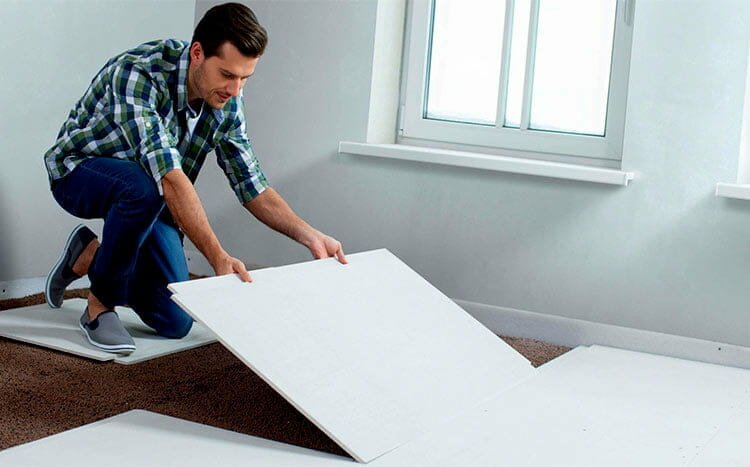
Credit: homegardenguides.com
Standard drywall
Standard drywall is the most common interior board for walls and ceilings in dry areas. A 1/2-inch 4×8 sheet usually falls around 50 to 70 pounds. It is the everyday choice for many homes because it balances cost, strength, and handling.
Moisture-resistant drywall
Moisture-resistant boards, often used in bathrooms, laundry rooms, and basements, may weigh slightly more than standard sheets. The facing and core are built differently to help manage damp conditions. Weight depends on the exact product, but expect some added pounds compared with basic board.
Fire-rated drywall
Fire-rated drywall, commonly 5/8-inch Type X, is usually heavier because of the dense core and fiberglass reinforcement. This is the type many people use in garages, shared walls, utility rooms, and areas where code requires extra fire resistance. A 4×8 sheet can easily move into the 70 to 105 pound range, and some panels can be even heavier.
If you want a technical product reference, the USG drywall resource is a useful place to compare panel types and specifications.
Soundproof or specialty drywall
Sound-damping drywall often uses special layers or a denser core. Because of that, it may weigh more than standard board. Some products are designed to block sound while staying thinner than a traditional heavy panel, but many still have a noticeable weight increase.
Abuse-resistant drywall
Abuse-resistant drywall is made for areas that take more wear, such as schools, hallways, and busy commercial spaces. It usually has a stronger face and may weigh a bit more than standard drywall. The bigger point is not just weight, but durability. These sheets are often chosen for performance, not easy handling.
How to estimate the weight of a drywall stack
If you are buying more than one sheet, total weight becomes very important. A stack of drywall can quickly become too heavy for one person, one truck, or one floor area if you do not plan ahead.
Here is a simple way to estimate stack weight:
- Find the weight of one sheet based on size and thickness.
- Multiply that number by the total number of sheets.
- Add a little extra if you are using specialty drywall or a denser brand.
For example, if one 4×8 sheet of 1/2-inch drywall weighs about 60 pounds, then 20 sheets weigh about 1,200 pounds. That is before you count pallets, straps, packaging, or load limits for transport.
Example estimates for common project sizes
- 10 sheets of 1/2-inch 4×8 drywall: about 500 to 700 pounds
- 20 sheets of 1/2-inch 4×8 drywall: about 1,000 to 1,400 pounds
- 10 sheets of 5/8-inch 4×8 drywall: about 700 to 1,050 pounds
- 12 sheets of 4×12 drywall: often over 1,000 pounds, depending on type
These numbers matter if you are loading a pickup truck or moving boards through a home. Many people forget that the weight of the full stack can create floor stress in a garage or upstairs room as well.
What affects drywall weight besides size
Two sheets with the same dimensions may still weigh differently. That happens because several small factors change the total mass of the board.
Core density
Some drywall cores are denser than others. A denser core usually means better performance, but it also adds weight. This is one reason product labels matter more than guesswork.
Paper facing and additives
The paper facing and special additives also affect weight. Mold resistance, fire resistance, and sound control often require material changes. Even if the sheet looks the same from the outside, the inside can be very different.
Manufacturer differences
Different brands may produce sheets that vary slightly in weight. One brand’s “lightweight” product can feel much easier to carry than another company’s standard panel. That is why it helps to check the actual product data sheet if you need precise numbers.
Moisture content and storage
Drywall should be stored in a dry place. If it absorbs moisture, it can become heavier and weaker. This is not only a handling issue. Damp drywall can bow, crumble, or become unsafe to install.
So if you are wondering how much does drywall weigh in real life on a jobsite, the answer may be more than the label says if the sheets were stored poorly.
Lightweight drywall: what it is and when it helps
Lightweight drywall is designed to reduce strain during lifting and installation. It is often easier to carry than traditional board, which makes it popular for DIY work and larger jobs where speed matters.
For many homeowners, lightweight board is a smart choice for walls and ceilings in normal living spaces. It can reduce fatigue and lower the chance of injury. But it is not always the best option for every room.
In some cases, standard or specialty drywall is still better because it gives more resistance, better sound control, or better fire protection. So the lightest board is not always the right board.

Credit: pinterest.com
A practical tip many people miss
If you are working overhead, even a few pounds matter a lot. A sheet that feels manageable on a wall can be exhausting on a ceiling. This is why many installers prefer lighter drywall whenever the job allows it.
How drywall weight affects transport and lifting
Drywall is often damaged not during installation, but during handling. The weight of the sheets makes them easy to crack at the corners, flex in the middle, or slip if your grip is poor.
When moving drywall, think about both weight and shape. A 50-pound sheet may sound reasonable, but drywall is large and awkward. That means balance, not just strength, is important.
Transport tips
- Carry sheets on edge when possible.
- Use two people for large or thick boards.
- Keep sheets dry and flat during transport.
- Check your vehicle payload before loading multiple boards.
- Do not stack too many sheets in one spot on weak flooring.
If you are loading a truck, remember that drywall weight adds up fast. A few sheets may be fine, but a full order can exceed the safe carrying capacity much sooner than expected.
Drywall weight and ceiling work
Ceilings are where drywall weight becomes very important. A wall sheet can rest on studs while you fasten it. A ceiling sheet must often be held in place overhead, which makes the same weight feel much harder.
That is why installers often choose lighter board for ceilings when the design allows it. It also explains why longer and thicker sheets are usually a two-person job. Even if the board is within your lifting ability, holding it above shoulder height changes the difficulty a lot.
One common mistake is assuming that a sheet that is fine for a wall is also fine for a ceiling. In reality, ceiling work raises the difficulty level fast, especially with 5/8-inch panels or larger sheet sizes.
Simple ways to guess drywall weight without a scale
You do not always need exact factory data. For most home projects, a good estimate is enough. Here are the simplest rules:
- 1/4-inch boards are the lightest common option.
- 1/2-inch sheets are the standard choice and often weigh around 50 to 70 pounds for a 4×8 panel.
- 5/8-inch boards are much heavier and are often used where fire or sound performance matters.
- Larger sheets add weight quickly, even if thickness stays the same.
If you are unsure, check the printed product label or ask the supplier for the specific board weight. That is the best way to avoid surprise lifting problems.
Common mistakes people make when judging drywall weight
Many drywall problems start before installation. The biggest issue is guesswork. People often pick a board by price or appearance and only think about weight later.
Choosing the wrong thickness for the job
Some buyers pick 5/8-inch drywall because they think thicker is always better. But if the room does not need fire resistance or extra stiffness, that choice may create more work than necessary.
Ignoring the size of the sheet
A 4×12 sheet can be hard to handle in tight homes. The extra length matters just as much as the extra pounds. For small rooms or solo work, shorter sheets may be the smarter choice.
Underestimating the total order
One sheet is manageable. Twenty sheets can be a different story. This is one of the most common planning errors, especially for first-time buyers.
Forgetting about stairs and corners
Moving drywall through a house is not the same as carrying it across an open lot. Stairs, narrow halls, and tight corners can turn a normal board into a frustrating one.
Best way to choose drywall by weight and purpose
The best drywall choice is the one that fits the room, the code requirements, and the people doing the work. Weight should not be the only factor, but it should be part of the decision.
If you want easier handling, choose lighter standard drywall where allowed. If you need fire resistance, sound control, or extra durability, accept the extra weight and plan for it. If you are doing a ceiling or working alone, consider lighter board or smaller sheets to reduce strain.
In simple terms:
- Use lightweight options when easier handling matters most.
- Use 5/8-inch drywall when code or performance needs demand it.
- Use shorter sheets when the room layout makes long boards hard to move.
- Always check product specs if the exact weight matters for transport or labor planning.

Credit: primedumpster.com
Final thoughts on drywall weight
So, how much does drywall weigh? For a standard 4×8 sheet, the answer is often somewhere between 40 and 105 pounds, depending on thickness and type. Once you move to larger sheets or specialty panels, the weight can rise quickly.
The key is not just knowing the number. It is knowing how that number affects handling, delivery, safety, and installation. A small difference in weight can matter a lot when you are lifting overhead or moving a full stack through a house.
If you plan ahead, choose the right sheet type, and estimate total load before buying, drywall becomes much easier to manage. That simple step can save time, reduce strain, and make your project smoother from the start.
FAQs
1. How much does a 4×8 sheet of 1/2-inch drywall weigh?
A 4×8 sheet of 1/2-inch drywall usually weighs about 50 to 70 pounds. The exact number depends on the brand, product type, and core density.
2. Is 5/8-inch drywall much heavier than 1/2-inch drywall?
Yes. 5/8-inch drywall is usually noticeably heavier than 1/2-inch drywall. A 4×8 sheet can often weigh 70 to 105 pounds or more, especially if it is fire-rated.
3. Does a 4×12 drywall sheet weigh a lot more than a 4×8 sheet?
Yes. A 4×12 sheet has more surface area, so it weighs more even if the thickness is the same. It can also feel harder to carry because the extra length makes it less easy to control.
4. What is the lightest common drywall type?
Thin drywall, such as 1/4-inch board, is among the lightest common options. Lightweight drywall products are also made to reduce carrying strain while still working well for many walls and ceilings.
5. Why does drywall weight matter for DIY projects?
Drywall weight matters because it affects lifting safety, transport, storage, and installation. Knowing the weight helps you choose the right sheet size and avoid injury or damage during the project.
