
Choosing between a ball screw vs lead screw is not just a technical detail. It can affect speed, accuracy, cost, noise, maintenance, and even how long your machine lasts. If you pick the wrong one, the system may work, but it may work poorly.
Both parts turn rotary motion into linear motion. If you need the basic fastener terminology first, start with what a machine screw is before comparing motion screws. That sounds simple. But the way they do it is very different. One uses rolling balls. The other uses direct thread contact. That single difference changes everything.
If you are building a CNC machine, a 3D printer, an actuator, or any motion system, this guide will help you choose with confidence. You will learn the key differences, the real advantages of each option, common mistakes, and the best applications for both.
How each screw actually works
A screw drive changes spinning motion into straight-line movement. The motor turns the screw, and the nut moves along it. This is different from standard fastening, so a broader bolt vs screw comparison can help separate motion screws from ordinary fasteners. That is where the similarity ends.
Ball screw
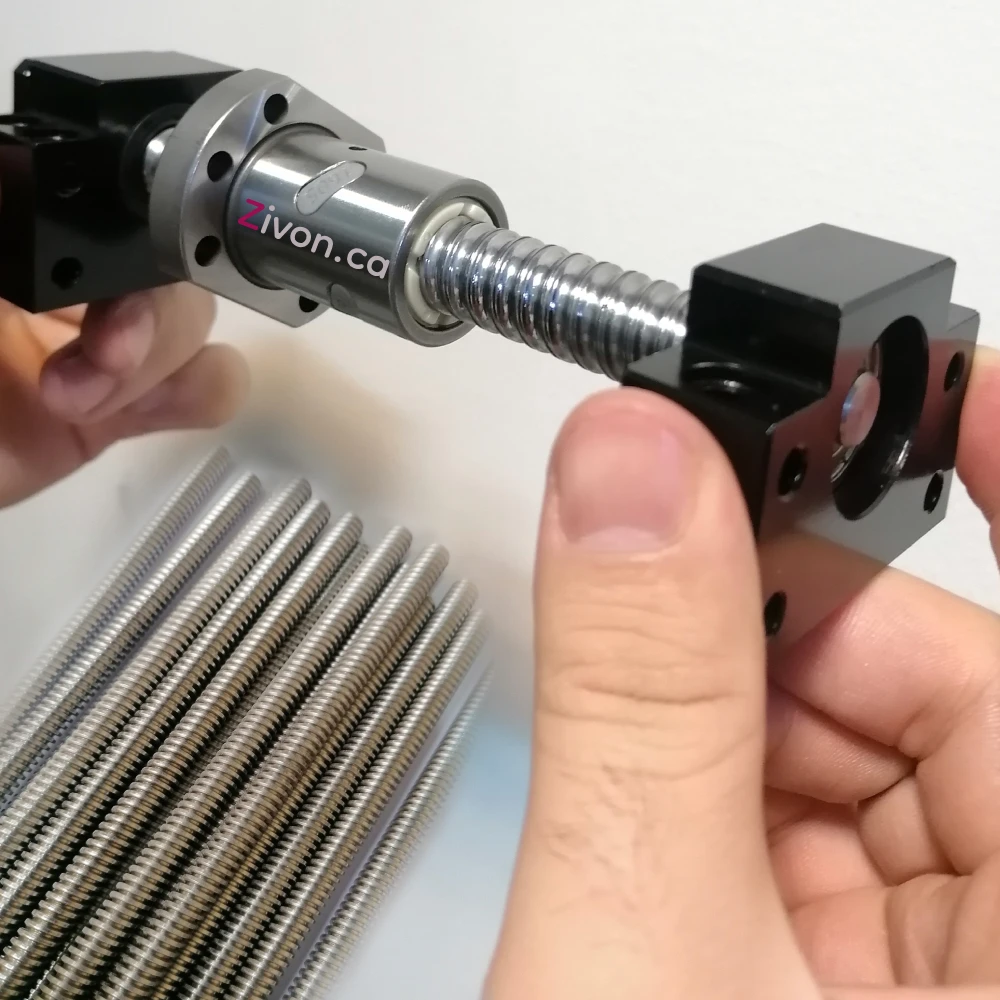
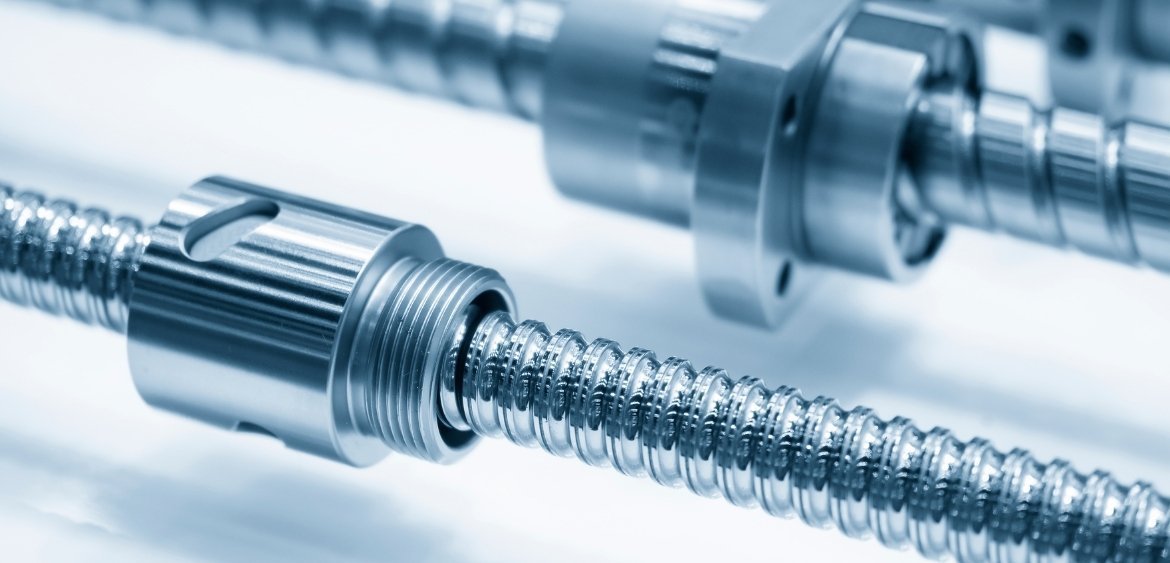
A ball screw uses small steel balls between the screw shaft and the nut. These balls roll inside a recirculating path. Because the contact is rolling instead of sliding, friction stays low. That makes the movement smooth, efficient, and precise.
Ball screws are built for performance. They often support higher speed, higher load, and much better positional accuracy than simpler screw types. They are common in machines where repeatability matters.
Lead screw
A lead screw uses direct sliding contact between the screw threads and the nut. There are no balls. The design is closer to a threaded sliding system than a regular wood or machine fastener, but comparing wood screw vs machine screw helps explain why thread purpose matters. The nut simply rides on the thread surface. This design is simpler and cheaper, but friction is much higher.
Lead screws are often chosen for lighter-duty systems, slower motion, and projects where cost matters more than efficiency. They are widely used in basic automation, small machines, and consumer devices.
The key differences that matter most
When people compare ball screw vs lead screw, they often focus only on price. Price matters, but it is not the full story. The real decision depends on how the screw behaves in daily use.
| Factor | Ball screw | Lead screw |
|---|---|---|
| Friction | Very low | High |
| Efficiency | High | Lower |
| Accuracy | Very high | Moderate |
| Speed | Good for high speed | Better for slower systems |
| Load capacity | High | Moderate to low |
| Backlash | Low, often very low | Usually higher |
| Noise | Quieter in smooth systems | Can be noisier due to sliding contact |
| Maintenance | Needs good lubrication and care | Simple, but wears faster |
| Cost | Higher | Lower |
The table gives a quick view, but the real-world tradeoffs are deeper than that. Here is what many beginners miss:
- Efficiency is not only about power use. It also affects heat, motor size, and system wear.
- Backlash is not always a deal-breaker. In some simple systems, a little backlash is acceptable if the rest of the design is stable.
- Higher accuracy does not always mean better results. If your frame is weak or your motor is undersized, a ball screw cannot fix poor machine design.
Friction and efficiency
This is one of the biggest differences in the ball screw vs lead screw comparison. Ball screws have rolling contact, so they waste less energy as heat. That means more motor power goes into actual movement.
Lead screws have sliding contact, so more energy is lost to friction. This can be useful in one special way: some lead screws resist back-driving better. In simple terms, the load may not push the screw backward as easily. That can be helpful in vertical systems or devices that must hold position without constant power.
Accuracy and repeatability
Ball screws are usually the better choice when you need very precise positioning. The nut and screw fit is tighter, and the rolling motion is more consistent. That makes them popular in CNC machines, robotics, and metrology equipment.
Lead screws can still be accurate enough for many tasks, but they usually have more positional variation over time because of wear and friction. For small projects, this may not matter. For precision manufacturing, it often does.
Backlash
Backlash is the small gap or lost motion that appears when motion changes direction. In fastening work, similar small thread differences also matter, which is why grub screw vs set screw is another useful comparison. It is one of the most important practical issues in motion control.
Ball screws usually have much lower backlash, especially when preloaded. That makes them better for systems that reverse direction often. Lead screws tend to have more backlash unless they use anti-backlash nuts or careful tuning.
Non-obvious point: backlash is not just about accuracy. It also affects the “feel” of the machine. A system with too much backlash may seem loose, even if the motor and controller are working correctly.
Speed and smoothness
Ball screws handle higher speeds better because the balls roll with less heat buildup. This is important when the system must move fast and stop in the right place.
Lead screws are usually better at low to medium speed. If you push them too fast, friction can rise, wear can increase, and efficiency can drop sharply.
Load capacity
Ball screws can carry heavier loads more effectively because the force is spread across rolling elements. This makes them a strong fit for industrial machinery, automation systems, and heavy-duty linear motion.
Lead screws can carry load too, but the sliding contact creates more wear under stress. They are often fine for lighter or intermittent use, but not ideal for continuous heavy-duty motion.
Advantages of a ball screw
Ball screws are usually the premium choice. They cost more, but they offer major performance benefits.
- High efficiency with less energy loss
- Excellent accuracy for precise motion
- Low backlash, especially with preload
- Better speed capability
- Long service life when properly lubricated and protected
- Better load handling in demanding systems
One often overlooked advantage is motor sizing. Because ball screws waste less energy, you may be able to use a smaller motor than you would with a lead screw. That can reduce heat and improve overall system design.
Another benefit is consistency. Ball screws tend to give more predictable motion over time, which helps when you want repeatable output from a machine.
Credit: zivon.ca
When ball screws make the most sense
Use a ball screw when the machine must be accurate, fast, and efficient. It is usually worth the higher cost if downtime, error, or wear would be expensive later.
Good examples include:
- CNC milling machines
- CNC lathes
- Industrial robotics
- Pick-and-place systems
- Precision automation stages
- Medical and laboratory equipment
In these systems, a cheap screw can become expensive very quickly if it causes errors, lost time, or maintenance problems.
Advantages of a lead screw
Lead screws are simpler, and that simplicity is a real strength. For simpler threaded hardware in regular projects, this guide to types of wood screws shows how screw design changes by use case. They are often the smart choice when the application does not need premium performance.
- Lower cost than ball screws
- Simple design and easy to understand
- Good holding ability in some applications
- Works well at low speed
- Easy to use in compact systems
Lead screws are often chosen because they are practical, not because they are the best in every category. For many small machines, that is exactly the right decision.
Non-obvious point: in some designs, the friction of a lead screw can act like a built-in brake. That can reduce the need for a separate holding mechanism, especially in lower-load vertical systems.
When lead screws make the most sense
Lead screws are a strong fit when cost, simplicity, and moderate performance are enough. They are common in devices that move slowly or only occasionally.
Good examples include:
- 3D printers
- Small actuators
- Adjustable furniture
- Basic lab equipment
- Consumer electronics
- Simple positioning stages
In these uses, the lower price and easy maintenance can be more valuable than top-level precision.
Best applications for each type
The right choice depends on the job. That same rule applies outside motion systems too, such as choosing between a machine screw vs bolt for metal assemblies. A ball screw is not “better” in every case. A lead screw is not “cheap junk” either. Each one fits a different level of need.
Credit: progressiveautomations.com
Choose a ball screw if you need:
- High precision
- Fast motion
- High repeatability
- Low backlash
- Long service life under frequent use
- Efficient motion with lower power loss
Examples include aerospace systems, semiconductor tools, inspection machines, and industrial automation lines. In these environments, performance savings often outweigh the higher upfront cost.
Choose a lead screw if you need:
- Lower cost
- Simple installation
- Slower linear motion
- Moderate accuracy
- Occasional use instead of continuous duty
- A compact, simple design
For many hobby projects and light-duty products, lead screws are the most sensible option. They do the job without adding unnecessary complexity.
Common mistakes people make when choosing
The ball screw vs lead screw decision often goes wrong because people focus on one feature and ignore the rest. That can lead to poor performance later.
- Choosing only by price. Cost also causes mistakes with ordinary fasteners, especially when people pick between construction screws vs wood screws without checking the load and material. A cheaper lead screw may cost more over time if it wears fast or causes poor motion.
- Ignoring backlash. If the machine changes direction often, backlash can ruin accuracy.
- Overestimating the need for precision. Not every project needs a premium ball screw.
- Ignoring motor load. A high-friction lead screw may need a larger motor than expected.
- Forgetting about maintenance. A ball screw performs best when protected and lubricated properly.
Another common mistake is assuming a ball screw will fix an unstable frame. It will not. If the machine body flexes, the final result may still be inaccurate even with a very good screw.
Maintenance and lifespan
Ball screws and lead screws need different care. This can affect the total cost of ownership more than many buyers expect.
Ball screw maintenance
Ball screws need proper lubrication and good protection from dust and chips. If contamination gets inside, the recirculating balls can wear the raceway quickly.
They often last a long time in clean environments. But in dirty environments, they need seals, covers, or bellows. Without protection, their performance can drop fast.
Lead screw maintenance
Lead screws are simpler to maintain. There are fewer moving elements inside the nut, and the design is easier to inspect. However, the sliding contact means wear is naturally higher.
This makes lead screws a good choice for lower-cost systems that can accept more wear or can be replaced easily when needed.
Helpful authority reference: For more on precision linear motion and screw terminology, you can review manufacturer and industry guidance from THK.
How to choose the right screw for your project
If you are still unsure, do not start with the screw type. Start with the machine requirement.
Ask these questions first
- How accurate does the motion need to be?
- How fast must it move?
- How often will it run?
- Will it work in a clean or dirty environment?
- How much maintenance is acceptable?
- What is the real budget, including long-term cost?
If accuracy and speed matter most, a ball screw is usually the safer choice. If the project is simple, slow, and cost-sensitive, a lead screw often makes more sense.
A simple rule of thumb
If failure is expensive, choose the ball screw. If complexity is expensive, choose the lead screw.
That rule is not perfect, but it is a strong starting point for most buyers and builders.
Ball screw vs lead screw in real-world use
Let us make the choice more practical.
For a CNC router used by a hobbyist, a lead screw may work well if the cuts are light and the budget is tight. For a professional CNC machine that must hold tight tolerances, a ball screw is the better option.
For a vertical lifting system, a lead screw may help hold position without extra braking. But if the system moves often and must stay precise, a ball screw with the right drive design may still be better.
For a 3D printer, both can work. Lead screws are common for simpler machines, while ball screws may appear in higher-end models that need faster travel and better accuracy. The best choice depends on print quality, speed, and cost goals.
The main lesson is this: do not choose by habit. Choose by motion need.
Credit: wedin.com
Final thoughts
The ball screw vs lead screw decision comes down to a clear tradeoff. Ball screws give you higher efficiency, better accuracy, lower backlash, and stronger performance. Lead screws give you lower cost, simpler design, and acceptable results in many lighter-duty systems.
There is no universal winner. The best option is the one that fits your machine’s real demands. If you need precision and speed, ball screws are usually worth it. If you need simplicity and low cost, lead screws can be the smarter buy.
In the end, the right choice is not about which screw sounds better. It is about which screw helps your system do its job well, for as long as you need it to.
FAQs
1. Which is more accurate, ball screw or lead screw?
A ball screw is usually more accurate. It has lower backlash and smoother motion, so it is better for precision work and repeatable positioning.
2. Is a lead screw cheaper than a ball screw?
Yes. A lead screw usually costs less to buy and is simpler to use. That is one reason it is common in budget and light-duty systems.
3. Which lasts longer, ball screw or lead screw?
A ball screw often lasts longer in demanding systems if it is maintained well. A lead screw can wear faster because of direct sliding contact.
4. Can a lead screw replace a ball screw?
Sometimes, but not always. A lead screw may work if the system is slow and the accuracy need is moderate. It is not a good replacement for high-speed or high-precision machines.
5. What is the biggest mistake when choosing between them?
The biggest mistake is choosing only by price. The better choice depends on accuracy, speed, load, maintenance, and how often the machine will run.
