
For most home projects, gypsum board and drywall are the same finished panel. “Gypsum board” is the technical product name, while “drywall” is the common jobsite and homeowner term for the board used on interior walls and ceilings.
The confusion starts because gypsum by itself is also the mineral inside the board. So the useful comparison is not raw gypsum versus drywall as competing wall surfaces. It is this: gypsum is the core material, gypsum board is the manufactured panel, and drywall is the common name for that installed panel.
This guide explains the terms clearly, then shows when board type matters: regular panels, fire-rated Type X panels, moisture-resistant boards, and plaster-style alternatives. For related planning, see what drywall is, compare sheetrock vs drywall, and use the drywall weight chart before estimating materials.
Gypsum board vs drywall: the direct answer
Gypsum board is the technical name for a family of panel products with a gypsum core and a facing material. The U.S. Consumer Product Safety Commission explains that ASTM uses “gypsum board” as the technical term for the class of products commonly called drywall.
Drywall is the common name for the finished gypsum board panel installed on walls and ceilings. In everyday use, drywall, wallboard, plasterboard, and gypsum board often point to the same basic interior panel, though exact product type still matters.
Gypsum alone is the mineral core material. It is not usually the finished sheet a homeowner buys and screws to studs. That distinction matters because a search for “gypsum board vs drywall” usually asks about terminology, while a search for “gypsum vs drywall” may mix up the mineral with the manufactured board.
Terminology comparison: gypsum, gypsum board, and drywall
The main difference between gypsum and drywall
The biggest difference is not just the name. It is the form and function.
| Term | What it means | How to use it when buying or planning |
|---|---|---|
| Gypsum | The mineral used in the board core | Use this term when discussing material composition, plaster, or the core ingredient. |
| Gypsum board | The technical product family for gypsum-core panels | Use this term for specifications, standards, and product subtypes. |
| Drywall | The common name for installed gypsum board panels | Use this term for normal home walls, ceilings, repairs, and contractor conversations. |
| Type X / specialty board | A gypsum board subtype made for a performance need | Choose by room condition, code requirement, fire rating, moisture exposure, or sound goal. |
Many people use the words loosely, and context decides what they mean. If someone says “gypsum wall,” they may mean gypsum board, drywall, or a gypsum-based plaster finish. For specifications, use the exact board type instead of relying on shorthand.
This is the key point beginners miss: gypsum describes the core material, gypsum board describes the technical product, and drywall is the common name for the installed panel.
How drywall is made from gypsum
Drywall starts with gypsum rock. The rock is heated and turned into a powder. Water and additives are then mixed in to create a paste. That paste is formed into a sheet and pressed between paper layers.
Once the board dries, it becomes hard, smooth, and ready for installation. Different additives can change its performance. For example, some boards are made for better moisture resistance, while others are designed to slow fire or block sound.
Why this process matters
Not all drywall is the same. The gypsum core can be adjusted for different jobs. That is why one board may work well in a bedroom, while another is better for a bathroom or garage.
This is another important detail many homeowners miss. When they ask about gypsum vs drywall, they often focus only on the material name. But the real decision is usually about the type of drywall and the conditions of the room.
Where gypsum is used in construction
Gypsum is valuable because it is versatile. It is used in many products, not just wall panels.
- Drywall and gypsum boards for walls and ceilings
- Plaster for surface finishing
- Ceiling tiles in commercial buildings
- Decorative moldings and interior details
- Cement and soil products in some cases
In homes, gypsum is most often seen indirectly through drywall. In older buildings, gypsum plaster may also appear on walls. That older method can be strong and durable, but it usually takes more labor to install and repair.
Gypsum also plays a role in modern green building because it is common, recyclable in some forms, and efficient to produce compared with many heavier wall systems.
Where drywall is used
Drywall is one of the most common interior finishing materials in modern buildings. It is used for:
- Living room walls
- Bedroom walls
- Hallways and ceilings
- Office partitions
- Apartment interiors
- Garages and utility spaces, with the right board type
Drywall is popular because it is fast to install, easy to finish, and affordable. It creates a smooth surface for paint, wallpaper, texture, and trim.
For most houses, drywall is the default choice. It is the standard answer unless the project has special needs such as heavy moisture, strict fire rules, or sound control.
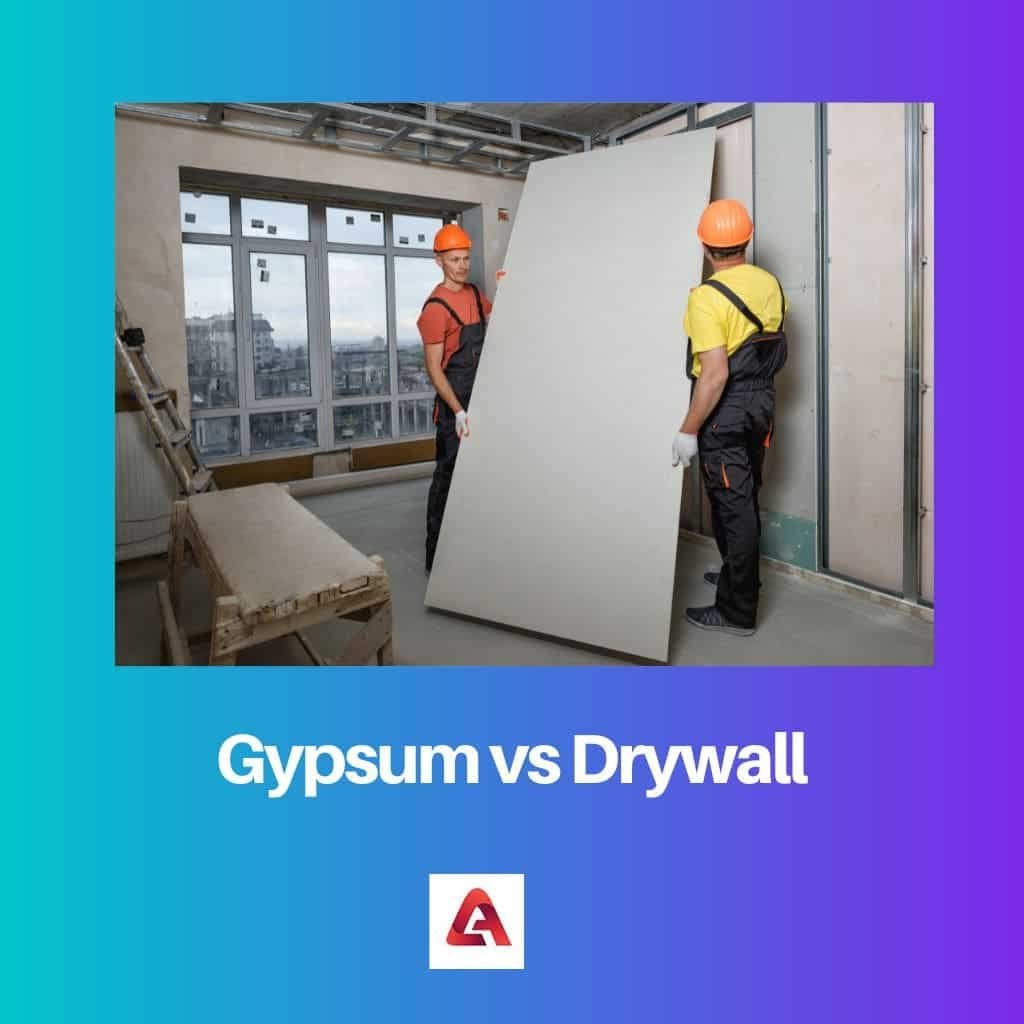
Credit: askanydifference.com
Gypsum vs drywall in strength and durability
In normal home use, drywall is strong enough for everyday needs. But it is not as tough as brick, concrete, or wood panels. A hard hit can dent it. A wet area can damage it. Heavy items need proper anchors.
Gypsum itself is not the surface people walk into or hang pictures on. Its durability matters because it is the core of the board. If the board is made well and used in the right place, it can last a long time.
One practical insight is that the wall system is only as good as the room conditions. A standard drywall sheet may last decades in a dry hallway, but the same sheet can fail early in a bathroom with poor ventilation.
What affects durability most
- Moisture – Water is the biggest enemy of regular drywall.
- Impact – Hallways and kids’ rooms often need stronger boards or better protection.
- Installation quality – Poor fastening or bad joint finishing reduces lifespan.
- Room use – A garage, laundry room, and bedroom have very different needs.
Fire resistance: a major advantage of gypsum-based boards
Gypsum has a natural advantage in fire resistance because it contains chemically bound water. When exposed to heat, that water helps slow the spread of fire. This is one reason gypsum-based drywall is widely used in homes and commercial buildings.
Regular drywall is not fireproof, but many drywall products are fire-resistant. These boards are often used around stairways, boiler rooms, garages, and areas with building code requirements.
For standards context, the Gypsum Association notes that gypsum board is manufactured to ASTM C1396, and ASTM lists C1396/C1396M as the Standard Specification for Gypsum Board.
Here is the key point: if fire safety matters, the board type matters more than the simple gypsum vs drywall wording. You want the right rated product, not just any wallboard.
Moisture resistance and where people go wrong
This is one of the biggest mistakes in home improvement. People think “drywall” is fine everywhere, then install standard boards in bathrooms, basements, or laundry rooms.
Regular drywall can absorb moisture and break down. That does not mean all drywall is bad in wet areas. It means you must choose the right version.
Better choices for damp spaces
- Moisture-resistant drywall for bathrooms and laundry rooms
- Green board or similar products for low-moisture wet areas
- Cement board for shower surrounds and high-water zones
A smart buyer does not ask only “gypsum vs drywall?” The better question is, “Which drywall type works for this room?” That question saves money, time, and future repairs.
Sound control and comfort
Drywall can help reduce sound between rooms, but standard boards have limits. Thicker drywall, double layers, insulation behind the wall, and special acoustic boards perform better.
Gypsum-based panels are often used in sound control systems because they are dense enough to help reduce noise transfer. Still, the best results usually come from the whole wall assembly, not just one sheet.
Beginners often miss this: sound control is not solved by the board alone. Stud spacing, insulation, sealing gaps, and number of layers often matter just as much as the panel itself.
Credit: livehomes.in
Installation differences
Drywall is designed for fast installation. Workers cut the sheets, screw them to studs, tape the joints, apply joint compound, and then sand the surface smooth. This process is much faster than traditional plaster work.
Gypsum in raw form is not something most homeowners install directly. It is processed into boards or finishes first. So, in practice, when comparing gypsum vs drywall for installation, drywall is the usable product.
Why drywall is easier for most projects
- It comes in large sheets.
- It is simple to cut with basic tools.
- It creates a flat finish quickly.
- It is familiar to most contractors.
That ease is a big reason drywall became the standard in modern building.
Cost: which one is cheaper?
In most real-world projects, drywall is the more practical and affordable choice. Since gypsum is the core material inside drywall, comparing cost between the two is a little misleading.
If you compare raw gypsum to finished drywall, drywall costs more because it includes processing, paper facing, transport, and manufacturing. But if you compare usable wall systems, drywall is usually one of the lowest-cost ways to finish an interior space.
Special drywall products cost more. Fire-rated, moisture-resistant, mold-resistant, and soundproof boards all raise the price. But they can save money later by preventing damage or helping you pass code.
Which one is better for different projects?
The best choice depends on the exact board type, not on treating gypsum board and drywall as rivals. For most interior walls, regular drywall/gypsum board is the practical default. For special rooms, choose a board made for the condition.
For new home interiors
Drywall is usually better. It is fast, cost-effective, and gives a clean finish.
For bathrooms and damp spaces
Special moisture-resistant drywall is better than standard drywall. Raw gypsum is not the answer by itself.
For fire-sensitive areas
Fire-rated gypsum board is the better choice, because it is designed to slow heat spread.
For sound reduction
Thicker or acoustic drywall systems work better than standard board.
For traditional plaster-style finishes
Gypsum-based plaster products may be better if you want an older, harder wall finish with a different look and feel.
Common mistakes when choosing between gypsum and drywall
People often make the same few mistakes when they compare gypsum vs drywall.
- Thinking they are fully different materials – Drywall is made with gypsum.
- Choosing only by price – Cheap board may fail in the wrong room.
- Using standard drywall in wet spaces – This can lead to mold and repair costs.
- Ignoring fire or sound needs – The right board can solve a problem before it starts.
- Not checking local building code – Some areas require special board types in certain rooms.
A simple rule helps here: match the board to the room, not just to the budget.
So, which is better?
If you mean gypsum board and drywall, they usually refer to the same installed panel. If you mean raw gypsum mineral versus drywall, drywall is the usable wall product and gypsum is the core material inside it.
For the average homeowner, drywall is the better choice because it is practical, available, easy to install, and suitable for most rooms. Gypsum is the base material that makes drywall possible, but it is not usually the final wall surface by itself.
The simple rule is: do not buy by name alone. Match the panel to the room, the required performance, and any local code or manufacturer instructions.
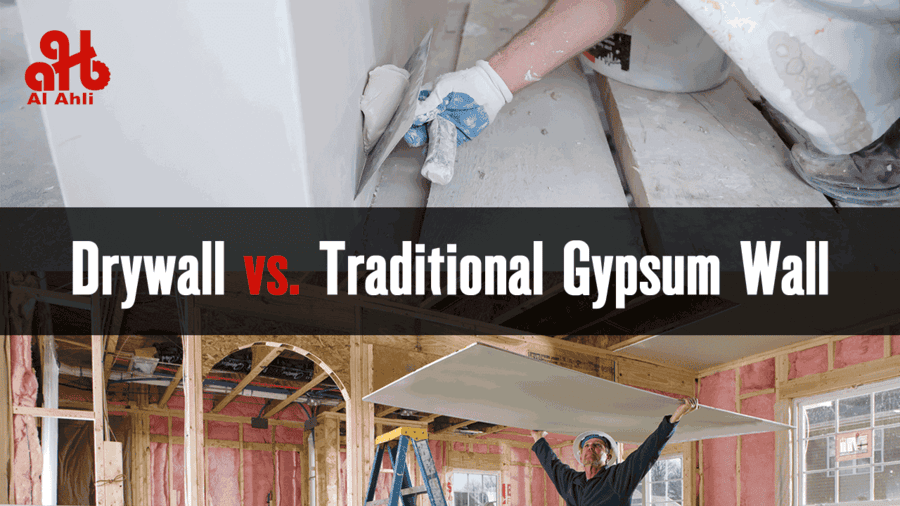
Credit: alahlitrading.com
Quick buying advice before you start a project
Before you buy, think about these three things:
- Room conditions – Dry, damp, or high-traffic?
- Performance needs – Fire, sound, moisture, or basic coverage?
- Finish quality – Do you want a smooth painted wall or a special surface?
Many beginners focus too much on the sheet itself and not enough on the wall system. But the board, insulation, fasteners, joints, and finish all work together.
If you remember one thing, make it this: gypsum is the material; drywall is the product. That small difference explains most of the confusion and helps you choose with more confidence.
FAQ
1. Is gypsum the same as drywall?
If you mean gypsum board, yes, it is commonly the technical name for drywall. If you mean gypsum mineral, no: gypsum is the core material, while drywall is the finished panel made from that material and facing layers.
2. Why is gypsum used in drywall?
Gypsum is used because it is light, easy to shape, and naturally fire-resistant. It also helps make smooth boards for walls and ceilings.
3. Can drywall get wet?
Standard drywall should not get wet for long. It can absorb moisture, weaken, and grow mold. Moisture-resistant boards are better for damp areas.
4. Which is better for fire resistance: gypsum or drywall?
Gypsum-based drywall is better because gypsum helps slow fire spread. For safety areas, look for fire-rated drywall, not standard board.
5. What is the best choice for most homes?
For most homes, drywall is the best choice because it is easy to install, affordable, and suitable for many interior rooms when the right type is used.
