
If you found small holes in your wall, a soft spot near the baseboard, or a strange dust trail on the floor, you may be asking one urgent question: do termites eat drywall? The short answer is yes, but not in the way many people think. Termites do not eat the drywall paper and gypsum because they want “wall material” itself. They eat the paper layer because it contains cellulose, which is their food.
This matters because drywall damage often looks minor at first. The surface may still seem fine while the inside is already weak. That is why termite problems are often missed until the damage becomes expensive. If you understand the signs early, you can protect your home before the problem spreads.
In this guide, you will learn how termites damage drywall, how to spot early warning signs, what termite damage usually looks like, and what to do next if you suspect an infestation. You will also learn how to tell termite damage apart from water damage, which is one of the most common mistakes homeowners make.
How termites damage drywall
Drywall is made of a gypsum core with paper on both sides. That paper is the main reason termites can damage it. Subterranean termites, which are the most common type in many homes, eat cellulose. Since paper contains cellulose, drywall becomes an easy target once termites reach it.
They usually do not stop at drywall. In most cases, the drywall is just one part of a larger food path. Termites may enter through wood framing, baseboards, door frames, or tiny cracks in the foundation. Once they get inside the wall, they can feed on the paper layer and move into nearby wood.
One important detail many people miss is that termites often leave the outer paint layer looking normal for a while. So a wall can look fine from the outside even when the paper backing inside is being eaten away. This is why tapping on the wall or pressing gently on soft spots can reveal damage before a visible hole appears.
Why drywall is vulnerable
Drywall is not termite food in the same way wood is, but it still gives termites what they need to travel and feed. The paper layer acts like a thin snack and a hidden path. Once termites reach drywall, they can tunnel behind it where they stay protected from light and air.
They also like quiet, hidden places. Inside walls, behind insulation, and near damp areas, termites can work for weeks or months without being noticed. By the time you see obvious wall damage, the colony may already be well established.
Early signs that termites may be inside drywall
Drywall termite damage often starts small. The first signs can be easy to ignore because they look like normal wear, water spots, or minor cracks. Still, there are clear clues if you know what to look for.
- Small pinholes in the wall surface
- Bubbling or peeling paint without a clear water leak
- Soft or thin spots when you press gently on the wall
- Hollow-sounding areas when you tap the wall
- Fine dust or frass near the baseboard or wall edge
- Warped or blistered sections of drywall
- Small cracks that seem to grow over time
One mistake homeowners often make is assuming a wall problem must be from plumbing. Water damage is common, but termites and moisture can also work together. Damp drywall is easier to damage, and some termite activity becomes more likely in areas with leaks or poor ventilation.
Another clue is the shape of the damage. Water damage often causes stains, spreading discoloration, or sagging. Termite damage may look more localized at first, with tiny holes, paper tearing, or a weak surface around one area.
Signs you may see on the outside of the wall
Sometimes the first warning is not on the wall itself. It may show up around the room.
- Discarded wings near windows or doors
- Small mud tubes on the wall, baseboard, or foundation
- Swarming termites near light sources
- Wood trim that sounds hollow or breaks easily
- Sticky doors or windows from hidden wall shifts
These signs matter because termites often move from wood to drywall and back again. If you see mud tubes, that is a strong sign of subterranean termites. They build those tubes to stay moist while moving between their nest and food source.
What termite damage in drywall looks like
Termite damage in drywall is not always dramatic. In the beginning, it may look like a few small surface flaws. As the problem gets worse, the wall can become brittle, weak, and easy to break.
Here is a simple comparison that helps many homeowners understand the difference between early and advanced damage:
| Damage stage | What you may notice | What it may mean |
|---|---|---|
| Early | Pinholes, light bubbling, tiny cracks | Termites may be feeding behind the paper layer |
| Moderate | Soft spots, hollow sound, torn paper | The drywall is losing strength and termites may be active inside |
| Severe | Broken sections, sagging wall, visible tunnels | Damage has spread and repair will likely need more than a patch |
If you can press a finger into the wall and feel it give way too easily, the problem may already be serious. Drywall should feel firm. A weak or crumbly section means the paper backing and inner area may have been compromised.
One less obvious sign is a change in sound. A damaged wall often sounds different when tapped because the paper and gypsum have been eaten away or loosened from the frame behind it. This is not proof by itself, but it is a useful clue.
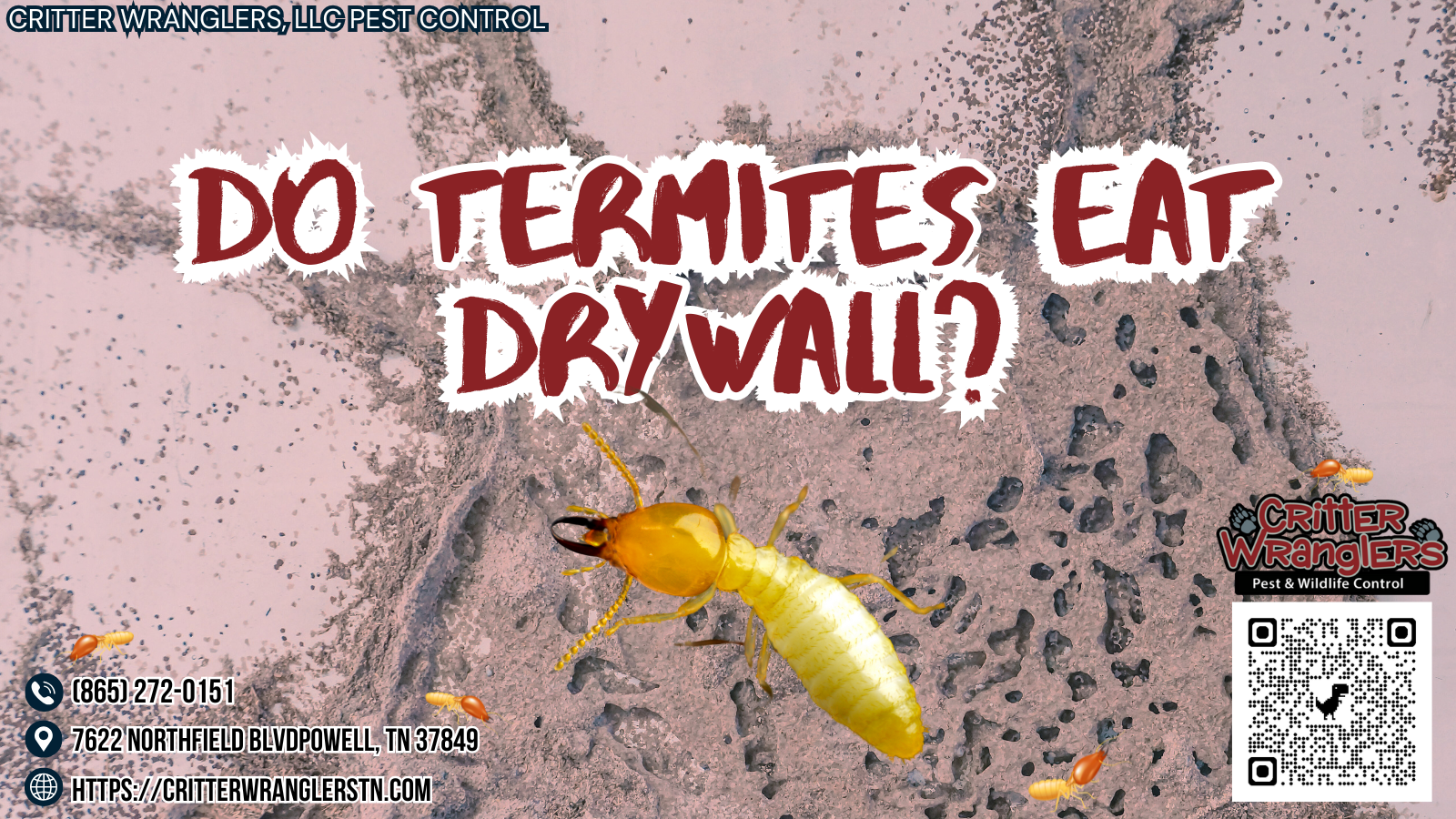
Credit: critterwranglerstn.com
Do termites always leave visible tunnels?
No. Many people expect to see dramatic tunnel marks, but termites often stay hidden behind the wall surface. Mud tubes are more common on foundations, crawl spaces, or exposed areas. Inside drywall, the damage may appear as layered paper loss, not obvious dirt tunnels.
That is why a clean-looking wall does not always mean a safe wall. The real damage can hide behind paint and joint compound.
Do termites eat drywall or just the paper?
This is the key question, and the answer is important. Do termites eat drywall? Yes, but mostly the paper facing, not the gypsum core. The paper contains cellulose, which termites can digest. The gypsum itself is not a food source, but once the paper is damaged, the wall loses strength.
Some species may also use drywall as a path to nearby wood. So even if the wall material itself is not their main meal, the damage can still become serious. In a home, the real danger is that drywall damage often means termites are already close to framing, studs, or other structural wood.
This is why drywall damage should never be treated as a small cosmetic issue. It can be the warning sign of a much bigger termite problem inside the wall system.
How to tell termite damage from water damage
Many homeowners confuse termite damage with water damage because both can weaken drywall and make paint look bad. The two problems can even happen together. Still, there are ways to tell them apart.
Clues that point to termites
- Pinholes or tiny openings in the wall
- Fine dirt-like material near openings
- Hollow or papery sound when tapped
- Nearby mud tubes or swarm wings
- Damage near wood trim, baseboards, or wall edges
Clues that point to water
- Yellow or brown stains
- Soft sagging areas
- Mold smell or visible mold
- Damage near pipes, ceilings, or bathrooms
- Peeling paint with clear moisture signs
The biggest clue is location. Water damage usually follows a leak path. Termite damage often appears near wood, floor edges, or wall voids where termites can move hidden from view.
If you are unsure, do not guess. A professional inspection is the safest next step. The U.S. Environmental Protection Agency has helpful termite control guidance that explains how infestations start and why quick action matters.
What to do next if you suspect termites in drywall
If you think termites may be in your drywall, act quickly but calmly. Do not start tearing open the wall right away. That can make it harder to understand the full extent of the problem and may spread dust or disturb the colony before inspection.
- Check nearby areas for mud tubes, wings, or soft wood.
- Look for moisture around the wall, baseboard, or ceiling line.
- Take photos of the damage before touching anything.
- Mark the affected area so you can see whether it grows.
- Call a licensed pest control professional for a proper inspection.
If you have visible termite activity, try not to spray random insecticide inside the wall unless a professional tells you to. Improper treatment can push termites deeper into hidden areas, which can make the job harder.
It is also smart to check other rooms. Termites rarely damage just one small spot. If one wall is affected, nearby trim, flooring, or framing may also be at risk.
When to call for help fast
Some signs should not wait.
- You see live termites indoors
- You notice mud tubes on interior walls
- The wall feels soft in more than one area
- Damage is spreading quickly
- There are signs of both termites and water leaks
These are signs that the issue may already be active inside the wall, not just on the surface.
Can you repair termite-damaged drywall?
Yes, but only after the termite problem is treated. Repairing the wall first without removing the termites is a waste of time and money. The damage will likely return.
Once the infestation is controlled, small drywall damage can often be patched, sanded, and repainted. If the damage is larger, you may need to replace sections of drywall and possibly repair nearby framing or insulation. In severe cases, the wall may need professional restoration.
One thing many people miss is that drywall repair is only part of the job. If termites reached the studs, baseboards, or subfloor, those areas may also need inspection and treatment. The visible wall damage may be much smaller than the hidden damage behind it.
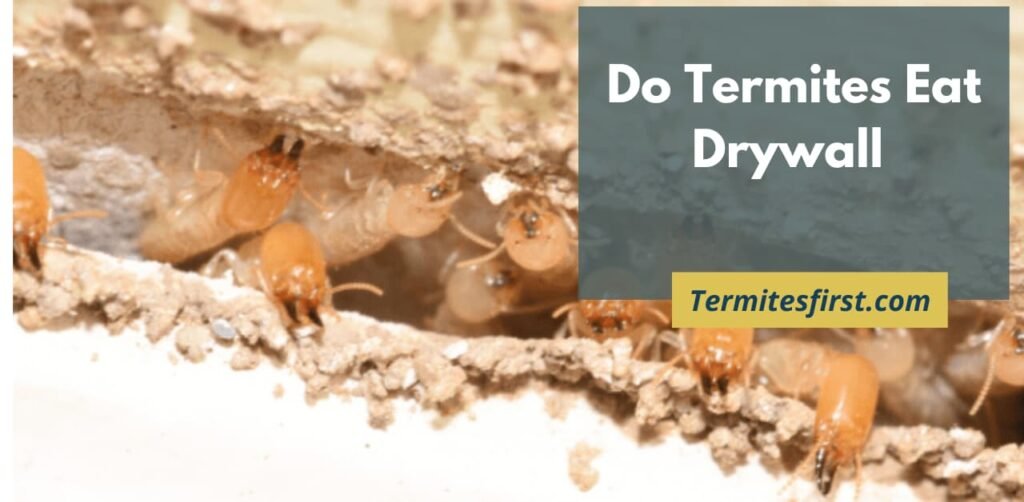
Credit: termitesfirst.com
What repairs usually involve
- Removing damaged drywall sections
- Checking the wall cavity for hidden termites
- Replacing damaged wood if needed
- Installing new drywall patches
- Finishing with tape, mud, sanding, and paint
If the wall was damaged by moisture and termites, both problems must be fixed. Otherwise, the same weak area may become attractive to termites again later.
How to reduce the chance of future termite damage
Once you have dealt with the problem, the next goal is prevention. Drywall becomes more vulnerable when homes have moisture, hidden leaks, or easy entry points. A dry, well-sealed home is much less attractive to termites.
Practical prevention steps
- Fix plumbing leaks quickly
- Keep gutters and downspouts working well
- Seal cracks around the foundation and wall penetrations
- Keep wood and soil from touching the exterior wall when possible
- Reduce dampness in crawl spaces, basements, and bathrooms
- Inspect baseboards and wall edges during routine home checks
Moisture control is a major part of termite prevention. That is one reason homes with leaks or poor drainage often have more termite trouble. Drywall may be the visible victim, but the real invitation is often water and hidden humidity.
Another useful habit is to watch for small changes over time. A tiny crack that grows, a patch of bubbling paint, or repeated dust near the same wall can be early signs. Catching changes early often saves you from bigger repairs later.
Common mistakes homeowners make
Many termite problems get worse because people wait too long or treat the wrong thing. Avoiding these mistakes can save time and money.
- Ignoring small signs because the wall still looks mostly normal
- Assuming all wall damage is water damage without checking for termites
- Painting over the damage before finding the cause
- Using only surface spray and missing the hidden infestation
- Repairing drywall before treatment is complete
The biggest mistake is delay. Termites work quietly. If you wait for a large hole, the colony may already have spread farther than you think.
A second mistake is focusing only on the damaged wall. In many homes, the wall is just the first visible clue. The infestation may be starting in a crawl space, attic edge, or exterior framing area.
What termites mean for your home’s structure
Drywall damage alone can be annoying, but the bigger concern is what may be happening behind it. Drywall is attached to framing. If termites reach studs, joists, or other structural wood, the repair becomes more serious.
That is why termite damage should always be taken as a warning sign, not just a cosmetic issue. A weak wall can be the first sign of deeper damage that affects doors, floors, and other parts of the home.
In other words, when people ask do termites eat drywall, they are often asking the wrong size of question. The real issue is not only whether the wall is being damaged. It is whether termites have already moved into the wood behind it.
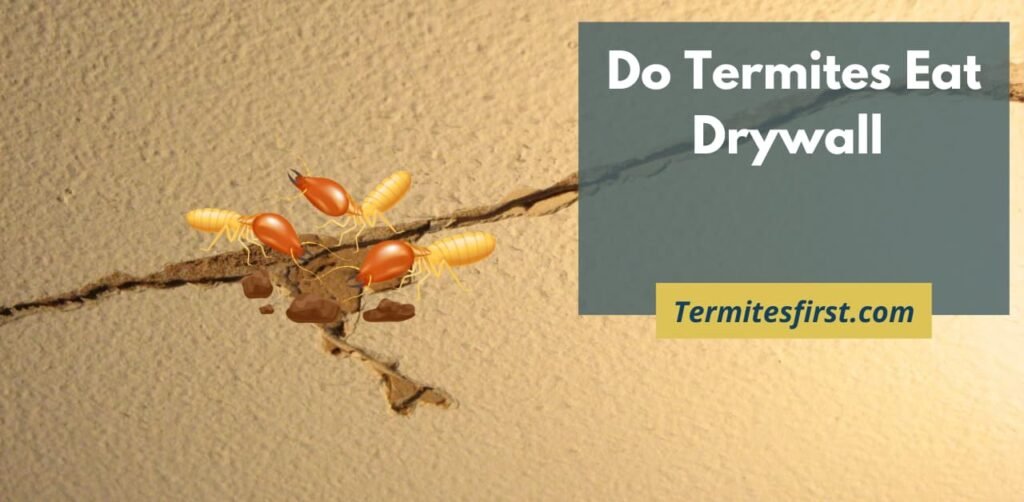
Credit: termitesfirst.com
Conclusion
So, do termites eat drywall? Yes, they can damage it, especially the paper layer that contains cellulose. They may not “eat” the gypsum core in the same way they feed on wood, but drywall damage can still be a serious warning sign. Tiny holes, soft spots, bubbling paint, hollow sounds, and mud tubes should never be ignored.
If you suspect termites, the safest move is to inspect the area, look for moisture, and get a professional evaluation. Early action can protect not only your walls, but also the wood structure behind them. The faster you respond, the easier the repair usually is.
FAQs
1. Do termites eat drywall in every home?
No. Termites do not target every home or every wall. They usually enter where there is moisture, hidden wood, or easy access from the outside. Drywall becomes a problem when termites reach the paper layer or use it to move toward wood.
2. Can termites live inside drywall?
They can hide behind or inside wall voids near drywall, but they usually do not live in the drywall itself like a nest. They are more likely to travel through the wall space and feed on paper, nearby wood, or other cellulose materials.
3. What does termite drywall damage look like at first?
Early damage may look like tiny pinholes, slight bubbling, soft spots, or thin areas that sound hollow when tapped. It can be easy to miss because the surface may still look almost normal.
4. Is drywall damage always a sign of termites?
No. Water damage, mold, and general wear can also damage drywall. But if you see holes, mud tubes, discarded wings, or nearby soft wood, termites become much more likely.
5. Should I repair the drywall before treating termites?
No. The termite problem should be treated first. If you repair the wall too soon, termites may continue feeding behind it and damage the new drywall again.
